

JOBS POLICIES, ANALYSIS, AND RESOURCES
Latest Jobs Posts
Abortion: How Abortion Rulings Could Affect Women in America
Brief #149 – Health & Gender
By Inijah Quadri
By basically overturning Roe v. Wade, six unelected Supreme Court judges took away the right of tens of millions of women to make their own decisions about their bodies. After their ruling, several areas in the United States were to be transformed into a dystopian nightmare of online tyranny, where even a Google search for “abortion medication” could be used as evidence against people seeking abortions.
The Move Away from Plastic is Looking Just as Flimsy
Brief #150 – Environment Policy
By Todd J. Broadman
We are a world addicted to plastic, the most perceivable, persistent and pervasive indicator of the Anthropocene. Plastics are produced from natural gas, feedstocks derived from natural gas processing, and each year more is produced. The current production rate is 400 million metric tons and is the source of 5% of CO2 emissions. By 2030 it will be 600 million metric tons, and 800 by 2040.
Examining the Integrity of Voting Systems
Brief #73 – Technology Policy
By Steve Piazza
In 2002, President George W. Bush signed into law the Help America Vote Act (HAVA). HAVA’s passage enhanced existing policy established under the 1971 Federal Election Campaign Act, which created the National Clearinghouse for Information on the Administration of Elections.
Taking a Look at the Georgia Runoff Election
Brief #45 – Elections & Politics
By Ian Milden
Georgia’s Senate Race is going to a runoff. The runoff will be held on December 6th. This brief will explain the concept of runoff elections and take a look at what both parties are doing to prepare for the runoff.
Petersburg and Moscow Deputies Demand Putin’s Resignation
Brief #156 – Foreign Policy
By Yelena Korshunov
In September 2022, the deputies of the St. Petersburg municipal district Smolninskoye turned to the State Duma (Congress) with a proposal to dismiss president Vladimir Putin and additionally accuse him of treason for the violent war in Ukraine. Within a week, the deputies were accused of “discrediting the army” and fined, and the court launched a procedure for the dissolution of the municipal council.
The Implications of November 8th, 2022
Brief #44 – Elections & Politics
By Maureen Darby-Serson
The elections on Tuesday November 8th, 2022, may be one of the most impactful elections we will have seen in our lifetime to date. With the US House of Representative and US Senate up for grabs, Democrats were preparing for the worst but hoped for the best.
Situation Update: # 15 The Ukraine Crisis
Brief #155 – Foreign Policy
By Abran C
After 260 days of war, the fighting in Ukraine is still raging as firece as ever, yet Ukranian forces have made more gains in recent weeks than they had in the first months of the war. Russia on Wednesday ordered its forces to withdraw from the city of Kherson, the only regional capital captured by Russian forces since the invasion began back in February. The withdrawal of Russian forces from the city signals another blow to the Kremlin’s efforts in Ukraine.
Brittney Griner’s Sentencing in Russian Trial
Brief #154 – Foreign Policy
By Reilly Fitzgerald
WNBA star Britney Griner is one of several American citizens wrongfully detained in Russia. Her arrest took place within about one week of the start of Russia’s war in Ukraine. She was arrested on trumped up charges of ‘drug smuggling’ while traveling to Russia to play on a team during the WNBA off-season. She was convicted of drug smuggling, due to her carrying a small amount of cannabis oil into Russia, which she was prescribed by her doctor in the United States.
Amazon is a Hazardous Place to Work, But Don’t Dare Tell the Company to Change
Brief #72– Technology Policy
By Mindy Spatt
Workers, regulators even its own investors want Amazon to improve its abysmal worker safety record. But the company has fought tooth and nail to quash those efforts.


Biden-Harris Administration Pushing Back on Abortion Rights
Biden-Harris Administration Pushing Back on Abortion Rights
Health & Gender Policy Brief #156 | By: Stephen Thomas | June 12, 2022
Header photo taken from: CNN
Follow us on our social media platforms above
Browse more health and gender policy briefs from the top dashboard

Photo taken from: Yahoo
Policy Summary
[SSB theme=”Official” align=”center” counter=”true” ]
Striving to be proactive in reinstating abortion rights that the U.S. Supreme Court curtailed June 24, the administration of President Joseph R. Biden Jr. and Kamala D. Harris is taking steps to safeguard a right that the high court established in Roe v. Wade in 1973.
The first step is constituent reassurance that the administration is not sitting on the sidelines. For instance, Vice President Harris on July 8 discussed with lawmakers from several Republican-controlled states the administration’s fight to restore women’s reproductive rights is still ongoing. The vice president also met with health care providers, faith-community figures, experts in constitutional and privacy law, and state attorneys general.
In so doing, the vice president “reiterated the Administration’s commitment to partnering with elected leaders at the local, state, and federal level to protect reproductive health care access,” according to a statement issued by the White House on July 8.
That very same day, President Biden signed an Executive Order intended to “promote access to critical reproductive healthcare services, including abortion,” according to the order. The president reiterated in the Executive Order, “It remains the policy of my Administration to support women’s right to choose and to protect and defend reproductive rights. Doing so is essential to justice, equality, and our health, safety, and progress as a Nation.”
Policy Analysis
What does the executive order mean? Contrary to the highest aspirations of abortion-rights activists, an executive order cannot reverse the U.S. Supreme Court’s foolish ruling June 24 in Dobbs v. Jackson Women’s Health Organization.
Executive orders have limitations. In a 2008 article on Executive Orders, attorney and law professor Patrick Parenteau, the president derives the authority to issue Executive Orders from Article II, Section 1, of the U.S. Constitution, which reads, “The executive power shall be vested in a president of the United States of America.” In Section 3, the Constitution reads, “The President shall take care that the laws be faithfully executed.”
Here is the tricky part. Although judicial review of executive and legislative actions has existed in the U.S. since the U.S. Supreme Court’s ruling in 1803 in Marbury v. Madison, there is no executive rollback of Supreme Court rulings.
Nevertheless, rest assured that Biden’s Executive Order is not insignificant.
What President Biden can do—and did do—is instruct federal agencies and departments to comb the law and to recommend to the White House ASAP all mitigating executive avenues available to the president to protect a woman’s right to choose. The president also issued several directives in his Executive Order.
This list below is not exhaustive:

Photo taken from: Miguel Gutierrez Jr. / The Texas Tribune
- The Department of Health and Human Services will identify “potential actions” that might “protect and expand access to abortion care, including medication abortion,” family planning services, emergency contraception, and full protections under the law for women who experience miscarriages and ectopic pregnancies. HHS also must develop a way to promote “awareness of and access to the full range of contraceptive services.”
- White House counsel and the Justice Department must reach out to lawyers and “public interest organizations” to encourage lawyers to “represent and assist patients, providers, and third parties lawfully seeking these services throughout the country.”
- The Justice Department must work with the Department of Homeland Security to ensure the safety of “patients, providers and third parties” as well as clinics and pharmacies that dispense or otherwise provide reproductive health services. Protecting patients’ personal health data is also on their agenda.
- What about protections for states that patients visit for out-of-state abortions? The Justice Department, as the President directed, must provide “technical assistance” to states that want to protect those patients.

Photo taken from: The Hill
All the identified federal departments must find solutions to the Supreme Court’s restriction on reproductive rights—protections that federal law on the books today permits. President Biden says that repeatedly in his Executive Order. The solutions must be legally justifiable.
For instance, HHS on July 11 issued “guidance” permitting abortions in Medicare-participating hospitals when the procedures are provided during “life- or health-saving” treatment.
“Under the law, no matter where you live, women have the right to emergency care—including abortion care,” HHS Secretary Xavier Becerra said in a statement. “Today, in no uncertain terms, we are reinforcing that we expect providers to continue offering these services, and that federal law preempts state abortion bans when needed for emergency care. Protecting both patients and providers is a top priority, particularly in this moment. Health care must be between a patient and their doctor, not a politician. We will continue to leverage all available resources at HHS to make sure women can access the life-saving care they need.”
Keep in mind that any federal agency’s interpretation of a federal statute can be challenged in court—perhaps even all the way to the U.S. Supreme Court. Nevertheless, Article VI of the U.S. Constitution makes federal law the “supreme law of the land,” which is a part of what Becerra meant when he stated that “federal law preempts state abortion bans” in medical emergencies.
The Biden-Harris administration’s task is daunting, but it is not impossible. Just about every U.S. president has used the Executive Order to further a policy agenda, according to the American Bar Association. There’s no reason to believe that the administration cannot find, by executive action, bulletproof solutions— fortresses that are legally impenetrable at least until the U.S. Supreme Court rules against them.
In the meantime, there will be a midterm election in November. Efforts to pass a federal statute to protect a woman’s right to make her own reproductive decisions may very well depend on the outcome.
Engagement Resources
Click or tap on resource URL to visit links where available

President Biden’s executive order
White House statement on Vice President Harris’s actions

See footnote 29 of Professor Parenteau’s article on climate-change
https://www.ecologylawquarterly.org/currents/currents35-18-parenteau-2008-1221/

American Bar Association explanation of executive orders

The U.S. Supreme Court’s ruling in Dobbs
https://www.supremecourt.gov/opinions/21pdf/19-1392_6j37.pdf

With Roe v. Wade Overturned, Some States Fight Back
With Roe v. Wade Overturned, Some States Fight Back
Health and Gender Policy Brief #157 | By: Geoffrey Small | July 12, 2022
Header photo taken from: Olivier Douliery / AFP / Getty Images
Follow us on our social media platforms above
Browse more health and gender policy briefs from the top dashboard

Photo taken from: The Pew Research Center
(click or tap to enlargen)
Policy Summary
[SSB theme=”Official” align=”center” counter=”true” ]
According to the Pew Research Center, the total number of abortion providers in the United States has decreased since 1982. The recent Supreme Court decision to overturn Roe V. Wade may lead to further decreases and declining accessibility. On July 8th, 2022, the Biden administration responded to the Supreme Court’s decision with an executive order. Biden’s executive action will include establishing a task force on reproductive health care access, expanding contraception, promoting public education, improving access to legal aide, protecting healthcare information, and ensuring interstate safety from Republican states’ draconian abortion laws.
Despite these efforts, President Biden stated that the best solution is for Congress to “codify Roe as federal law.” However, the possibility of bipartisan federal legislation is uncertain. Some state Governors have already signed legislation and executive orders to fight back against the 19 Republican states that enacted 108 abortion restrictions in 2021 and 11 Republican states that enacted 42 additional abortion restrictions since 2022.
California, New Jersey, and Massachusetts have already authorized protections for providers and out-of-state patients. Exploring these progressive state strategies can provide some insight into how they are targeting new Republican state restrictions, as well as the overall limitations when compared to a comprehensive federal law.
Policy Analysis
All photos taken from: The Associated Press
California

Gavin Newsome, 40th governor of California since 2019.
On June 24th, Governor Gavin Newson signed California State Legislation AB1666. The new law is designed to protect providers and patients from civil liability issues resulting from state laws, such as Missouri’s, which allow citizens to sue their residents if they receive an out-of-state abortion.
California will effectively block any civil litigation related to these issues to be heard in their courts.
New Jersey
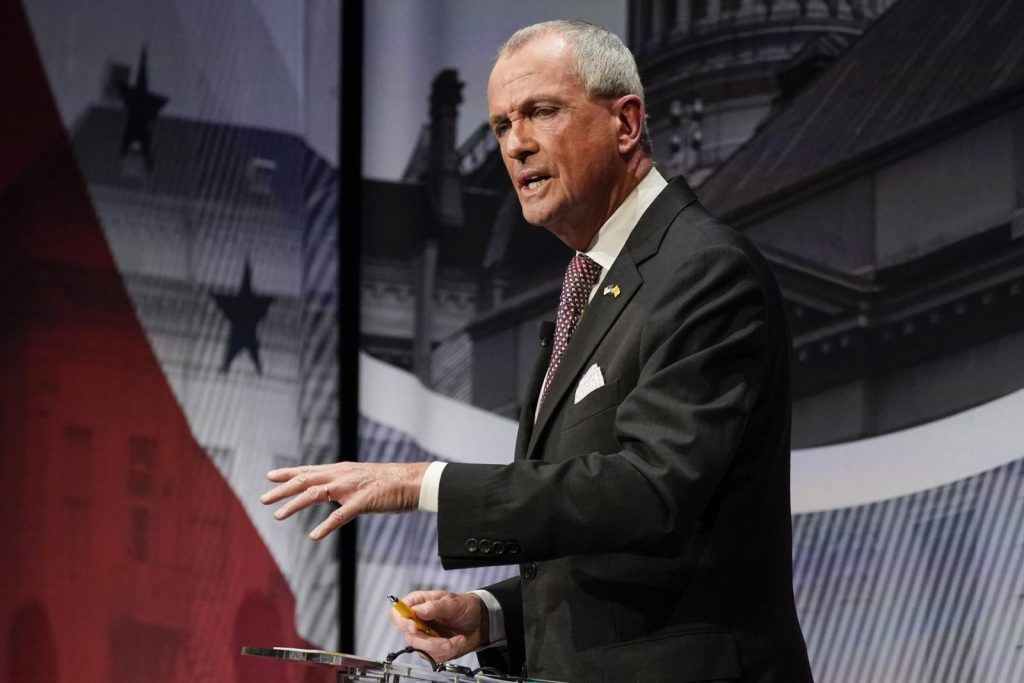
Phil Murphy, 56th governor of New Jersey since 2018.
The State of New Jersey focused more on disrupting out-of-state criminal prosecution. On July 1st, Governor Phil Murphy signed S2642 and S2633. S2642 prevents other states from extraditing individuals who are providing or receiving abortion care and services. S2633 ensures that medical records and physician licenses are protected from states or anti-abortion groups pursuing information for prosecution.
Also, this law prohibits any state employee or agency from cooperating with other states that are pursuing criminal charges related to providing or receiving reproductive healthcare.
Massachusetts

Charlie Baker, 72nd governor of Massachusetts since 2015.
The Massachusetts Republican Governor, Charlie Baker, issued an executive order instead of coordinating with state legislature to pass a law. Baker’s Executive Order, which was made effective on June 24th, prohibits executive agencies from assisting other states seeking criminal or civil charges for providing or receiving reproductive health services. The order also protects physicians from losing their license, and prohibits the Governor’s office from extraditing individuals for abortion procedures that are legal in State of Massachusetts.
This executive order may seem more comprehensive in its language, as it has similar criminal protections to New Jersey’s law and civil protections like California’s. However, one can argue that the scope of an executive order is fundamentally prohibited when compared to state or federal legislation. Like President Biden’s executive action, Baker’s order is restricted to employees in executive departments. It fails to include a comprehensive state employee restriction like the legislation enacted in New Jersey. Also, executive orders can be easily reversed when a new administration takes office, unlike legislation that requires a majority vote.
Despite these efforts to protect individuals from the wave of restrictions that Republican states are implementing, President Biden’s observations on the most effective measure still stands. Congress must pass a national law that prevents Republican state’s from prohibiting access to abortion and reproductive health care. Calling your U.S Congressional representatives and demanding laws protecting reproductive rights is essential. Donating to the ACLU and Planned Parenthood will help coordinate legal action and national advocacy for better universal reproductive rights.
Engagement Resources
Click or tap on resource URL to visit links where available


The Ukraine Crisis #10
Situation Update: The Ukraine Crisis #10
Foreign Policy Brief #141 | By: Abran C | July 12, 2022
Header photo taken from: The Atlantic
Follow us on our social media platforms above
Browse more enivornmental policy briefs from the top dashboard

Photo taken from: Business Today
Policy Summary
[SSB theme=”Official” align=”center” counter=”true” ]
As fighting continues to rage in Ukraine’s East, Russian President Putin on Monday, July 4th, 2022 declared victory in the region of Luhansk, only one day after Ukrainian forces withdrew from their last remaining bastion of resistance in the province, the city of Severodonetsk, which is now in Russian hands.
A Ukrainian military assessment earlier last week noted that Russian forces will “now almost certainly” switch full gear to capturing the second Eastern breakaway region of Donetsk to complete their takeover of the Donbas, which Putin had promised to “liberate” as the pretext for war. The OHCHR now confirms that 4,889 civilians were killed in the five months of fighting, with the true number likely to be far higher.
Two weeks ago, both the G7 and NATO summits were held and the war in Ukraine loomed large over both gatherings. NATO heads of state came together on June 30, 2022, in a rare wartime meeting to present a unified front against Russia and in support of Ukraine. Turkey dropped its opposition to Finland and Sweden joining and both were formally invited into the alliance, increasing NATO’s border with Russia by 830 miles.
President Joe Biden announced that the United States would establish a permanent military base in Poland. This marks the first time the US has created a permanent a base anywhere on NATO’s eastern flank, which until now has only had a rotating troop presence. NATO also invited the leaders of Japan, South Korea, New Zealand, and Australia to the summit for the first time to engage in consultations against what they see as the growing threat of China.
Later that week, G7 leaders met to confront the global economic fallout of the pandemic and the war. Leaders promised up to $29.5 billion for 2022 to help Ukraine ease its financial gap brought on by the war and committed to tighter sanctions on Russia.
Policy Analysis
Five months into the war and there is still not an end in sight. To plan for the future, it is an important question to ask as we continue to analyze the current situation, What are the likely future consequences for Russia and Ukraine?
Russia’s invasion has undoubtedly caused tension in the international community, pitting great powers against each other and forcing countries in the global south to take sides in a war between common trade partners. During the G20 summit late last week, the Russian foreign minister Sergei Lavrov was received coldly by Western leaders who refused to meet with the Russian minister, even refusing to be in a group photo with Lavrov in it.
The Russian minister later left the G20 meeting after being accused of sparking the global food crisis. Russia throughout the war has had to contend with political isolation, everything from private businesses to governments cutting ties, and unanimous global condemnation at the UN.
Ukraine conversely has been welcomed by the international community, and reached the first step of its goal to join the EU since it’s 2014 revolution that overthrew the then president Viktor Yanukovych who shunned the EU. Additionally both Sweden and Finland were formally invited to join NATO. The addition of an 800 mile border between NATO and Russia is likely to leave a thorn in Russia’s side long after the war.

Photo taken from: Sky News
(click or tap to enlargen)

Photo taken from: PBS
(click or tap to enlargen)
The expansion of NATO was a key issue for Putin. He sought assurances from the alliance before the invasion as a pretext to avoid the war. Now his biggest fear has come to pass. This will undoubtedly cause more tension. As NATO expands, so will Russia’s anxieties. It has already announced that it will seek to move ‘powerful’ weapons closer to the US and has moved closer to China to help rival the US and NATO.
Though Ukrainian leaders have stated they would regain all stolen territory it is unlikely that Ukraine will retain its Eastern Donbas region and the Crimean peninsula. Both territories are likely to be used as concessions by Ukraine and the West for an end to the war, and as trophies for Putin to present to a wary Russian public.
The cost of the war is not only measured in the square miles conceded but the number of lives lost, so far nearly 4,900 civilians are known to have been killed. Those who come after, the children of this war who may have lost their parents, their homes, or both, will not soon forget the aggression committed against them.
We can assume a future in which movements are led by Ukrainians who seek to regain their lost territories, and to bring Russian war crimes to justice on the international stage such as at the International Criminal court. Russia’s image has been stained by the war, not only by those who condemn it, also by those who once saw it as a great global military power that now cannot defeat the civilians taking up arms against it.
Similarly the hardship faced by Russians due to sanctions and war if not only projected onto their government will also be directed at the West, leaving behind an increasingly polarized Europe. Regardless of the near-term outcomes of the war, animosities between the two countries and two peoples are likely to continue to remain escalated for years and decades to come.

Photo taken from: Shutterstock
Economic contraction is a certainty for both countries in the near future. Thus far, the West has kept up economic pressure against Russia and is making plans to ween Europe off of Russian energy. Though sanctions have not yet helped bring an end to the war, they have taken a heavy toll on the Russian economy and will do so for some time.
Russia has benefited from the recent spike in price of oil, yet still in late June, it defaulted on its external sovereign debt for the first time since 1918. Though Russia has the money to pay, it lacked the ability to do so due to sanctions. This economic isolation coupled with double-digit inflation and the worst recession in years paints a clear image to us that Russia’s economic future looks turbulent and harsh which may endanger Putin’s rule, something the West has hinted that it hopes comes to pass.
The Ukrainian economy is also understandably fairing poorly, it is predicted to shrink by nearly 50% this year and so far the war has cost Ukraine up to $600 billion. However, on June 23, 2022 Ukraine was awarded with EU candidate status, which comes with the promise of joining the large and powerful EU single market. Additionally, at the G7 summit, German Chancellor Olaf Scholz called for a ‘Marshall Plan for Ukraine’ to aid reconstruction during the post-war period. He stated, “Just like war-scarred Europe then, Ukraine today needs a Marshall plan to rebuild”. So even though Ukraine’s near term future will most certainly be bleak, there are glimmers of hope at a future in a post-war reconstructed and peaceful Ukraine.

SCOTUS Tightens its Noose Around Another Federal Agency: the EPA
SCOTUS Tightens its Noose Around Another Federal Agency: the EPA
Environment Policy Brief #144 | By: Todd J. Broadman | July 9, 2022
Header photo taken from: epa.gov
Follow us on our social media platforms above
Browse more environmental policy briefs from the top dashboard

Photo taken from: CNBC / Spencer Platt | Getty Images
Policy Summary
[SSB theme=”Official” align=”center” counter=”true” ]
The recent SCOTUS decision in the West Virginia vs. EPA case, though not unexpected, is further support for a clear ideological direction underway at the Court. The case was brought by several Attorney Generals along with mining industry plaintiffs from major coal producing states. The 6-to-3 decision in favor of the plaintiffs applies directly to the EPA’s authority to regulate the carbon emissions of power plants under the (Obama) 2015 Clean Power Plan. In the majority opinion, Justice Roberts emphasized that the EPA does not have the explicit authority to force power plant operators to eliminate or otherwise change their fuel source. In this instance, the elimination of coal in favor or less polluting sources.
The significance of the Clean Power rule is that it recognizes the process of generating electricity by utilities is the second major source of greenhouse gases behind transportation. Going back to 2007 and the SCOTUS case Massachusetts v. EPA, the agency’s right to regulate greenhouse gases was established under the Clean Air Act.
In a sense, this ruling is pre-emptive because the EPA had not yet implemented its intention to force the industry to change its fuel sources. The threat of the EPA doing so was enough to trigger the lawsuit. This lawsuit is the unfolding of a deeper form of conservative activism aimed at overturning “legal doctrine by which Congress has delegated authority to federal agencies to regulate the environment, health care, workplace safety, telecommunications, the financial sector and more.”
Senate minority leader Mitch McConnell has been at the center of this strategy to curtail government regulation at the EPA and other federal agencies; a strategy that has used every opportunity to stack the judiciary with like-minded conservatives. The coal industry in his home state of Kentucky is symbolic of the values that are making their way before the bench. Under Trump, McConnell and the considerable resources of the Federalist Society and similar conservative action groups were able to maneuver into place three Supreme Court justices, 54 appeals court judges, and 174 district court judges. To date, President Biden has appointed 68 federal judges.
To be sure, this ruling does not impede the EPA’s authority to regulate pollution under Section 111, but does, according to Andres Restrepo, a senior attorney at the Sierra Club, “remove the most important tool that EPA had in its tool kit.” And while EPA regulations on carbon dioxide emissions from cars and trucks, as well as methane emissions from oil and gas infrastructure remain intact, this Supreme Court ruling invites further legal challenges from industries who feel unfairly regulated.
As Michael Oppenheimer, professor of geosciences at Princeton University, commented: “If the Supreme Court uses this as an opportunity to really squash EPA’s ability to regulate on climate change, it will seriously impede U.S. progress toward solving the problem.”
Policy Analysis
This ruling adds another obstacle to an already chaotic political landscape when it comes to changes necessary to address global climate and planet-wide environmental cataclysm.
Rather than lead the world as a model of practical action that reduces CO2 emissions, the U.S. judiciary is essentially endorsing the idea that corporations know best how to regulate and in the absence of detailed legislation they must be trusted to do so. Similar cases are presently making their way through the federal courts with the aim of blocking the government’s ability to regulate pollution. “Attorney Generals’ strategies are becoming more and more sophisticated,” according to Paul Nolette, professor of political science at Marquette University. They act in fear of the “deep state.”
The Biden administration has good reason to be disappointed in this ruling, yet at the same time may see this as an opportunity to confess their own contradictory and inconsistent climate policies: on the one hand declaring that all utilities be powered by sustainable energy by 2035, and on the other, approving a record number of oil drilling leases. The ambition to halve greenhouse gases by 2030 is now plainly impractical. All of this while the nooses around the necks of regulating agencies will continue to tighten.

Photo taken from: Chip Somodevilla / Getty Images
(click or tap to enlargen)
In Judge Elena Kagan’s dissenting opinion (joined by Justices Stephen Breyer and Sonia Sotomayor), she sounded the alarm bells: “Whatever else this Court may know about, it does not have a clue about how to address climate change.” Authority is being stripped from the field experts is the sobering conclusion. “The Court appoints itself — instead of Congress or the expert agency — the decision maker on climate policy. I cannot think of many things more frightening.”
Existing EPA rules that regulate sulfur dioxides or particulates, regulations which were not contested in this case, are sufficiently expensive for coal burning utilities to convert their operations to natural gas and those conversions are expected to continue. The primary driver though is economics; natural gas is cheaper to use and provides over 35% of U.S. electric generation. But natural gas too is a climate menace and is being replaced with wind, solar, and nuclear.
The conversions though, are not happening fast enough to meet carbon cap goals. If nothing else, this case lays bare that our branches of government refuse to agree and coordinate their actions to achieve long-term environmental wins. Portending the dysfunction to come, Sally Katzen, co-director of the Legislative and Regulatory Process Clinic at New York University School of Law, opined that, “I don’t think this is the culmination of their [conservative action groups] agenda. I think it’s just the beginning.”
Engagement Resources
Click or tap on resource URL to visit links where available

https://eelp.law.harvard.edu/ is an environmental research program within Harvard Law School with a team of expert attorneys, staff, and student research assistants that track and analyze policy developments, legal actions, and court decisions.

https://www.scotusblog.com/ is devoted to covering the U.S. Supreme Court comprehensively, without bias and according to the highest journalistic and legal ethical standards. The blog is provided as a public service.

https://www.utilitydive.com/ provides in-depth journalism and insight into the most impactful news and trends shaping the utility industry.
Representative Boebert’s “Separation of Church and State
Representative Boebert’s “Separation of Church and State” Comment Misinformed And Historically Inaccurate
Civil Rights Policy Brief #191 | By: Rodney A. Maggay | July 2022
Header photo taken from: The Washington Post
Follow us on our social media platforms above
Browse more civil rights policy briefs from the top dashboard

Photo taken from: WND
Policy Summary
[SSB theme=”Official” align=”center” counter=”true” ]
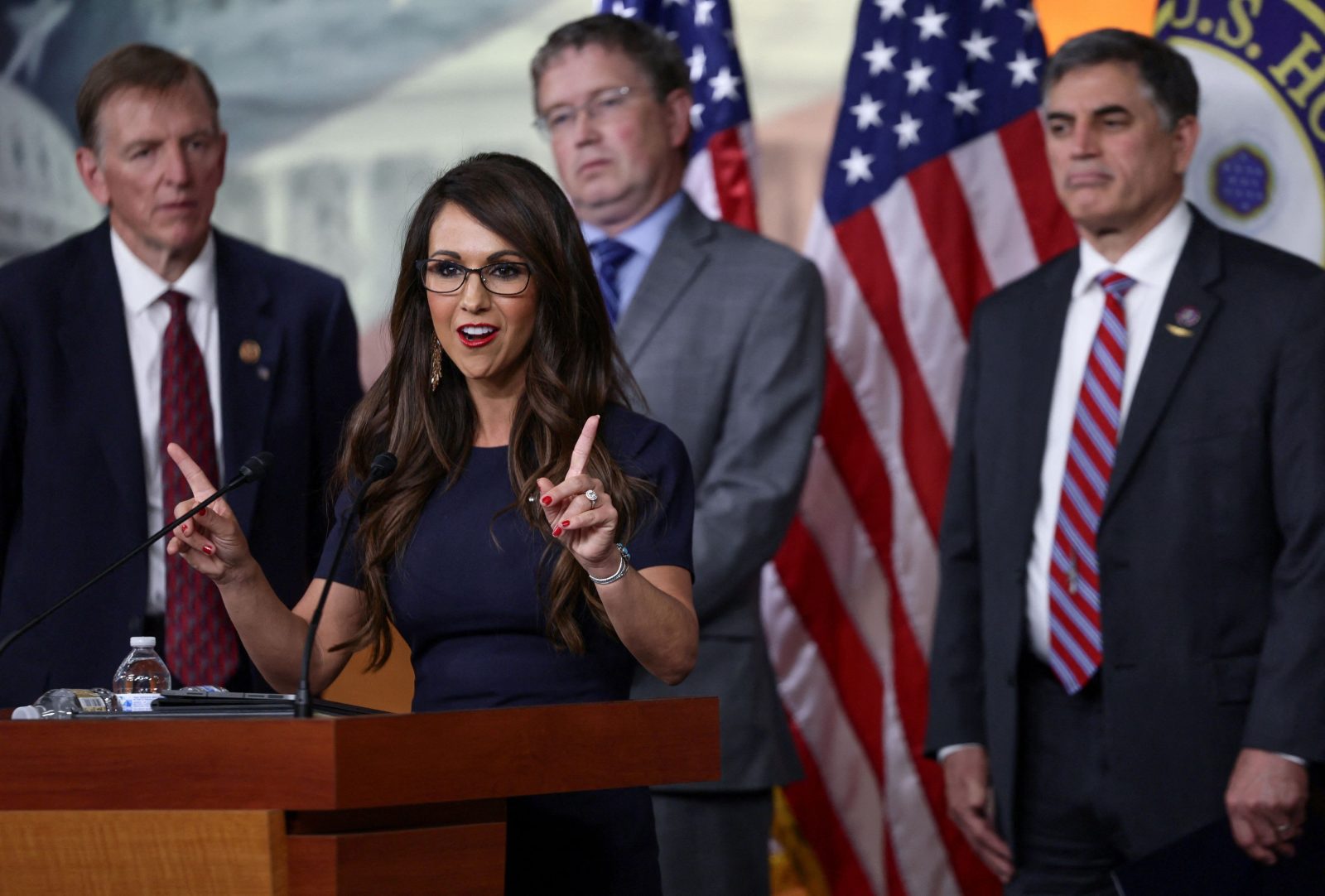
On June 26, 2022, Representative Lauren Boebert (R-CO) made remarks at the Cornerstone Christian Center in Basalt, Colorado about the role of religion and government in the United States. Representative Boebert stated, “The church is supposed to direct the government. The government is not supposed to direct the church. That is not how our Founding Fathers intended it.” She continued by stating “I’m tired of this separation of church and state junk – that’s not in the Constitution. It was in a stinking letter and it means nothing like they say it does.”
The comments were heavily criticized not just from politicians but also from American citizens from all walks of life. On June 29, 2022 Representative Adam Kinzinger (R-IL) responded and blasted Representative Boebert for her comments. In a tweet posted to his Twitter account that was posted with a picture of Ms. Boebert, Representative Kinzinger said, “There is no difference between this and the Taliban.
“We must [be] opposed [to] the Christian Taliban. I say this as a Christian.” The mention of the Taliban is a reference to the currently ruling government of Afghanistan and its establishment of Islam as the religion of the state. The phrase Christian Taliban likely implies that Representative Boebert’s comments support a state mandated Christian religion in the United States similar to how the Taliban have declared Islam as the state religion in Afghanistan.
The Establishment Clause of the First Amendment to the United States Constitution provides “Congress shall make no law respecting an establishment of religion[.]” LEARN MORE, LEARN MORE
Policy Analysis
Representative Boebert’s remarks, which received applause from the crowd, is incredibly ignorant of the history of the First Amendment and the Establishment Clause and the goals that the Founding Fathers, specifically Thomas Jefferson and James Madison, had for this particular clause.
When Ms. Boebert mentioned the “stinking letter” in her comments she was very likely referring to a letter Thomas Jefferson wrote to the Danbury Baptists Association in 1802. In that letter, President Jefferson assured the association that there was “a wall of separation between Church and State.” President Jefferson wanted to reassure the group that the government would not interfere with their religious affairs and that the government would not give favor to any other religion. But because the words “separation of church and state” appear in this personal letter and nowhere in the U.S. Constitution, religious conservatives claim this is evidence that there was never any intent for the church and the state to be separate.
But this claim by religious conservatives is completely wrong and there is overwhelming evidence that the intent of the Founding Fathers was a strict separation of church and state.
In 1777 Thomas Jefferson wrote the Virginia Statute for Religious Freedom. That statute provides that no person can be forced to attend any church or even be forced to support any church with his taxes. And, it provides that any man is free to worship as he pleases with no discrimination. However, Virginia did not pass the statute at that time. In 1786, James Madison revived Jefferson’s bill in order to defeat another bill that would have required Virginia taxpayers to support a Christian church. Additionally, Madison also wrote a long document advocating for the strict separation of church and state titled “Memorial and Remonstrance Against Religious Assessments.” What is clear is that James Madison and Thomas Jefferson both favored the doctrine of a separation of church and state even if they did not use those exact words at the time. And since James Madison subsequently authored the Bill of Rights to the U.S. Constitution, including the Establishment Clause embodied in the First Amendment, it is clear that a strict separation of church and state was the intent of the Founding Fathers in the 1780’s.
This background has helped inform the development of the Establishment Clause down through the modern day. With only ten words the clause has been remarkably durable in standing for the doctrine of a separation of church and state. Through the years, the Supreme Court has interpreted the clause to strike down state laws requiring the recitation of school prayer in public schools, moments of silence for private prayer in public schools and the recitation of prayers before other school events such as graduations and athletic contests. The Court has even relied on the clause to prohibit the display of religious symbols such as the Ten Commandments on state grounds such as a courthouse.

Photo taken from: The Hill
(click or tap to enlargen)
The key for the Court in these cases under an Establishment Clause challenge was in determining whether a state law had a secular purpose or was enacted solely to promote or inhibit religion. Promoting or inhibiting religion would be enough to render a statute void. In the 1947 case Everson v. Board of Education Justice Hugo Black said it best when he stated, “The ‘establishment of religion’ clause of the First Amendment means…[n]either can pass laws which aid one religion, aid all religions, or prefer one religion over another.”
So, despite overwhelming evidence that there was an intent for a “wall of separation” why do religious conservatives ignore the history of cases at the Supreme Court and also claim Jefferson’s 1802 letter as evidence that the government and the church should not be separate? By trying to claim Jefferson’s letter as proof, religious conservatives find it easier to dismiss the concept that there is a separation of church and state. This would then permit them to propose laws that are more in line with Christian thought without having to deal with the possibility that their laws would be declared void because of the Establishment Clause. People on the religious right want nothing more than to have Christianity declared as the official religion of the United States.
But that ignores the fact that there are other religions and sects in the U.S. Declaring Christianity as the only religion the U.S. Government supports would exclude millions of people who practice different faiths and hold different religious values. Representative Kinzinger’s response was very likely alluding to the dangers of a state sponsored religion when he suggested Representative Boebert’s wish for more religion in government policies would be the introduction of a “Christian Taliban” in the U.S.

Photo taken from: Business Insider
But while it might be easy to dismiss Representative Boebert’s comments as being uninformed, recent incidents in the U.S. show that she is not alone in trying to propose a Christian worldview on official government policy. Just this week in Florida, Florida parents and educators raised concerns of new Christian nationalist teachings put into public school lessons in revised civics studies. In 2015, the Idaho GOP proposed to have Idaho declared a Christian state. And, there have been numerous incidents where legislators have proposed more prayer and more God in public schools to deal with a myriad of problems such as school shootings, unwed and teenage mothers and student drug abuse.
These politicians do not understand, or do not want to understand, that there is a clear separation of the government and the church. It seems probable that these politicians are simply ignoring what the First Amendment and the Establishment Clause provide in order to try and impose a Christian worldview on government activities. The United States was founded with the intent that all religious faiths, beliefs and sects would be tolerated and that the U.S. Government would not favor or aid any one religion above all others. Representative Kinzinger was right in calling out Representative Boebert’s uninformed comments and the historical evidence clearly shows that Ms. Boebert was simply wrong in calling the separation of church and state “junk.” LEARN MORE, LEARN MORE
Engagement Resources
Click or tap on resource URL to visit links where available

The Free Speech Center at Middle Tennessee State University – article explaining James Madison’s “Memorial and Remonstrance Against Religious Assessments” document and Madison’s views on religious liberty.

Freedom From Religion Foundation – news release from non – profit group on Representative Boebert’s controversial comments.

Americans United for Separation of Church and State – news release from non – profit group investigating White Christian Nationalism teaching in Florida school curriculum.

Future of Abortion Medication and Women’s Equality: Look to Europe
Future of Abortion Medication and Women’s Equality: Look to Europe
Health and Gender Policy Brief #154 | By: Geoffrey Small | July 6, 2022
Header photo taken from: EURACTIV
Follow us on our social media platforms above
Browse more health and gender policy briefs from the top dashboard

Photo taken from: AFP / Twitter
Policy Summary
[SSB theme=”Official” align=”center” counter=”true” ]
On June 24, 2022, the U.S. Supreme Court overturned the landmark ruling and protections for abortion rights, Roe v. Wade. Recent polls indicate that the majority of U.S. citizens oppose this ruling, because it infringes upon women’s equality and their right to choose. This Supreme Court decision has made a seismic impact on accessibility to procedures that were previously available for generations of women. According to the Guttmacher Institute, 42 states have already enacted 541 restrictions and 11 states have legislated abortion bans since the beginning of 2022.
Some state laws, like Mississippi’s Gestational Age Act, ban clinical abortion procedures after 15 weeks. These restrictions are just the beginning, as Republican states are now targeting the growing accessibility of abortion medications. In order to understand the future of abortion legislation and accessibility, one can look to studies conducted in European countries, where abortion medication was made available over a decade before the United States. The European Union has a public perception of being a hub for progressive values and institutions.
However, further analysis of European countries’ access to abortion medication, when correlated with their societal values on women’s equality and activism, paint a more complicated picture. This insight can help determine the potential outcome on widespread restrictions that can take place in the United States if the public doesn’t take action.
Policy Analysis

Photo taken from: The Guttmacher Institute
The Guttmacher data analysis illustrated above highlights that, since their legalization in 2000, medication-based abortions account over half of abortion procedures in the United States. A recent ACLU legal victory in 2021 over the FDA has led to unprecedented access to abortion medicatations.
Women are now able to legally receive the medication through the mail via a Telehealth consultation from a licensed physician. This victory may be temporary. Republican states, now emboldened by the overturned Supreme Court ruling, are targeting abortion medication through additional restrictions and bans.
The future of abortion accessibility in the U.S. may be uncertain. However, analysis of abortion policy in European countries can provide some insight. A Bielefeld University study from Germany correlates European countries’ abortion medication accessibility with their societal perspectives on equal representation through participation.

Photo taken from: Bielefeld University’s Medical abortion ratios and gender equality in Europe: an ecological correlation study
(click or tap to enlargen)
The data shown above highlights the disparities between European countries that promote progressive reproductive health practices, gender equality, and feminist movements and countries that are more conservative. The German University study assessed these values by collecting multiple ratings on gender equality conducted by the U.N, Social Watch, and the World Economic Forum.
The ratings were then correlated with each European countries’ ratios on abortion medication availability. As illustrated, countries like the ones located in the Scandinavian region have better access to abortion medications because their institutions encourage feminist activism and reproductive rights. When you look at a country like Spain, heavily rooted in Catholicism and less progressive overall, abortion medication is more restricted.
The data is an ominous sign for the future of abortion rights in the United States. Kentucky, South Dakota, and Tennessee have already enacted state abortion medication restrictions. These states can arguably be characterized as religiously conservative supporting institutions that repress reproductive rights. The U.S. may be entering a downward spiral where states that are legalizing these restrictions are simultaneously preventing a women’s right to choose and to have a voice politically with the legislation they pass.
There is hope with recent ACLU legal victories supportingabortion and a woman’s right to choose.. Therefore, it is critical that the public coordinate their response and donate to the ACLU and Planned Parenthood in order to challenge the growing legislative restrictions that Republican states are attempting to implement.
Engagement Resources
Click or tap on resource URL to visit links where available

It’s Time to Declare Independence from America’s Two Political Parties
It’s Time to Declare Independence from America’s Two Political Parties
U.S. Resist News Op Ed | By: John Halpin | July 5, 2022
Header photo taken from: Politico
Follow us on our social media platforms above
Browse more U.S. Resist News Op Eds from the top dashboard

Photo taken from: National Archives
[SSB theme=”Official” align=”center” counter=”true” ]
Nothing ever changes with America’s broken political system. Despite reams of evidence that an increasing proportion of voters despise both political parties and want to see internal changes or alternative party choices, neither Democrats nor Republicans have gotten the message.
Republicans vie to elevate the dimmest bulbs in the country to office, pledging loyalty to a corrupt former president who actively sought to overturn an election he lost. In turn, Democrats vie to elevate those who live in a fantasy world where things like high gas prices or violent crime aren’t real problems while mystical structural forces and improper language use are keeping Americans in a permanent state of oppression.
Normal Americans—a mix of traditional conservatives, liberals, and moderates—look at the two parties and just shake their heads. Out to lunch. Whack jobs. Extremists. Arrogant blowhards. Clowns who don’t understand my life. They’re right. The two parties have failed to adequately represent the views of ideologically unaligned Americans. And the two parties don’t particularly care to change this situation as they make yet another call to the partisan ramparts ahead of the 2022 elections.
Pundits like to say we are a nation divided between red and blue, separated along partisan lines over abortion, guns, gender, climate, and economic issues. In reality, America is a 30-30-40 nation split between partisan diehards on the left and right and a large pool of people who don’t fit into either one of these categories.
According to Gallup trend data, no more than 3 in 10 Americans today identify as either a Democrat or Republican, respectively, while roughly 4 in 10 call themselves Independent with equal proportions of these voters leaning Democratic and Republican when forced to choose.

Table taken from: Gallup, The Liberal Patriot
There’s vast unoccupied terrain in American politics with lots of unrepresented voters. A political party that chooses to inhabit this middle space on both economic and cultural issues will certainly reap electoral benefits. Alternatively, party leaders who shun this middle ground should expect more and more Americans to ignore their pitches and reject their candidates.
A successful political future that truly represents all Americans will be less doctrinaire, more independent, and grounded in equal dignity and rights for all peoplewith economic policies that advance America’s interests.

Table taken from: Gallup, The Liberal Patriot
Political scientists argue that this independence is not real and that these voters are just embarrassed by party labels even as they mostly vote one way or another. But what else are self-identified Independents supposed to do? They only get two viable choices, if at all, and the only other option is not to participate.
But imagine if there were two additional parties—one on the center-left and one on the center-right—that were given fair ballot access with resources to compete. Would these Independent voters who lean one way or another bolt given the chance? Probably a good chunk of them would. Or what if we had more competitive districts, open and nonpartisan primaries, and ranked choice voting to help break the “two-party doom loop”? Then we’d have a situation where the two main parties would have to genuinely fight for the middle portion of voters who don’t accept the down-the-line economic and cultural ideologies of the big dogs.
The parties would be forced to be more tolerant of people with different personal views and positions on hot-button issues rather than insisting on fealty across the board. They would need to recruit and field a diverse array of candidates from different backgrounds who are not beholden to ideologically predetermined positions. Perhaps with more competition the parties would adjust their governing visions to better represent a “pro-worker, pro-family, pro-America” centrist agenda that is economically nationalist and culturally moderate.
Unfortunately for America, the two parties aren’t likely to allow for real competition anytime soon.
Ideologically homeless Americans will therefore need to protect themselves and their sanity by declaring independence from the two parties. If the parties won’t voluntarily shift to more sensible positions designed to help all people in all parts of the country succeed, then American voters in the broad middle should take control of their own lives, join forces, and make the two parties come to them.

Congressional Effort to Regulate Internet Algorithms May Impact Efforts that Support Reproductive Rights
Congressional Effort to Regulate Internet Algorithms May Impact Efforts that Support Reproductive Rights
Technology Policy Brief #61 | By: Mindy Spatt | July 6, 2022
Header photo taken from: Los Angeles Times
Follow us on our social media platforms above
Browse more technology policy briefs from the top dashboard

Photo taken from: The Tribune Content Agency
Policy Summary
[SSB theme=”Official” align=”center” counter=”true” ]
According to a US Surgeon General’s advisory, online misinformation is dangerous to our health. Abortion advocates agree. So does my pregnant daughter whose Tik Tok and Instagram are filled with horror stories of premature births and preeclampsia that just exacerbate the normal anxieties that come with being pregnant. According to a recent LA Times article she is not alone. The Times interviewed pregnant women about their social media use and found that “Across the country and around the world, pregnant women are finding themselves pummeled on social media with video after video about the most terrifying aspects of pregnancy”.
Algorithms, those mysterious inner workings that enable Facebook, Google and other online companies to relentlessly target us with content and ads based on our past searches and activities, are increasingly the determinants of what we see on our phones, tablets and computers. And it’s gone beyond just selling products.
Knowing you are pregnant algorithms send you not only diaper sales but also but also disaster stories. Knowing you are house hunting, algorithms send you apartments and houses, but also likely contribute to redlining. Advocates for marginalized communities say algorithms are impacting access to housing and jobs by, for example, directing people of color to certain neighborhoods or professions.
To combat some of these issues, Representative Yvette D. Clarke, D-N.Y., with U.S. Senator Ron Wyden, D-Ore., and Senator Cory Booker, D-N.J., have introduced the Algorithmic Accountability Act of 2022, which they describe as “a landmark bill to bring new transparency and oversight of software, algorithms and other automated systems that are used to make critical decisions about nearly every aspect of Americans’ lives.”
Policy Analysis
The bill requires companies to conduct impact assessments for bias, effectiveness and other factors when using automated decision systems (algorithms) to determine what content they feed to users. It would also make it illegal for platforms to segregate or discriminate in their treatment of data on the basis of race, ethnicity, gender identity, religious belief, sexual orientation, disability status, immigration status, and other categories.
The effort is supported by numerous established nonprofit advocacy organizations including the National Hispanic Media Coalition (NHMC), Consumer Reports, Public Knowledge and Color of Change.
Arisha Hatch, Vice President and Chief of Campaigns at Color of Change, said “When bias in algorithms goes unchecked, Black people are subjected to discrimination in healthcare, housing, education, and employment — impacting nearly all parts of our lives. In order to reduce the impact of this bias, Big Tech and their operations must proactively detect and address discrimination.” She added that “Companies conducting their own audits is a first step but prevention will be key.”

Photo taken from: bankinfosecurity.com
It is hard to imagine that the bill won’t face stiff opposition. Algorithms are at the core of every profitable digital platform. And while critics may say this legislation doesn’t go far enough it is likely to encounter strict opposition from Facebook, Google and other companies that have vociferously fought any sort of public accountability.
The shady data broker industry, now estimated to be raking in about $200 billion annually from information gleaned from our phones, searches and social media posts, surely doesn’t want to see anything change.
While Public Knowledge supports the bill its’ blog posts note that privacy protections are equally important, perhaps even more so, since ultimately the less that data is collected the less that data can be misused.
That is certainly the case as the battle over abortion access is increasingly moving online. In post-Roe America patients needing abortions in states where it is illegal will have no place other than the Internet to go to find services and access doctors and medication. That data could result in prosecution of both patient and doctor in some states.
Abortion foes have taken advantage of algorithms in the past to push their fake Pregnancy Crisis Centers to pop up when the user is actually searching for an abortion provider. Google now says these ads will be flagged to note that they don’t provide abortions but activists are saying they will remain vigilant. And we can assume the pregnancy center ads are just as unwanted by someone seeking an abortion as the pregnancy horror stories are by my daughter.
Engagement Resources
Click or tap on resource URL to visit links where available

Take Action: Tell Congress to Protect Our Personal Information https://www.votervoice.net/PublicKnowledge/campaigns/90100/respond

Learn more: For Pregnant Women, the Internet Can Be a Nightmare By BRIAN CONTRERAS, May 25, 2022 https://www.latimes.com/business/technology/story/2022-05-25/for-pregnant-women-the-internet-can-be-a-nightmare

Google Improves Flagging of Fake Abortion Clinic Ads
By CARRIE N. BAKER, 6/14/2022
https://msmagazine.com/2022/06/14/google-fake-abortion-clinic-ads/

Cataloging the Harms of Algorithmic Decision Making By Lisa Macpherson and Antoine Prince Albert III, March 9, 2022

Changes in Google Cookie Policy Could Help Improve Consumer Privacy
Changes in Google Cookie Policy Could Help Improve Consumer Privacy
Technology Policy Brief #60 | By: Christopher Quinn | July 5, 2022
Header photo taken from: DIGIT
Follow us on our social media platforms above
Browse more technology policy briefs from the top dashboard

Photo taken from: Tam Nguyen / Ad Age
Policy Summary
[SSB theme=”Official” align=”center” counter=”true” ]
In 2023 Google Chrome is phasing out third party cookies. What this means is the entire global browser market will no longer track users’ every move across the web. Safari, Firefox and Brave already block third-party cookies by default to protect users’ privacy. Google Chrome currently holds 64.9 percent of the global browsing market.
Cookies are tiny, but crucial, identifiers that track internet users’ activities across the web.
They help advertisers target ads and measure the effectiveness of their marketing campaigns.
The following is a list of what information cookies can hold:
- The amount of time you spend on a website
- The links you click while visiting the website
- The options, preferences or settings you choose
- Accounts you log into.
- Recording which pages you’ve visited in the past
- Items in shopping basket
They’ve become one of the central technologies underpinning the business model of publishing on the web. Ever notice when you open a website, there often is a 2-3 sentence blurb that says the site uses cookies and asks you to accept. If you do accept you are given the site license to share your privacy information with advertisers
Policy Analysis
The death of third-party cookies comes at a time of widespread backlash against advertisers’ digital surveillance. The public has become increasingly vocal about its discomfort with ad tracking.
Europe’s landmark digital privacy (Directive on Privacy and Electronic Communications) otherwise known as The Cookie Law) passed initially in 2002 and added additional directives in 2011. The directives recognize the need for cookies to create the personalized online universe we enjoy today, but also makes it clear that cookies could be considered an invasion of privacy and that users deserve the right to be made aware of the presence of cookies and their usage.
Certain cookies that are considered “strictly necessary for the delivery of a service requested by the user” don’t have to be declared, because they are of far higher benefit to the user than the company.
This includes cookies used to track shopping carts in e-commerce and important logon information that the user requires.
Apple, sensing an opportunity to market itself as the privacy-friendly tech giant, has announced software updates that will make it much harder for advertisers to track what users do in apps and mobile browsers.
Google’s plan is to provide a set of APIs that will offer aggravated data, similar to what the third-party cookies of today offer.

Photo taken from: Quartz
(click or tap to enlargen)
Brands will be able to use the APIs, but instead of being specific to any one person, the data will be more like a sample of similar kinds of people.
For example, if today a brand is using data to better target John Doe, a 28 year old male in Louisville, by 2023, they’ll be working from a sample set of data that can target people similar to John Doe in terms of age, gender, and geography, but not specifically John Doe himself.
Essentially they’re planning to remove explicit tracking and rely on a more cohort-based option instead. When it comes to marketing, the term cohort refers to specific experiences, events, or other factors shared by a group of consumers according to Google.
Google says it will be effective, marketers and advertisers seem less convinced.
Until the changes take effect, marketers are going to have to find other ways of gathering and handling prospect data to ensure they’ve got coverage.
The internet is now at an inflection point. Industry groups representing advertisers, agencies, browsers and publishers are scrambling to come up with alternatives to the old methods of invasive personal tracking.
The decisions they make over the next year will have widespread implications for the future of privacy on the web and how the businesses that operate on the internet carve up the spoils of the 336 billion dollar digital advertising industry.
Engagement Resources
Click or tap on resource URL to visit links where available

https://blog.google/products/chrome/updated-timeline-privacy-sandbox-milestones/

Analyzing the Implications of the Dissolution of the Israeli Knesset
Analyzing the Implications of the Dissolution of the Israeli Knesset
Foreign Policy Brief #140 | By: Ian Milden | July 5, 2022
Header photo taken from: AP News
Follow us on our social media platforms above
Browse more foreign policy briefs from the top dashboard

Photo taken from: The Wall Street Journal
Policy Summary
[SSB theme=”Official” align=”center” counter=”true” ]
On June 22nd, Prime Minister Naftali Bennett announced plans to dissolve the Knesset, Israel’s parliament. This means that a snap election will be held this fall. This will be the fifth election in Israel in under four years. Bennett, a conservative, stepped down and his coalition partner, Foreign Minister Yair Lapid, was selected to be the interim Prime Minister until new elections are held. Lapid, a centrist, was supposed to become the Prime Minister after two years if the coalition survived that long. The Knesset was dissolved on June 30th.
Policy Analysis
The governing coalition in the Knesset came together because all members of the coalition wanted someone other than Benjamin Netanyahu in the Prime Minister role and a broad ideological coalition was the only way to achieve that. The coalition was composed of Israeli moderates, liberals, Arab parties, and conservatives who were disgusted with Netanyahu’s corruption and style of governing. Netanyahu is facing multiple corruption charges from cases that have been public for years. He has remained in the Knesset as the opposition leader.
The coalition collapsed because of its inability to agree on major policy issues with the policy on the West Bank being the breaking point. Members of the coalition threatened to withhold support over positions that they did not like leaving the Israeli government unable to make significant policy changes on many policy issues. This coalition was formed because it was the only way to establish a government without Netanyahu as Prime Minister.
The election will take place on November 1st. Netanyahu remains the leader of his Likud Party and three religious right-wing parties continue to support him. In the past few elections, this group of four parties has not been large enough to give Netanyahu a stable majority, but it was large enough to prevent anyone else from forming a majority in the Knesset until the coalition that just collapsed was formed last year. There do not appear to be any significant challenges to Netanyahu’s leadership within the Likud Party at the moment.
It’s hard to say what the results of this fall’s election might be. Complicating matters is Netanyahu’s corruption trial, which remains ongoing and may not finish by the time the election occurs due to the judicial system’s summer recess.

Photo taken from: The Times of Israel
(click or tap to enlargen)
If the trial does not conclude, Netanyahu could form a coalition if his supporters win enough seats by capitalizing on anti-Arab sentiment or if his party gets additional seats due to an opposition party not meeting the 3.5% viability threshold. Many of Naftali Bennett’s supporters are not happy that he formed a government with Arab parties, which affected policy in a manner that Bennett’s supporters did not like. This dynamic led to Bennett announcing that he would not run in the upcoming election, so there are voters that Netanyahu can try to persuade to support him.
Bennett handed leadership of the Yamina Party to Ayelet Shaked, who has expressed an openness to forming a coalition with Netanyahu. It is unclear how the change in leadership will affect the support for the Yamina Party, an ideologically conservative party, in the upcoming election. Arab parties have never been in the governing coalition before, so it is not known how their participation in the previous coalition will affect voter behavior.
Netanyahu becoming Prime Minister again is not guaranteed, even if his corruption trial does not conclude. The election may produce a Knesset where nobody can form a majority coalition. This has been the result of most of the recent elections, which is why there have been so many elections in such a short period of time.
The polls indicate that this is the most likely result if the election were held today. However, the polls do not account for the recent changes with the Yamina Party’s leadership. Yair Lapid could also remain as the Prime Minister, but that will depend on which parties get seats in the Knesset and their willingness to cut a deal with him.
The results of the Israeli elections also have implications for the United States. The United States is being urged by the European Union to reengage with Iran and reinforce the nuclear agreement that was made in 2015. Any deal between the United States and Iran would have to be structured to deter Iran and Israel from taking unilateral offensive action against each other. Defense Minister Benny Gantz suggested the current government would be interested in participating in talks while Netanyahu has been a vocal opponent of the deal with Iran.
Engagement Resources
Click or tap on resource URL to visit links where available

Jerusalem Post – https://www.jpost.com/

The Times of Israel – https://www.timesofisrael.com/

Haaretz (Israeli newspaper of record) – https://www.haaretz.com/