

JOBS POLICIES, ANALYSIS, AND RESOURCES
Latest Jobs Posts
Checking in on US Senate Races Before Election Day, Part 2
Brief #42 – Elections & Politics
By Ian Milden
Election Day is November 8th. This Brief will take a look at some of the Senate Races I previewed over the summer and early fall and provide some short updates on the state of those races.
Abbott Running Scared: Texas Incumbent Limited Voter Access to Polls Ahead of Midterms
Brief #43 – Elections & Politics
By Abigail Hunt
For the disillusioned and jaded non-conservatives of the Lone Star state, seeing Beto O’Rourke within spitting distance of Greg Abbott in a dead heat for governor thrills our withered-but-still-beating Grinchy little hearts. From 1847 to 1979, with the exception of a few years here and there, Texas was Democratic.
Education Takes a Back Seat in the 2022 Midterms
Brief #57 – Education Policy
By Steve Piazza
Most polls show that 2022 midterm election voters seem to have prioritized the economy over all other issues. Not surprisingly, since it often holds voter interest more than crime, foreign affairs, health, and the environment.
Medicare Drug Prices: Listen to the Organizations that Matter
Brief #148 – Health and Gender Policy
By Geoffrey Small
Understanding these organizations’ assessments on the benefits of reducing drug prices and inflation is necessary during a time when election seasons lead to misleading political rhetoric. Donating to the AARP foundation and the NAACP can help keep Americans informed and balanced when making decisions about the future of health care and senior benefits in the United States.
Checking in on US Senate Races Before Election Day
Brief #40 – Elections & Politics
By Ian Milden
Election Day is November 8th. This brief will take a look at some of the Senate Races I previewed over the summer and provide some short updates on the state of those races.
Why Are China / US Sanctions Such a Big Issue? (Part I – General Sanctions)
Brief #153 – Foreign Policy
By Inijah Quadri
Trade sanctions on the US imposed by China, in the last several years, are a reflection of Beijing’s desire to respond to similar sanctions imposed by America. In particular Chinese sanctions are a reaction to the effects of the trade war that the United States exacerbated during Trump’s presidency.
A Candidate Code of Ethics
U.S. Resist News Op Ed
By Ron Israel Abigail Hunt, Rod Maggay, Geoffrey Small, and Steve Piazza
The US election system, at the core of our democracy is under attack.
Many politicians still refuse to accept the results of the 2020 Presidential election; others refuse to go on record saying they will accept the result of mid-term races where they are candidates. Debates are at a minimum, and campaigns are rife with lies, false statements, and dark money.
Increasing Reports of Voter Intimidation Incidents As Election Day Nears
Brief #196 – Civil Rights
By Rodney A. Maggay
On October 17, 2022 in Mesa, Arizona a couple approached an outdoor voting drop box to deposit their ballots for the upcoming 2022 midterm elections. The couple was legally permitted to drop off their ballots early as Arizona’s early voting period had begun on October 12th.
The Trump Subpoena
Brief #41 – Elections & Politics
By Maureen Darby-Serson
Last week, the January 6th Committee issued a subpoena to former President Donald Trump in one of its most brazen moves to uncover Trump’s involvement in the insurrection that happened early in 2021. This will likely start a long and arduous court fight over whether Trump will actually appear before the committee.


The Supreme Court Weakens The Separation of Church and State With High School Football Coach Decision
The Supreme Court Weakens The Separation of Church And State With High School Football Coach Decision
Civil Rights Policy Brief #190 | By: | June 28, 2022
Header photo taken from: Reuters
Follow us on our social media platforms above
Browse more civil rights policy briefs from the top dashboard

Photo taken from: Americans United for Separation of Church and State
Policy Summary
[SSB theme=”Official” align=”center” counter=”true” ]
Joseph Kennedy was a football high school coach at a public high school in Bremerton, Washington. During his time as a coach in the Bremerton School District Mr. Kennedy had started a routine where he would pray at the fifty – yard line of the football field at the conclusion of the game. It started as small quiet moments but through the years had grown to include many of his players, parents and even players from the opposing team. Mr. Kennedy also conducted pre and post game prayers in the locker rooms with players from the team.
In September 2015, the school district instituted an inquiry into Mr. Kennedy’s activities. The District soon informed him that some of his activities such as prayers in the locker rooms and talks with students that included religious expression and prayer were constitutionally problematic. The school was worried that Mr. Kennedy’s activities were an endorsement of religion while he was engaged in his duties as a public school football coach. The District sought to work with Mr. Kennedy to set clear parameters as to what he could and could not do. Mr. Kennedy ceased some of his religious activities but his attorney later sent a letter that stated that Mr. Kennedy felt compelled to offer a personal post game prayer. After a game on October 26, 2015 where Mr. Kennedy led players in prayer, the District placed Mr. Kennedy on paid administrative leave and prohibited him from team related football activities.
Soon thereafter, Mr. Kennedy filed a lawsuit in the Federal District Court for the Western District of Washington. He alleged violations of the Free Speech and Free Exercise Clause of the First Amendment to the U.S. Constitution. The trial court ruled against Mr. Kennedy and in favor of the Bremerton School District. An appeal to the Court of Appeals for the Ninth Circuit affirmed the trial court. An appeal was taken to the U.S. Supreme Court, which was denied in 2019. The case went back to the trial court which led to another trial and another appeal at the Ninth Circuit which ruled against Mr. Kennedy again. A second appeal was made to the U.S. Supreme Court. On June 27, 2022 the Court ruled 6 – 3 that Mr. Kennedy’s rights under the Free Speech and Free Exercise Clauses were violated. LEARN MORE
Policy Analysis
In a Supreme Court term that has been defined by religion, the Court issued another disappointing decision in a religion case. On the heels of Carson v. Makin, which permitted state taxpayer funds to be used for tuition assistance at religious schools, the court issued the opinion in Kennedy v. Bremerton School District that an employee at a public school has the right to pray at the fifty – yard line of a football field after a game. While being contrary to previous Supreme Court precedents these two decisions are also disappointing because of how it weakens the American ideal that there should be a separation of church and state.
In the First Amendment there is the Free Speech Clause and the two religion clauses – the Free Exercise Clause and the Establishment Clause. The text of the Amendment states “Congress shall make no law respecting an establishment of religion, or prohibiting the free exercise thereof…” And it continues “or abridging the freedom of speech.”
The problem with the majority opinion’s analysis is its sweeping dismissal of the Establishment Clause in this case and Justice Gorsuch’s use of misleading facts to reach a conclusion. Under the Establishment Clause and the 2000 case Santa Fe Independent School District v. Doe, the court held that pre – game prayers on school property were not permitted because it would be seen as state endorsement of prayer at public schools. The key here is endorsement of prayer during school hours. Mr. Kennedy’s status as a state employee should have prohibited him from leading prayers after games because it would appear that the public school district would be endorsing religion. Justice Sotomayor in her dissent points out that the endorsement inquiry is not for any one or hypothetical person but the effect that the perceived endorsement would have on the community as a whole and how the community would perceive that.

Photo taken from: Berkeley Political Review
(click or tap to enlargen)
Yet the majority opinion quickly dismisses this precedent. It does so by discarding the Lemon test (from the Lemon v. Kurtzman case) and implementing a new and uncertain test. The Lemon test asked three questions to determine if a law or policy violated the Establishment Clause – whether a statute or policy had a secular purpose or not, whether the statute had the effect of advancing or inhibiting religion and if the statute excessively entangled the government with religious matters. This case could have easily been decided by using this established Supreme Court legal test but Justice Gorsuch instead dismisses the test and states that future violations should be decided based on “original meaning and history.” This new standard is entirely unclear.
The Lemon test was much more precise and better suited for analysis because it is direct in its inquiry – whether a law is secular, whether religion is being promoted or suppressed and whether a state is getting too mixed up in religious affairs. What Justice Gorsuch and the five conservative members of the majority may have done is make government policies that favor or promote religion much harder to strike down. Under Justice Gorsuch’s new “original meaning and history” analysis, laws that may have been struck down under the Lemon test because they imply an endorsement of religion will now have a better chance of being held valid. That paves the way for more government laws and policies that favor or promote religion and weakens the wall of separation between church and state.
Finally, with the issuance of the opinion, Justice Gorsuch is coming under fire from an unexpected direction. As the author of the majority opinion, Justice Gorsuch is being accused of relying on a false narrative and a misleading use of the facts to resolve the case. He states that Mr. Kennedy was simply taking a quiet moment away from his players and staff to pray by himself. Justice Gorsuch may have stated this in order to generate more sympathy for Mr. Kennedy but the evidence shows that Mr. Kennedy was not engaged in quiet moments off by himself. Justice Sotomayor’s dissent actually went so far as to include pictures to show what was really going on on the football field.

Photo taken from: Vox
Mr. Kennedy was often shown surrounded by a number of players and parents. The evidence also shows that Mr. Kennedy often invited the other team to come and join him in the post – game prayer at the fifty – yard line. Mr. Kennedy was not, as Justice Gorsuch stated, taking a quiet moment to pray by himself. The fact that Justice Gorsuch would use false facts in his opinion in the face of contrary photo evidence makes his reasoning in the majority opinion less credible.
This opinion was clearly a disappointing decision and has generated a massive debate about the scope and limits of state sponsored religious activity in everyday American life. Simply put, this Court got it wrong and it remains to be seen if a future Court will recognize that and overturn this misguided decision. LEARN MORE
This brief was compiled by Rod Maggay. If you have comments or want to add the name of your organization to this brief, please contact Rod@USResistnews.org.
Engagement Resources
Click or tap on resource URL to visit links where available

Freedom From Religion Foundation – press release from non – profit group about the Kennedy v. Bremerton decision.

Americans United For Separation of Church and State – statement from non – profit group about the Kennedy v. Bremerton decision.

For a ‘Young’ Country, the U.S. Has an Old and Outdated Constitution
For a ‘Young’ Country, the U.S. Has an Old and Outdated Constitution
U.S. Resist News Op Ed | By: Alexander Clarkson | June 29, 2022
Header photo taken from: World Politics Review
Follow us on our social media platforms above
Browse more U.S. Resist News Op Eds from the top dashboard

Photo taken from: The New Yorker, Barry Blitt
[SSB theme=”Official” align=”center” counter=”true” ]
The belief that the United States is a uniquely youthful society in contrast to an aging and decadent Europe has become so entrenched that it is rarely questioned. Whether out of politeness or genuine belief, Europeans encountering this recurring trope often turn to their own, emphasizing their belief that a European point of view is more mature than that of the supposedly youthful and naive United States.
Very rarely is there much consideration about what it means for a society to be “old” or “young.” Sometimes commentators point to the steady birthrates and higher immigration that once sustained a more youthful and dynamic labor market in the United States. Yet in the past two decades, U.S. demographic growth has slowed down to a more “European” balance between older and younger generations, with all the societal and policy challenges that entails.
The emphasis on Europe’s age is certainly more accurate when pointing to its history of continuous settlement going back thousands of years. By contrast, the colonial-settler foundations of U.S. society in the 17th century mark the beginning of what is at most a 400-year history of what would now be recognized as a distinctly American way of life. Yet in many European cities, much of the urban landscape of industrial Europe emerged at the same time as similar processes in the United States. For every ancient cathedral city built many centuries before the first colonial settlement in North America, there are cities like Sheffield in the U.K. or Dortmund in Germany that only expanded at the same time as Chicago or St. Louis.
While European societies can look back to long histories, the forms of identity on which their political systems hinge are much more recent. Medieval linguistic and religious traditions provided the cultural foundations of state formation in Europe. But the emergence of national identities as we would understand them now was a product of the economic and social changes that engulfed Europe at the same time that the settler communities of North America’s Eastern seaboard began their expansion through the forced displacement of Indigenous peoples. The formation of nation-states in much of Europe only took shape in the century after the start of the American Revolution in 1776. And as the U.S. experienced vast territorial expansion and profound internal instability, culminating in the Civil War of the early 1860s, every European society was experiencing its own period of disorienting economic transformation and vicious political conflict.
During this period, almost every European state developed a lasting constitutional order, long after the U.S. Constitution was ratified in 1788. In the 234 years since then, France has lived through two royal dynasties, two empires, three revolutions, a fascist collaboration regime and five republics, each with its own distinct political system. Though Germany’s basic law was set out in the West German Constitution of 1949, only with the absorption of East Germany through reunification in 1990 did the modern German system fully take its current form. The constitutional orders of Greece, Spain and Portugal only emerged after the fall of dictatorships in the 1970s, while the political systems of every Eastern European state, from Estonia to Ukraine to Albania, are all products of the Soviet Union’s collapse in the early 1990s.
The European state in which radical constitutional experimentation and improvisation are most effectively hidden by a facade of symbolic continuity is the United Kingdom, which consolidated as a cohesive state with the merger of the Scottish and English Parliaments in 1707. For all its royal pomp and circumstance, however, when looked at more closely, the U.K. as a state has gone through dizzying institutional and political change in the past two centuries. The brutal war that led to the formation of an independent Ireland in the 1920s marked the most fundamental break of all. But the devolution of substantial power to the Northern Irish Assembly, the Welsh Senedd and the Scottish Parliament in the 1990s also represented huge changes to the basic configuration of British political life.
Combined with Britain’s fraught involvement in European integration as a member of the European Union, by the early 2000s the U.K.’s constitutional order had been fundamentally transformed. In the context of a society undergoing such vast and sudden changes, it is far less surprising that a huge institutional gamble like leaving the EU gained so much traction among voters during the 2016 Brexit referendum.
The European integration process that elicited so much hostility among parts of the British public marked the most radical constitutional innovation facing European societies. Though the first steps toward what is now the EU were taken with the Treaty of Rome in 1957, the EU came much closer to its current form as an increasingly state-like entity with the 1992 Maastricht Treaty. With such rapid consolidation of the EU’s collective currency, parliament, legal system and border controls, the period between 1992 and the Treaty of Lisbon in 2009 marked a massive transformation in how power is organized across Europe. Even as they try to diverge from the EU’s system, successive British governments have struggled to manage the shock of leaving, showing how deeply intertwined the economies and constitutional orders of European states have become with EU institutions.
While the EU has experienced a succession of shocks that have kept its young system in a state of flux, the polarization and gridlock paralyzing U.S. politics have been severely exacerbated by an inflexible U.S. constitutional order that is beginning to show its age. Even as European states experienced dizzying constitutional turnover, the last significant changes to the U.S. Constitution were put in place with the creation of the Federal Reserve and introduction of direct elections to the U.S. Senate in 1913, and the expansion of suffrage to women in 1920.

Photo taken from: New York Magazine, Ron Edmonds / AP Photo
(click or tap to enlargen)
Yet after decades of relative stability, the United States’ political system was already beginning to show signs of stagnation and dysfunction in the years before former President Donald Trump’s authoritarian populism brought it close to the breaking point.
In the early 1990s, growing ideological polarization between Democrats and Republicans hollowed out procedural conventions that had provided the basis for effective governance. In the wake of Pat Buchanan’s ferocious “Culture War” speech at the GOP convention of 1992, the Republican leadership’s focus on mobilizing the party’s base and polarizing the electorate turned U.S. politics into the zero-sum environment that enabled Trump’s rapid rise.
An awareness of such dynamics and a more critical view of old tropes that portray the United States as young and Europe as decrepit does not mean ignoring the strengths of U.S. society or the weaknesses of the EU system. But it can provide a clearer understanding of the challenges both face when trying to secure stability, prosperity and democracy.
If one sees European integration as a state-building process, then the disparate responses to the repeated waves of crisis that have hit the EU and its neighborhood begin to make more sense. As a new system, the EU’s structures were often still only half-formed when plunged into managing crises that threatened to overwhelm the continent’s societies.

Photo taken from: Time
So, it should come as no surprise that substantial numbers of European voters proved to be susceptible to populist demagogues who promised to restore order in a disordered world. Yet operating in a young system that is still being formed also gives policymakers room to experiment and improvise as they try to help European societies adapt to a changing world, which explains how those same crises also drove significant advances in the process of integration.
In the United States, the institutional continuity provided by a constitution that has remained largely unchanged since 1920 provided the basis for decades of political stability and economic growth. Yet the breakdown of bipartisan consensus since 1992 has made that constitution seem increasingly unable to manage a technologically advanced urban society with a population of 330 million people, while also making it impossible to overhaul it.
Despite all the signs of systemic dysfunction, it is the chaos of the Trump years that has finally made it impossible to ignore the extent of the problem, building momentum for a much wider debate. If the political will can be found to reform the United States’ ancient constitution, then perhaps the country will once again enjoy the opportunity of being young again.
Alexander Clarkson is a lecturer in European studies at King’s College London. His research explores the impact that transnational diaspora communities have had on the politics of Germany and Europe after 1945 as well as how the militarization of the European Union’s border system has affected its relationships with neighboring states. His weekly WPR column appears every Wednesday.

New Tech Regulation Bill Being Considered by Congress American Innovation and Choice Online Act
New Tech Regulation Bill Being Considered by Congress American Innovation and Choice Online Act
Technology Policy Brief #59 | By: Christopher Quinn | June 24, 2022
Header photo taken from: TechCrunch
Follow us on our social media platforms above
Browse more technology policy briefs from the top dashboard

Photo taken from: Yahoo
Policy Summary
[SSB theme=”Official” align=”center” counter=”true” ]
A major piece of legislation that could re-shape the tech industry is just a few steps away from becoming law.
The American Innovation and Choice Online Act, S.2992 (117) led by Senators Amy Klobuchar (D-Minn) and Chuck Grassley (R- Iowa) would prohibit dominant tech platforms from what its sponsors believe amounts to unfairly ranking their services above those of its rivals. The new law would help small businesses and entrepreneurs by barring Amazon, for instance, from giving preference to its own products. In other words, the Seattle-based company, couldn’t put its own goods on page one of the platforms search engine and its competitor’s on page sixteen.
The bill marks the most serious attempt at tightening oversight of the tech industry in years and passed the Senate Judiciary Committee with support from both parties earlier this year.
Many advocates believe the bill must pass ahead of the mid-term elections, or at least before House control potentially changes, in order to achieve the reforms.
Policy Analysis
Tech lobbyists and several members of Congress have voiced concerns that the bill could have negative ramifications on user privacy and security. It could prevent covered platforms from installing or maintaining default security measures on their services, such as Google Chrome’s spam filters and malware protection.
Google, Amazon, Apple and Meta have shelled out tens of millions of dollars over the past year alone, supporting lobbying spending and advertising campaigns, arguing that the bills would hurt national security and aggravate consumers that rely on products like Google Search and Amazon Prime.
There’s a growing concern on Capitol Hill that the privacy of Americans’ data could be at risk and the new law could make it harder to tamp down Russian dis-information. It could also prevent companies from imposing privacy or security rules for third-party businesses that use their platforms. Moreover, the third-party data access and portability provisions, could in the absence of further privacy protections, lead covered platforms to transfer sensitive customer information to bad actors.

Photo taken from: Freedom House
(click or tap to enlargen)
The bill would need to pass both the Senate and the House and there’s concern by advocates of the bill that there are a handful of Senators that have expressed support for the bill in the past that are either non-committal or not engaged or just giving a poker face – so the bill may never make it to the Senate floor for a vote.
One member of Congress, who requested anonymity to speak freely, added that it will be a challenge to get through a tango between Nancy Pelosi in the House and Chuck Schumer in the Senate, neither of whom want to be the first to bring the bill to a vote in their full chamber.
There’s concern among some Congressional staffers and anti-monopoly activists that two of Schumer’s daughters work at Facebook and Amazon respectively and this is a reason Schumer is not focused on fast-tracking a vote on the bills.
For a lot of members of Congress they want to be able to talk about what they’ve actually done to reign in tech and what they’ve done to help small businesses in their districts and this bill is a good plank for them to stand on.
Engagement Resources
Click or tap on resource URL to visit links where available

The Bill:
https://www.congress.gov/bill/117th-congress/senate-bill/2992/cosponsors

Advocates and Opponents:

https://www.csis.org/analysis/breaking-down-arguments-and-against-us-antitrust-legislation

Preview of US Senate Races in Nevada and North Carolina
Preview of US Senate Races in Nevada and North Carolina
Elections & Politics Policy Brief #39 | By: Ian Milden | June 28, 2022
Header photo taken from: Nation World News
Follow us on our social media platforms above
Browse more elections & politics policy briefs from the top dashboard
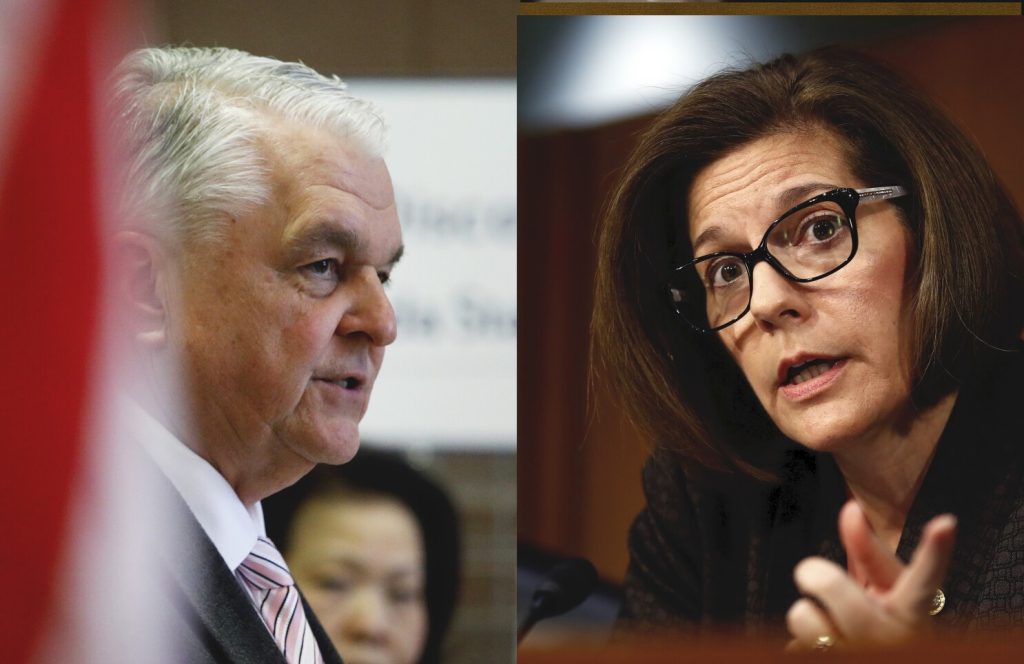
Photo taken from: The Los Angeles Times
Policy Summary
[SSB theme=”Official” align=”center” counter=”true” ]
Control of the U.S. Senate will be up for grabs in the 2022 mid-term elections. Competitive races in key states will determine the balance of power. In this brief, I will preview the US Senate races in Nevada and North Carolina.
Policy Analysis
In Nevada, Senator Catherine Cortez Masto (D-NV) is running for a second term. Cortez Masto won the seat in 2016 by defeating Congressman Joe Heck (R-NV) in a close race. Before her election to the U.S. Senate, Cortez Masto was the state attorney general for two terms. Her current committee assignments include the Senate Finance Committee, the Senate Banking, Housing, and Urban Affairs Committee, and the Senate Natural Resources Committee.
She will be facing former state attorney general Adam Laxalt (R-NV). Laxalt was the 2018 Republican nominee for Governor. Adam Laxalt is the grandson of Paul Laxalt, the former Governor and US Senator from Nevada. Adam Laxalt also chaired the Trump 2020 campaign in Nevada, so he is well-connected with influential Nevada Republicans.
His website emphasizes his military background and endorsements from other Republicans such as Donald Trump, Senator Ted Cruz (R-TX), and Governor Ron DeSantis (R-FL). His website does not provide much information on his policy positions. The limited information on his campaign website regarding his policy positions is in-line with the rhetoric used by many of the Republicans who have endorsed him.
It does not appear that there have been any polls of the Nevada Senate race since the primary was held. Democrats have won most of the recent statewide races, but often by narrow margins. Democrats have owed recent victories in Nevada to a strong get-out-the-vote operation that was built by Harry Reid and his political staff. However, Reid has since passed away, and the leadership of the state Democratic party has changed.
The change in leadership at the state Democratic Party has led to disputes about important data files and multiple staff resignations. Uncertainty about the Democratic voter turnout operation in Nevada will lead to a significant investment of outside resources in Nevada by both Democrats and Republicans. This race will be close and will be determined by who shows up to vote.

Photo taken from: TBA
(click or tap to enlargen)
In North Carolina, there is an election for an open Senate seat due to the retirement of Senator Richard Burr (R-NC). The Republicans nominated Congressman Ted Budd (R-NC), and the Democrats nominated former state Supreme Court Justice Cheri Beasley (D-NC). Beasley previously served as an elected state judge before becoming a state Supreme Court Justice. Ted Budd was elected to Congress in 2016 after court-ordered redistricting created an open seat.
Before his election to Congress, Budd owned a gun store and did not have experience in public office. Budd is a member of the House Freedom Caucus, and he has compiled a very conservative voting record in Congress. Budd was not well-known outside of his district before he got the endorsement of Donald Trump and the Club for Growth started paying for advertisements that helped Budd’s campaign.
A recent poll conducted for WRAL, a local news station in Raleigh, finds that the race is within the margin of error. Both candidates registered support in the low 40s, indicating that they both have some work to do on persuading voters to support them in November. This could be due to the candidates not being well-known. The polling data does not include name ID data, which would have been valuable with this race.
According to the poll’s data, Beasley seems to be performing better among moderate and independent voters while her support is a little weaker than a Democratic nominee would prefer among very liberal voters. Budd has strong support among very conservative voters, but he doesn’t perform as well with moderate and independent voters.
His conservative voting record and his efforts to project a very conservative image to win the Republican nomination could be limiting his appeal to moderate and unaffiliated voters. I expect this race to remain in the poll’s margin of error until something shakes up the race. Republicans tend to win statewide races in North Carolina, but Democrats can win in North Carolina if they have the right candidate and get their supporters out to vote.
Engagement Resources
Click or tap on resource URL to visit links where available

Senator Catherine Cortez Masto’s Campaign Website
https://catherinecortezmasto.com/

Cheri Beasley’s Campaign Website

DSCC – Official Campaign Arm of Senate Democrats

Florida’s controversial ‘Don’t Say Gay’ law explained
Florida’s Controversial ‘Don’t Say Gay’ Law Explained
Education Policy Brief #53 | By: Lynn Waldsmith | June 27, 2022
Header photo taken from: National Center for Lesbian Rights
Follow us on our social media platforms above
Browse more education policy briefs from the top dashboard

Photo taken from: USA Today
Policy Summary
[SSB theme=”Official” align=”center” counter=”true” ]
It’s not easy having curly hair in Florida. That’s the message the first openly gay class president of Pine View School in Osprey, Florida delivered last month in his commencement address, who used his curly hair as a euphemism for his sexual orientation.
Zander Moricz, 18, the youngest public plaintiff in the “Don’t Say Gay” lawsuit, had been warned by his principal that the administration would cut off his microphone if he mentioned his activism. Moricz never used the word “gay”, but his coded message nonetheless came across loud and clear.
“There are going to be so many kids with curly hair who need a community like Pine View, and they won’t have one,” Moricz said in his speech. “Instead, they’ll try to fix themselves so that they can exist in Florida’s humid climate.”
Republican Florida Gov. Ron DeSantis signed the so-called “Parental Rights in Education” bill into law in the spring, and dozens of states have introduced similar pieces of legislation.
“We will make sure that parents can send their kids to school to get an education, not an indoctrination,” DeSantis said when he signed the measure.
The “Don’t Say Gay” law bans instruction on sexual orientation and gender identity in grades K-3 and requires that it be “age-appropriate” after that. Parents can sue school districts over alleged violations. But sexual orientation and gender identity is not taught in grades K-3, and opponents worry about the impact of the law on LGBTQ students since the “age-appropriate” description is so vague that teachers and staff may be fearful to discuss or even mention issues relating to sexual orientation and gender identity, thus making LGBTQ students feel invisible. After all, even “boy” and “girl” are gender identities.
Florida’s new law takes effect July 1, but it is being legally challenged on free speech grounds.
Policy Analysis
Bills similar to Florida’s “Don’t Say Gay” law are pending in state legislatures across the country. Here is a sampling of what several states are considering:
- Alabama – a bill prohibiting early classroom instruction on sexual and gender identity.
- Arizona – a bill proposing to change the state’s sex-ed curriculum to focus on biological sex and “not gender identities.”
- Iowa – a bill requiring that parents opt in, in writing, to any instruction “relating to gender identity.”
- Louisiana – a bill limiting discussion of sexual orientation or gender identity in some grades and prohibiting it all together in others. A South Carolina bill is similar.
- Missouri – a bill banning “gender or sexual diversity training” in public schools. Indiana and Kentucky have bills that are similar.
- Oklahoma – a bill banning books from school libraries that focus on “the study of sex, sexual lifestyles, or sexual activity.”
- Ohio – a bill containing similar language used in Florida’s law.
- Tennessee – a bill banning books and instructional materials “that promote, normalize, support, or address lesbian, gay, bi-sexual, or transgender issues or lifestyle.”

Photo taken from: Mental Health America
(click or tap to enlargen)
According to Joe Saunders, political director for Equality Florida, Gov. DeSantis is relying on LGBTQ stereotypes by using the new law to imply that gay people look to sexualize children.
Critics of the “Don’t Say Gay” law say DeSantis, who is eyeing a possible presidential run in 2024, is using the law and other cultural wars for political purposes.
But the greatest criticism of the law is that it will be harmful to students. LGBTQ youth are already at greater risk of mental health issues, self-harm and suicide.
A recent report from the LGBTQ suicide prevention and crisis intervention group, The Trevor Project, found that LGBTQ youth who learned about LGBTQ+ people or issues in school were 23 percent less likely to attempt suicide in the last year.
While sexual orientation and gender identity are not taught in grades K-3 in Florida, such topics potentially may arise, as in talk of a child’s home life or family makeup. Therefore, same-sex parents say they are being erased by the “Don’t Say Gay” law.
As for older students, Sam Ames, director of advocacy and government affairs at the Trevor Project, says school is a place where LGBTQ students need to feel accepted, yet he worries that they will be far less likely to see themselves reflected in the curriculum.
“We are seeing entire chapters of textbooks being erased,” Ames told the newsletter Changing America. “Do you not talk in a civics class about Pete Buttigieg? Do you not talk in a history class about Harvey Milk or Marsha P. Johnson? These are fundamental moments, not just in LGBTQ history, but in American history, that are being written out of existence.”
Engagement Resources
Click or tap on resource URL to visit links where available

Anti-LGBTQ bills in 2022:
https://www.hrc.org/resources/state-maps/anti-lgbtq-bills-in-2021

State policies that are affirming and exclusionary of LGBTQ+ students:

The Trevor Project’s report on LGBTQ youth suicide prevention:
https://www.thetrevorproject.org/research-briefs/lgbtq-youth-suicide-prevention-in-schools/

Shinn v. Martinez Ramirez (2022): Being Innocent of a Crime is Not Enough
Shinn v. Martinez Ramirez (2022): Being Innocent of a Crime is Not Enough
Social Justice Policy Brief #36 | By: Alexandra Ellis | June 27, 2022
Header photo taken from: AZ Central
Follow us on our social media platforms above
Browse more social justice policy briefs from the top dashboard

Photo taken from: Getty Images / Brendan Smialowski
Policy Summary
[SSB theme=”Official” align=”center” counter=”true” ]
On May 25, 2022, the United States Supreme Court released the published opinion of Shinn v. Martinez. The 6-3 opinion has ramifications not only for the defendants in the case, David Martinez Ramirez and Barry Jones, but for post-conviction relief for wrongfully convicted individuals everywhere. The essence of the opinion is that being innocent of a crime is not enough.
Policy Analysis
First, let us unpack what the ramifications are of Shinn v. Martinez by putting into plain English the legal issues presented in the case. The question presented in Shinn v. Martinez is whether a federal court is permitted to hear a prisoner’s post conviction claim of ineffective assistance of counsel if they failed to preserve the issue in state court in the first habeus corpus petition.
Usually, if an individual is convicted of a state crime by a jury, and they feel as if it was unfair, they can appeal to the State’s District Court. They will then petition for their first appeal to the Court of Appeals in the state. If the court of appeals denies the petition, or affirms the District Court’s opinion, then the individual can petition the state’s Supreme Court. This process will vary from state-to-state, but the idea is that the individual must exhaust all options before filing a post-conviction relief claim.
Once all regular forms of appeal are exhausted in criminal court, the individual can sue the state in civil court for post-conviction relief, usually asserting good “cause.” Cause will be based on theories of new and compelling evidence that were not available. Plain error by the District Court (or the trial court) is another legal theory in which an individual can bring a post-conviction relief claim.
Generally, the state court will then do what’s called an evidentiary hearing, looking both to the facts that came out of the criminal case and looking to new evidence. The state’s civil court will look to see if the evidence is “clear and convincing” which is a lower standard than “beyond a reasonable doubt.” The biggest difference in this phase is that the defendant has the burden of proof instead of the state.
If the defendant’s post-conviction relief petition in state civil court is denied, then the defendant can appeal. If the appeal is denied, then the individual can file a habeus corpus petition (a claim for the person’s release) with the federal court alleging that the state errored or infringed upon certain unalienable constitutional rights.
At this phase of post-conviction relief, the federal court is generally not allowed to look beyond the state’s record unless it fits narrow exceptions like, new evidence and procedural issues like ineffective assistance of counsel. Or rather, the federal court usually not be allowed to hold a whole new trial with witnesses or allow new evidence to come in that was not available to the state court.

Photo taken from: MSNBC / Getty Images
(click or tap to enlargen)
This is because usually, they are looking to overturn convictions based on good cause or plain error. The exceptions allow new evidence to be heard by federal courts in extraordinary instances – like DNA evidence or when counsel was defective in earlier proceedings. See 28 U.S. Code § 2254(e)(2)(ii).
In Shinn v. Martinez Ramirez, the Arizona federal district court decided two cases on the theory of ineffective assistance of counsel – a constitutional claim rooted in the 6th amendment right to counsel. See Strickland v. Washington (the standard of what constitutes ineffective assistance of counsel).
The facts of these cases aren’t relevant, but what is relevant is that the federal appeals court made both cases go beyond the state’s record to determine the question of ineffectiveness of counsel because it was obvious something went wrong in the former proceedings. Justice required the appeals court to ask the federal district court to hold an evidentiary hearing on the issue- meaning new evidence could be added to the record. In Shinn v. Martinez Ramirez, Arizona petitioned en blanc (meaning the bench) the United Supreme Court to decide whether a federal court could do this. The Supreme Court decided they could not.
The Supreme Court’s decision in this case is important because it is far-reaching. The ruling basically gutted a person’s right to sue for post-conviction relief. The decision announced that individuals incarcerated at the state level have no constitutional right to present new evidence in federal court to support their claims of wrongful conviction. This means if their attorney sucked, they cannot present this new evidence.

Photo taken from: Lumen Landing
This means if there is new DNA evidence, they cannot submit this to the court as a means to prove their innocence. In this decision, the supreme court announces it is not enough to be innocent of the crime you were wrongfully convicted.
The question presented in front of the Supreme Court may not seem like a big deal at first glance. However, all the procedural hoops a wrongfully convicted individual must go through to prove their innocence is already substantial. It is expensive, complicated, and almost hopeless. For someone sitting in prison for life, or facing death row, for something they didn’t do – the Supreme Court’s decision could mean the difference between life and death.
The Supreme Court in their decision in Shinn v. Martinez Ramirez makes proving one’s innocence post-conviction even harder – if not impossible. From this decision, a federal court will not be able to open up the record to allow new evidence to come in– further punishing indigent clients for their lack of ability to secure a fair trial.
The question becomes at what point will the criminal justice system place individual lives in front of upholding a broken and often racist system? The decision in Shinn v. Martinez Ramirez embraces the idea that it does not matter if you are innocent. They tell us the Supreme Court does not care if you are innocent, it is not enough. Through this ruling that it does not matter if an individual had an unjust trial, there is no constitutional right to bring claims of new evidence of an ineffective trial to federal court for state defendants.
This is not how justice has should be served, but the addiction to procedure outweighs the need for fairness.
Engagement Resources
Click or tap on resource URL to visit links where available

To read the full opinion see: https://www.supremecourt.gov/opinions/slipopinion/21

To read a plain-English explanation of Shinn v. Martinez Ramirez and its ramifications see: https://www.thedailybeast.com/the-supreme-court-just-said-in-in-shinn-v-ramirez-that-evidence-of-innocence-is-not-enough.

To support individuals wrongfully convicted visit: https://innocenceproject.org/
THE DEPARTMENT OF JUSTICE SHOULD INDICT FORMER PRESIDENT TRUMP
THE DEPARTMENT OF JUSTICE SHOULD INDICT FORMER PRESIDENT TRUMP
U.S. RESIST NEWS OP-ED | By: Ron Israel | June 28, 2022
Header photo taken from: Business Insider
Follow us on our social media platforms above
Browse more U.S. Resist News Op Eds from the top dashboard
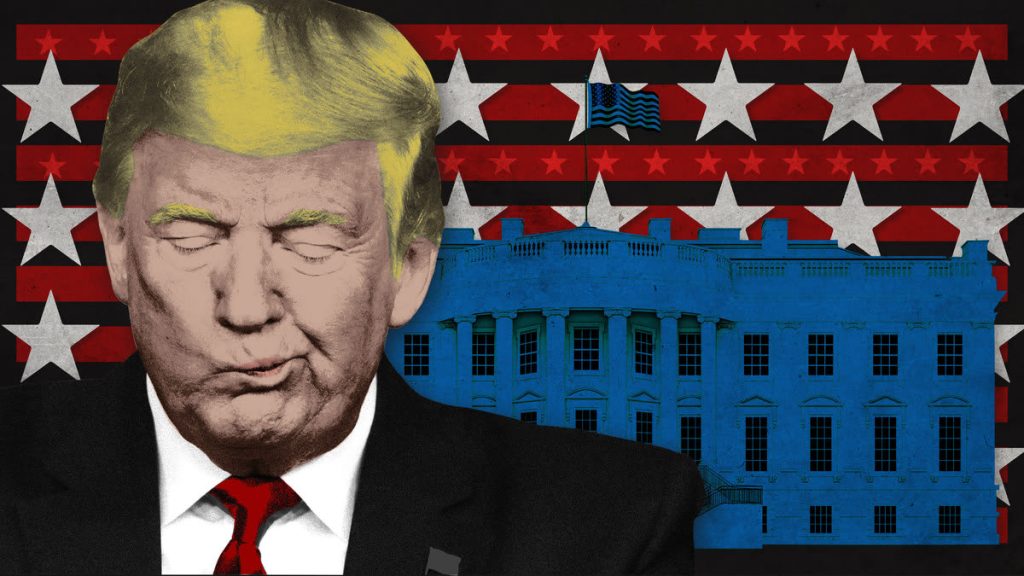
Photo taken from: The Daily Beast
Policy Summary
[SSB theme=”Official” align=”center” counter=”true” ]
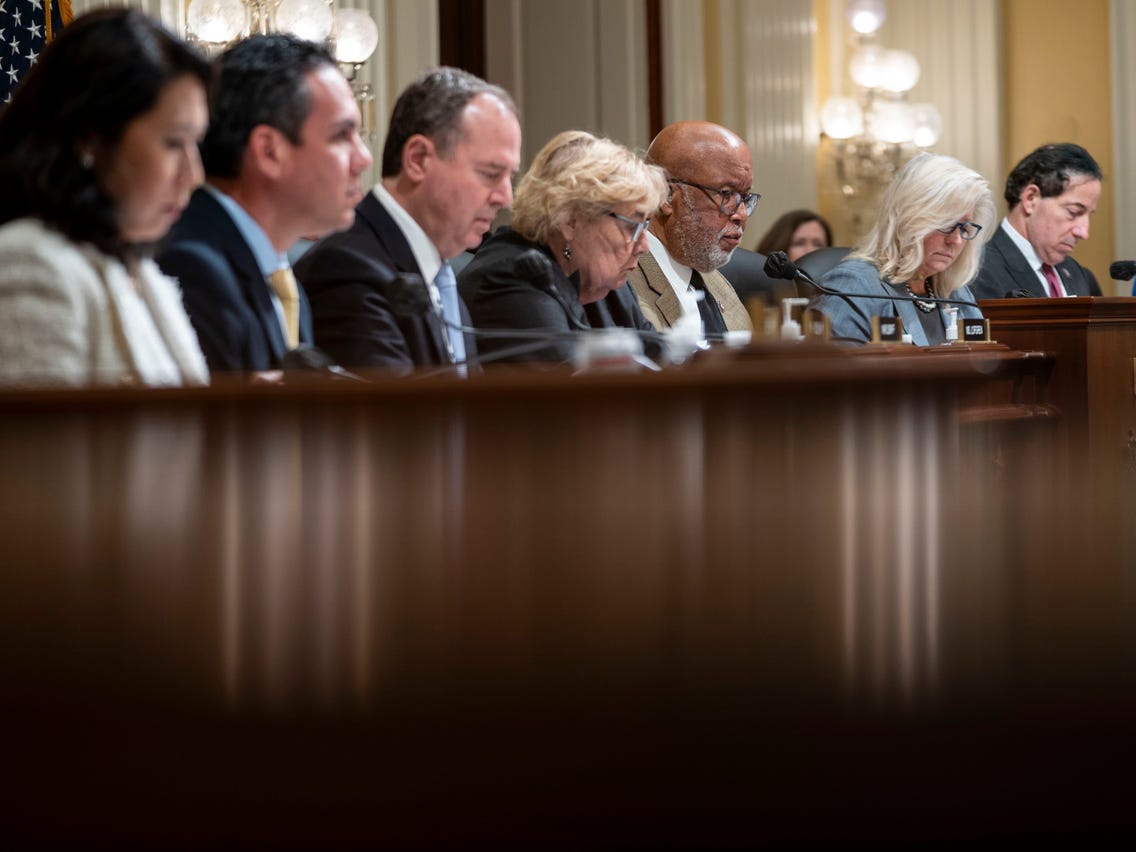
The January 6th Committee, through its publicly televised hearings has revealed that it has enough evidence to indict former President Donald Trump. The indictment would be focused on Trump’s illegal efforts to overturn the results of the 2020 Presidential elections.
The evidence would be based on Trump’s efforts to coordinate a slate of fake electors from states that President Biden legitimately won; his efforts to encourage the mob that stormed the US Capitol on January 6th hoping to prevent Vice-President Pence from certifying the election’s legitimate outcome; his publicly visible attempt to get the Secretary of State in Georgia to find him enough votes to overturn Biden’s election in that state; and his effort to get the Justice Department to declare that the 2020 election results were fraudulent.
There would be a great deal of risk involved if the Justice Department prosecuted Trump. They would need to have an iron -lad case to prove Trump’s intent to overturn the election, and they would need to convince a grand jury to unanimously agree that the evidence merited conviction. It would be a case that would drag on for some time; might further inflame existing political divisions, and might take place against the backdrop of a Republican-controlled Congress.
Policy Analysis
Some argue that rather than prosecute Trump it would be sufficient to find a way to bar him from taking public office again. There is a clause in the 14th Amendment to the Constitution that could apply. That clause, developed after the civil war, says that officeholders who “have engaged in insurrection or rebellion against the government are disqualified from future office.” However no one is sure how such a clause would be invoked today. At a minimum it probably would require the approval of both houses of Congress, a far-fetched possibility in this day and age.
So it appears that criminally prosecuting Trump for his leadership in seeking to overturn a legitimate election outcome is the best approach to dealing with the former President’s illegal actions. It is a risky approach but it is a risk worth taking. To do otherwise, to ignore and not prosecute Trump, would be setting a standard that a President is above the law Such a standard would be a slap in the face of American democracy.
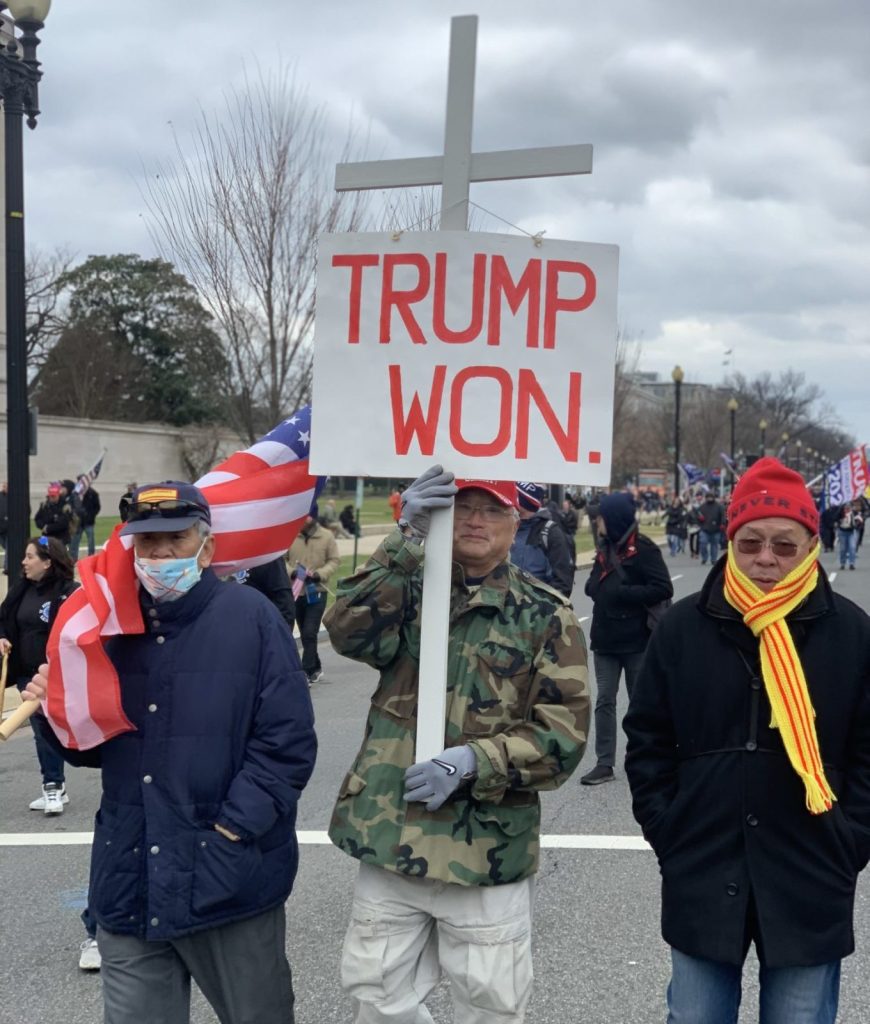
Photo taken from: Washington Monthly
(click or tap to enlargen)
We know that other countries with democratic constitutions have prosecuted presidents who committed crimes and violated laws, such as France, South Africa, Colombia, Peru, and Honduras; so there is precedent from countries around the world for the United States to take such action. Failing to do so will put a stain on the character of our nation.

Quid Pro Quo Again? And Again? And Again?
Quid Pro Quo Again? And Again? And Again?
Social Justice Policy Brief #37 | By: Maureen Darby-Serson | June 27th, 2022
Header photo taken from: Fox News
Follow us on our social media platforms above
Browse more social justice policy briefs from the top dashboard

Photo taken from: Getty Images
Policy Summary
[SSB theme=”Official” align=”center” counter=”true” ]
Over the past couple of weeks, the January 6th committee has been holding public hearings that have revealed several astonishing facts regarding the attack on the US Capital and events after the 2020 Presidential election. While there have been several cringeworthily revelations, one that has gathered attention from the most recent hearings was the appointment of Jeffrey Clark as acting Attorney General of the United States, Former President Donald Trump’s third acting Attorney General at the time.
Mr. Clark was arguably given this appointment due to his willingness to investigate and prosecute false claims of election fraud and declare the 2020 election stolen from Donald Trump. Was this another case of quid pro quo by Donald Trump?
One of the first well known quid pro quo’s, in 2019, Donald Trump was accused of a quid pro quo when Ukraine asked for aid to fight off Russia and Trump offered to send aid if Ukraine investigated then presidential candidate Joe Biden. The US House of Representative considered this interfering in a presidential election and impeached Donald Trump. After the January 6th riots, they impeached him again. The Senate failed to fully impeach the Former President.
Policy Analysis
Several Department of Justice officials testified at the hearings to their disbelief that Jeffrey Clark was appointed as acting Attorney General due to his lack of background in criminal law and lack of trial experience.
They also testified to their refusal to sign a letter written by Jeffrey Clark declaring the 2020 election a fraud and one that was stolen from Donald Trump, even after finding no evidence of widespread fraud that would have changed the outcome of the election. This was the letter that made Donald Trump want Jeffrey Clark as his acting Attorney General.

Photo taken from: The New York Times
A person who was willing to write and sign a letter stating that the election was stolen was the kind of person he wanted running the Department of Justice. So, Trump did just that. Should we add this to the list of quid pro quos? With all of the other revelations, this one may take a back seat but Trump may have to answer this question if he decides to run in 2024.
Engagement Resources
Click or tap on resource URL to visit links where available

Ukraine quid pro quo timeline – https://torres.house.gov/timeline-president-trump-s-quid-pro-quo
Impeachment of Donald Trump – https://www.congress.gov/bill/117th-congress/house-resolution/24/text

January 6th Committee Hearings – https://january6th.house.gov/committee_activity

A Prescription to Improve American Healthcare
A Prescription to Improve American Healthcare
Health & Gender Policy Brief #153 | By: Inijah Quadri | June 27, 2022
Header photo taken from: Commonwealth Fund
Follow us on our social media platforms above
Browse more health & gender policy briefs from the top dashboard

Photo taken from: legacyhealthcare247
Policy Summary
[SSB theme=”Official” align=”center” counter=”true” ]
According to the Commonwealth Fund, the United States spends more on healthcare than any other country in the world. However, when it comes to healthcare outcomes, the U.S. lags behind many other industrialized countries.
There are a number of reasons for this discrepancy between spending and outcomes. For one thing, the U.S. has a relatively decentralized healthcare system, with most care delivered by private physicians and hospitals. This leads to higher costs and less efficiency than the centralized systems found in other countries. As a result, Americans are paying more for health care than ever before, yet the quality of care is not keeping up.
Additionally, the United States is one of only a few OECD countries without universal health care. Despite the Affordable Care Act, which has made coverage more available for some, the US still has a long way to go in terms of providing quality, affordable health care for all.
Policy Analysis
The Affordable Care Act, also known as Obamacare, was put into place in 2010 with the goal of making healthcare more affordable and accessible for all Americans. The law has been controversial from the start, with Republicans and other conservatives arguing that it is unconstitutional and will lead to higher premiums and taxes. Supporters of the law argue that it was needed to fix a broken healthcare system.
So far, the Affordable Care Act has had mixed results. On the one hand, it has helped millions of people gain access to health insurance. On the other hand, premiums have increased significantly for some people, and some small businesses have seen their rates go up as well. This has led to problems among low-income earners; it has led to frustration among many people who are trying to get coverage.
To fix this gap, The Affordable Care Act (ACA) of 2010 introduced a public healthcare option in the United States. This option, known as “the public option”, allows individuals to purchase healthcare coverage from the government. The public option was to be made available to all U.S. citizens and legal residents, regardless of income or health status. The public option offers lower premiums and lower out-of-pocket costs than private insurance plans, and it was to be made available to everyone regardless of pre-existing conditions. However, there has been a significant debate over the merits of the public option, and as of this writing, only three states have taken active steps to implement it.
Even with this lackluster attitude to implementing positive healthcare change, there is a broad consensus that the US healthcare system requires significant reform; there is less agreement on the specifics of what needs to be done. So, we will suggest a short prescriptive plan for improving US healthcare that focuses on prevention, cost containment, and a formula for universal healthcare.

Photo taken from: AARP
(click or tap to enlargen)
One important step is to invest in prevention. Too often, people only seek medical treatment when they are already ill. This leads to increased costs and can often be avoided through preventive measures. So, promoting health prevention needs to be a top priority.
Another key element is to ensure cost containment. This can be done by expanding Medicaid eligibility and providing subsidies for those who need help paying for health insurance. Another way to ensure equitable access is to invest in community health centers, which provide affordable care to everyone, regardless of their ability to pay.
Additionally, as the high cost of prescription drugs is a source of concern for many Americans, the government should negotiate prices with drug manufacturers and cap each product at a certain peak price. Another approach is to allow the importation of drugs from other countries, where prices are often lower.
Finally, we need to expand healthcare with a view to making it universal. There are a few steps that America can take in order to provide universal healthcare for all of its citizens. First, the government could provide more funding for Medicaid and Medicare, which would help more people afford healthcare. Second, the government could create a public health insurance program that would be available to all Americans. This program would be funded by taxes and would offer free or low-cost healthcare to its participants. If this option is chosen, taxes will directly fund healthcare and everyone will be covered—rich, poor, self-employed, employer, employee, etc.
We urge policymakers to put patients first and work together to build a health care system that works for everyone. The time for reform is now, and we must work together to make our health care system the best it can be.
Engagement Resources
Click or tap on resource URL to visit links where available

Politifact: The Poynter Institute (https://www.politifact.com/factchecks/2015/sep/01/dan-gecker/dan-gecker-says-us-only-wealth-nation-without-univ/, https://www.politifact.com/factchecks/2019/jun/21/mark-pocan/universal-health-care-diagnosis-mark/)

The Commonwealth Fund (https://www.commonwealthfund.org/publications/issue-briefs/2020/jan/us-health-care-global-perspective-2019#:~:text=In%202018%2C%20the%20U.S.%20spent,%2C%20Switzerland%2C%20spent%2012.2%20percent.)


Supreme Court Permits The Use Of State Taxpayer Funds For Religious Instruction
Supreme Court Permits The Use Of State Taxpayer Funds For Religious Instruction
Civil Rights Policy Brief #189 | By: Rodney A. Maggay | June 23, 2022
Header photo taken from: Education Week
Follow us on our social media platforms above
Browse more civil policy briefs from the top dashboard

Photo taken from: The Institute for Justice
Policy Summary
[SSB theme=”Official” align=”center” counter=”true” ]
Petitioners David and Amy Carson and Troy and Angela Nelson are two couples that reside in Maine. Both families wanted to apply for Maine’s tuition assistance program in order to send their children to two separate “sectarian” schools. Both families were denied because Maine had previously determined that using state taxpayer funds to fund tuition for students at sectarian schools was a violation of the Establishment Clause of the First Amendment.
Maine’s tuition assistance policy was crafted in response to the population sparseness of the State. Because half of Maine’s 260 school administrative units (similar to a school district) do not have enough students to establish a public secondary school in the unit, Maine devised a public program whereby parents can choose another public school in another unit for their child to attend. Maine would then allow families and the school units use of the taxpayer funds to send the child to the school in the other unit. Maine also permits parents to choose a private school that is approved by the Maine Department of Education if they are “nonsectarian.”
The only schools that cannot receive taxpayer funds are “sectarian” schools. Those schools are expressly prohibited from receiving taxpayer funds from the tuition assistance program. The reason is because Maine determined that sectarian schools are “associated with a particular faith or belief system” and “promotes the faith or belief system…and/or presents the material taught through the lens of this faith.”
Once the Carson and the Nelson families were denied tuition assistance to send their children to two sectarian schools they chose, they filed a lawsuit in the Federal District Court for the District of Maine. They claimed that their denial to receive tuition assistance for use at a sectarian school violated their rights under the First Amendment.
They lost at the trial court. An appeal was subsequently filed in the United States Court of Appeals for the First Circuit where the Court ruled against the plaintiffs again. An appeal was subsequently made to the United States Supreme Court, which ruled in a 6 – 3 decision that Maine’s denial of funds from the tuition assistance program for the Carson and Nelson families was unconstitutional because it violated the First Amendment’s Free Exercise Clause. LEARN MORE
Policy Analysis
The decision by the Supreme Court represents another low point in the Court’s recent decisions concerning the scope and limits of the First Amendment’s religion clauses. What the Court is allowing here is opening up the door for state taxpayer funds to be used for religious instruction. While the majority does not see it, or refuses to see it, the majority opinion is in clear contradiction to the Free Establishment clause’s dictates that there be a separation of church and state.
Justice Stephen Breyer’s dissenting opinion encapsulates brilliantly what the majority opinion ignores in this case. Giving a quick history lesson of the Court’s prior decisions on the Establishment Clause, Justice Breyer shows how the Court definitively stated that states cannot use “its public school system to aid any or all religious faiths” and how a state may “[not] adopt programs or practices in its public schools…which ‘aid or oppose’ any religion.”
This is explicitly clear and has been followed in subsequent Supreme Court decisions for decades – no weekly religious teachings in public schools, no prayers in public schools, no Bible readings in public schools, no religiously tailored curriculum in public schools, no prayers during public school graduations and no prayers during public school football games.

Photo taken from: Balls and Strikes / Getty
(click or tap to enlargen)
The majority opinion’s mistake is when they reasoned that this is a public benefit available to all Maine residents. The court’s reasoning relied on the Supreme Court’s 2017 decision from the case Trinity Lutheran Church of Columbia, Inc.v. Comer. That decision ruled that the church from the case could not be prohibited from state taxpayer dollars on account of their religious status because the funds were for a public benefit – the resurfacing of the church playground with recycled rubber materials.
The monies could be classified as being used for public safety and not for any type of religious instruction. But the difference from that case and the case from Maine is that state taxpayer funds would now be used for direct religious instruction. Justice Breyer notes this distinction and illustrates the “status-use” distinction that is at the heart of this case.
Justice Breyer points out that it is not the status or classification of the group that is the point but how state taxpayer funds will be used – and in this case it will now be used to directly pay for religious instruction. This isn’t about improving playgrounds or buildings anymore. The tuition monies in Maine would now be used to directly pay for religious materials and to pay the salaries of teachers who advocate for a particular religious viewpoint.
This is a clear violation of the Establishment Clause’s prohibition against religion in public schools and Justice Breyer correctly points out why the majority opinion is clearly wrong and against prior Supreme Court precedent. LEARN MORE, LEARN MORE
This brief was compiled by Rod Maggay. If you have comments or want to add the name of your organization to this brief, please contact Rod@USResistnews.org.
Engagement Resources
Click or tap on resource URL to visit links where available

Freedom From Religion Foundation – non – profit group’s statement on the Carson v. Makin case.

Americans United For Separation of Church And State – statement from non – profit group on the Carson v. Makin case.