

JOBS POLICIES, ANALYSIS, AND RESOURCES
Latest Jobs Posts
Profiles of U.S. Anti-Abortion Groups
Brief #139 – Health and Gender Policy
By Geoffrey Small
With Roe v. Wade overturned, a deluge of anti-abortion trigger laws have gone into effect across the country. States like Louisiana, Texas and Missouri have created some of the strictest laws and legislative proposals in the United States. Recent proposals include criminal and civil prosecutions for providers, people who aid in out-of-state abortions, and potentially the patients who receive them.
Round 10 in the Fight to Save the Planet – and Fatigue Has Set-in
US Renew Op-Ed
By Todd J Broadman
Global warming as our single most important political issue has begun to wane, taking a backseat to economic concerns. A scant 1 percent of those recently polled by the New York Times/Siena College perceive climate change as the most important U.S. issue.
That low ranking for climate as an issue held true for those under 30 as well. As this is a long-term issue and one that requires long-term determination, the apparent widespread apathy is cause for concern.
The Banning Surveillance Advertising Act of 2022
Brief #63 – Technology Policy
By Mindy Spatt
Internet giants like Google and Facebook are selling our personal data or selling access to the data they collect. The resulting barrage of advertisements are not just annoying, they violate our privacy, perpetuate discrimination and spread misinformation.
How Donald Trump Changed the Government
Brief #38 – Social Justice
By Maureen Darby-Serson
A President can change the course of the United States in many ways. Donald Trump was no different. But the ways that Trump changed the government are haunting us and will follow us for decades to come.
Schools, Universities Now Leading Targets of Ransomware Attacks
Brief #54 – Education
By Lynn Waldsmith
A new viral threat known as ransomware is attacking schools and universities throughout the country. According to security company Sophos, 64 percent of higher education institutions and 56 percent of K-12 schools were struck by ransomware last year.
According to the company’s State of Ransomware in Education 2022 report, that means an average of 60 percent across the education sector overall, up from 44 percent in 2020.
The New Gun Law Also Helps Address the U.S. Mental Health Crisis
Brief #37 – Social Justice
By Geoffrey Small
On June 25th, 2022, President Joe Biden signed The Bipartisan Safer Communities Act. The Congressional Bill is a measure touted to address gun safety. However,
this bipartisan legislation is the culmination of almost a decade of mental health advocacy spearheaded by Republican Senator Roy Blunt and Democratic Senator Debbie Stabenow. The most effective measure of this bill may be the record $8 billion in funding allocated to school programs and mental health programs.
The Latest Developments and Applications in 5G Technologies
Brief #62 – Technology
By Christopher Quinn
Wireless communications systems use radio frequencies (also known as spectrum) to carry information through the air. 5G operates in the same way, but uses higher radio frequencies that are less cluttered. This allows for it to carry more information at a much faster rate. 5G also works closely with the iCloud to store and retrieve data.
After Dobbs v. Jackson, the End of Roe v. Wade and the Battlefield for Liberty
Brief #138 – Health & Gender Policy
By Alexandre Ellis
On June 24, 2022, the United States Supreme Court released the published opinion of Dobbs v. Jackson Women’s Health Organization.19-1392, 597 U.S. ___. In a 6-3 majority opinion, a group of unelected officials stripped people with uteruses bare of the right to choose whether they will carry a pregnancy to term.
Preview of US Senate Races in Ohio and Iowa
Brief #40 – Elections & Politics
By Ian Milden
Control of the U.S. Senate will be up for grabs in the 2022 mid-term elections. Competitive races in key states will determine the balance of power. In this brief, I will preview the US Senate races in Ohio and Iowa.


Situation Update # 4: The Ukraine Crisis
Situation Update # 4: The Ukraine Crisis
Foreign Policy Brief #146 | By: Abran C | February 28, 2022
Header photo taken from: ABC News
Follow us on our social media platforms above
Browse more foreign policy briefs from the top dashboard

Photo taken from: CNN
[SSB theme=”Official” align=”center” counter=”true” ]
On February 24, 2022, the largest assault on a European state since World War Two began as Russia launched a full-scale invasion of Ukraine. Russian forces entered by way of air, land, and sea quickly spreading across the country. Areas outside of the capital Kyiv, such as the Chernobyl Nuclear Power Plant and Ukraine’s second-largest city Kharkiv have fallen under Russian control. The invading forces have targeted the country’ s infrastructure, fuel facilities, airfields, and military posts attempting to limit Ukraine’s capacity to fight back. Yet as Russian troops have advanced towards the capital they have been slowed by fierce pushback from Ukrainian forces and armed civilians. A curfew has been put in place in Kyiv and is set to last to Monday morning as Russian forces close in on the city.
Condemnation of the invasion followed soon after it began, the US, UK, European Union, Japan, Australia, New Zealand, and Taiwan all hit Moscow with fresh rounds of sanctions. US sanctions include– cutting off major Russian banks’ access from using dollars for transactions, sanctioning wealthy Russian individuals with links to the Kremlin, cutting off high-tech imports to stop Russia from developing further military capabilities, as well as sanctioning Vladimir Putin himself. Following the US’s lead, the UK, EU, and Canada also announced personal sanctions on Putin and Russian Foreign Minister Sergey Lavrov. On Saturday, February 26, 2022, Russian banks were shut out of the SWIFT (Society of Worldwide Interbank Financial Telecommunication) financial system.
European countries had previously stopped short of shutting Russia out of the financial system. SWIFT is used by over 11,000 banks worldwide to carry out transactions worth trillions of dollars. EU countries such as Germany had argued that removing Russia from SWIFT could damage their economies that have business dealings with Russia. Yet as the invasion enters its third day with the capital of Ukraine within sight of Russian forces the move was taken to harshly hinder Russia financially.
As of February 27, 2022, nearly 150,000 people have fled Ukraine into Poland and other neighboring countries. Most refugee arrivals have been women and children, as all men aged between 18 to 60 years old have been banned from leaving the country in order to take up arms and assist in the fight against the invasion. Ukrainian officials have reported 198 deaths thus far. While across the border in Russia, more than 3,000 people have been arrested for protesting against the war in Ukraine.
In a ratcheting up forces, NATO has announced that the alliance would deploy thousands of troops to neighboring allied states. The deployments include elements of its rapid response force made up of, land, air, sea, and special operations forces. The alliance has also indicated it would continue sending weapons to Ukraine. President Biden has also instructed the US State Department to provide an additional $350 million worth of weapons to be allocated to Ukraine under the Foreign Assistance Act.
On Friday, a draft UN security council resolution that would have condemned the invasion of Ukraine was vetoed by Russia. Eleven other security council members voted in favor of the resolution with the UAE, India, and China abstaining, signifying Moscow’s isolation and lack of support for its aggression. Additionally, France on Saturday seized a cargo ship in the English channel, “the Baltic Leader”, that is suspected to have been defying sanctions and have links to Russian officials targeted by sanctions.

Photos taken from (above): Sky News, (below): Sparklight

Officials in Kyiv have urged residents to seek shelter, stay away from windows, and take precautions to avoid flying debris or bullets. Ukrainian President Volodymyr Zelensky released a video on Saturday on the streets of Kyiv having rejected offers by foreign governments to evacuate him from the besieged country, instead choosing to remain and fight.
“I am here. We are not putting down arms. We will be defending our country, because our weapon is truth, and our truth is that this is our land, our country, our children, and we will defend all of this,” he said.

Figure Skating Drama: Adults’ Ambitions Can Kill Kids’ Health
Figure Skating Drama: Adults’ Ambitions Can Kill Kids’ Health
Health Policy Brief #147 | By: Yelena Korshunov | February 25, 2022
Header photo taken from: Then24
Follow us on our social media platforms above
Browse more health policy briefs from the top dashboard

Photo taken from: Insider
Policy Summary
[SSB theme=”Official” align=”center” counter=”true” ]
Sport is beautiful, isn’t it? Many of us enjoy watching the Olympic games on TV. Mastery of fascinating figure skating and graceful rhythmic gymnastics enchant us. But what happens behind the curtain? What price do these gracious young teenagers in a big sport pay to meet adults’ ambitions? After Kamila Valieva, Russian teen figure skater, was cleared to participate in the Games despite testing positive for a banned drug, she finished fourth in the women’s individual figure skating competition at the Beijing Olympics.
An issue that followed her performance was shocking. “Why did you stop fighting?” Valieva’s trainer, Eteri Tutberidze, rudely spat in the teen’s face, chilling every single one who heard it. Even the International Olympic Committee president, Thomas Bach, spoke out. “I must say I was very disturbed yesterday when I watched the competition on television,” he said. “First in her performance, how high the pressure must have been on her (Valieva). I know from my athlete time a little bit about pressure. But this pressure is beyond my imagination, in particular for a girl of 15 years old.”
We also watched the silver medallist, Alexandra Trusova, crying after her beautiful performance: “Everyone has a gold medal, everyone, but not me. I hate skating. I hate it. I hate this sport. I will never skate again. Never.” Isn’t the price for Olympic medals too high, especially for teenagers whose fragile psyche is in an acute time of its development?
Even for an average child, serious sport activities are risky despite all the precautions and attention given by supervisors. According to Stanford Children’s Health, about 30 million children and teens participate in some form of organized sports in the US, and more than 3.5 million injuries each year, which cause some loss of time of participation, are experienced by the participants. Sports and recreational activities contribute to approximately 21 percent of all traumatic brain injuries among American children.
You can just imagine how high is the injury rate for children and teenagers in a big sport and how many talented children lost their health somewhere on the way to great achievements. We will never hear their names. This is a price that they pay for adults’ ambitions. Much worse is when a child’s psyche is destroyed by an adult’s inattention, indifference, or even rude accusations, that a multi-million TV audience has recently witnessed.
Policy Analysis
For most girls, their body begins to change at the age of 13-15. They gain weight, their shape changes, and a hormonal shift also affects their psychology. For many skaters, their careers end at this point and they never move into adult sports. By this age, if they are well prepared, they can jump three quads or even quadruple jumps per performance. Then nature will take its toll, and this same girl will not be able to jump quads at all. These well-prepared teens are a temporary triumph of trainers like Eteri Tutberidze that throw them to the scrapyard when their body starts puberty. That recently happened to Evgenia Medvedeva, Alina Zagitova, and Julia Lipnitskaya.
Their starring career lasts a year or two before they become forgotten. Isn’t it unfair? I once spoke to a mom of a young transparently slender girl who dreamed about her daughter’s starry career in rhythmic gymnastics. The girl is 11, but she has already been on a strict diet for years. Nobody cares about the healthy growth and puberty of this child. “One day she will be a star,” confidently states her mom. Who else, if not parents and trainers, should care about the health and safety of these kids?
“Benefits of Youth Sports,”report developed by the PCSFN (President’s Council of Sports, Fitness, and Nutrition) in 2020, shows that participating in youth sports can lead to immediate and long-term benefits for youth, their families, and communities.

Photo taken from: jerseywatch.com
(click or tap to enlargen)
According to the PCSFN’s findings, 73 percent of parents believe that sports benefit their child’s mental health. And they are right! 88 percent of parents believe that sports benefit their child’s physical health. 55 percent of parents believe that sports will benefit their children academically and improve their future careers. 80 percent of parents believe that sports helped their child learn about discipline and dedication, as well as how to get along with others. Research supports these beliefs.
73 percent of adults who play sports participated when they were younger. This means they built the habit of physical activity early and are reaping the rewards in adulthood. Lifelong participation in sports can also lead to improved mental health outcomes.
Look how thin the border is, how much kids can benefit from doing sports and how fatally it can ruin their lives.
It’s in our power to create healthy sports for children, without enormous pressure and ambitious expectations that harm kids’ physical and mental health, but rather with support and encouragement that will make them happy.
Engagement Resources
Click or tap on resource URL to visit links where available

List of Kids Sports
https://www.rookieroad.com/sports/kids-sports-list/#rowing

All About Sports for Children’s Health https://www.healthychildren.org/English/healthy-living/sports/Pages/default.aspx

Play More Than One Youth Sport for Better Mental Health

The Remington Deal With the Sandy Hook School Massacre Victims’ Parents
The Remington Deal With the Sandy Hook School Massacre Victims’ Parents
Social Justice Policy Brief #33 | By: Inijah Quadri | February 22, 2022
Header photo taken from: The Wall Street Journal
Follow us on our social media platforms above
Browse more social justice policy briefs from the top dashboard

Photo taken from: BBC
Policy Summary
[SSB theme=”Official” align=”center” counter=”true” ]
On the 14th of December, 2012, Adam Lanza, a 20-year-old shooter, murdered children and educators using a Remington rifle lawfully owned by Lanza’s mother.
Before turning the handgun on himself as police closed in on their Newtown house, Lanza killed his mother in her bed and then took the rifle to the school and opening fire for five minutes.
As a result of Lanza’s mental illness, fascination with violence, and access to his mother’s firearms, Connecticut’s child advocate called it “a prescription for mass murder”.
A lawsuit filed by the nine families of those killed in the Sandy Hook Elementary School murder in 2012 has been settled with the maker of the AR-15 semi-automatic weapon that was used in the slaughter of 20 children ages six and seven, as well as six teachers.
There will be $73 million paid up by Remington to resolve lawsuits filed in 2015 by families who claimed that their loved ones were killed by Remington’s sale of illegal assault rifles. It was their goal, according to the plaintiffs, to stop other mass shootings in the future.
Apparently, the AR-15 weapon used by the shooter was advertised to at-risk young men via product placement in violent video games. Remington advertised the rifle with the slogan “Consider Your Man Card Reissued”.After the Sandy Hook massacre, the manufacturer was hit with a slew of lawsuits and sales restrictions.
“It was never about compensation in the sense of damages in this instance.” At a press conference announcing the settlement, lawyer Josh Koskoff, a representative for the families, stated, “It was about damages, in the sense of forcing change”. To that end, Koskoff urged gun manufacturers to take greater responsibility for the way their goods are used, saying, “It’s money that gets their attention.”
Policy Analysis
As a result of the Sandy Hook lawsuit, which was filed in Connecticut in 2015, the weapons industry has come under assault for its alleged role in the country’s rampant pandemic of gun violence. It was predicted that the case would lead to an unprecedented wave of gun-related lawsuits or fundamentally alter the landscape of such cases. Legal scholars who have examined the history of gun industry cases insist it is doubtful that this will happen.
To understand why, we must first look at the federal liability shield that protects gun-makers. It’s called the Protection of Lawful Commerce in Arms Act and it shields gun manufacturers from lawsuits stemming from the illegal exploitation of their products.
Sandy Hook relatives, on the other hand, claimed that their case was exempt from federal immunity. They asserted that the Unfair Trade Practices Act of Connecticut, which they believed applies to the marketing of firearms, was violated since this marketing was immoral.
Victims of gun violence may file similar lawsuits in other jurisdictions that have legislation comparable to Connecticut’s regarding unfair business practices. Consequently, victims may contend that a gun manufacturer’s aggressive marketing of combat-style weapons violates state laws that apply to the sale or marketing of a firearm – such as an unfair trade practice law.

Rich Pedroncelli / AP Photo
New California legislation is attempting to amend these rather stringent regulations. One measure would focus on ghost weapons, while another would prohibit some firearm advertisements from being directed at children under the age of 18. California is attempting to impose stricter regulations on the marketing and distribution of weapons by the gun industry, as well as the ability for the state Department of Justice and gun crime victims to file lawsuits against individuals who violate the state’s harsh firearms laws.
The California law would empower a plaintiff to seek injunctive relief to prohibit the transfer of guns, as well as recover $10,000 in damages for each handgun implicated in a complaint under certain circumstances.
These lawsuits brought against the gun business are aimed at encouraging gun manufacturers and retailers to develop goods that are less likely to be used for criminal purposes and to keep them out of illicit markets.
Engagement Resources
Click or tap on resource URL to visit links where available

The Conversation (https://theconversation.com/why-73-million-sandy-hook-settlement-is-unlikely-to-unleash-a-flood-of-lawsuits-against-gun-makers-177209)

Wiley Online Library (https://onlinelibrary.wiley.com/doi/pdf/10.1111/1468-5973.12186)

Hartford Courant (https://www.courant.com/news/connecticut/hc-news-sandy-hook-lanza-spreadsheet-20181205-story.html)

Disaster Health (https://www.ncbi.nlm.nih.gov/pmc/articles/PMC5314926/)


Views of Odessa Residents: First Day of Putin’s Invasion
Views of Odessa Residents: First Day of Putin’s Invasion
Foreign Policy Brief #145 | By: Yelena Korshunov | February 25, 2022
Header photo taken from: Courthouse News Service
Follow us on our social media platforms above
Browse more foreign policy briefs from the top dashboard

Photo taken from: Dumskaya.net
[SSB theme=”Official” align=”center” counter=”true” ]
I spent my childhood years in Odessa, a sunny seaport city in south Ukraine, on the Black Sea shore. I remember bright cozy streets, flourishing acacia, tall poplars, shady sycamores, the smell of the sea, and smiley people whose humor and unique mixed multicultural talk became known as “Odessa’s language”. People of more than 133 nations and nationalities have been residing in the Odessa region for hundreds of years. This multicultural melting pot induced tolerance to each other’s traditions, cultures, and languages. That is what was engraved in my childhood memory.
Also, there were a lot of civil government holidays that we celebrated altogether: Ukrainians, Russians, Jews, Bulgarians, and many others. February 24th, the day after the former Soviet Army holiday, turned out to be the date when Putin’s army invaded Ukraine, bombing, shelling, and killing. Ukrainians will remember this day forever. I’m intentionally not saying “Russia’s army”. Putin is not Russia, and Russia is not Putin. This is Putin’s governance that seeds violence on Ukrainian land and in his own country, jasiling Russian citizens who are brave enough to protest against Russia’s invasion of Ukraine.
I still have part of my family and friends in Ukrainian Odessa and I made multiple phone calls today to find out what’s going on in the city.
Irina lives in an apartment building in a quiet green block. Her family now hosts their friends. People try to not stay alone in their apartments. “We heard explosions at 5 in the morning, then at 10, and then at 1pm. I can’t describe my feelings. It’s scary. We still have water and electricity, but who knows what’s gonna happen? TV reports that Russian troops are about to invade the Chernobyl nuclear power plant. Withdrawing cash from ATMs is very limited. People stay in lines to get at least some bills in their pockets. Gas stations limit gas sale to 20 liters (5.28 gallon) per person.”
Sergey’s family escaped from invaded Eastern Ukraine to Kiev years ago. “We ran away from the war in Donetsk, but it has caught us up in the heart of the country, in its capital.”
Victoria and Igor are parents of three. Their two kids, a high school student and a college student, had their lessons remotely today. “Entire week we had a daily shelling drill”, says their daughter. “Inexpensive food and medicines disappeared from shelves this morning”, tells me Victoria. “There are enormously long lines to the gas stations. People wait for hours to get their 20 liters of gas. But there is enough food and medicine if you can overpay and there is no panic in the streets. People are walking back and forth, and it looks like a routine day. Farmer markets work as usual, though some supermarket networks and McDonalds are closed, and some merchants in local stores say that they’re gonna be closed in the afternoon.” Vera, Victoria and Igor’s older child is trying to get to Odessa from Kiev at this hour. Small bus (“marshrutka”) is full of people and is moving very slowly. There is a huge traffic jam on a Kiev highway toward Odessa.”
Sofia has been living in Moscow for more than 20 years. Her parents are in Odessa where she was born. “I’m frustrated and scared. I don’t know what to do to help my family in Ukraine. It’s a nightmare. It just cannot be a reality”, she says.

Photo taken from: iNews
(click or tap to enlargen)
Curfew in Odessa is announced from 11 pm tonight through 6 am in the morning. This is something that my cognition refuses to absorb. In 21st century’s Europe, at this hour, my motherland is invaded by a neighboring country. Many families from both countries have been traditionally mixed up for centuries. Many Ukrainians (including me) have Russian as their native language. And today my family, friends, and their neighbors in Ukraine are praying just to stay alive.
Military service in both Ukrainian and Russian armies is mandatory for young men when they turn 18. Today Russian youths are thrown to shell the land of their neighbors and — probably — relatives.
Ukrainian youth risk their lives to defend the motherland, while mothers on opposite sides of the border cry and pray to see their children again, coming back home alive. I wish Ukraine peace. I want to go there and see this land as beautiful and flourishing as I saw it years ago through my child’s eyes.

Virtual Realty Education: The Future is Now.
Virtual Reality Education: The Future is Now.
Technology Policy Brief #69 | By: Erik Pillar | February 24, 2022
Header photo taken from: WINK News
Follow us on our social media platforms above
Browse more technology policy briefs from the top dashboard

Photo taken from: Perfect Design
Policy Summary
[SSB theme=”Official” align=”center” counter=”true” ]
Virtual reality in the modern age sees increased potential for online learning and education amidst the continued Covid-19 pandemic.
A charter school in Florida, The Optima Classical Academy, recently announced its intention to offer a tuition-free full virtual reality learning environment to students starting August 10th, 2022. According to the school’s website, the curriculum will be based on a classical education format with a heavy emphasis on history, classical literature, and logical reasoning skills. When the school opens, classrooms will be offered for grades 3-8, with plans for high school years to be added in the future.
Students at Optima will spend four hours a day of schooling with a teacher in a virtual environment, and four hours of free learning time. Students will be able to learn through digital recreations of historical locations, such as the Oval Office in the White House, sites in Ancient Rome and other grand historical locales.
Those interested in enrolling can navigate to https://www.optimaclassical.org/prospective-families/enrollment/apply-for-lottery and sign up for a lottery to obtain a seat.
Scientists and experts in child development and learning are interested in the use of VR in education. Stanford University recently released a study called Accessibility of Educational Virtual Reality for Children during the COVID-19 Pandemic. The study aimed to answer several key questions related to children and virtual reality use, and education, during the pandemic. Overall, their findings support a high rating being given to the technology by parents who were interviewed. Those parents, who took part in the study, commonly reported that virtual reality technology was more engaging and stimulating to their children than other methods of schooling.
One parent said, “My daughter takes Russian in school, and she’s very interested in it… in the language, in the country, so I gave her Wander (A VR software to explore digital locations) and said, ‘Go to St. Petersburg or go to Moscow.’ And we would pass the headset back and forth and do that.”
The full study can be read at: https://stanfordvr.com/pubs/2022/accessibility-of-educational-virtual-reality-for-children-during-the-covid-19-pandemic/
Policy Analysis
Virtual Reality offers an alternative to real time learning in a Metaverse, a virtual universe of worlds, servers, all connected and accessible for users to travel and live within; an idea that has been explored in popular genre fiction both recently and in the past.
The original VR metaverse was in William Gibson’s 1984 novel titled Neuromancer. That novel focused less on educational prospects and more on the metaverse as being a world within a world, a place just as real as the physical, but not. More recently, the hit novel and film Ready Player One helped further popularize VR, including its use in schools. With the first full virtual realty school for children opening, we may see more VR classrooms should it prove to be a success.

Photo taken from: Digital LA
(click or tap to enlargen)
If VR based learning were to become accepted mainstream, the gap in quality education for many rural or densely populated metro families could be bridged. However, the cost of set up may be a barrier to schools serving low-income communities.
Engagement Resources

Steam’s VIVE

Windows Mixed Reality

Meta’s Oculus
There are three primary shippers of the technology. From video game platform giant Steam, we have the VIVE, Windows shows us their Windows Mixed Reality, and the company formerly known as Facebook -now Meta- sponsors the OCULUS.
The three current primary headsets for Vive are the HTC VIVE PRO 2, the VIVE FOCUS 3, and the VIVE FLOW.
The PRO 2 is a powerhouse of technology offering 5k resolution with an increased field of view and advancements in the technology to eliminate most graphical fidelity problems from previous versions. Notably for gamers is that the PRO 2 offers full 120 Hz refresh rate, a near must to avoid motion sickness in fast paced gaming. The PRO 2 hits a high price though, with all additions included, of $1399 USD.
The VIVE FOCUS 3 brings most of the power of the PRO 2 but is marketed for businesses or training simulations and is less made for gaming. As such, some of the comforts of the PRO are missing or lessened, such as a lesser refresh rate. It makes up for what it is missing in having more advanced tracking software, hand tracking, not only motion controller, and it offers the possibility of wireless use. At the high end, the FOCUS 3 will cost up to $1300 USD.
Further differences between the PRO 2 and FOCUS 3 can be found in an excellent comparison chart at: https://versus.com/en/htc-vive-focus-3-vs-htc-vive-pro-2
The VIVE FLOW is tailored for more casual users. Flow has a much smaller resolution than either previous option, a lesser refresh rate, and a smaller field of view. It is much lighter however, is run right off your phone, and by default comes with a wireless option. The FLOW is made for those seeking VR experiences, such as meditation, yoga, movie watching, and other such less graphic intensive uses. The FLOW comes in cheapest of the VIVE headsets at a high of $499 USD.
Meta’s The QUEST 2 can be used with a PC or without, wireless at a diminished compacity, comes with the Quest Touch motion controllers, and is designed for a minimalist appeal. QUEST 2 runs at slightly less than true HD 4K resolution and comes with a max of 90 Hz refresh rate. The QUEST 2 will run up to $299 USD for its full bundle.
Windows Mixed Reality is Microsoft’s stab into the VR market. Mixed Reality is no different from VR, the change in name is only for branding purposes. The two primary options for Mixed Reality are the SAMSUNG ODYSSEY+ and the HP REVERB.
The ODYSSEY+ comes with a less than true HD 4K resolution, a 90 Hz Refresh rate, and proprietary screen technology to cut down on graphical issues and to improve the performance of the machine beyond its base specs. It comes with built in headphones and sports a wide range of adjustment and fit options, including interpupillary distance dials to physically move the screens to exactly fit your eye placement. The ODYSSEY+ is designed to not require any external tracking stations, comes with Samsung motion controllers, and will run up to $399 USD.

Biden Administration Plans to Construct an Alternative Fuel Corridor Across the Country
Biden Administration Plans to Construct an Alternative Fuel Corridor Across the Country
Environment Policy Brief #137 | By: Jacob Morton | February 25, 2022
Header photo taken from: KOTA
Follow us on our social media platforms above
Browse more environment policy briefs from the top dashboard

Photo taken from: Pima Association of Governments
Policy Summary
[SSB theme=”Official” align=”center” counter=”true” ]
Earlier this month, the Biden administration announced its plan to spend $5 billion to install electric vehicle (EV) charging stations along the nation’s highways. The $1.2 trillion bipartisan infrastructure package includes $7.5 billion allocated to building “a sprawling network of EV charging stations across the country,” and to “facilitate data collection, access, and reliability.” Biden’s plan intends to spend the first $5 billion over a span of five years, by providing funding directly to states that submit their own plans for developing their portion of what the administration calls an “Alternative Fuel Corridor,” that would connect forty states along interstate highways across the country.
Each state would have to submit its plans by August 1, 2022, on how the money would be used to create its section of the Alternative Fuel Corridor with EV charging stations and other EV infrastructure. The plans will be required to meet Federal Highway Administration guidelines, and the agency will approve eligible plans by September 30, 2022. The White House recently unveiled a new agency, the Joint Office of Energy and Transportation, to oversee this effort.
The US Department of Transportation has released a state-by-state disbursement plan that shows the largest funding levels going to Texas, California and Florida — the three most populous states, but also says 40 percent of the funding will be directed to underserved and rural areas.
This initial $5 billion will be divided and allocated to states through the new National Electric Vehicle Infrastructure (NEVI) Formula Program, which will also distribute the remaining $2.5 billion in available funding through discretionary grants later on. Funding from those grants will be eligible for installing EV stations along the Alternative Fuels Corridor, as well as for general community EV charging infrastructure, with the intent of creating access to EV charging stations in rural and underserved areas. The details of this grant program will be announced later this year.
The funds provided to states can only be used for battery-electric vehicles, not hydrogen or other alternative energy vehicles, and states can team up with private enterprises to build and maintain the stations. However, it will be up to the states to decide what kind of chargers to install. There are two types of EV chargers, DC fast chargers, which can charge a car to mostly full in 20-30 minutes, and L2 chargers, which can take hours. Typically, DC fast chargers cost around $100,000, compared to around $6,000 for a L2, according to Ellen Hughes-Cromwick, a senior resident fellow at the think tank, Third Way.
Hughes-Cromwick says that states will have to find the right balance between the faster, more expensive chargers and the slower, cheaper ones, but explains that generally, DC fast chargers are meant to be installed along highway corridors and at rest stops, while L2 chargers make more sense for homes, workplaces, restaurants and shopping centers, where people have time to step away from their vehicle. Additionally, she notes that while a L2 costs only $6,000, but charges much slower, “you can still put a lot of plugs in.”
According to the Department of Energy, there are currently around 45,000 publicly available charging stations across the United States. Biden’s plan seeks to build half a million more – five times the current number – by 2030. The goal is for owners of electric vehicles to be able to find a charging port anywhere within 50 miles of their location across all 50 states, the District of Columbia, and Puerto Rico.
Policy Analysis
According to Transportation Secretary, Pete Buttigieg, this funding will place America in a position to “lead the electric vehicle revolution.” Buttigieg says, “This is about making sure everybody can get in on the EV revolution, it’s already happening, but we have to make sure that it’s made in America; that everyone benefits from cities to rural areas.” To this end, the White House has been pushing for charging stations to be built domestically.
President Biden also has touted an Australian company called Tritium that is set to build a manufacturing facility in Tennessee that will produce up to 30,000 DC fast chargers each year and create 500 local jobs. According to forecasts from consulting firm Alix Partners, roughly 24% of new vehicles sold worldwide are likely to be fully electric by 2030, and the US sits behind Europe and China as the world’s third-largest market for EVs. “China has been leading the race up to now, but this is about to change,” says Biden. The President also argues that the program could save an average driver up to $1,000 each year on fuel costs when they switch to an electric vehicle.
The transportation sector accounts for one third of all US greenhouse gas pollution, and the Biden administration has pledged that half the vehicles sold in the US will be electric or plug-in hybrids by 2030. However, Energy Secretary, Jennifer Granholm, says, “We’re not going to go electric fast enough if we don’t have the ability to eliminate range anxiety for people and to be able to have them plug in wherever they live, wherever they work, wherever they want to head.” Granholm proclaims the infrastructure developed with these funds will allow “drivers across America to save money and go the distance, from coast to coast.”
Reports show that electric vehicles made up less than 3% of new auto sales last year, and while that number is expected to increase within the next decade, Deputy Federal Highway Administrator, Stephanie Pollack, says, “Americans need to know that they can purchase an electric vehicle and find convenient charging stations when they are using Interstates and other major highways.” However, the administration also recognizes that the cost of an electric vehicle is a significant roadblock for many consumers.
Secretary Granholm says, “This is exactly why the president has pushed, as part of the Build Back Better agenda, to have tax credits for the purchase of electric vehicles, both new and used ones.” Granholm argues that while part of the equation for a successful transition to EVs is to eliminate range anxiety in consumers, we also must “focus on areas where we haven’t seen a big uptake in electric vehicles. Maybe they are in urban areas. It might be poor communities.” Unfortunately, the Build Back Better Act remains stalled in the Senate because Senators like Joe Manchin of West Virginia oppose providing a tax credit for vehicles made by union workers.

Photo taken from: Ars Technica

Photo taken from: Good Word News
(click or tap to enlargen)
According to Elizabeth Gore, senior vice president of political affairs at the Environmental Defense Fund, “The Administration’s announcement demonstrates that clean energy investments deliver for America.” Gore says, “Building out a national network of charging stations will mean less pollution, more jobs and cleaner cars. It will also allow more Americans to skip paying at the pump by making electric vehicles a practical choice for more working families.” Additionally, the White House expects this funding to catalyze more investment from businesses, utilities, and state and local governments.
Some supporters of the new program, however, feel the administration may have to be more ambitious. Connor Morgan, a spokesperson for the Zero Emission Transportation Association, says the number of charging stations actually required, “[is] going to depend on consumer behavior.” Morgan explains that “Instead of driving until the tank is empty and then stopping to fill up, EV drivers need to think about refueling whenever they’re parked and close to an available charger.” He says Biden’s infrastructure funding will help make those chargers more accessible.
Dan Becker, director of the Safe Climate Transport Campaign at the Center for Biological Diversity, also notes that officials must ensure access to charging stations is equitable. A 2019 study by the Department of Energy found that 80% of electric vehicle owners have chargers in their homes, but for those who live in apartment buildings or multi-unit housing, that option may not be available. Becker says that Biden’s plan for more charging stations “will allow them to enter the EV revolution.”
Engagement Resources
Click or tap on resource URL to visit links where available

- Zero Emission Transportation Association (ZETA): The Zero Emission Transportation Association (ZETA) is the first industry-backed coalition of its kind advocating for 100% of vehicles sold by 2030 to be electric vehicles. ZETA brings together industry, advocates, and nongovernmental organizations whose values and strategic interests are fulfilled by meeting the 2030 goal of every vehicle sold being an EV.

- Environmental Defense Fund (edf.org): For more than 50 years the Environmental Defense Fund has been using science and different perspectives to make the environment safer and healthier for us all. EDF’s scientists, economists, attorneys, and policy experts work in 28 countries, alongside hundreds of partners, to fight climate change and protect people and the planet.

- Center for Biological Diversity (biologicaldiversity.org): Reducing transportation emissions is one of the most vital steps in fighting the climate emergency, and solutions to the transportation problem are already available. Our nation needs to shift away from fossil fuel-powered vehicle dependence and toward zero emissions in all transport sectors. The Center for Biological Diversity wages innovative legal and grassroots campaigns, including the Safe Climate Transport Campaign, to protect people, wildlife and ecosystems from climate change and the dirty and dangerous fossil fuel industry. They work to eliminate greenhouse pollution and speed the just transition to 100 percent clean, renewable energy.
Writer’s Resources
Click or tap on resource URL to visit links where available

Dent, S. (2022, February 10). Biden Administration unveils $5 billion plan for EV charging infrastructure. Engadget. Retrieved February 23, 2022, from https://www.engadget.com/biden-administration-unveils-5-billion-plan-or-ev-charging-infrastructure-133022348.html?src=rss

Kasper, K. (2022, February 10). Biden administration green lights funds for Nationwide Electric Vehicle Charging Network. https://www.hawaiinewsnow.com. Retrieved February 23, 2022, from https://www.hawaiinewsnow.com/2022/02/10/biden-administration-green-lights-funds-nationwide-electric-vehicle-charging-network/

Martin, G. (2022, February 11). Biden administration backs $5B network of electric vehicle charging stations. Review-Journal. Retrieved February 22, 2022, from https://www.reviewjournal.com/news/politics-and-government/biden-administration-backs-5b-network-of-electric-vehicle-charging-stations-2527429/

Newburger, E. (2022, February 10). White House rolls out $5 billion funding plan to States for Electric Vehicle Chargers. CNBC. Retrieved February 23, 2022, from https://www.cnbc.com/2022/02/10/biden-rolls-out-5-billion-to-states-for-electric-vehicle-chargers.html

Nilsen, E. (2021, November 23). How Biden’s infrastructure funding could push more Americans into the Electric Vehicle ‘revolution’. CNN. Retrieved February 23, 2022, from https://www.cnn.com/2021/11/23/politics/biden-electric-vehicle-chargers-climate/index.html

Coping with Crisis: Teacher Shortages Will Last Longer than the Pandemic
Coping with Crisis: Teacher Shortages Will Last Longer than the Pandemic
Educational Policy Brief #50 | By: Lynn Waldsmith | February 24, 2022
Header photo taken from: National Education Association
Follow us on our social media platforms above
Browse more edcuation policy briefs from the top dashboard

Photo taken from: Education Week
Policy Summary
[SSB theme=”Official” align=”center” counter=”true” ]
America’s teacher shortage, which was worsening even before the pandemic, is now reaching crisis levels in many parts of the country as a growing numbers of educators are not planning to ever return to the classroom. School districts are scrambling to think of ways to cope with the immediate situation, including calling in the National Guard in some cases, and urging policymakers to act now to stem the tide of teaching professionals who are leaving.
“It’s a problem that existed pre-pandemic, it has been exacerbated by the pandemic, and the teacher shortage will not disappear with the pandemic,” Michigan State Superintendent of Public Instruction Michael Rice told Axios earlier this month.
A pre-pandemic (2018) state-by-state map from the Learning Policy Institute shows that teacher shortages were already severe in many parts of the country, with “teaching attractiveness ratings” varying based on compensation, teacher turnover, working conditions, and qualifications.
But the pandemic has severely worsened the problem. According to data released by the U.S. Bureau of Labor Statistics, employment in local government education rose by 29,000 in January but is down by 359,000, or 4.4 percent, since February of 2020.
The reason for the teacher shortage boils down to a basic supply and demand problem: more and more teachers are retiring or quitting as the pandemic makes a stressful profession even more exhausting and frustrating, while fewer students are graduating from universities to fill the available jobs.
Based on a survey of its members, the National Education Association released a statement earlier this month that indicated 55 percent of educators are thinking about leaving the profession sooner than they had originally anticipated.
“After persevering through the hardest school years in memory, America’s educators are exhausted and increasingly burned out,” NEA President Becky Pringle said. “School staffing shortages are not new, but what we are seeing now, is an unprecedented staffing crisis across every job category. This crisis is preventing educators from giving their students the one-on-one attention they need. It is forcing them to give up their class planning and lunch time to fill in for colleagues who are out due to Covid. And, it is preventing students from getting the mental health supports needed.
“This is a five-alarm crisis,” she added. “We are facing an exodus as more than half of our nation’s teachers and other school staff are now indicating they will be leaving education sooner than planned. If we’re serious about getting every child the support they need to thrive, our elected leaders across the nation need to address this crisis now.”
Policy Analysis
Putting aside all of the mounting obstacles teachers have faced in the past few years by trying to navigate through the coronavirus crisis and, most recently, the omicron variant, the national teacher shortage has been decades in the making. A drop-off in hiring teachers actually began during the financial crisis of 2008, as the birth rate began to decline. At the same time, chronically underfunding education has resulted in lower salaries and less generous pensions for teachers compared to other professions requiring a college degree, and pay equity still has a long way to go.
An Economic Policy Institute analysis shows that the wage gap between teachers and the remainder of the comparably educated workforce was about 21% in 2018, compared to only 6% in 1996. And while salaries for teachers have gone up 0.7% in the last quarter, that progress was just half the 1.5% average for all civilian workers. Besides older teachers who are opting to retire earlier than they might have, younger teachers are being lured by an abundance of better paying options.
But money is only the tip of the iceberg. Teachers continue to endure a litany of other grievances, including the politicization of curriculum, frustrations over standardized tests, concerns about class size, a lack of autonomy and inadequate resources and mentoring.
For administrators who need more adults in schools right now, desperate times call for desperate measures. School districts facing staff shortages have implemented actions ranging from cancelling school, shortening the school day, returning to remote learning, relaxing requirements for substitute teachers, and even calling in the National Guard.
Besides enlisting civilian state employees, including herself, to volunteer as substitute teachers, New Mexico Gov. Michelle Lujan Grisham has deployed the National Guard to teach in classrooms on an emergency basis.
The move has drawn mixed reactions, including gratitude from many parents but criticism from some who view it as a slight against teachers and a move that could create anxiety for some students whose communities have historically had hostile experiences with law enforcement.

Photo taken from: The Los Angeles Times
(click or tap to enlargen)
In January, police officers in Moore, Oklahoma served as substitutes, which drew both support and criticism from those who felt it wasn’t appropriate for armed officers in full uniform to teach. So far, New Mexico has been the only state to use National Guard troops in a substitute teaching role, but they have been called upon to drive school buses in at least 11 states.
In Michigan, Gov. Gretchen Whitmer recently signed a bill that temporarily allows school support staff – including bus drivers and cafeteria workers — to substitute teach with just a high school diploma. The state House Education Committee is also considering a Republican-sponsored bill that would allow districts to hire not-yet-certified education majors as paid teachers with their own classrooms for up to one year.
But education leaders say stop-gap measures like emergency substitute teachers and even teacher bonuses aren’t enough to address the problem of staff shortages over the long-term. In addition to increasing salaries for teachers, Michigan State Superintendent Michael Rice wants to see the state offer scholarships to education majors, extend loan forgiveness to current teachers, provide better mentoring of new educators, and ease restrictions on accepting teacher licenses from other states.
In California, some districts have been using state and federal Covid-19 recovery funds to increase teacher compensation and develop “high-retention pathways into teaching” Through teacher residencies and Grow Your Own (GYO) programs that recruit local community members into teaching, districts helped recruits with tuition reimbursement as they completed coursework toward their credentials.
GYO programs and residencies are considered important strategies for recruiting more teachers of color.
In any event, teacher shortages are a complex problem requiring multiple approaches to ensure that teachers get the support, respect and autonomy they deserve.
Engagement Resources
Click or tap on resource URL to visit links where available

Pre-pandemic (2018) teacher shortage state-by-state map:
How California is addressing teacher shortages:
https://learningpolicyinstitute.org/product/california-teacher-shortages-response-report
Learning Policy Institute’s recommendations to address teacher shortages:

U.S. Bureau of Labor Statistics data
https://www.bls.gov/news.release/empsit.nr0.htm

NEA survey of its members:

Michigan House Bill 5685 proposing college education majors be allowed to teach:

EPI report showing wage gap between teachers and rest of the educated workforce:
Economic Policy Institute’s agenda to address teacher shortage:

Situation Update #3: The Ukraine Crisis
Situation Update #3: The Ukraine Crisis
Foreign Policy Brief #144 | By: Abran C | February 24, 2022
Header photo taken from: Press TV
Follow us on our social media platforms above
Browse more foreign policy briefs from the top dashboard
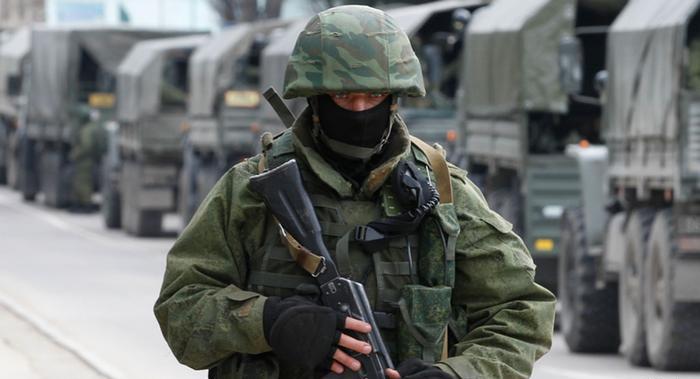
header photo: Biden says ‘this is the beginning of a Russian invasion’ as he announces sanctions
Photo taken from: Reuters
[SSB theme=”Official” align=”center” counter=”true” ]
On February 20, 2022, Belarus’ defense ministry announced that Russian troops which had been sent for military exercises and scheduled to return on Sunday would remain in the country indefinitely. The following day, Monday, February 21, 2022, Putin signed a presidential decree recognizing the independence of the separatist regions of Donetsk and Luhansk in eastern Ukraine. In his televised address, Putin described Ukraine as an integral part of Russia’s history and said eastern Ukrainian lands were ancient Russian lands.
On Tuesday, February 22, 2022, the upper chamber of the Russian Parliament, Federation Council, authorized the use of Russian armed forces in Ukraine. The Council’s decision comes after Russian President Vladimir Putin asked for the parliament’s permission to approve the use of the Russian military in the breakaway territories of Ukraine’s Donbas region. This decision marks the end of the Minsk peace deal which was signed in 2015 to bring peace to the area of Ukraine taken over by Russian separatists.
In his Monday address, Putin stated, “The Minsk agreements do not exist now, we recognized the DNR and LNR”. Condemnation from around the world swiftly followed. In response to the devolving situation, President Biden on Tuesday announced the implementation of sanctions against Russia. British Prime Minister Boris Johnson also said that the UK would press sanctions on five Russian banks. The German chancellor, Olaf Scholz on the same day, stopped the certification process for the Nord Stream 2 gas pipeline in response to Russia’s recognition of the two self-proclaimed republics. The U.S., UK, and EU together will impose harsh sanctions targeting Russian oligarchs, financial institutions, and its sovereign debt. The sanctions would effectively cut out the use of U.S. dollars (the global reserve currency) from the Russian institutions, as well as blocking it from trading in its debt using Western finance.

Photo taken from: The New York Times
(click or tap to enlargen)
President Biden also stated that NATO reinforcements would continue to operate in a defensive capacity, and would move additional troops to the Baltics to strengthen our Baltic Allies.
He emphasized that the United States would impose more sanctions if Russia moved forward with its invasion. Thus far only Cuba, Venezuela, Nicaragua, and Syria have joined Russia in recognizing the break-away regions of Donetsk and Luhansk.
As world leaders scramble to find appropriate counters to Russia’s invasion, the question now on everyone’s mind is, will Russia be content with its recognition of the regions within their current borders, or will it move to “regain” perceived lost territory of the separatist regions as a pretext for advancing further into Ukraine.

The Far-Right Insists That Even Butterflies Recognize Borders
The Far-Right Insists That Even Butterflies Recognize Borders
Environmental Policy Brief #136 | By: Todd J. Broadman | February 21, 2022
Header photo taken from: The Week
Follow us on our social media platforms above
Browse more environmental policy briefs from the top dashboard

Photo taken from: AZ Central
Policy Summary
[SSB theme=”Official” align=”center” counter=”true” ]
The politics of immigration along the border between Texas and Mexico now involves the National Butterfly Center (NBC). The NBC is a 100-acre nature preserve located in Mission, Texas. Since 1993, the NBC has served as a protected migratory refuge for the monarch, the rare pale sicklewing, and over 80 other butterfly species. They host 35,000 visitors annually, most of them school age children doing field education and were forced to close their doors recently.
Far-right conspiracists and QAnon followers have concocted a false claim that the NBC has been a hub for human-trafficking and illegal migration, and spread those allegations over social media outlets. Their motivation for doing so stems from the NBC’s actions to halt the building of a section of the immigration border wall through their property. The building of that section began unannounced in the summer of 2017 with contractors onsite cutting down trees. Even the US Border Patrol was uninformed of the construction. Armed federal agents are now onsite to protect the contractors.
One of President Joe Biden’s first actions after taking office was to issue an executive order to immediately stop border wall construction. 458 miles of border wall had already been built prior to Biden’s order. The wall consists mostly of 18- to 30-foot steel bollards anchored in concrete. With a federal mandate to stop construction, the state of Texas approved funding and carried on with extending the border wall.
Along with the NBC, the Children’s Museum of Denver and other non-profit public institutions across the country have had to close their doors because of safety concerns directed at staff and visitors that emanate from confrontational conspiracists.
The NBC filed a number of lawsuits, the first in December of 2017 claiming that the government violated the National Environmental Policy Act and the Endangered Species Act. The government also had not exercised eminent domain. The US Border Patrol does have the legal authority to “patrol” without a warrant, but not necessarily to build. In Arizona there has been active opposition from the native O’odham tribe as that section of wall passes through their ancestral sacred lands at Quitobaquito Springs.
The We Build the Wall organization is also tightly aligned: it is led by Trump’s former chief strategist Steve Bannon and founder Brian Kolfage. The organization used social media to spread the word that the NBC is run by “left wing thugs with a sham butterfly agenda” along with the “rampant sex trade” taking place on their property.
NBC Executive Director, Marianna Treviño-Wright, has been vocal in her defense of Butterfly Center’s mission and has been met with death threats. Along with her condemnation and lawsuits directed at the far-right, she points out that Democrats “are asleep at the wheel.” In late January, Virginia Republican congressional candidate Kimberly Lowe showed up at the Butterfly Center demanding to see “illegals crossing on rafts” and ended up allegedly pushing Treviño Wright to the ground. Scott Nicol, a McAllen-based environmental activist, said “Biden won’t build these border walls, but if Texas Governor Abbott wants to build them, we will give him free bollards.” He was referencing a government surplus purchase program used by Texas to buy 1700 unused wall panels.
Policy Analysis
While the NBC received a temporary reprieve in 2019 when the site was exempted from wall construction in a Department of Homeland Security spending bill, there will be continued political pressure for construction to continue. In all of 2021, Customs and Border Protection agents encountered more than 2 million unauthorized people at the southern border, a record high.
Jared Holt, a resident fellow at Atlantic Council who follows digital extremism points to a trend: “This conspiratorial wing has gained so much sway that we’ll see more politicians catering directly to it, and that means we’re going to get more Marjorie Taylor Greenes.” Biden’s executive order was even challenged by Arizona Attorney General, Mark Brnovich, with an argument that stopping construction required the government to do an environmental impact study. He went onto argue that gaps in the border wall actually “enticed migrants.” The federal judge ruled against Brnovich and in his ruling concluded that one cannot “attribute the immediate increase in migration to cessation of construction activities, given the border wall would not have otherwise been completed overnight.”

Photo taken from: Newsweek
(click or tap to enlargen)
The need for the butterfly refuge has inspired donors and activists. The North American Butterfly Association has acquired an additional 350 acres near to the current NBC acreage that will soon be developed as a refuge for the rare Manfreda Giant-Skipper.
Meanwhile, Marianna Treviño-Wright is plaintiff in two separate lawsuits aiming to halt construction of the border wall and a defamation suit against Bannon’s We Build the Wall. (Bannon has raised over $20 million from far-right activists under the pretense of building a private border wall).
Immigration from south of the U.S. border, based on living conditions in the “Northern Triangle” of Honduras, Guatemala, and El Salvador, is only expected to increase and this in turn is making activists on both sides of the aisle more vocal. What is taking place at the NBC now, portends further, more intense confrontations at the border between opposing sides. The issue will prove pivotal on the 2024 election stage.
Engagement Resources
Click or tap on resource URL to visit links where available

https://nationalbutterflycenter.org/ is dedicated to the conservation and study of wild butterflies in their native habitats.

https://www.scientificamerican.com/ is committed to sharing trustworthy knowledge, enhancing our understanding of the world, and advancing social justice.

https://www.borderreport.com/ provides real-time delivery of the untold local stories about people living, working and migrating along the U.S. border with Mexico.

How Race Has Emerged in Recent Redistricting Cases Months Before the 2022 Midterms
How Race Has Emerged in Recent Redistricting Cases Months Before the 2022 Midterms
Civil Rights Policy Brief #182 | By: Rodney A. Maggay | February 16, 2022
Header photo taken from: FiveThirtyEight
Follow us on our social media platforms above
Browse more civil rights policy briefs from the top dashboard

Photo taken from: Well News
Policy Summary
[SSB theme=”Official” align=”center” counter=”true” ]
For the first few months of 2022 reports emerged on the status of redistricting efforts in a number of states. Some of those battles have not been definitively resolved with one case even reaching the U.S. Supreme Court. Here is an update on those cases that are still ongoing and an analysis of the common themes found in the cases.
- On February 7, 2022 the United States Supreme Court refused to allow a federal district court order to redraw Alabama’s congressional map to go forward. The federal district court had ruled that the map drawn by the Republican controlled state legislature was likely in violation of Section 2 of the Voting Rights Act’s prohibition against vote dilution based on race.
- On February 8, 2022, arguments were wrapped up in an Arkansas State House redistricting case before U.S. District Court Judge Lee Rudofsky. The case is similar to the Alabama case in that the plaintiffs are challenging the recently drawn state maps as likely being in violation of Section 2 of the Voting Rights Act because of their weakening of Black Arkansans voting power. In the last decade Arkansas gained 30,000 black persons. But the new state House map reduced the number of black majority districts from twelve to eleven out of a total of 100 state House seats.
- On February 14th, 2022, the ACLU of Kansas and the Campaign Legal Center jointly brought suit to block Kansas’ new congressional map that had been drawn by the Republican controlled state Legislature. The map appears to have been intentionally drawn to defeat Representative Sharice Davids who is currently Kansas’s only Democratic member of Congress.
- In Georgia, Judge Steven Jones heard arguments as to whether Georgia’s new state legislative maps discriminate against Black voters in the state. Registered Black voters in Georgia increased 500,000 over the last decade and plaintiffs believe the maps were drawn to dilute the voting power of black voters in the state.
- On February 11, 2022, the NAACP of South Carolina filed a lawsuit against proposed congressional and state legislative district maps on the grounds that the new maps dilute Black voting power in a number of congressional and three state legislative districts.
Policy Analysis
According to former U.S. Attorney General Eric Holder, currently the chairman of the National Democratic Redistricting Committee, thirty – nine (39) states have completed their redistricting maps for Congress. Those states comprise 337 congressional districts. There are eleven states whose congressional redistricting has not been completed because of challenges to maps that had been drawn and submitted for approval. While some states such as Georgia and South Carolina are still debating new district maps for their state legislatures, there has been no comprehensive information on how many states have completed their state district maps for their state legislatures.
Of the eleven states remaining, a common theme has emerged to explain why these states have not completed their congressional maps and in some cases their state district maps. The proposed maps are being challenged on the basis of race and the state’s attempts to dilute the voting power of Black communities. Section 2 of the Voting Rights Act of 1965 explicitly prohibits voting practices that discriminate on the basis of race and color yet some states continue to ignore this prohibition especially when it comes to drawing new state legislative and congressional districts.
In Alabama, the claim that there was no racial gerrymandering was so weak that two Trump appointed judges ruled that there was an illegal gerrymander and Chief Justice Roberts even opined that the maps should not be allowed to go into effect. The case in Arkansas is just as stunning as Alabama as the Black population in Arkansas went up yet the number of majority Black districts redrawn in the proposed maps went down.

Photo taken from: MSNBC News
(click or tap to enlargen)
The theme in these states is to try and dilute the voting power of Black communities lest the states have to relent and concede a seat. And with many minority communities voting Democrat than Republican the redrawing of state legislative and congressional districts to accommodate another majority Black district would in essence be flipping a likely Republican district to one that would probably end up Democratic.
This is power politics being played at the expense of the Black community in many states, challenging their ability to participate fully in the democratic process. With the future of legislative proposals and elections being defeated by very slim margins , it is imperative that the selection of our representatives not be determined by the exclusion of a bloc of voters.
The representatives who cast their votes in state legislative house and Congress on issues that affect the lives of every citizen should be selected because they heard what their constituents have to say and not because only a selected few live in a particular district. The remaining eleven states can help to remedy this problem by choosing state maps that are not based on trying to exclude a selected minority community. LEARN MORE, LEARN MORE, LEARN MORE, LEARN MORE
This brief was compiled by Rod Maggay. If you have comments or want to add the name of your organization to this brief, please contact Rod@USResistnews.org.
Engagement Resources
Click or tap on resource URL to visit links where available

United States Department of Justice (DOJ) – guidance on enforcement of Section 2 of the Voting Rights Act of 1965.

National Democratic Redistricting Committee (NRDC) – non – profit group head by former U.S. Attorney General Eric Holder to combat gerrymandering and redistricting abuses.