

JOBS POLICIES, ANALYSIS, AND RESOURCES
Latest Jobs Posts
An Update on US GDP and the Economic Effects of Russia’s Invasion of Ukraine
Brief #136 – Economic Policy
By Greg Ziegler
The Bureau of Economic Analysis (“BEA”) released the second estimate of 2021 Q4 Gross Domestic Product (“GDP”) on Thursday, February 24th. The first advanced estimate was released on January 27th which showed fourth quarter growth in 2021 of 6.9% and third quarter growth in 2021 of 2.3%.
West Virginia School District Sued For Forcing Students To Attend Religious Assembly During School Hours
Brief #183 – Civil Rights
By Rod Maggay
On February 2, 2022 two homeroom classrooms at Huntington High School in the Cabell County School District in southwestern West Virginia were brought to a school assembly. The assembly was hosted by Nik Walker of Nik Walker Ministries. Nik Walker is an evangelical preacher and his group had been hosting revival events in the area with the purpose of exposing persons to Jesus Christ and Christianity.
Situation Update # 4: The Ukraine Crisis
Brief #146 – Foreign Policy
By Abran C
On February 24, 2022, the largest assault on a European state since World War Two began as Russia launched a full-scale invasion of Ukraine. Russian forces entered by way of air, land, and sea quickly spreading across the country. Areas outside of the capital Kyiv, such as the Chernobyl Nuclear Power Plant and Ukraine’s second-largest city Kharkiv have fallen under Russian control.
Figure Skating Drama: Adults’ Ambitions Can Kill Kids’ Health
Brief #147 – Health Policy
By Yelena Korshunov
Sport is beautiful, isn’t it? Many of us enjoy watching the Olympic games on TV. Mastery of fascinating figure skating and graceful rhythmic gymnastics enchant us. But what happens behind the curtain? What price do these gracious young teenagers in a big sport pay to meet adults’ ambitions? After Kamila Valieva, Russian teen figure skater, was cleared to participate in the Games despite testing positive for a banned drug, she finished fourth in the women’s individual figure skating competition at the Beijing Olympics.
The Remington Deal With the Sandy Hook School Massacre Victims’ Parents
Brief #33 – Social Justice
By Inijah Quadri
On the 14th of December, 2012, Adam Lanza, a 20-year-old shooter, murdered children and educators using a Remington rifle lawfully owned by Lanza’s mother.
Before turning the handgun on himself as police closed in on their Newtown house, Lanza killed his mother in her bed and then took the rifle to the school and opening fire for five minutes.
As a result of Lanza’s mental illness, fascination with violence, and access to his mother’s firearms, Connecticut’s child advocate called it “a prescription for mass murder”.
Views of Odessa Residents: First Day of Putin’s Invasion
Brief #145 – Foreign Policy
By Yelena Korshunov
I spent my childhood years in Odessa, a sunny seaport city in south Ukraine, on the Black Sea shore. People of more than 133 nations and nationalities have been residing in the Odessa region for hundreds of years. This multicultural melting pot induced tolerance to each other’s traditions, cultures, and languages. That is what was engraved in my childhood memory.
Virtual Realty Education: The Future is Now.
Brief #69 – Technology
By Erik Pillar
Virtual reality in the modern age sees increased potential for online learning and education amidst the continued Covid-19 pandemic.
Biden Administration Plans to Construct an Alternative Fuel Corridor Across the Country
Brief #137 – Environment Policy
By Jacob Morton
he Biden administration announced its plan to spend $5 billion to install electric vehicle (EV) charging stations along the nation’s highways. Biden’s plan will extend over five years, providing funding directly to states that submit their own plans for developing their portion of what the administration calls an “Alternative Fuel Corridor,” that would connect forty states along interstate highways across the country. The plan seeks to build half a million charging stations by 2030 so that owners of electric vehicles will be able to find a charging port anywhere within 50 miles of their location across all 50 states, the District of Columbia, and Puerto Rico.
Coping with Crisis: Teacher Shortages Will Last Longer than the Pandemic
Brief #50 – Education Policy
By Lynn Waldsmith
America’s teacher shortage, which was worsening even before the pandemic, is now reaching crisis levels in many parts of the country as a growing numbers of educators are not planning to ever return to the classroom.


Our Chance to Avert Climate Catastrophe May Have Gone Up in Smoke
Our Chance to Avert Climate Catastrophe May Have Gone Up in Smoke
Environment Policy Brief #131 | By: Todd J. Broadman | October 5, 2021
Header photo taken from: The Independent
Follow us on our social media platforms above
Browse more environmental policy briefs from the top dashboard

Photo taken from: Climate Central
Policy Summary
[SSB theme=”Official” align=”center” counter=”true” ]
80% of the world’s energy comes from coal, oil and natural gas; carbon sources which account for 89% of human-derived CO₂ emissions. These daily emissions have accumulated in the earth’s atmosphere to produce a global climate crisis; a recent U.N Intergovernmental Panel on Climate Change (IPCC) report forecasts global average temperature will rise 2.7 degrees Celsius by the year 2100. Accordingly, the U.N. Secretary General António Guterres has warned, “the world is on a catastrophic pathway.”
The U.N. report underscores the need for all the world’s CO₂ emitters to not only meet, but go beyond their Nationally Determined Contributions (NDCs). As specified in the 2015 Paris Agreement, The U.N. is charged with calculating the total impact of these NDC plans every five yers– and 86 countries have recently submitted NDC revisions. Based upon these revisions and current promises from big emitters like China and India, the globe is on course – not for a decrease – but for a 16% CO₂ increase by 2030. China has not submitted their required NDCs to the U.N. and they are the world’s biggest emitter; their position is that they will reach net zero emissions by 2060. Some countries, most notably Brazil, Mexico and Russia, have actually revised their pledges downwards with weaker emissions targets.
The overwhelming bulk (some 80%) of the 89% of human-derived CO₂ emissions come from the G20 nations.
For the U.S.’s part, President Biden has warned, in the midst of touring areas devastated by fires and floods, that America faces a “code red” moment (echoing the language of the U.N.’s IPC report). The U.S. has pledged to cut its emissions by 50 percent to 52 percent below 2005 levels by the end of this decade. On his inauguration day, Biden signed executive orders to rejoin the Paris Agreement and to cancel the Keystone XL pipeline. As well, he directed the Department of the Interior to pause new oil and gas leases on public land. His “whole of government” approach to combating the crisis has an “all-star climate team” charging the effort.

Photo taken from: Fox Business
In spite of this encouraging rhetoric though, his administration has defended Trump-approved oil-and-gas lease grants in Wyoming, a drilling project in Alaska, and chosen not to block the Dakota Access Pipeline. 2,100 new oil and gas permits have been issued since Biden took office – setting a pace that would exceed Trump. Two days after the U.N.’s Intergovernmental Panel on Climate Change released its report, his administration asked that OPEC ramp up its oil production. Plans have been announced to auction off 80 million acres in the Gulf of Mexico for drilling.
“We literally have no time to waste,” Biden said, and yet many of the clean energy initiatives in the bipartisan infrastructure bill have been removed in a compromise effort for its passage. New climate provisions have been added and time will tell if they will remain given the number of Democratic centrists pushing against them. On September 29th, Canadian oil company Enbridge announced that its Line 3 running across Minnesota, carrying oil from Alberta’s tar sands (a heavier crude that consumes more energy and generates more carbon dioxide in the refining process than lighter oil) is now “substantially complete.”
Crystal Cavalier, Biden’s campaign director for tribal engagement in North Carolina said, “Biden campaigned on helping tribes with climate justice. He’s not standing up.” In this instance, the administration chose not to revoke Enbridge’s federal permits.
Policy Analysis
To date, global temperatures have risen about 1 degree C since the late 19th century. Although Britain and the EU are close, no major emitters have a climate pledge in keeping with targets. The challenge for Biden and all G20 leaders as put forth by U.N. climate chief Patricia Espinosa, is: “Leaders must engage in a frank discussion driven not just by the very legitimate desire to protect national interest, but also by the equally commanding goal of contributing to the welfare of humanity.” Biden chose to appoint John Kerry as special envoy for climate. While he attempts to gain commitments, climate activists like Swedish teenager Greta Thunberg, demand an accounting: “whatever our so-called leaders are doing, they’re doing it wrong.”
Her admonitions are based upon the IPC report which concludes that even the existing pledges, if implemented as promised, will fall far short of what’s needed to limit global temperature rise to levels that would avert the worst impacts of warming.
In effect, the US and Russia who sit on half of the world’s coal, must leave 97% of it in the ground. This while Australia has pledged to keep producing and exporting coal beyond 2030. The Middle East must commit to not extracting two-thirds of their reserves – what to speak of the required moratorium on extracting carbon from under the Arctic.

Photo taken from: Bloomberg.com
Given that the Paris Agreement commitments and any associated new pledges are not enforceable, and that even major emitters are submitting numbers that are unlikely to avert temperature consequences, the “catastrophic pathway” that General António Guterres has described will likely unfold.
Complex environmental systems do not respond to politically negotiated pollution caps. The impacts from climate disasters and food shortages will continue to displace large numbers of people and accelerate species extinction. Alongside the hope for limiting climate change, governments must plan responses for an increasing pattern of more intense and larger-scale emergencies.
Engagement Resources
Click or tap on image to visit resource website.

https://www.ipcc.ch/ The Intergovernmental Panel on Climate Change (IPCC) is the United Nations body for assessing the science related to climate change.

https://climateanalytics.org/ Synthesize and advance scientific knowledge in the area of climate change and on this basis provide support and capacity building to stakeholders.

https://yaleclimateconnections.org/ aims to help citizens and institutions understand how the changing climate is already affecting our lives.

The U.S. House Select Committee Investigates the January 6 Attack on the Capitol: Part 2
The U.S. House Select Committee Investigates the January 6 Attack on the Capitol: Part 2
Social Justice Policy Brief #28 | By: Erika Shannon | October 5, 2021
Header photo taken from: Head Topics
Follow us on our social media platforms above
Browse more social justice policy briefs from the top menu

Photo taken from: Los Angeles Times
Policy Summary
[SSB theme=”Official” align=”center” counter=”true” ]
The case that is being built against those who participated in the January 6 Capitol riots is a slow one due to the sheer number of videos, pictures, and evidence related to the events. The House Select Committee on the January 6 Attack is doing their best to piece together the truth in the most non-partisan way possible. The most recent development from the Select Committee is their move to subpoena four people from former president Donald Trump’s administration. These are the first subpoenas that the committee members have issued. The panel is attempting to piece together what Trump was doing in the days leading up to the attack, and whether or not he played a direct role in the events that transpired.
Those subpoenaed include former White House chief of staff Mark Meadows and his deputy chief of staff, Dan Scavino Jr., as well as Trump’s former adviser Stephen K. Bannon and former Pentagon chief of staff, Kash Patel. The four men have until October 7 to turn over any relevant documents, and they must appear at depositions the following week. These individuals are being chosen, in part, due to their close ties with the former President. The Committee also believes these individuals had communications with the White House on or in the days leading up to the January 6 insurrection that took place.
Policy Analysis
There is evidence that Mark Meadows was in communication with organizers of the January 6 rally, including Amy Kremer of the group Women for American First. He also allegedly communicated with officials at both the state level and in the Justice Department as part of an effort to overturn the results of the 2020 election. It is important to note that this is not the first time that the Select Committee has sought out White House records relating to Mark Meadows.
Daniel Scavino Jr. was subpoenaed related to a discussion he was involved in with former President Trump; they were allegedly trying to discuss how they could convince members of Congress not to certify the election for Joe Biden. There is also evidence that Scavino promoted the January 6 March for Trump on Twitter, encouraging people to “be a part of history.” He was also tweeting messages from the White House on January 6, 2021.
A key reason Kash Patel is being subpoenaed is due to the fact that he was involved with discussions among senior Pentagon officials prior to and on January 6, 2021, regarding security at the Capitol. Kash Patel has also spoke on the fact that he was talking to Mark Meadows “nonstop that day.” Just like in the case of Meadows, this is not the first time the Select Committee has sought information about the steps taken at the Pentagon regarding national security both on and after January 6, including Patel’s role and his communications with other Pentagon officials.

Photo taken from: Forbes
As for Stephen Bannon, he reportedly communicated with former President Trump on December 30, 2020, urging him to focus his efforts on January 6. Bannon also allegedly attended a gathering at the Willard Hotel on January 5, 2021, where he was part of an effort to persuade members of Congress into blocking the certification of the election results the next day. Bannon also had a podcast titled “War Room,” and on his January 5 episode he stated, “all Hell is going to break loose tomorrow.”
The reasons that these four individuals have been subpoenaed are clear, and it is likely that the Select Committee will subpoena other individuals close to Trump in the future. According to chairman Bennie Thompson, it is the committee’s job to “identify and evaluate lessons learned and to recommend corrective laws, policies, procedures rules, or regulations.”
This Brief is part of an ongoing series on the Select Committee’s investigation; further updates will be provided as the investigation continues.
Engagement Resources
Click or tap on image to visit resource website.

To read the official press release regarding the subpoenas, click here.
Click here to submit tips directly to the House Select Committee.
A Primer on the Debt Ceiling Crisis
A Primer on the Debt Ceiling Crisis
Economic Policy Brief #125 | By: Rosalind Gottfried | September 29, 2021
Header photo taken from: Financial Times
Follow us on our social media platforms above
Browse more economic policy briefs from the top dashboard

Photo taken from: The Washington Post
Policy Summary
[SSB theme=”Official” align=”center” counter=”true” ]
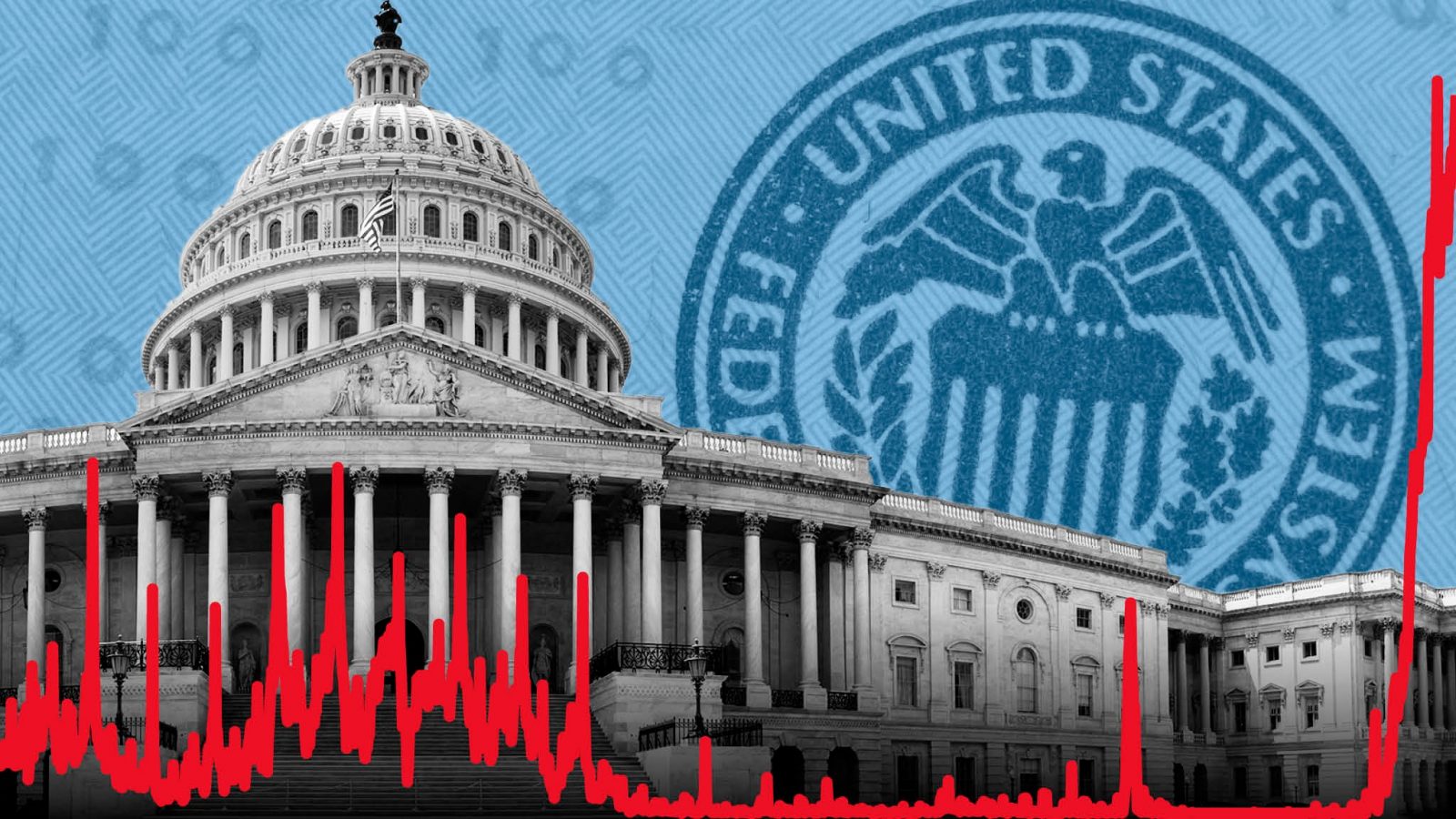
The deadline for Congress to pass a Bill to fund the government past the current fiscal year deadline of September 30th is fast approaching. The Republicans blocked a bill which would extend government spending and suspend the debt ceiling. The House passed the bill providing for government spending through December and suspending the debt ceiling through December 2022, after the mid-term elections.
Republicans unanimously refuse to support a hike in the debt ceiling. During the former administration, the debt ceiling was raised three times with bipartisan support and little public party wrangling. In fact, the debt ceiling has been raised over 80 times since 1960. The matter of raising the ceiling is urgent as even without a new Biden spending bill the US credit limit would need to be increased; 97% of the debt that precedes his administration. Many Americans will suffer if the government shuts down: 50 million seniors will not receive their social security checks, parents will not receive their monthly child credit, troops won’t get paid and myriad other expenses incurred by the federal government will be in default. The fallout can be catastrophic. The economic recovery will likely fall into recession as interest rates spike, stock prices drop, and dollars of growth and increases in employment will suffer reverses.
The long-term consequences of a shutdown surround the issue of maintaining a suitable credit rating since that is essential to the functioning of the economy; the US always has made payments on time and consequently has been able to borrow money more cheaply than other nations. If the country undergoes a change in its credit rating the result will be higher payments for everything depending on credit, ranging from mortgages, to loans, to credit card interest.
Policy Analysis
There are two ways the Senate can proceed to raise the debt limit. The House already has passed a Bill but the Senate is mired in partisan conflict and the Republicans refuse to be associated with any rise in the debt ceiling.
The Treasury Secretary and the Federal Reserve officials all support a bill rising the debt limit. Efforts to put a debt ceiling increase into the Biden spending plans have met with opposition, some of it from moderate Democrats.
There could be a stand-alone bill for the debt increase which would need only 51 Senate votes, representing 48 Democrats, two independents, and Vice President Harris as supporters.
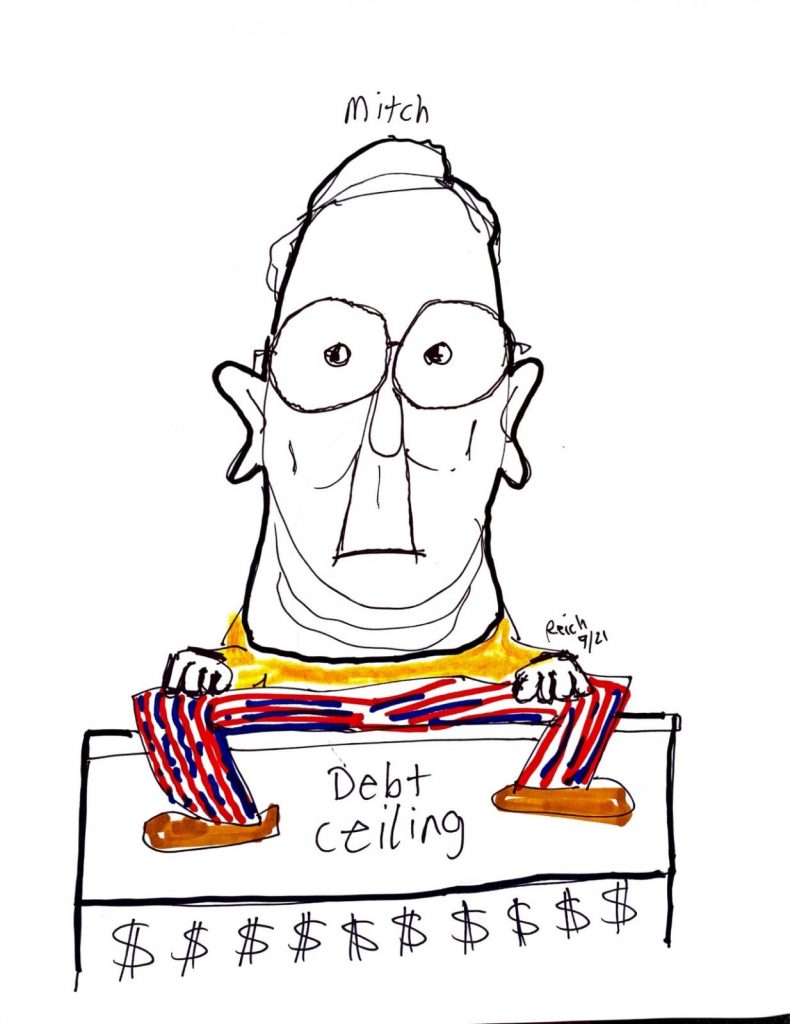
Photo taken from: Robert Reich
Or the Senate could pass a Budget reconciliation bill which also would not require a single Republican vote though such a measure could be held up by legislators’ efforts to attach amendments to the Act, a situation which has held put the process in the past.
The bottom line, failure to pass a debt ceiling increase would cause tens of millions of Americans hardships compounding those experienced from the pandemic and, perhaps more urgently, would extend financial hardship into the future by jeopardizing our long term credit rating.
Engagement Resources
Click or tap on image to visit resource website.


The Lesson of Afghanistan
The Lesson of Afghanistan
Foreign Policy Brief #132 | By: Brandon Mooney | September 28, 2021
Header photo taken from: WHYY
Follow us on our social media platforms above
Browse more foreign policy briefs from the top dashboard
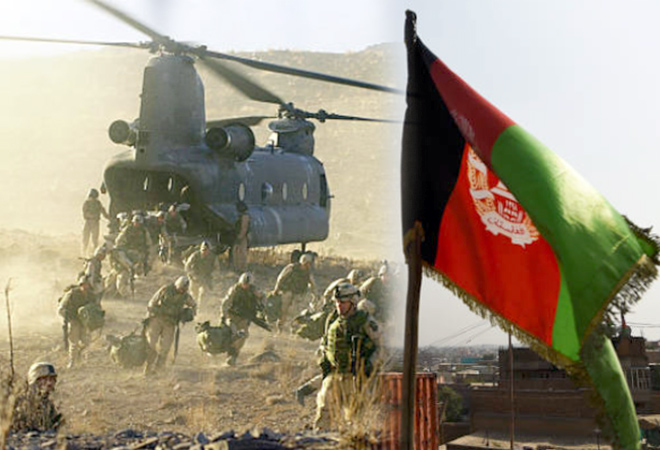
Photo taken from: ORF
Policy Summary
[SSB theme=”Official” align=”center” counter=”true” ]
With the U.S. military officially pulling out of Afghanistan, an almost 20-year conflict and the longest war in American history comes to an end, alongside a mandate from all those whose lives were lost and impacted to reflect upon what the war and its legacy meant. Although I am sure that the reader knows or at least has a general idea of the evolution of the War in Afghanistan, a quick summary is needed to better understand the coming analysis section and bring those who may not be as versed in the conflict up to speed.
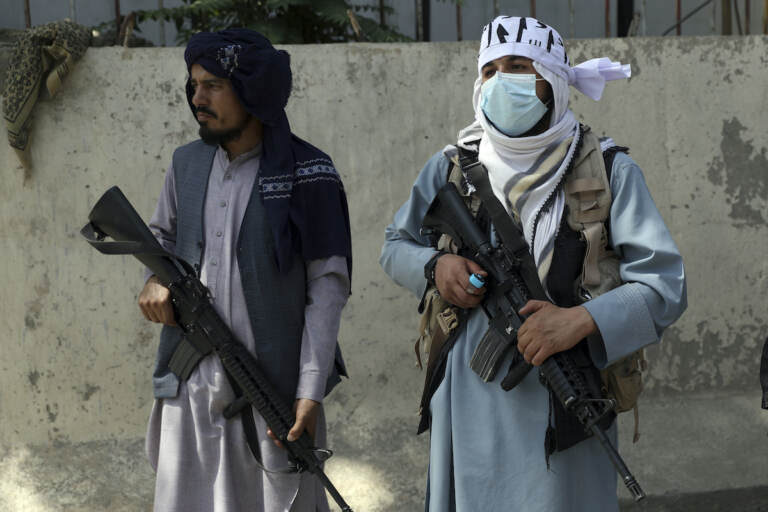
Beginning in 2001 following the 9/11 attacks on the Twin Towers in New York City, the Bush administration insisted that the Taliban-controlled government in Afghanistan hand over Osama bin Laden and cease allowing al Qaeda operatives to train, find haven, etc. inside the country. When these demands were not met, the U.S. alongside its NATO allies rolled into Afghanistan and toppled the Taliban regime within a short spate of time. A democratic government headed by Hamid Karzai and run by domestic Afghani elites that were friendly to Western powers and had been fighting the Taliban since the mid-1990s was put into place. It would not take long before said government was dogged by accusations of corruption, nepotism, and election fraud. Meanwhile, not only did bin Laden manage to escape, but the Taliban fell back to and began to operate out of Pakistan, conducting an effective guerilla campaign against U.S. and NATO forces for the remaining years of the war.
Rather than declare the mission objective of toppling the Taliban and preventing Afghanistan from being a sanctuary for terrorists threatening U.S. security, the Bush administration would begin a decades long endeavor to build a new Afghanistan in the image of the West, with women’s rights, democratic freedoms, a modern education system, etc. being chief aims. This nation-building effort would be picked up by the Obama administration, supported by other NATO powers, and tacitly maintained by the Trump administration, before being ended under the current Biden administration.
Policy Analysis
I am not arguing that any of these aims were bad or that the Afghani people are incapable of achieving these aims. Rather, I would argue that these aims were unrealistic due to the sustained will required on the part of the West to maintain necessary manpower and funding, the lack of most Afghani elites putting the national interest first, and the sponsorship of the Taliban by Pakistan.
From the beginning, the success of nation-building in Afghanistan depended upon U.S. and foreign support, which is only achievable through continued public will and support for said spending and conflict. Yet, according to the Pew Research Center, by 2009, 43% of Americans favored withdrawing U.S. troops as soon as possible. To achieve the re-making of Afghanistan, the U.S. and NATO would have had to stay in Afghanistan for many years longer and spend much more. The simple fact is that the American public grew tired and saw little, if any, positive progress.

Photo taken from: Organized Crime and Corruption Reporting Project
According to the Asia Foundation, surveyed Afghanis in 2012 said that corruption had grown in the past five years, with some evidence that the millions from NGOs and donations were only increasing an already endemic issue. Positioning themselves between those in need and Afghan donors, local warlords, government officials, law enforcement, and other Afghani entities grew impossibly rich. Transparency International has regularly ranked Afghanistan among the top 10 most corrupt nations in the world. The Karzai administration was regularly accused of election fraud, nepotism, taking bribes, not prosecuting connected persons, and stuffing ballot boxes. It is apparent from the swift collapse of the Afghani government following U.S. withdrawal that it was a straw man at best.
The Pakistani government has supported the Taliban since the beginning, with their interest being the establishment of a friendly regime in Afghanistan. Human Rights Watch would accuse Pakistan of financing, training, recruiting for, giving tactical support to, and sending their own troops to the Taliban before the U.S./NATO invasion. It was even reported that during the fall of the Taliban regime, Pakistani planes were used to evacuate Taliban fighters, Pakistani operatives, and al Qaeda over the border to safety. Bin Laden would later be found living in a compound in northeast Pakistan built in 2005 and less than a mile away from the Pakistani Military Academy. I no doubt stray a bit into conspiracy at this moment, but at the very least, Pakistan had a role to play in the continued insurgency.
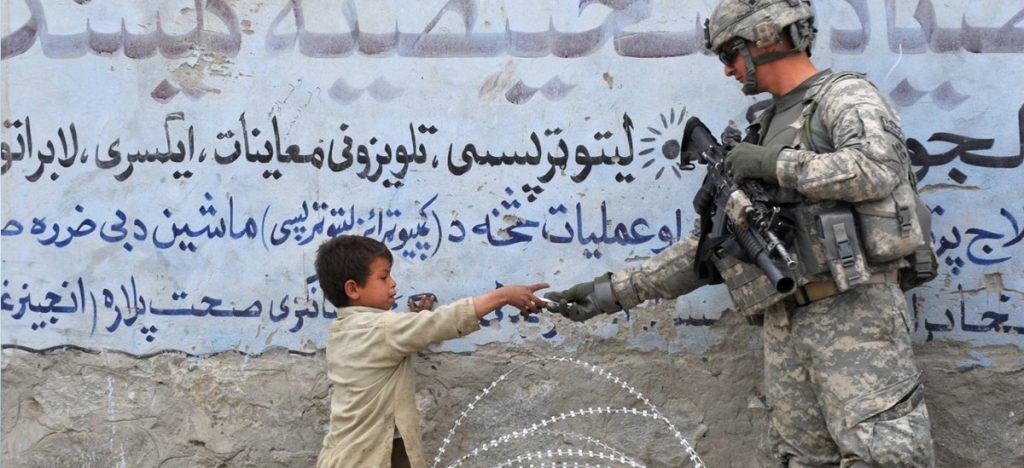
Photo taken from: Canadian Global Affairs Institute
Looking back on the long War in Afghanistan, I draw a few lessons for the U.S. moving forward. First, nation-building is rarely a success and requires a long-term occupation force backed by sustained public will and deep pockets. Wars and conflict are rarely so cut and dry to allow for such scenarios, and it is the height of arrogance to believe so strongly in American exceptionalism that we can overcome any obstacle. Second, democratic states without a strong judiciary, united national goals, and government officials accountable to the people are unlikely to stand for long. Once again, I would never suggest that the Afghani people are incapable of establishing a functioning judicial system or do not wish for better lives or that every official was corrupt. However, pressing Western ideals upon a people with their own or potentially fractured national identity, distinct culture, history, warring factions, and morals is challenging. As the Taliban reassert their control over Afghanistan and push back strides made in public education, women’s rights, religious freedom, etc., I do not see success or even failure. Nothing but a broken promise that was unrealistic from the start.
Engagement Resources
Click or tap on image to visit resource website.

Taimani One – a website with foreign policy briefs from NPR’s former head correspondent in Afghanistan.

Islamic Relief USA – a non-profit working to help Afghani refugees and immigrants.

A Guide to Air Travel in the Era of Covid
A Guide to Air Travel in the Era of Covid
Health & Gender Policy Brief #134 | By: S Bhimji | September 27, 2021
Header photo taken from: Getty Images
Follow us on our social media platforms above
Browse more health & gender policy briefs from the top dashboard

Photo taken from: CNN
Policy Summary
[SSB theme=”Official” align=”center” counter=”true” ]
Ever since the Covid pandemic started in early Jan 2020, airlines had lowered airfares, removed many of the cumbersome fees, and even started to provide snacks for economy passengers. And better still, the planes were less than 20% full, and often passengers had the entire row of seats to themselves. Cheap airfares across the country were readily available 24/7.
And many people took advantage of the low airfares and the best part was that there were no lines at the TFSA checkpoints, the check-in counter, or boarding the aircraft. So has anything changed with the airl
Policy Analysis
For those expecting cheap airline travel in 2021, you are going to be disappointed. Almost every airline lost billions of dollars in revenue last year but this is going to change in 2021. Now that mass vaccination has started, Americans who have been holed up in their homes for over a year are starting to travel.
Most airlines have increased the number of flights from major cities and the dreaded TFSA checkpoints lines have started to get longer. Searches for cheap airline fares on google are at an all-time high. But unfortunately, for the most part, the low ticket prices of 2020 have gone up in every category. And while the hated baggage fees have not seen a return, it is only a matter of time.
With the acceleration of the vaccine program, the airlines are already seeing heavy bookings for the holiday season, especially within the country. And as the Covid restrictions ease, the demand for air travel has started to rise and the airlines no longer feel they need to slash airfares.
The few deals available today are slightly better than those available during the precovid era but only for those who wish to travel midweek. Despite recommendations from the CDC that Americans delay trips, the number of passengers is gradually increasing each week. The airlines have taken note of the rise in Americans who want to travel and want to make up for the lost revenue in 2020. So do not expect fares to drop anymore.
So should you start flying?

Photo taken from: iStock
Americans tend to have short memories; during the height of the Covid pandemic, thousands of flights were canceled and many people only got vouchers or coupons from the airlines instead of money. Thousands of others lost money on their hotel reservations, pre-booked wedding halls, cruises, safaris, car reservations and much more.
The tourism industry is still fragile and now many parts of the globe, including our neighbors to the north, are dealing with outbreaks of Covid variants, which appear to be harder to treat. Job security is still an issue for many people and unemployment remains high. If you plan to go outside the US, be fully aware that many countries have made quarantine mandatory, at your expense. And when you return back to the US, you will have to show proof of a negative test, even if you have been vaccinated.
The time is too early to start spending; instead, people should be saving. Plus, almost every week there are reports of rowdy and drunk passengers who refuse to abide by the airline rules, causing long delays.
For those wishing to chill out at international beach resorts, the best advice is to go somewhere local by car. And if your locality does not allow you to chill out during the hot days, invest in an AC; and if you cannot afford that, then you need to be saving money instead of flying.
Engagement Resources
Click or tap on image to visit resource website.

Federal Aviation Administration: https://www.faa.gov/

Transport Security Administration: https://www.tsa.gov/

International Travel: https://travel.state.gov/content/travel/en/international-travel.html

Supreme Court Inadvertently Supports Vigilante Justice In Texas Abortion Law Case
Supreme Court Inadvertently Supports Vigilante Justice In Texas Abortion Law Case
Civil Policy Brief #174 | By: Rodney A. Maggay | September 19, 2021
Header photo taken from: Dallas Morning News
Follow us on our social media platforms above
Browse more civil rights policy briefs from the top dashboard

Photo taken from: UT College of Liberal Arts
Policy Summary
[SSB theme=”Official” align=”center” counter=”true” ]
On September 1, 2021 the United States Supreme Court issued its order in the case Whole Woman’s Health v. Jackson. The case began on July 13, 2021 when a lawsuit was filed in the Federal District Court for the Western District of Texas. The case was brought on behalf of a number of abortion providers in the State of Texas. The plaintiffs were seeking to prevent enforcement of Texas Senate Bill 8 (SB 8) before it took effect on September 1, 2021.
SB 8 bars abortions approximately six weeks after pregnancy. Additionally, the law permits any person to sue the health care provider to prevent them from performing the abortion and gives those persons who initiate a lawsuit money damages of $10,000 if they are successful in their lawsuit against the health care provider.
SB 8 was signed by Gov. Abbott and it was scheduled to become law on Sept. 1. The ACLU and others filed suit to stop the law from going into effect because they believed, correctly, it was against Roe v. Wade. The suit was going to take months and so they applied for a temporary restraining order against the law until the case was finished. An appeal was made in the Fifth Circuit Court of Appeals which was quickly denied. An appeal was then made to the United States Supreme Court shortly thereafter. In a 5 – 4 decision the Court declined to block SB 8 and the law went into effect on September 1, 2021. The ACLU case can still proceed to determine if the law is valid. But it will be in force starting September 1 while the ACLU case continues. LEARN MORE
Policy Analysis
While the Supreme Court’s unsigned order caused an uproar around the nation for its refusal to block enforcement of the Texas law that is clearly contrary to the 1973 Roe v. Wade decision that guarantees a woman’s right to an abortion, it is the legal and procedural discussion that raised the most questions about the Texas law.
A closer examination of the Texas law and the Supreme Court order show that the Court was not interested in making a statement that they were opposed to Roe v. Wade. SB 8 was uniquely written in that the burden of enforcing the new law would not be on state officials as is typically the norm. Enforcement of SB 8 would fall on ordinary Texas citizens who would be the ones bringing the lawsuits against state health care providers.
Texas state officials would have no role in enforcing the new law. This is what the Texas officials successfully argued to the Court – “it is unclear whether the named defendants in the lawsuit can or will seek to enforce the law against the Texas applicants.” Even in the dissenting opinion penned by Chief Justice Roberts, he notes the difficulty of trying to decide the unique facts of the case – enforcement of a law by ordinary citizens and not by state officials – that itself has not been decided by Texas state courts or other federal courts and which has not gone through the usual course of legal briefing and oral arguments like most cases. The Chief Justice would have barred SB 8 from taking effect until judicial proceedings have run their course.

Photo taken from: Elle
And based on the Court’s refusal to bar enforcement of SB 8 while the trial proceeds it has inadvertently sent a message that “vigilante justice” as contemplated with this abortion law is acceptable. While the reasoning of the court was based on allowing lower state and federal courts a chance to make a decision on the unique aspects of the case first before the Supreme Court hears it – allowing private citizens to enforce SB 8 – a result of the Supreme Court order is that people are now under the impression that ordinary citizens can take matters into their own hands. Any ordinary citizen, with no personal connection to a health care provider, can bring a lawsuit.
And the motivation for the lawsuit could be based only on money, as there is a $10,000 “bounty” if the lawsuit is successful. The Supreme Court could have suspended this law while the trial on the merits of the law continued. Instead, by letting the law go into effect the Supreme Court now could embolden other states to enact a similar anti – abortion “bounty” type of law.
And now, they have even opened the door for this unique “bounty” procedure to be used in other non – abortion cases. States might see fit to use the procedure of having ordinary bring lawsuits in cases involving free speech, racial justice, protests and for personal LGBQT activities. The Supreme Court has opened the door to a frightening set of enforcement possibilities that may not be limited to just abortion rights.
The Supreme Court’s order focused on the novel question of having ordinary citizens enforce the law. There are now concerns about what that might mean for other personal rights if the “bounty” procedure spreads to other states. The Supreme Court could have shut the door on this method of “vigilante justice” but instead the Supreme Court inadvertently supported it and may have made things worse. LEARN MORE, LEARN MORE
Engagement Resources
Click or tap on image to visit resource website.

American Civil Liberties Union (ACLU) – press release on Whole Woman’s Health v. Jackson decision.

Center for Reproductive Rights – non – profit group’s infopage on Whole Woman’s Health v. Jackson case.
This brief was compiled by Rod Maggay. If you have comments or want to add the name of your organization to this brief, please contact Rod@USResistnews.org.

The Frontlines of Gun Rights— Missouri’s “Second Amendment Preservation Act”
The Frontlines of Gun Rights – Missouri’s “Second Amendment Preservation Act”
Social Justice Policy Brief #27 | By: By Erika Shannon | September 27, 2021
Header photo taken from: St. Louis Public Radio
Follow us on our social media platforms above
Browse more social justice policy briefs from the top dashboard

Photo taken from: St. Louis Dispatch
[SSB theme=”Official” align=”center” counter=”true” ]
It is no secret that here in the United States, there is an invisible line dividing those who are in favor of more gun laws, and those who are opposed. Those who are opposed to gun reform and gun laws are usually staunch supporters of the Second Amendment (the right of citizens to keep and bear arms.”). Certain states feel that gun ownership outranks the safety of their citizens, and one of those states just so happens to be Missouri. This year, Missouri passed their “Second Amendment Preservation Act,” which essentially nullifies any federal gun laws. While the passage of such a law is no shock coming from a conservative state like Missouri, some of the implications behind the law are skirting on dangerous.
According to the text of the law itself, laws and rules that collect data, restrict or prohibit the manufacture, ownership, and use of firearms and accessories/ammunition within the state of Missouri exceed the powers granted to the federal government. The only exception is to the extent that the laws are either necessary for arming official military forces or militias. This is also taken a step further, as it is declared “that all federal acts, laws, executive orders, administrative orders, court orders, rules, and regulations, whether past, present, or future, that infringe on the people’s right to keep and bear arms…must be invalid in this state, including those that impose a tax, levy, fee, or stamp on these items as specified in the bill.”
The focus of a law like this is on the issue of states rights. Does a state have a right to nullify any actions of the federal government in relation to the 2nd Amendment? Missouri believes they do because their interpretation of the U.S. Constitution is a literal one: that people are allowed to own firearms because our Founding Fathers said so. Missouri lawmakers are ignoring the fact that we live in a world where gun control is absolutely necessary. According to the Gun Violence Archive, there have been over 500 mass shootings in 2021 alone. An even more staggering number is the fact that the total number of deaths in 2021 related to gun violence so far is over 32,000. The numbers are disturbing, yet states like Missouri wish to prohibit the federal government from doing their job to protect American citizens. If other states follow suit, we are looking at future baked with gun violence.
Policy Analysis
Besides nullifying any federal laws, orders, or statutes related to gun control, this Missouri law also makes it illegal for law enforcement officers to enforce or attempt to enforce any federal laws infringing on the right to keep and bear arms. If a law enforcement officer, or anyone else for that matter, attempts to knowingly deprive a Missouri citizen of the right to bear arms, they will be liable to the injured party for redress, including monetary damages in the amount of $50,000 per occurrence and injunctive relief. It is clear that the state of Missouri is taking the right to gun ownership very seriously, as enforcing such hefty fines is a big step in keeping federal government gun control laws out of their land.
It is unnerving that Missouri Governor Mike Parson is on board with a law that could potentially raise crime rates even more in his state. According to the World Population Review, Missouri has the second highest homicide rates in the United States with 9.8 homicides per 100,000 people. Data from 2018 indicates that about 85% of homicides in Missouri are gun-related.

Photo taken from: St. Louis Dispatch
The fact of the matter is that Missouri is not exempt from the gun crimes that our nation is facing. Missouri should also not be exempt from following federal laws meant to protect American citizens and possibly lower the amount of gun crimes that occur.
Lawmakers of Missouri clearly care more about the Second Amendment than they do about their own citizens. With Missouri’s choice to nullify any laws that impede Second Amendment rights, there is the question of what else Missouri’s government may push back on – there is fear Missouri Republicans will attempt to flout any vaccine mandates put forth by the federal government, a move that would cause much controversy in these uncertain times. Missouri has already made one unnecessary move against federal laws, so it is hard to know where they will draw the line.
Engagement Resources
Click or tap on image to visit resource website.

- To read the full text of Missouri’s Second Amendment Preservation Act, click here.

- Visit the World Population Review to learn more about crime rates in the U.S.

How Much Should You Walk for Good Health?
How Much Should You Walk for Good Health?
Health and Gender Policy Brief #133 | By: S Bhimji | September 22, 2021
Header photo taken from: The New York Times
Follow us on our social media platforms above
Browse more health & policy briefs on our header dashboard

Photo taken from: The Conversation
Policy Summary
[SSB theme=”Official” align=”center” counter=”true” ]
There is no question that walking is a good form of exercise. Not only is it free but it is safe. But how much walking is adequate for good health? Talk to ten fitness experts and one will most likely get 50 different answers. Today there are all types of gadgets that can monitor the number of steps you walk and the time it takes. Exercise fanatics have been tracking their steps for decades but a definitive daily goal has never been stated based on scientific evidence.
Personal fitness trainers have been recommending 10,000 steps a day and this number is included in most fitness gadgets. But where did this number come from? Have there been studies to show that 10,000 steps are the ideal number for good health? The answer is no.
The traditional goal of 10,000 steps was in fact a marketing ploy. Way back in the 1960s, a Japanese company released a step-tracking device and called it the ‘10,000 steps meter.’ Since then many fitness gadgets have employed this number as a way to guide consumers.
But the question is ‘Are 10,000 steps a day necessary for good health? Are they too little or too many?” Do people who walk 10,000 steps a day have better health?
Policy Analysis
A recent study just published in JAMA states that walking 7,000 steps a day may lower the risk of premature death. In an era of androids, iPhones, and wearable devices, this carries more significance. No longer will people have to wonder how many steps to walk to boost their health.
This study done by Boston researchers began in 2005 when they started to track 2,110 participants between ages 38-50 and followed them for an average of 11 years. The end result was that those who walked 7,000 steps a day had a 50-70 percent lower risk of premature death, compared to participants who walked less than 7,000 steps.
What stood out in the study was the 7,000 step milestone, which made a significant difference in health. This study is in stark contrast to the 10,000 step mark first established by the Japanese. The latest study showed that the 7,000 step mark was required to lower premature death and walking more was not associated with a further lowering of the death risk.

Photo taken from: Quint Fit
This study now provides some insight into what middle-aged Americans should be aiming for every day- but it is also important to understand that there is no one number recommended by the federal government.
In the world of fitness, it has always been believed that more strenuous exercises are more effective at lowering the risk of death than walking. However, this study may help Americans view walking from a different perspective. It is important to have reachable goals that can be attained by the majority of the population.
One can start walking slowly and gradually increase the number of steps. The best thing about walking compared to many other exercises is that it can be done anywhere, it is free, allows you to enjoy nature, nurtures the mind, and is safe unless you get hit by a bus while texting.
Engagement Resources
Click or tap on image to visit resource website.

Physical Activity Guidelines for Americans, 2nd edition. https://health.gov/sites/default/files/2019-09/Physical_Activity_Guidelines_2nd_edition.pdf

How much physical activity do adults need? –https://www.cdc.gov/physicalactivity/basics/adults/index.htm

American Heart Association Recommendations for Physical Activity in Adults and Kids

Why Universal Pre-K is So Important
Why Universal Pre-K is So Important
Education Policy Brief #59 | By: Lynn Waldsmith | September 21, 2021
Header photo taken from: Boston Public Schools
Follow us on our social media platforms above
Browse more education policy briefs on our header dashboard

Photo taken from: Verywell Family
Policy Summary
[SSB theme=”Official” align=”center” counter=”true” ]
The evidence is overwhelming that children who attend preschool not only dramatically improve the quality of their own lives but the welfare of their communities. Yet, far too many kids aren’t able to attend because their parents simply can’t afford it. President Biden is hoping to change that by making universal pre-K a reality, if Congress passes the $1.8 trillion American Families Plan.
The Plan calls for the federal government to invest $200 billion in universal preschool for all 3- and 4-year-olds through a national partnership with states, with states having to pay for about half of the cost when universal pre-K is fully operational. Such an investment would benefit an estimated 5 million children and save the average family $13,000.
It’s no secret that the most important years for a child’s learning and development occur from birth to age 5. And while many wealthy countries already provide free and broad access to preschool education, the United States merely offers a patchwork of private and public programs, making access to pre-kindergarten dependent on where children live and how much their parents earn.
In fact, only a handful of states and cities currently offer universal pre-K programs, including Vermont, Florida, New York City and the District of Columbia. These programs offer access to all children, though enrollment is not mandatory. Meanwhile, Colorado voters approved a tax on tobacco and vape products last year that will fund universal, free preschool for all 4-year-olds in Colorado beginning in 2023.
According to the National Institute For Early Childhood Research, about half of all 3-year-olds and a third of all 4-year-olds in the United States were not enrolled in preschool in 2019. The drought of universal pre-K programs hits children of color even harder. The Education Trust says only 1 percent of Latino children and 4 percent of Black children in the 26 states it recently analyzed are enrolled in state preschool programs.
Policy Analysis
A body of solid research has consistently shown how universal preschool benefits kids, families and society. For example, about 20 years ago (between 1997 and 2003) approximately 4,000 4-year-olds participated in a preschool lottery in Boston. Economists Christopher R. Walters, Guthrie Gray-Lobe and Parag A. Pathak studied the Boston school data surrounding these now 20-somethings, both those who attended the preschool program and those who didn’t.
They found that the children who attended just one year of preschool were less likely to get suspended from school, less likely to skip class and had a high school graduation rate of 70 percent – 6 percentage points higher than the kids who weren’t lucky enough to be selected for preschool. More than half of the preschoolers – 54 percent – went to college, eight percentage points higher than their counterparts who didn’t go to preschool. These results were bigger for boys than for girls.
But going to preschool does not necessarily translate to better performance on standardized tests. Research suggests that preschool helps kids develop “non-cognitive skills,” like emotional and social intelligence, grit and respect for the rules.
“The combination of findings — that we don’t see an impact on test scores, but we do see an impact on these behavioral outcomes and the likelihood of attending college — is consistent with this idea that there’s some kind of behavioral or socio-emotional, non-cognitive impact from preschool,” says Christopher Walters, an economist at UC Berkeley who co-authored the study.

Photo taken from: American Public Media
One of the most famous studies measuring the effects of preschool education is the Perry Preschool Project, which was conducted in Ypsilanti, Michigan by Nobel Prize-winning economist James Heckman. He has been conducting experiments and studying the results of the program from the 1960s until just a few years ago. The program provided two years of high-quality preschool for disadvantaged 3- and 4-year-olds.
Heckman found that the kids who participated were less likely to get arrested, to go on welfare or to be unemployed as adults. They also earned significantly more. In 2019, Heckman and his colleagues concluded that even the children of the children who attended the Perry preschool had markedly better outcomes in life.
For every dollar the Perry Preschool project invested in kids there was a return on investment of 7-10 percent per year, Heckman estimates, through increased economic gains for the kids and decreased public spending on them through other social programs when they got older. In fact, “the Heckman Curve” maintains that the government gets a better return on its investment the earlier it provides resources to educate people. In other words, teaching toddlers is more powerful than educating older students in high school, college or in job-training programs.

Photo taken from: CNN
Other advantages of universal preschool education include more diverse learning environments and encouraging parents to become more involved in their children’s education.
The COVID 19 pandemic seems to have made the idea of universal pre-K largely a nonpartisan issue. However Biden’s pre-K proposal still has a long way to go. There are concerns that expanding public preschool options may hurt the quality and availability of infant and toddler care. And, of course, the biggest concern is the cost.
Politicians will argue whether $200 billion is too much or too little, but the bottom line is that all kids can benefit from high quality universal pre-K, though disadvantaged children will likely benefit even more.
“We can’t be afraid of the size of the budget that’s required,” said Mary King, a professor of economics emerita at Portland State University. King told the education news outlet EdSurge that compared to the funding needed for K-12 schools, it’s a drop in the bucket. “It’s just a few years of education, and it’s critical that whatever we do is high-quality.”
Engagement Resources
Click or tap on image to visit resource website.

President Biden’s plan for universal pre-school:

The Education Trust report on how children of color and low-income children most lack access to pre-school programs:

“The Long-Term Effects of Universal Preschool in Boston”:
“Intergenerational and Intragenerational Externalities of the Perry Preschool Project”:

The Heckman Curve:

“The Effects of Tulsa’s Pre-K Program on Middle School Student Performance”:

“The Impacts of Expanding Access to High-Quality Preschool Education”:

“The Effects of Universal Preschool in Washington, D.C.”:

Monitoring of Virtual Workers: Is it Legal?
Monitoring of Virtual Workers: Is it Legal?
Health & Gender Policy Brief #132 | By: S. Bhimji | September 20, 2021
Header photo taken from: SHRM
Follow us on our social media platforms above
Browse more health & gender policy briefs

Photo taken from: Insperity
Policy Summary
[SSB theme=”Official” align=”center” counter=”true” ]
Because the Covid pandemic has not ended, millions of Americans still continue to work from home. And in many cases, their companies are supplying the computers and even paying for the home internet costs. But employees should not feel elated or special; the reason companies are providing the latest PCs to employees for virtual work from home is because they can be monitored.
Today, there are many tracking devices available that can monitor almost every aspect of the virtual worker including login and log-out times, the keystrokes, and all the websites that the employee visits during work hours. Even something as innocuous as Zoom video conferencing is being used to monitor employees. Employers can now use Zoom analytics to see what the employee is doing, what he/she is saying, and if they are on another website at the same time. So if you think you can pretend you are at the Zoom meeting and no one knows what you are doing- think again.
All over the USA, sales of monitoring spyware have tripled; both small and large businesses including financial services, IT companies, consulting firms, call firms and many more have been getting their PCs upgraded to include spyware to track employees.
Surveillance in the workplace is not new at all. For decades, hotels, banks, restaurants, and retail stores have used surveillance cameras to ensure employees are not stealing, taking unnecessary breaks, or treating customers poorly.
The vast majority of virtual workers may not be aware that they are monitored. But the fact is that in almost every state, the employer is under no obligation to tell the employee about the monitoring.
Policy Analysis
Unlike Europe, US employers do not need to get consent from the employee for monitoring and the laws overall tend to favor the employers but do vary from state to state.
For example U.S. Federal Telecommunications Regulation 2000, a privacy act intended to govern electronic communications, allows employers to monitor employees without the employee having given consent. However there is a fine line between legal and illegal. Only if the employer believes that the employee is involved in criminal activity, absconding, or not being productive, do they have the legal right to monitor that employee. However, in some liberal states (e.g. California), monitoring of employees is not permitted without consent. In other states, employers need to inform the employees that they will be monitored
How much the employer can monitor in the employee’s home still is debatable – recording audio and video in the home of the employee that does not pertain to work can run into legal issues. The other question is how much surveillance is done and how long will the data be maintained; will it be shared with other companies?. So far all this is a grey area and Congress has not addressed the issue.
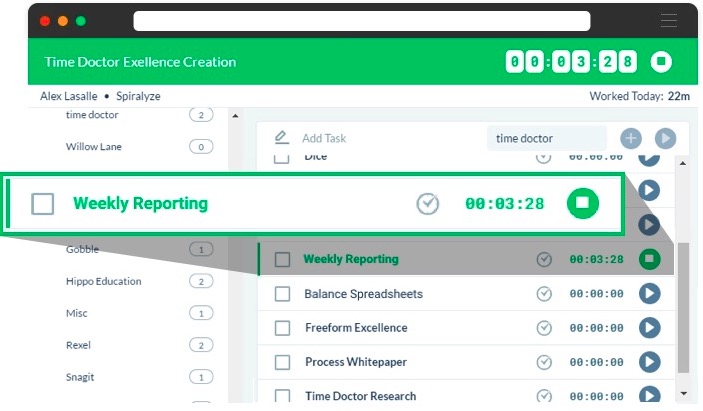
Photo taken from: Time Doctor Blog
However for years even the federal government has been placing signs and sending regular notices to all government employees that all email is government property and there is no right to privacy during electronic communications.
So what choices does the employee have?
- Look for another virtual job but there is no guarantee that the new employer will not track you.
- Abide by the rules and work hard. This is the simplest solution.
- Go back to the office and refuse a virtual job; this is only possible if there is a physical job available.
The Microsoft Approach
To ensure that the employee is not disheartened by the monitoring, Microsoft has developed an analytical tool that measures employee performance. At the end of the month, this data is provided to the worker rather than to human resources; so that workers can see what he or she needs to do to improve productivity and yet have a balance in work-life activities.
Engagement Resources
Click or tap on image to visit resource website.

The Evolution of Time Tracking
https://www.workpuls.com/blog/evolution-time-tracking

Introduction: Privacy in the Workplace
https://cyber.harvard.edu/privacy/Module3_Intronew.html
PRIVACY IN AMERICA: ELECTRONIC MONITORING
https://www.aclu.org/other/privacy-america-electronic-monitoring