The ongoing, contentious debate over public monuments is not a referendum on history, but a profound struggle over power, memory, and the definition of public space. For generations, city squares, parks, and government buildings have been dominated by statues celebrating figures of colonialism, slavery, and state violence—from Confederate generals and slave traders to architects of Indigenous genocide. These monuments have never been neutral historical markers. They are active political statements, erected to assert a specific, dominant narrative of power and to legitimize a social hierarchy built on white supremacy.

Search Results
Fortress Borders: the Rise of Anti-Immigrant Nationalism (Immigration Policy Brief #192)
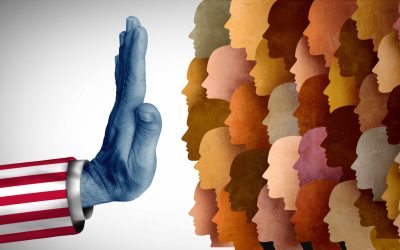
International migration continues to grow, with the UN’s International Organization for Migration (IOM) estimating there were 281 million international migrants globally in 2020. While much migration is South-South (between developing nations), displacement from conflict, climate change, and economic instability drives significant South-North movement. This visible migration has become a foundational issue for populist movements, particularly in Europe and North America, which frame migrants as a threat to cultural identity and national security. In response, governments are increasingly adopting deterrence-focused policies, raising significant human rights concerns.
The Youth Vote: Is There Much of One? Can It Make a Difference? (Social Justice Policy Brief #179)
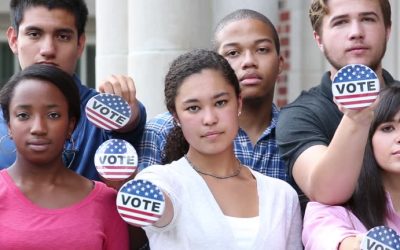
Young voters are often called a “sleeping giant,” and in 2024, nearly half of eligible 18–29-year-olds voted—about 47%. That’s slightly less than in 2020 but more than in 2016. Turnout varied widely: states like Minnesota and Maine had over 60%, while Oklahoma and Arkansas were in the low 30s. These differences are closely tied to state policies. Places with easy registration and voting options—like online registration, same-day registration, and mail voting—had higher turnout. States with strict ID laws and limited access saw lower participation. In short: young voters showed up in 2024, but where and how much they participated depended heavily on state policies and systemic barriers. You can explore more in CIRCLE’s full analysis or theMAP youth voting report.
Is It Time to Take a Look at Our Own Gun Laws? (Social Justice Policy Brief #178)
Gunfire remains a defining crisis in the United States. On an average day, roughly 125 people are killed with guns and many more are wounded, a toll that reverberates through classrooms, workplaces, and families. Recent data compilations show that by late August 2025 the country had already endured more than 300 mass shootings this year, with hundreds killed and well over a thousand injured. These are not abstractions; they are neighbors, classmates, and coworkers.
Where Gerrymandering Comes From—and Where It’s Going (Elections & Politics Brief #193)
Gerrymandering began as a nineteenth-century power play in Massachusetts, when Governor Elbridge Gerry signed a state senate redistricting bill whose oddly shaped Essex County district reminded a newspaper illustrator of a salamander. The nickname stuck, and so did the tactic: drawing electoral district lines to advantage a party or faction and to weaken cohesive communities of interest.
The U.S. Government Turns the Other Cheek to Resolving the Israel–Palestinian Conflict (Foreign Policy Brief #215)
Under the Trump administration, U.S. policy has shifted in tone, language, and substance: Washington has openly embraced Israeli priorities while sidelining Palestinian rights and claims. What had long been presented as a balancing act—security guarantees for Israel paired with a rhetorical commitment to Palestinian statehood—has become a policy that favors one side almost exclusively.
A Review and Analysis of the Health Policies of RFK Jr. (Health & Gender Policy Brief #181)
Robert F. Kennedy Jr., confirmed on February 13, 2025, as U.S. Secretary of Health and Human Services under the Trump administration, launched a sprawling “Make America Healthy Again” (MAHA) agenda targeting chronic illness, food quality, and vaccine policy. His platform positions ultra‑processed foods (UPFs) and environmental toxins as primary drivers of America’s health crisis. Prominent proposals include banning UPFs in schools, nursing homes, and prisons; eliminating synthetic food dyes; restricting SNAP purchases of junk food; and overhauling the quintennial Dietary Guidelines to emphasize whole, minimally processed foods.
TikTok vs. U.S. Government: The Battle Over Data Privacy and Platform Ownership (Technology Policy Brief #153)
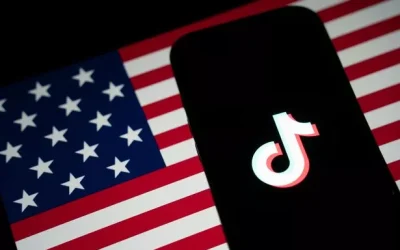
The clash between TikTok and the U.S. government centers on national security and data privacy concerns tied to its Chinese parent company, ByteDance. TikTok, with around 170 million American users, faces a federal mandate under the Protecting Americans from Foreign Adversary Controlled Applications Act (PAFACA), signed April 24, 2024, requiring it to divest its U.S. operations or face a nationwide ban effective January 19, 2025. The Supreme Court upheld PAFACA in TikTok v. Garland on January 17, 2025, finding it constitutional and not in violation of First Amendment rights.
How Elon Stays in Business (Economic Policy Brief #89)
Elon Musk’s corporate empire—Tesla, SpaceX/Starlink, X, Neuralink and the Boring Company—has become a single, privately steered ecosystem whose combined annual revenues now rival the GDP of a midsize nation.
AI Regulation: Who’s Up to the Challenge? (Technology Policy Brief #150)
Artificial intelligence (AI) is the discipline of designing computer systems that can perform tasks normally requiring human cognition—pattern recognition, language generation, planning—by learning statistical relationships from large data sets. Modern AI works by training vast machine-learning models on petabytes of text, images, audio, and code and then applying those models to new inputs to produce predictions or content; it now powers everything from chatbots and fraud detection to medical imaging and autonomous drones.