Brief #1—U.S. RESIST NEWS Media Blog
By John McCabe
The death of George Floyd not only sparked more than three months of protests against police brutality and racism, but also made these issues a focal point of the 2020 presidential election.


Brief #1—U.S. RESIST NEWS Media Blog
By John McCabe
The death of George Floyd not only sparked more than three months of protests against police brutality and racism, but also made these issues a focal point of the 2020 presidential election.
U.S. Resist News Op Ed
The most important goal in the upcoming presidential election is to win. We need to win the presidency, maintain control of the house, and flip the senate.

Brief #127—Civil Rights
By Rod Maggay
On June 10, 2020 Amazon.com announced that they would implement a one-year moratorium on providing Rekognition to law enforcement agencies. Rekognition is Amazon’s face recognition software that allows a user to scan a crowd of persons and quickly match a photo of a person’s face to a database of people’s face photos
Brief #1—Criminal Justice
By Ivan A Moore
Over a week after protests began in Minneapolis, demonstrations continue in dozens of cities. While these civil rights protests were intended to be peaceful, violence has erupted on a scale unheard of since the riots following Dr. Martin Luther King Jr’s assasination.
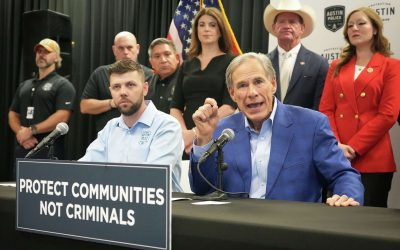
On May 15, Texas Governor Greg Abbott announced a new initiative titled “Protect Communities, Not Criminals,” which includes a proposal to create a statewide prosecutor with the authority to override local district attorneys in certain cases. This proposed role would allow a state-appointed prosecutor to step in when a local prosecutor has not secured an indictment within 90 days, effectively creating a “backstop” to ensure cases move forward. Supporters of the proposal frame it as a necessary response to what they describe as “rogue prosecutors” local district attorneys who decline to pursue certain categories of crimes based on policy or resource limitations. The initiative is presented to ensure consistency in enforcement across Texas counties and to prioritize victims’ rights.
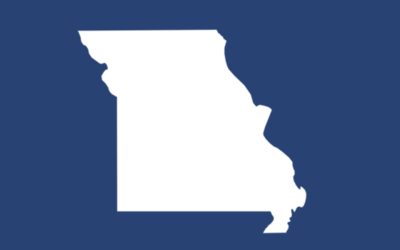
Missouri, the “Show Me State,” enters the 2026 election cycle as a firmly Republican-controlled state, with all eight U.S. House seats on the ballot and no Senate race this cycle. Democrats currently hold just two congressional districts, MO-01 and MO-05, represented by Wesley Bell and Emanuel Cleaver, respectively. Both districts are anchored in the state’s urban cores of St. Louis and Kansas City and are considered safely Democratic.
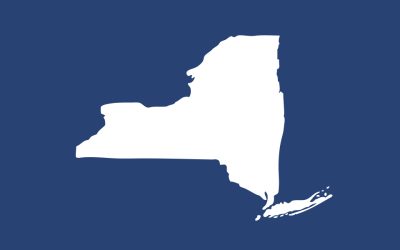
New York often sits in the average voter’s mind as a solid blue state, almost as a homogenous Democrat stronghold. With the recent election of Zohran Mamdani as the mayor of NYC, one wouldn’t be faulted for assuming that the rest of the state is skewed towards the left to some degree. Representatives like Alexandria Ocasio-Cortez, House Minority Leader Hakeem Jeffries, and Senate Minority Leader Chuck Schumer lend credence to this impression.
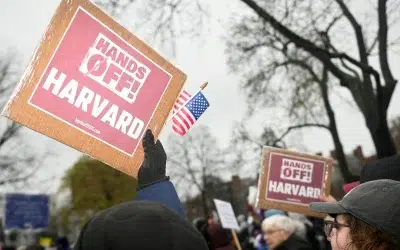
From Harvard to Stanford, the message was unmistakable—comply or be cut off. The campaign, launched soon after Trump’s return to office in 2025, has transformed federal education funding into a weapon aimed squarely at the nation’s most prestigious campuses.
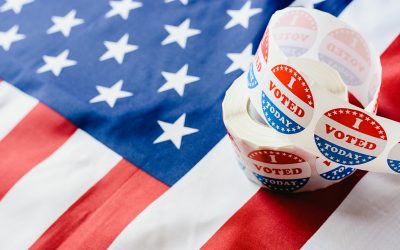
With only nine months of his presidency in the books, President Donald Trump has undertaken a radical reshaping of American democracy. From its courts to its liberties, Trump is actively pushing for an American society that serves him and his movement.
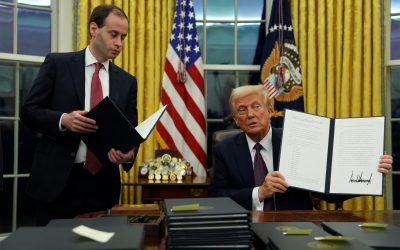
Presidential pardons are a constitutionally granted power, intended to serve as instruments of mercy, justice, and healing. But under President Donald Trump’s second term (2024–2025), this power has again been wielded as a political tool, continuing a controversial legacy from his first term. The recent wave of pardons reflects a continuation—and escalation—of Trump’s willingness to use executive clemency to reward loyalists, pardon convicted political allies, and whitewash wrongdoing linked to his political movement.