Brief #16—Elections and Politics
By Zack Huffman
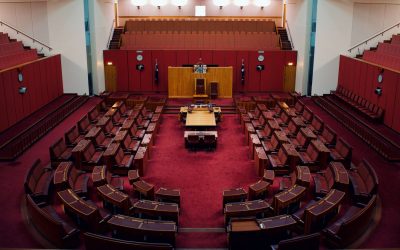
The Democrats now have slight control of the 50-50 Senate with Vice President Kamala Harris’ tiebreaker vote. Much like the former time the Democrats held the Senate, there is some discussion about whether or not to remove the filibuster, which allows the minority party to block votes on bills they are fighting. The fact that the Democrats failed to move the John Lewis Civil Rights Act past a filibuster in 2020 has further compelled some legislators to favor an end to the filibuster before the GOP can block future Senate bills. The longest filibuster to date is still the one Sen. Strom Thurmond preformed in his failed attempt to block passage of the Civil Rights Act of 1957. The late Dixiecrat spoke for 24 hours and 18 minutes before the law was finally passed 72-18. Thurmond would later switch parties from Democrat to Republican in protest over the passage of the 1964 Civil Rights Act.
Search Results
Artificial Intelligence —Will It Really Take Away Our Jobs?
Brief #37—Technology
By Linda F Hersey
Artificial intelligence is poised to take over many job functions beyond bolting doors on vehicles at auto plants or filling orders at Amazon warehouses. Jobs that many people assume require a human touch are at risk. They include roles in telemarketing, bookkeeping, employee compensation, office administrative duties, delivery services, proofreading and market research analysis. Within five to 10 years, driverless cars and trucks are expected to transform road transport services, including long-haul trucking and popular door-to-door food delivery. Should humans performing more complex business functions be looking over their shoulder? Perhaps. Emerging roles of artificial intelligence across industries are diverse and sweeping in scope, including entertainment/media, financial services, health care and energy.
GameStop, Reddit and Free Trading Apps A Threat to Economic Recovery?
Brief #36—Technology
By Charles A Rubin
The drama surrounding the wild trading and social media fueled speculation in the shares of stocks GameStop, AMC Entertainment, Bed Bath & and Beyond, Blackberry and other underperforming companies has thrust Wall Street near the top of a crowded list of issues that President Joe Biden’s regulatory team needs to tackle early in its term.
The wild fluctuations in these stocks which played out in the waning days of January revealed a new dynamic of Reddit subgroups, trading apps with no business model for profit and sophisticated social media personalities. There is excitement that the individual investor will be able to reap the benefits that had been only available to savvy and secretive Wall Street types. There is equal concern that we are creating bubbles that will seriously damage our economy when it can least sustain any more shocks.
Who gets a second chance?
Opinion Editorial
By Anand Giridharadas
In theory, second chances are a good thing. I mean, we all need them. Many of the ancient religions counsel mercy, and second chances are the natural consequence of that. Situations are not identities. Your worst deed is merely a situation. You should have the chance to become more than that deed, to transcend it.
But as the Trump era fades and a new wave of second-chance-seeking gets under way, I have been wondering: Who gets second chances and who doesn’t, what must you do to get one, and how is that connected to all the people who don’t even get first chances in America?
After President Trump’s acquittal in the Senate, what we’ve known all along was confirmed once again, and flagrantly: that certain people, especially if they are rich and powerful and white and male, enjoy total impunity in American public life. There will be no consequences for Donald Trump. Maybe some prosecutor somewhere will find a spine, but I wouldn’t bet my coffee on it.
Democrats Take Control of Committees Increasing Chances the Senate Will Get Things Done
Brief #150—Civil Rights
By Rod Maggay
On January 3, 2021 Vice President Michael Pence administered the oath of office to six new senators who had been elected in the November 2020 elections. Additionally, those senators who had won re – election in November were also sworn in. Two days later, elections were held in Georgia for both of Georgia’s Senate seats and a Democrat won each race. Their victories ensured that seats in the U.S. Senate would be equally split between Republicans and Democrats 50 – 50. Kamala Harris’ election as Vice – President gave the Democrats the ability to cast the tie – breaking vote if any vote in the chamber resulted in a tie.
Trump and Marjorie Taylor Greene
Us Resist News Blog
By Sean Gray
Last week’s vote to remove freshman Congresswoman Marjorie Taylor Greene from her committee posts didn’t end the GOP’s problem with her, but underscored it. Many Republicans were no doubt hoping for a return to normalcy after four years of Donald Trump’s chaotic leadership. This was always a pipe dream and the representative from Georgia’s 14th district illustrates that Trump’s presidency may have been unprecedented, and the political movement he inspired has staying power. Greene has no experience in government. She is a half-hearted businesswoman with more bombast than sense. She gained political recognition through the creation and dissemination of absurd conspiracy theories. Sound familiar? If Donald Trump was a symptom rather than the disease, Greene is a next-gen mutation. She can’t inflict the damage Trump did from the Oval Office. But her presence in Congress is a troubling commentary on the state of American politics. And her Republicans colleagues know it.
New Efforts Seek to Reduce Growing Rates of Child Poverty
Brief #109—Economics
By Rosalind Gottfried
President Biden seeks to raise the child tax credit to $3600 for children under 6 and to$3000 for school age children under 18. This is up from the current level of $2000 per child. As part of the stimulus, this change would become effective in July and last for one year though many Democrats would like to see the change made permanent. The credit would be available to individuals making $75,000 or less and couples making $150,000 or less. It would be based on income data from 2019 or 2020. To increase the effectiveness of the tax break, families could receive monthly payments of between $250 and $350 to meet their routine bills. Researchers at Columbia University estimate that this measure could reduce the child poverty rate by close to 50%. The proposal gained support with the weak jobs report released last week. The cost of the program would increase the federal deficit by 120 billion dollars.
General Motors and Wall Street can’t wait to plug into the new economy
Brief #108—Environment
By Todd J Broadman
Soon after President Biden’s election victory, General Motors Corporation (GM) publicly stated their vision: to manufacture vehicles that feature zero carbon emissions. That vision is the leading feature of their “triple zero,” which also includes zero congestion and zero crashes (through advanced safety technologies and self-driving vehicles). Over the next 15 years, GM will completely phase out the production of petroleum powered vehicles and will solely manufacture electric vehicles (EV). There are to be 30 such EV models available by 2025.
Will the US Approach to the Security Council Change with the Biden Administration?
Brief #106—Foreign Policy
By Will Solomon
The relative weakness of the Security Council can be ascribed to multiple factors: its limited budget, differing interests among members, the veto power of permanent members. With respect to the US, its weakness of late is certainly due in part to the aggressive anti-internationalism of the Trump administration. But the problems in the Security Council have far deeper roots, many of which stem from a long history of US (in particular, but other states’ as well) unilateralism as regards the UN and other international institutions.
Biden Signs Three Executive Orders to Reverse Xenophobic Policies
Brief #114—Immigration
By Kathryn Baron
Earlier this week, President Biden signed three Executive Orders to begin the lengthy process of undoing Trump-era immigration policies that have stained American foreign policy and international perception. The Senate had just confirmed Alejandro N. Mayorka as Secretary of Homeland Security – in which all but seven Republican voted no, which accurately depicts the divisions in the US government about American attitudes towards foreigners. Mayorka will be the first Latino-American of his position.