Brief #72—Economics
By Rosalind Gottfried
The economic conditions preceding the pandemic, aggravated by the likelihood of extended unemployment, could bring the poverty level to 25% or higher, especially for nonwhites. By some projections, from a Columbia University study, the unemployment rate could reach 30% resulting in 15.4% falling into poverty.
Search Results
President Trump Surpasses President Bush In Number of “Not Qualified” Federal Judicial Nominees
Brief #121—Civil Rights
By Rod Maggay
During Donald Trump’s presidency the American Bar Association (ABA) has rated nine of his nominations to the federal bench as “not qualified.” Six of the nine were nominations for a federal district court while the remaining three were nominations to a federal circuit court of appeals.
Mismanagement of the Pandemic Response
Brief #3—Government Coronavirus Watch Post
By Sean Gray/strong>
The Trump Administration’s handling of the coronavirus outbreak has been scatterbrained and inconsistent. Failure to adequately prepare and heed credible warnings are largely responsible for the nation’s current quagmire.
The Virus Is Used As An Excuse to Threaten Women’s Right to Choose
Brief #72—Economics
By Rosalind Gottfried
Almost immediately following the US Supreme Court Roe v Wade (1973) ruling to provide legal access to safe abortions, the rights of women have been challenged in the states. Legal cases have been filed to eliminate or restrict access to abortion and some have been successful.
Gun Control: Increases in Gun Sales During the Pandemic Raise Moral Issues for Society
Brief #25—Gun Control
By Ivan Moore
Amid coronavirus panic, a new and unexpected debate has arisen: Are gun stores essential businesses?
How Wisconsin Republicans Tried To Manipulate An Election Primary And Still Ended Up Losing
Brief #120—Civil Rights
By Rod Maggay
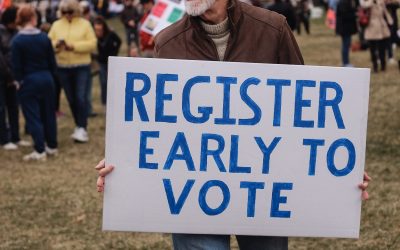
On March 24, 2020, at the direction of Governor Tony Evers, Wisconsin Department of Health Services Secretary – designee Andrea Palmer issued a stay at home order for the residents of Wisconsin to try and slow the spread of the COVID-19 virus.
EPA Response to COVID-19; Open license to Pollute?
Brief #81—Environment
By Shannon Q Elliot
On March 26, 2020, The Environmental Protection Agency (EPA) issued a memorandum in response to the COVID-19 pandemic. “COVID-19 Implications for EPA’s Enforcement and Compliance Assurance Program” authored by Susan Parker Bodine, (Assistant Administrator for Enforcement and Compliance Assurance) is a 7-page temporary policy, in which the EPA addresses industry concerns over non-compliance issues as a result of COVID-19. Staff shortages, travel restrictions and other imposed regulations are affecting facility operations, reporting obligations and ability to meet required deadlines.
EPA Launches Another Blow to Climate Change Policy with Its Roll-back of Obama Era Auto Emission Standards
Brief #82—Environment
By Jacob Morton
In 2012, the Obama administration passed a climate policy requiring automobile manufacturers to reduce their vehicles’ CO2 emissions by 5% each year through 2026. This would have meant that all new passenger vehicles and light trucks would have a fuel economy of around 54 mpg by the 2025 model year.
Stay At Home Rules Expose The Need for Universal Internet Access Now
Brief #13—Technology
By Charles A Rubin
As the COVID-19 epidemic has forced the nation’s schools and business into a second month of lock-down with no timetable for relaxation in sight, the digital divide has been brought into sharp relief. By some estimates, fully 25% of the US lacks high speed internet connections.
California Approves Rules That Could Be Best Model For Courts To Manage COVID-19 Pandemic
Brief #119—Civil Rights
By Rod Maggay
On April 6, 2020 the California Judicial Council approved eleven temporary court rules in response to the coronavirus COVID-19 pandemic. The rules are designed to only be temporary and will be used to ensure that California state courts can provide due process and access to justice to citizens while ensuring that citizens and employees of the judicial system are adequately protected from a possible COVID-19 transmission and infection.