Just this week a number of reports have surfaced that detailed President Trump’s frustration with the Supreme Court and both the federal and state level judiciary in general.


Just this week a number of reports have surfaced that detailed President Trump’s frustration with the Supreme Court and both the federal and state level judiciary in general.

In his first few days in office, Donald Trump announced a $500 billion joint venture with OpenAI, Oracle, and Softbank to invest in growing the US’s AI infrastructure and rescinded former President Joe Biden’s executive order requiring safety submissions from AI developers. His big, beautiful bill showers much more money in the industry, and aims to eliminate state oversight or regulation of AI companies as well.

Since Trump’s attack on the Department of Education, there has been some confusion surrounding the future of student loans. During the Biden Administration, there were discussions on a $20,000 loan forgiveness plan for each borrower, but that has since been struck down by the Supreme Court. Since then, there have been no discussed plans of mass loan forgiveness, but instead, mandatory loan repayments will be enacted.

It is no secret the disdain the Trump Administration has shown towards the Justice system in America. On Truth Social, President Donald Trump has blasted the judges who have ruled against his agenda as “Crazed”, “Trump Hating”, and rogue, “activist judges” who hate the legal system.

he beginning of President Trump’s second term saw a slew of executive orders on a number of policies and also saw numerous responses to those orders. More than two hundred legal challenges have been brought to oppose the implementation of these executive orders. The results have been mixed.
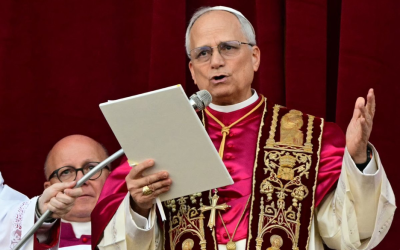
In an era marked by escalating global crises—from climate change and geopolitical conflicts to rising authoritarianism and social inequality—spiritual leaders continue to wield significant influence over billions worldwide. Their roles transcend religious rituals, often intersecting with geopolitics, human rights, and social justice. This article profiles the current heads of major global faiths—Catholicism, Tibetan Buddhism, Judaism, Islam, Hinduism, Anglicanism, and Eastern Orthodoxy—examining their leadership styles, political entanglements, and the size of their followings. These figures shape not only the spiritual lives of their adherents but also the moral frameworks through which societies interpret justice, peace, and progress.
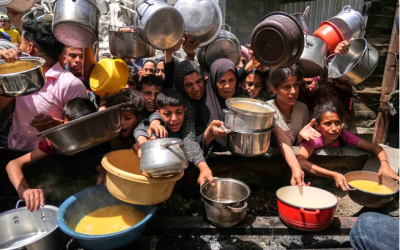
International pressure has been mounting as Israel continues its bombardment and siege of Gaza. The renewed assault has left thousands more dead in just the last weeks since the breaking of the ceasefire deal in January 2025. Over 52,615 Palestinians are reported to have been killed, though the true number is likely to be far higher and to remain unknown until international journalists and aid agencies are allowed into the strip. Last week, United Nations Secretary-General Antonio Guterres, warned that Israel’s escalating aggression and prolonged blockade have pushed the population to the brink of famine, stating Palestinians are enduring “what may be the cruelest phase of this cruel conflict”. The UN has released projections that up to 14,000 children are at risk of dying of famine in the Gaza strip if aid is not allowed in soon.

One of the most fundamental aspects of a fair and just legal system is the ability to challenge one’s detention, often referred to as “habeas corpus”. Habeas corpus is an old but crucial pillar of justice, dating back to the 13th-century Magna Carta, which stated that “No man shall be arrested or imprisoned…except by the lawful judgment of his peers and by the law of the land.”

The prison-industrial complex (PIC) in the United States represents a deeply entrenched system where incarceration is commodified, intertwining the interests of government agencies and private enterprises. This nexus has transformed the U.S. criminal justice system into a profit-driven enterprise, often at the expense of marginalized communities.
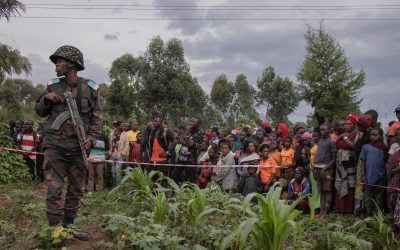
To the average westerner, and especially to Americans, the African continent seems to be politically and economically monolithic. One could recall instances where an interviewed passerby on Jay Leno or Jimmy Kimmel’s show would refer to Africa as a country. This point of view makes the western public less capable of discerning and debating foreign policy as it relates to Africa. Therefore, it is the mission of this brief to inform readers of an infamous armed group that has made headlines for its brutality and human rights abuses, but whose history and status remain vague in the casual reader’s news feed: M23.