

JOBS POLICIES, ANALYSIS, AND RESOURCES
Latest Jobs Posts
The Rise of White Nationalism in America
Opinion Editorial
By Erika Shannon
The recent attack on America’s Capitol has certainly confirmed what many have worried for a long time – that white supremacy is on the rise here in the U.S. With recent events, it can be seen that this is a fast-growing problem. These far-right extremists are often disillusioned Trump supporters who want nothing more than to create chaos and for Trump to remain in office, even though he lost the election fair and square. One of the problems is that we live in a world of social media heresy, where people are able to get others worked up with a few keystrokes and the click of a button. In fact, Facebook in particular is often used by right-wing extremists as a way to recruit, and sometimes train, new members. While social media websites attempt to take down groups or pages with white supremacist or extremist views for fear that they may be used to incite violence, it is impossible to make sure that people with these views do not find their way onto social media and share their hate-filled opinions. There are people who feel that occurrences like this are indicative of a free speech violation; however, it is legally up to websites to create their terms of use and handle violations as such. One thing that’s clear is that when people are given a platform to express hate, other like-minded individuals will find them; because of this, something must be done to ensure that they are unable to recruit new members or incite violence.
Trump Issues Pardons and Creates Nuisances for the Biden/Harris Team on his Way Out the Door
Brief #2—U.S. Resist Blog
By Sean Gray
Trump’s last days were marked by chaos, scandal and general ineptitude. Donald Trump’s swan song as a one term president has been unlike any before him. Self dealing and empty bombast have been the cornerstone of Trump’s political brand. With his tenure at an end, those chickens have come home to roost. Trump faces a second impeachment trial for his inciting role in the siege at the Capital.
Progress in Policing in 2020
Brief #4—Social Justice
By Laura Plummer
Two-thousand and twenty was a year defined by unprecedented hardship. A deadly global pandemic ravaged the country and crippled whole sectors of the economy. A contentious presidential election divided the nation, and killings of black and brown people by police officers sparked yearlong protests against police brutality.
The Black Lives Matter movement gained popular support last year as it exposed the systemic racism inherent in American policing. More than any previous year, communities started organizing to demand comprehensive police reform and to hold their leaders and elected officials accountable. The following list explores the progress achieved in policing in 2020 at the federal and state levels.
The Covid-era Classroom
Brief #52—Education
By Emily Carty
The “traditional” classroom is facing an identity crisis. As teachers throughout the country have turned to remote learning or modified in-person learning, the classroom as we know it is changing. With distancing in the classroom, learning on electronic devices, and everyone in masks, the physical attributes of a modern classroom will certainly be different at least until the pandemic subsides.
Damage Assessment Continues One Month After Massive Cyber Attack
Brief #31—Technology
By Charles A Rubin
In December 2020 Solarwinds, a major provider of computer network monitoring software, revealed that several of its servers that were used to distribute software updates to customers had been compromised. The servers had been routinely delivering altered code to computer networks throughout the US government and corporations that gave nefarious actors unfettered access to communications and internal systems. The malware created multiple “backdoors” that could be exploited in the future. Further, this compromise had gone undetected for several months. One month later the full extent of the intrusion is still not fully understood and the amount of information that has been exposed has not been completely assessed.
Retired Military Veteran, A “Shy Voter”
Brief #2—Americans on America
By Linda F Hersey
A rigged system that favored Democrat Joe Biden unseated President Donald Trump. That is the blunt assessment of Election 2020 by a Trump supporter so timid about candidly expressing views that he declined to give his name or other identifying information during an hour-long interview with U.S. Resist News about America’s values that quickly veered into politics.
Biden’s Plan for an Ailing Country
Brief #104—Economic
By Rosalind Gottfried
President elect Joe Biden’s 1.9 trillion dollar stimulus plan provides a comprehensive assault on what ails America and reinstates some of the controversial elements rejected by Republicans in the $900 billion December plan. Most notable is a reinstatement of 350 billion dollars to bolster state and local budgets suffering shortfalls largely attributable to the pandemic crisis. It also includes 400 billion dollars of pandemic aid to vaccinate Americans and open schools. Biden set a goal to vaccinate 100 million Americans in his first 100 days in office.
The Public Health System in the US: Does it Work?
Brief #91—Health & Gender
By Justin Lee
Newly inaugurated President Biden nominated Xavier Becerra to lead and be the next Secretary of the US Department of Health and Human Services (HHS). The HHS is comprised of various public health and human services agencies and offices that provide guidance, oversee and regulate operations, and establish laws and regulations. Agencies like the Centers of Disease Control and Prevention (CDC), Food and Drug Administration (FDA), National Institutes of Health (NIH), and the US Public Health Service Commissioned Corps (lead by the Surgeon General) all branch within the HHS.
Fixation on Fixtures; The Showerhead Rollbacks
Brief #106—Environment
By Shannon Q Elliot
President Trump has rolled back the Department of Energy’s (DOE) standards for consumer appliances.

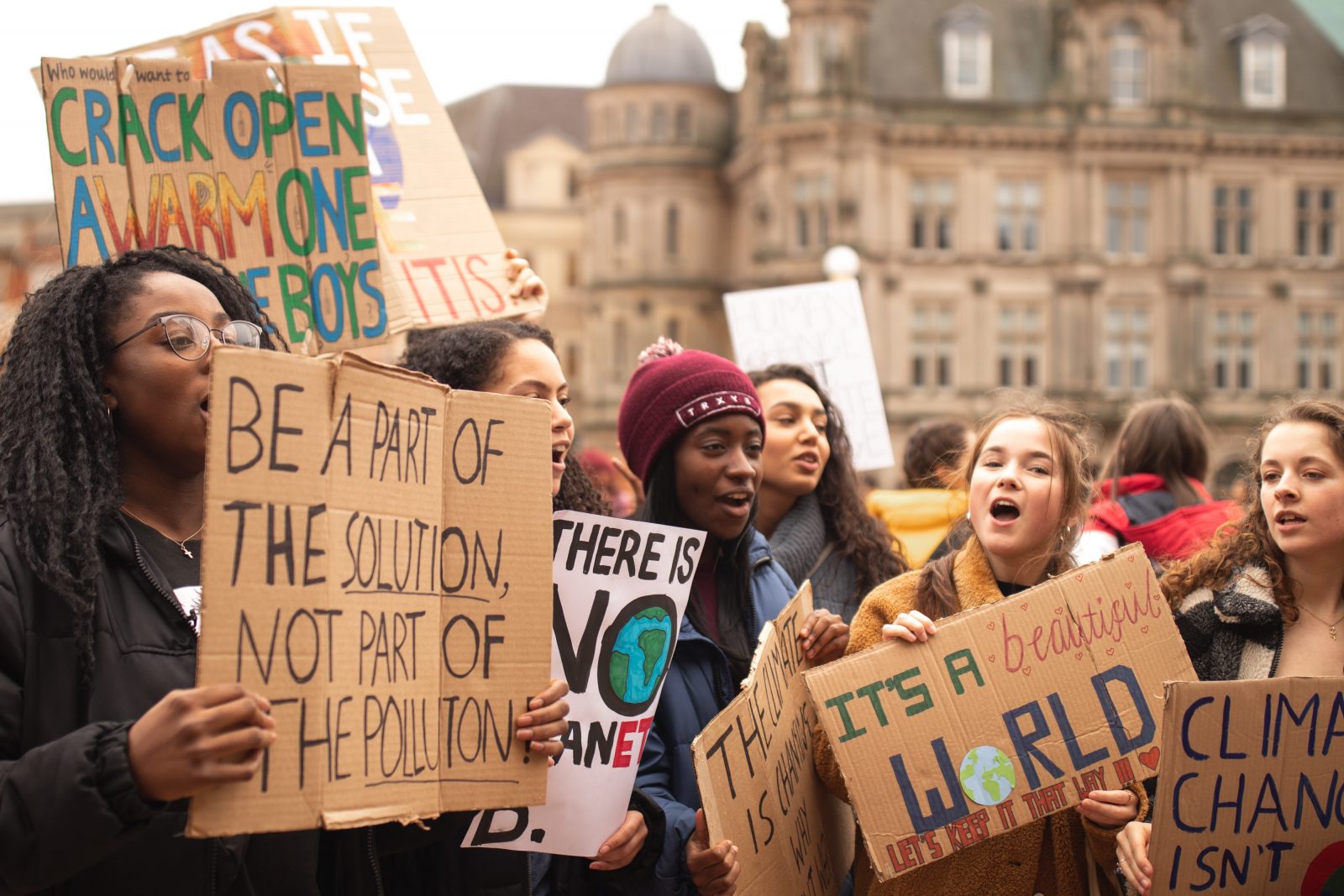
In Past Weeks, Ongoing Protests Met with Violence as Both Sides Clash
The protests that have been going on in recent weeks are nothing new here in the U.S. since police-involved shootings have been prompting people to gather an protest for change. However, incidents involving these protests are becoming increasingly violent. We still see ongoing protests in cities like Kenosha, Portland, Rochester, and Lancaster. In the past few weeks, we have seen incidents where Trump supporters clash with protesters, as well as protesters clashing with counter-protesters. The protesters are trying to get across a point: systemic racism is real, and the police target minority groups. The Black Lives Matter movement exists to further gain equality for black people in America; however, the right sees it as a movement to dismantle and destroy our democracy.
A few weeks ago, 17-year-old Kyle Rittenhouse, a Trump supporter, shot three protesters in Kenosha. Two of them were killed, while the other was injured. This is an act of vigilante-like justice by somebody who is underage, and we are seeing a lot of these acts coming from Trump supporters as of late. There was an instance in Portland where a pick-up truck full of Trump supporters drove into a crowd of protesters, firing paintballs and pepper spray. On August 29th, Aaron J. Danielson, an alleged counter-protester and member of right-wing group “Patriot Prayer,” was shot and killed at a protest in Portland when a caravan of Trump supporters clashed with protesters. The “Trump 2020 Cruise Rally” was involved in some back and forth with the counter-protesters, and when it escalated Michael Forest Reinoehl, a self-proclaimed ANTIFA member, reportedly shot and killed Danielson. Later, Reinoehl was killed when law enforcement attempted to apprehend him in Olympia, Washington. Reinoehl allegedly emerged with a firearm when the U.S. Marshals arrived, and the federal task force shot and killed him.
It seems that the protests have been mostly peaceful during the daytime. When night falls, that is when we tend to see things get out of hand. While there have been instances where both sides are the agitators, there are also outside forces at play. Counter-protesters often arrive, and in some cases, make matters worse for everyone involved; we saw this with the tragic shooting of Danielson, and subsequent death of Reinoehl by federal law enforcement. One of the problems is that people who do not live in these cities, and who are often times not associated with Black Lives Matter, come to these cities to get people riled up. They come to the sites of the protests to antagonize and incite violence. Another problem that lends to protests turning violent is the presence of federal law enforcement. While they claim to be there to protect federal property, they often end up provoking protesters with the use of tear gas, and the threat of violence. While the Black Lives Matter protests are supposed to be helping to make a change for the better, outside factors often intervene and attention gets strayed away from their central message: to ensure fair treatment of black people by the state and negate the world of any bigoted, anti-black sentiments.
Resistance Resources
- To find out more about the organization’s mission, donate, or get involved, visit the Black Lives Matter website.
- For tips on how to stay safe during protests, visit this PDF published by Amnesty International.
- The National Lawyers Guild has a mass defense program for those who have been arrested or held during protests and need legal support.

Renaming US Military Bases
Conversations Across the Aisle Blog Post
Conversations Across the Aisle is a new Blog Post created by USRN Reporter Brandon Mooney. The Post describes conversations between Brandon and a conservative colleague focused on today’s leading political issues.
I recently had a debate with a conservative about whether U.S. military bases bearing the names of Confederate generals should be renamed. It gave me a lot of perspective on how those on the right see the issue and why it is critical as a liberal-minded audience to have a concerted argument rather than a “righteous” opinion that suffers from a lack of facts and overall clarity. Therefore, I had the idea to write out the assertion that was presented to me and break it down into digestible segments that can be reasoned against. I hope that this exercise can help those presented with the same contention and be applied to other arguments as well.
The Civil War was about state’s rights, not slavery, so the names are not rooted in racism
This is an argument that I hear all the time from conservative pundits. “The Civil War was about state rights, not slavery.” It was what I was taught in American History class in high school. However, this feel-good, whitewashing fantasy needs to be put to bed because it is absolutely false.
The Constitution of the Confederate States mentions slavery five times. First, it maintains the notorious Three-Fifths Compromise from the U.S. Constitution. Second, it forbids the importation of “negroes of the African race” from foreign countries while specifically calling the Confederacy “the slaveholding States or Territories of the United States of America.” Third, it gives the Confederate Congress the power to stop the introduction of slavery into states outside of the original signing states. Fourth, it prohibits escaped or transported slaves from being freed and demands that any slave be returned to their owner upon capture. Fifth, it requires that in any territory admitted into the Confederacy that “the institution of negro slavery” be protected and recognized as legitimate. This is the supreme law of the land enshrining and entrenching the enslavement of African Americans. Sure, the states of the Confederacy seceded over state’s rights, but it was specifically the right to own slaves. You can’t dissect the two.
Just to hammer that point home, here are a few quotes from the so-called Cornerstone Speech given by Confederate Vice President Alexander Stephens. He says outright that “the immediate cause of the late rupture and present revolution” (i.e. the Confederacy) is the “proper status of the negro” (i.e. slavery). He goes on to say that U.S. Constitution “[rests] upon the [fundamentally wrong] assumption of the equality of races.” By comparison, the Confederacy was founded “upon the great truth that the negro is not equal to the white man; that slavery subordination to the superior race is his natural and normal condition.” Where are your state’s rights now?
Many American’s ancestors fought for the Confederacy, and it would be disrespectful to their memories to change the names
First of all, the idea that we shouldn’t rename things because it might hurt people’s feelings is rather rich coming from a political movement that regularly bashes so-called “snowflakes” and uplifts slogans such as “facts don’t care about your feelings.” But putting that aside, how does some Americans having Confederate ancestors mean that U.S. military bases should be named after high-ranking Confederate generals? This line of reasoning makes little sense to me. Just because your grandfather fought for something 159 years ago does not entitle you to a named military base. Acts of violence in the past are not deserving of exaltation based upon their existence alone.
Second, your ancestor fighting for what they believed in does not excuse or supersede the fact that it was fighting to maintain the enslavement of African Americans. It may be a hard pill to swallow, but sometimes people fight for things that are wrong. The Nazis fought for what they believed in; the Khmer Rouge fought for what they believed in. Belief alone does not entitle you anything.
In addition, we don’t name military bases or cities or what have you willy-nilly. We name them to highlight, venerate, honor. I would argue that there is no need to do any of this for these men. They fought to maintain an economic, social, and political system based upon a racial hierarchy that enshrined the white race as being superior to all others. It does not matter if your Confederate ancestor owned slaves themselves or what have you. They were fighting to maintain slavery. That’s it. I say again: there is no reason to highlight, venerate, and honor these men. By all means, remember them as your great-great-great grandfathers, but never forget that what they fought for was wrong. End of story.
It would depend on the time period and reasoning for the naming of each base
I would first like to say that naming a military base after someone that didn’t want to be an American is argument enough in my book. They were traitors. Plain and simple. But I will entertain the argument that the time period and reasoning for naming should affect the decision to rename a base.
So, let’s look back at the nine active U.S. military installations named after Confederate generals. All were built between 1909 and 1942. In fact, six of them were built in either 1941 or 1942. All are in states that were part of the Confederacy. Most of the Confederate generals were either military failures or architects of the Jim Crow era. Fort Hood’s namesake was known for his aggressive and overly reckless tactics that would lead to his command’s ultimate defeat. Fort Pickett’s namesake lead the infamous “Pickett’s Charge” at Gettysburg and hung deserters. Fort Polk’s namesake had no prior combat experience and lost almost every battle he was a part of. Fort Gordon’s namesake is believed to have been the head of the KKK in Georgia. Both Fort Benning’s and Fort A.P. Hill’s namesakes publicly said that they would rather die than see African Americans be equal citizens. Fort Bragg’s namesake went down in history as one of the worst generals in the Confederacy and was widely hated by his men. Why were these men chosen?
Well, I would argue it came down to the time period. Although the second manifestation of the KKK had largely died out by the 1940s, in the mid-1920s it claimed to have 4 – 5 million members (or 15% of the nation’s eligible men). These racist sentiments don’t simply die out. Jim Crow laws were still entrenched and wouldn’t be challenged for another decade. The U.S. military needed Southern support for recruitment and the war effort during World War I and II. Organizations such as United Confederate Veterans had long ago realized, in the words of a report by the Grand Camp of the Confederate Veterans of Virginia, that emphasizing the rebellion’s connection to slavery would “hold [Confederate veterans] degraded rather than worthy of honor.” The Confederate cause was re-formed around an idea of state’s rights, Southern pride, fighting in defense of one’s homeland, and honor on the battlefield. Talk of being rebels, traitors, and slavery was shoved under the carpet.
In short, the U.S. military symbolically agreed to this narrative in order to gain support. It needed the South to go along with the war, and the military knew very well that playing into the emerging hero cult around the Confederacy and racism would ensure that. So, they chose some generals and named the bases after them. And that, in my opinion, is not a good enough reason to not rename a base.
The names are a part of American history and therefore should not be erased
The argument that always came back up was that the base names were a part of our history, and that renaming them would be equivalent to erasing it. I find that this is an all-to-common clapback by conservatives to liberal audiences demanding the removal of names or statues or what have you. However, I believe that it holds little actual weight, and is in fact easily picked apart.
How does renaming a military base somehow equate to “erasing history,” exactly? It’s not as though we as a nation will somehow forget that the Civil War happened. Or that these men participated in it and fought for the cause of slavery. You don’t need to name a military base after a Confederate general to remember the Confederacy. Robert E. Lee and others like him will not suddenly vanish into the annals of history, never to be seen again.
I would argue that conservatives don’t actually believe that renaming the bases is equivalent to erasing history itself but erasing the feel-good Confederate narrative that we have discussed above. Renaming the bases means that we as a nation are symbolically stripping away any credence or belief in the story of brave Southern men charging into battle for state’s rights, regional autonomy, and the honor of Antebellum life. It means accepting that these previously hallowed men will be judged at their whole, as deeply flawed, racist traitors that fought for the enslavement of their fellow man. It means a step towards addressing major systematic racial inequalities that have persisted throughout American history. It means examining prejudices, admitting to wrongs, and grappling with a history that many white audiences would rather ignore.
The bottom line is that renaming something isn’t equivalent to forgetting or erasing. Children will still be taught, academics will still study, and layfolk will continue to debate the legacies left behind by these men. It simply means that the old story isn’t being accepted anymore. We as a nation have a responsibility, a debt, and a pressing need to address the wrongs of the past. The past few months have proven nothing if not that. And nothing will come of it if we continue to memorialize, venerate, and ultimately fetishize Confederate men and the values that some would have preferred them to have fought for.

Eleventh Circuit Court of Appeals Sides With Florida Republican Lawmakers In Restoration of Vote To Felons Case
Policy Summary: The Twenty – Fourth Amendment to the United States Constitution provides in Section One:
The right of citizens of the United States to vote in any primary or other election for President or Vice President, for electors for President or Vice President, or for Senator or Representative in Congress, shall not be denied or abridged by the United States or any State by reason of failure to pay any poll tax or other tax.
On November 6, 2018 voters in the State of Florida approved the ballot initiative known as Amendment 4. The initiative would permit Florida felons to be restored with the right to vote after they had completed all the terms of their sentence. Florida voters approved Amendment 4 overwhelmingly with 64.55% voting in favor while 35.45% voted against the measure. In 2019, due to Republican opposition to Amendment 4, Governor Ron DeSantis signed a bill that added an additional requirement before the right to vote was restored. SB 7066 required that felons must also pay all fines and fees associated with their sentence.
The battle then moved to the court system. The Florida Supreme Court ruled that the law was constitutional. However, another suit was brought in federal district court in Florida which ruled that the additional requirements of SB 7066 violated the U.S. Constitution and therefore the court issued an injunction blocking implementation of SB 7066. That ruling was appealed to the U.S. Court of Appeals for the Eleventh Circuit, which just ruled to uphold the injunction of the law issued by the federal district court. LEARN MORE
Policy Analysis: While this decision by the U.S. Court of Appeals for the Eleventh Circuit is a win for voting rights advocates it is certainly not the end of the case. The injunction initially issued by U.S. District Judge Robert Hinkle was only an order to prevent the law from going into effect until the issue can be decided on the merits at a full trial. With the injunction upheld by the appeals court the law remains frozen pending the non – jury trial that had been scheduled.
Additionally, Governor De Santis’ has indicated that he was disappointed with the ruling and intends to appeal the decision. An appeal would likely take several months to be resolved and might not be resolved in time for the November 2020 elections. However, a number of academics have calculated that the number of felons who would have their voting rights restored is 1.4 million which can certainly sway an election or an initiative on the ballot. This explains why both parties are going to extreme lengths to fight for the future of this issue. Republicans had initially opposed Amendment 4 and suffered an unexpected defeat when voters overwhelmingly approved it. In turn, Democrats have accused Republicans of trying to oppose the popular will of voters by adding additional requirements that would blunt the move to add 1.4 million more voters to the state rolls. And if the case moves up through the appeals process and eventually to the U.S. Supreme Court that will also likely bring up the constitutional poll tax issue which was outlawed with the 24th Amendment in 1964. The stakes are certainly high and while many would have liked to have had this issue resolved in time for the November 2020 elections it seems up in the air whether 1.4 million former felons in Florida will have their voting rights restored by the end of the year. LEARN MORE, LEARN MORE, LEARN MORE
Update: On July 16, 2020 the Supreme Court of the United States issued an order in the case Raysor v. De Santis. After a long, complex and winding road through the Florida judiciary and then the federal judiciary the case reached the Court of Appeals for the Eleventh Circuit. The federal district court had issued a permanent injunction barring full implementation of the law and with a number of remedies crafted by the trial court. Judge Robert Hinkle allowed felons to rebut the presumption that they were unable to pay as determined by the State, allowed felons to seek how much they owed in order to vote (this was likely a rebuke to Florida due to the state’s admission at trial that they did not keep accurate records nor had a workable database as to what felons owe the state in terms of fines and fees) and ordered the state to let felons register to vote without being prosecuted for a violation of the law. But when the case was appealed the Court of Appeals for the Eleventh Circuit issued an order without an opinion that did not allow the remedies from the trial court to go into effect. That move essentially did not permit felons to have their voting rights restored, for the moment. The case was then appealed to the U.S. Supreme Court. The Supreme Court upheld the Eleventh Circuit court order which in effect leaves 1.4 million Florida felons without the right to cast a ballot in upcoming state and federal elections in Florida for the foreseeable future. The case will proceed on the merits at a later date but the emergency application to have the law reinstated immediately has been denied.
Justice Sonia Sotomayor issued a dissent to the Supreme Court order and she brings up the Purcell Principle, which has played a leading role in a number of Supreme Court decisions regarding voting rights this term. The Purcell Principle, which comes from the 2006 Supreme Court case Purcell v. Gonzalez, cautions against making voting changes so close to election day in order to not confuse and burden voters who might not be up to date on the new changes. As Justice Sotomayor sees it, by blocking the law from going into effect the court is creating more confusion for felons as they now cannot rely on a law to figure out whether they are eligible to vote. If the goal is to create a stable voting atmosphere devoid of last minute voting rules changes, then why did the Supreme Court choose a path that makes a number of last minute voting changes that causes a felon to be unsure whether they are eligible to vote or not? Justice Sotomayor’s dissent is a pointed rebuke to the reasoning and rationale the Court has charted this term with regard to voting rights. It as a disappointing moment for the issue of vote restoration for felons but the case still remains to be played out as a hearing on the merits of the issue (as well as the application of the Twenty – Fourth Amendment) is scheduled for August 2020 in the Court of Appeals for the Eleventh Circuit. LEARN MORE, LEARN MORE
Update # 2: The current poll tax situation and the restoration of the right to vote to Florida felons has had a long and convoluted procedural history through both the Florida and federal court systems but it looks like a definitive answer has been issued from the Eleventh Circuit Court of Appeals. The Eleventh Circuit issued on September 11, 2020 its opinion in Jones v. Governor of Florida and the appeals court sided with the Republican Governor and Republican lawmakers in the state in a 6 – 4 decision.
In the case the court interpreted the term “all terms of a sentence” to include not just serving the complete term of incarceration but all other requirements that were imposed as part of the sentence. This includes any outstanding fees, fines and other financial obligations that could still be outstanding even though the person may have completed a prison sentence. The majority opinion addressed the issue of Florida’s requirements and if it could be consistent with the U.S. Constitution’s Twenty – Fourth Amendment’s prohibition against poll taxes as a requirement to vote. Chief Judge William Pryor wrote that the financial obligations required in Florida’s laws does not violate the Twenty – Fourth Amendment because the fines and fees in this case are not a “tax.” The key distinction Chief Judge Pryor made was that the court costs and fees are penalties for actions undertaken by the defendant and so are properly classified as a penalty rather than a tax. While this is a significant legal point the majority opinion struggles to address a significant feature of this entire saga – that the ballot initiative to restore voting to rights to felons was overwhelmingly approved by Florida voters by a nearly two to one (2 – 1) margin. The only reason Amendment 4 was challenged in the Florida and federal courts was because Republican lawmakers in the state wanted to suppress the nearly 1,000,000 votes that were not likely to vote Republican. With a history of razor thin margins in elections, having nearly 1,000,000 new voters could have tipped the upcoming 2020 elections further to the left. Now, because of their political considerations and their decision to ignore the will of the Florida electorate Republicans with this disappointing Circuit Court of Appeals decision have succeeded in suppressing a significant number of votes for the 2020 election. LEARN MORE, LEARN MORE
Engagement Resources:
- Brennan Center for Justice – non – profit group’s Voting Rights Restoration project.
- American Civil Liberties Union (ACLU) – statement on appeals court decision regarding voter restoration to felons in Florida.
- More Than A Vote – non – profit group fighting against Black voter suppression and raising money to pay for fees and fines that felons are unable to pay for themselves.
This brief was compiled by Rod Maggay. If you have comments or want to add the name of your organization to this brief, please contact Rod@USResistnews.org.

The Corruption of William Barr Part 3
Donald Trump is a documented philanderer. Both of his first two marriages ended in divorce, as a result of infidelities on his part. Payments were made to pornographic actress, Stormy Daniels were made during his 2016 campaign, in exchange for her silence on the affair. If half of the 23 accusations of sexual misconduct against him have merit, his dalliances have often veered into the criminal realm. One such claim, by writer E. Jean Carroll, who alleges Trump raped her in an NYC department store in the mid-1990’s, is currently on the docket of a New York state court. A judge recently rule that the suit may proceed while Trump holds office. In an obscene instance of corruption, the Department of Justice, headed by Trump lackey William Barr, has filed a motion to take over the case from the president’s personal lawyers.
Carroll was a nationally syndicated columnist, best known for her long-running ‘’Ask Jean’’ column in Elle magazine. According to her lawsuit, in the fall of ’95 or spring of ’96, Trump followed her into the dressing room of a Manhattan department store and forced himself on her. She remained silent for over two decades, revealing the incident in her 2019 memoir, What Do We Need Men For: A Modest Proposal. The criminal and civil statutes of limitation had expired by the time she came forward with the allegation. When confronted with the story, Trump vehemently denied the assault and hurled a barrage of crude barbs her way. He also denied having ever met her despite photographic evidence of the two together.
In calling Carroll a liar, Trump, she contends, defamed her. Trump’s response and its consequences are the crux of the civil suit against him. The suit contends Trump’s denials and attacks were defamatory, per se, and Carroll has suffered direct harm as a result. Her advice column was dependent on a high volume of compelling letters from readers from which to choose to respond. When the most powerful man on the planet branded her a liar, it damaged her credibility and adversely effected her readership. In February (well after the suit was filed), Elle magazine severed ties with her altogether. Carroll is seeking to have Trump publicly retract the inflammatory statements against her in addition to monetary damages to be decided in court.
Trump’s lawyers, as they have done often in his presidency, made broad claims of immunity in attempting to quash the lawsuit. His defense team had previously argued that a president is absolutely immune from any criminal inquiry in fighting subpoenas for his tax records. The judge in that case rejected the argument and allowed the subpoenas to be enforced. The judge presiding over this case cited the decision in allowing the lawsuit against Trump to proceed. After the case was allowed to move forward, Trump likely would have been compelled to produce relevant documents and subjected to a deposition. It is also probable that he would have been forced to submit a sample of his DNA, to compare to the semen stains on Carroll’s unlaundered dress from the night of the assault.
As the deadline to appeal the ruling approached, the White House asked the Department of Justice to intervene in the case. The Federal Tort Claims Act provides federal employees with immunity from civil liabilities related to their official duties. Utilizing the FTCA, the Justice Department has filed a motion to replace Trump’s lawyers on the case. It is the position of Attorney General William Barr that when Trump denied the rape accusation and insulted Carroll’s physical attractiveness, it was in his official capacity as president. If their motion is successful, it would substitute the US government for Trump as the defendant in the case. It would also make the American taxpayer liable for any damages should Carroll win her case. The move also has the potential to kill the lawsuit and muzzle Trump’s accuser before she has her day in court. Under the doctrine of sovereign immunity, the federal government must consent to be sued, which it has not done in this instance. It should be noted that this corrupt hail mary has been chucked out in the last week, while Carroll filed suit more than ten months ago. The legal maneuver is likely to fail as it requires a judge to accept that demeaning a woman who has leveled an accusation is part of a president’s official duties. However it does have the real potential to delay the case, and thus, and further discovery until after November’s election.
Barr, in textbook fashion, offered a sober legal explanation for his machination. The AG said this week that the FTCA provides an exclusive remedy in this case and that his application of the law is normal. No precedent exists for a president utilizing the DOJ to take his place in the firing line; the statue typically pertains to cases involving more mundane federal employees, such as a postal worker running over a pedestrian on his mail route. The argument is made even more dubious considering the Justice Department has made the exact opposite argument to allow Trump to block his critics on Twitter. In a case relating to the president’s use of the social media site, the department argued Trump is free to block who he likes as his feed constitutes private speech outside his official duties. The Justice Department’s independence from the Executive Branch is hardly debatable at this point when it will argue political messaging from Trump’s cyber bully pulpit are as a private citizen, but when he denigrates a woman who accused him of rape in the mid-’90’s it is within the scope of his office.
If Barr’s intervention in this case were a one-off, it would raise an eyebrow and smack of political favoritism. Regrettably, it is part of an increasingly audacious pattern of perverting his office to his boss’ benefit. He preempted the Mueller report by downplaying the seriousness of its findings just before its release. He irregularly intervened in the criminal cases of Trump associates Michael Flynn and Roger Stone, dropping the case against Flynn after two guilty pleas and inexplicably reducing Stone’s sentence before Trump granted him clemency. These are but the most high-profile of his betrayals. By all accounts Barr is a sharp legal mind and a highly competent lawyer. He is also an ideologue who believes in almost absolute executive power. Those convictions have been on full display in his time as AG, bending over backwards to enable Trump’s most heinous behavior.

U.S. RESIST NEWS VOTER CHECKLIST: NOVEMBER 3, 2020 ELECTION
U.S. RESIST NEWS VOTER CHECKLIST: NOVEMBER 3, 2020 ELECTION
U.S. RESIST NEWS has published this checklist as a guide to help ensure that all
Click here to download your own Voter Checklist
Voters cast their 2020 election ballots in a safe and timely manner. It is the most important thing we can do right now to preserve our democracy.
–All Voters:
[icon name=”check” class=”” unprefixed_class=””] Know your state’s voting requirements (If you don’t know visit https://www.usvotefoundation.org/vote/state-elections/state-election-dates-deadlines.htm#CA )
[icon name=”check” class=”” unprefixed_class=””] Make sure you are registered to vote as soon as possible.
[icon name=”check” class=”” unprefixed_class=””] Know the 2 ballot deadlines:
-
- The date it must be postmarked by.
- The date it must be received by. ( Because even if the ballot is postmarked in time if it is not received by the second deadline (a relevant issue because of the US Mail’s issues currently) it won’t be counted.)
–Mail-In and Absentee Ballot Voters:
[icon name=”check” class=”” unprefixed_class=””] Submit your ballot as early as possible so that your vote gets counted in a timely way.
–In-Person Voters:
[icon name=”check” class=”” unprefixed_class=””] Know the location of your polling station and its hours of operation.
[icon name=”check” class=”” unprefixed_class=””] Make sure you have transportation to take you to and from the polls
[icon name=”check” class=”” unprefixed_class=””] Protect yourself when you go to the polling station; wear a mask and social distance
[icon name=”check” class=”” unprefixed_class=””] Be prepared, if need be, to stand-in-line and wait.
[icon name=”check” class=”” unprefixed_class=””] Make sure your ballot is received by a poll worker
Click here to download your own Voter Checklist

US and Global Coronavirus Update
COVID-19’s Status in the US
As cases across the globe passes 27.6 million and over 6.5 million cases in the US, the death rate is not staying on pace, as many would expect. This phenomenon has yet to be fully understood by scientists and doctors. Some say this occurrence is because interventions are becoming more successful at treating complications; while others point to the clear trend that the COVID-19 is now becoming a “young person” disease. Where young adults are less likely to die or suffer from severe complications, more can be infected while keeping death rates relatively low. This comes after the disease ravaged nursing homes and the elderly population. Doctors are still adjusting to the seemingly changing affected demographic.
Schools across the nation are scrambling to manage how to keep students, faculty, and staff in the absence of a vaccine. Already, more than 37,000 cases of COVID-19 have been reported at colleges and universities. K-12 schools vary from in-person, virtual, and hybrid classrooms, a scattered approach that represents the lack of uniformity and varying opinions on the safest and best approach for education amid a global pandemic. Combatting a widespread misconception, researchers have stated that adolescents are equally capable of transmitting the virus as adult and age should not be considered an impervious shield to the virus. It is unclear how the rest of the school year will go as in-person learning communities experience massive outbreaks and parents are starting to go back to work.
COVID-19’s Status Internationally
Researchers in Hong Kong have documented the first case of virus reinfection. A 33-year-old patient was diagnosed with COVID-19 on Aug 15th, over four months after their first bout with the disease on March 26th. With this being the first case, there is an understanding that there could be more, researchers are now on high alert for more cases.
African nations have not gone untouched by the virus, but few nations are experiencing the peaks in both cases and deaths, that other nations have gone through. Some have attributed this to the relative youth of the continent, comparing it to Europe where more EU citizens are more likely to reach 80 years of age, and therefore more susceptible to COVID complications and deaths. Additionally, COVID-19 is known to have a higher mortality rate amongst those with health problems like obesity and type 2 diabetes, which are less common in the African nations. More populous nations like South Africa, Egypt and Nigeria COVID rates have slowed but increases have been present in Libya, Morocco, and Tunisia.
After the first week in September, UK officials tallied the highest daily number of cases, 2,988, since May, and have had four days with over 2,000 new cases. Prime Minister Boris Johnson announced new restrictions to curb the spread and prevent a second lockdown.
New cases send India sprinting to third in world ranking of cases. Even with the new increasing deaths, 72,775, researchers suggest that all cases are not being reported and the numbers could be much higher. All cases are not being reported to the World Health Organization, in addition to states attributing deaths to underlying conditions instead of COVID-19, and discrepancies are being found in deaths reported and counts from crematoria and burial grounds, thus prompting uncertainty in the accuracy of India’s reported numbers.
Mexico, fourth in line for most COVID deaths, reported nearly 3,500 new cases of COVID-19 on last Monday. President Nicolas Maduro has announced the mysterious and locally licensed Russia vaccine will be distributed to Venezuela in late September for clinical trials and “other vaccines” come October.
Analysis:
The emergence of a virus reinfection case prompts concern regarding immunity. While experts suggested previously infected individuals likely carried antibodies and therefore had some level of immunity against the coronavirus, new findings suggest that immunity may only last for a few months.
The previously mentioned phenomenon of an increase in cases, but not in deaths is contributing to the misconception that this disease and virus are not deadly. Such an idea is spreading throughout the US and as a result people are no longer taking the disease seriously, prompting anti-mask protests, young people gathering for parties, and other practices that are incompatible with CDC recommendations.
Engagement Resources:
For concerns about COVID-19, please seek assistance with the Center for Disease Control, the World Health Organization, or local health officials.
Subscribe HERE to stay up to date with COVID-19
Number of COVID-19 cases and deaths as of September 13, 2020 – Consult the CDC or Johns Hopkins for an update in numbers.
| Nation | Confirmed Cases | Deaths |
| Globally | 28,892,810 | 922,525 |
| United States | 6,519,249 | 194,069 |
| India | 4,754,356 | 78,586 |
| Brazil | 4,330,455 | 131,625 |
| Russia | 1,059,024 | 18,517 |
| Peru | 722,832 | 30,526 |
| Colombia | 708,964 | 22,734 |
| Mexico | 668,381 | 70,821 |
| South Africa | 649,793 | 15,447 |
| Spain | 566,326 | 29,747 |
| Argentina | 555,537 | 11,352 |

The Stock Market and Household Well-Being
Policy
The Stock market has surged, in August, almost to its historic February high, prior to the onset of the Covid-19 pandemic. This in spite of the absence of a new stimulus, the bi-partisan strife in the capital, and the spike in the Covid-19 cases this summer. In fact, the market has gained 32% since Trump took the office of the presidency. Good news? Yes, if you are among the top 1% but if you aren’t, the figure is largely irrelevant. The top ten percent of households account for 84% of all the equity from stocks while the top 1% enjoys one half of all equity. The next 10% account for 9.3% of the stock values and the bottom 80% weigh in at 6.7%. Although 52% – 54% of American households own stock, some by way of investments in 401Ks, they average $40,000 in total value. The value of the market has increased ten times since 1990 during which time the share by the top 1% of households experienced dramatic increases in their portion of the US wealth. The health of the stock market does not accrue equivalently across the sectors of the population. This measure of prosperity pertains to a micro sector of the society.
The market has sustained its performance in August, even after the failure of the government to pass a second set of stimulus programs. Unemployment is high, though the rebound is a bit better than anticipated, and the GDP was down in the second quarter. It is hypothesized that the resilience in the market is based on the assumption that there will be a stimulus passed by the end of September to avoid a government shutdown. The Federal Reserve’s pledge to keep the prime rate low until inflationary rates are attained, at least until 2022, and the faith in an eventual stimulus have kept the market hearty though its health is tenuous.
Evidence from the first stimulus package indicates that many Americans who could afford to do so saved their government payouts. Those who did not need to use their checks saved them and overall consumer spending declined indicating a preference for banking the acquired asset for future needs. Since February, personal savings rose from 8.3% to 33.5% of disposable income. Bank of America reported clients’ checking and savings accounts rose by 13% and 8% respectively. Average Americans had between one thousand and three thousand dollars more in the bank than prior to the pandemic. Credit card debt was down. Commercial bank deposits rose by 15% between February and August. Currently, the rate of savings is slowing and there is evidence that household spending has been falling as the stimulus wound down, especially among low income households. Credit card debt is creeping up again. The claim that the robust market is evidence of a good economy pales with respect to the persistent unemployment, failed businesses, and the health costs associated with the virus. After an upsurge of economic indicators in the late spring and early summer, the growth of the economy is slowing.
Analysis
The evidence of the economic gains of the Trump era speaks mostly to the enhancement of the wealth of the elite. The increase in savings and decreased spending, associated with the stimulus, show what Americans can do if they have some flexibility with disposable income. Because the stimulus was not very accurate in targeting the most vulnerable it demonstrates what people will do if they have discretionary income. For communities with concentrated poverty it can be seen that targeting them for business investment and employment programs is one way to improve the standard of living. Another stimulus would help vulnerable families and businesses and bolster the chances of avoiding the worst fallout from the continued virus threat.
Learn More
The Police Wall of Shame: The Los Angeles Police Department
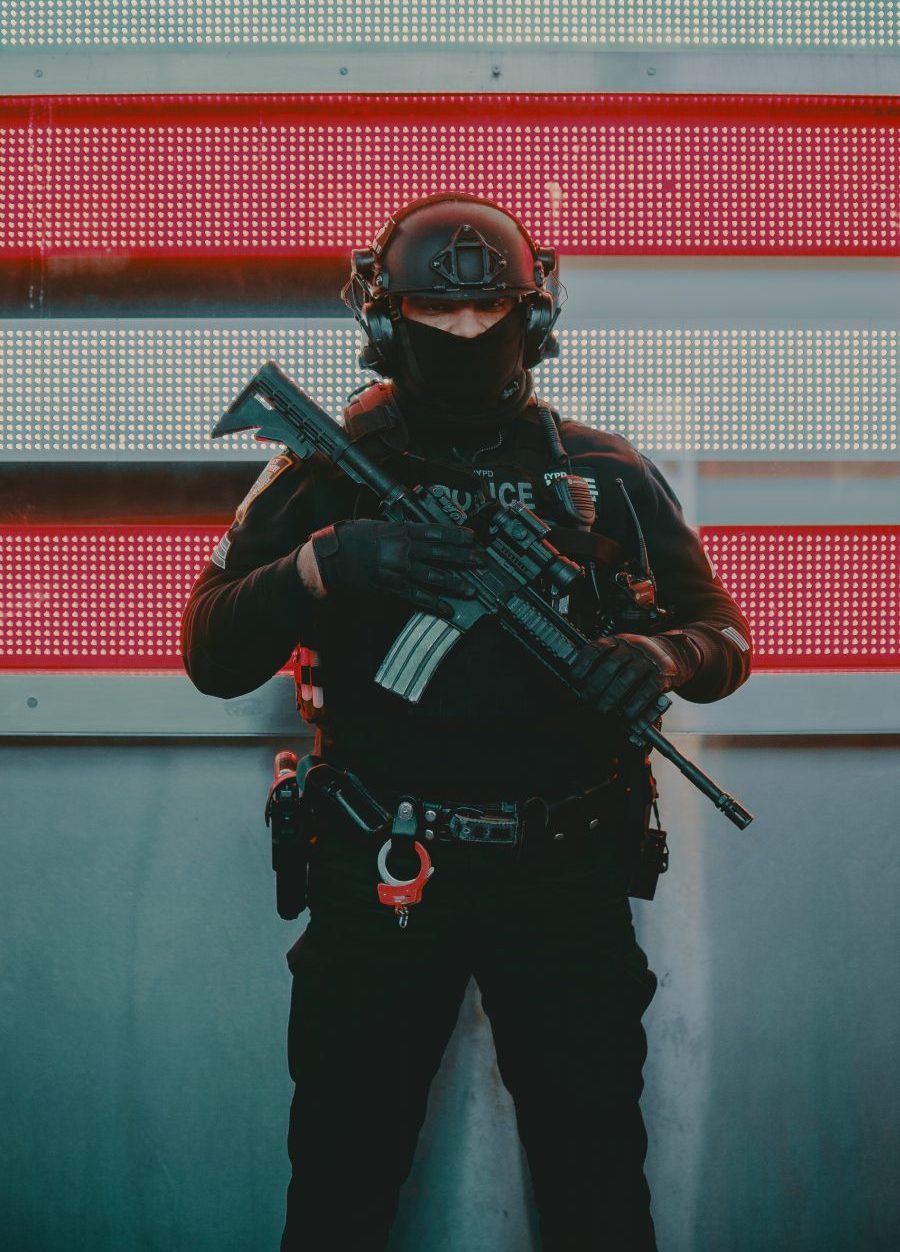
“Police Wall of Shame” is a new Policing in America series by Laura Plummer that provides a chronology of all the shameful incidents within a single police department. Articles in this series will be updated to reflect new events as they occur.
September 11, 2020
Summary
The Los Angeles Police Department (LAPD) is the largest police department in California and the third largest in the country. Angelenos have been clamoring for meaningful police reform in recent months as the LAPD has made headlines for all the wrong reasons. From profiling Black citizens and allegations of misconduct to falsifying records and the fatal shooting of Dijon Kizzee, the LAPD has earned its place firmly in our Police Wall of Shame.
Date: April 22, 2020
Incident: An officer nicknamed Top Shot shot and killed 38-year-old Daniel Hernandez when he exited his vehicle following a crash. The clearly intoxicated Hernandez stumbled out of his car shirtless holding a box cutter. When he did not drop the weapon, the officer shot him six times.
Date: June 1, 2020
Incident: Four police officers allegedly surrounded a man’s vehicle and smashed his car window during a protest against police violence. Hundreds of complaints have been filed alleging police misconduct during demonstrations in the city. Supervisors also told officers to remove their body cameras during the unrest.
Date: June 2, 2020
Incident: During a protest against police brutality, officers pushed a 28-year-old man holding a sign and shot him in the groin at close range with a non-lethal projectile. The incident plainly violates the department’s use-of-force policy.
Date: July 10, 2020
Incident: Three officers were charged with labeling dozens of innocent people gang members and entering them into the state’s gang database in 2018. With the officers’ credibility challenged, all defendants with whom they have had contact since 2002 may have their convictions overturned. In addition, the LAPD announced it was investigating over 20 other officers for the same behavior.
Date: July 31, 2020
Incident: Officers defied state orders for social distancing and attended a party for first responders inside Hollywood’s Sassafras Saloon, despite the fact bars had been shut down since earlier that month.
Date: August 12, 2020
Incident: A woman sued the LAPD after one of its officers was caught on his own body camera fondling the corpse of her deceased daughter. The officer was responding to the woman’s death, which was determined to be the result of an accidental overdose.
Date: August 18, 2020
Incident: A report showed a rise in misconduct accusations against LAPD officers in 2019. Despite this, fewer officers were found guilty or received punishment than in previous years. Allegations included driving while intoxicated, biased policing, domestic abuse and neglect of duty.
Date: August 22, 2020
Incident: Officers allowed a heavily intoxicated driver to walk away from the scene of a crash he caused without charging him or forcing him to take a breathalyzer test. The drunk driver was white and driving a sports car.
Date: August 27, 2020
Incident: Officers fired rubber bullets and tear gas into a crowd that was protesting the police shooting of Jacob Blake in Wisconsin.
Date: August 31, 2020
Incident: A 29-year-old Black man was shot and killed by police over a bicycle. Dijon Kizzee had allegedly violated a bicycle vehicle code and was shot 20 times by officers while fleeing on foot.
Date: September 4, 2020
Incident: Despite a season of controversy, scandal and legal woes, LAPD officers were on track to get a raise. Mayor Eric Garcetti allocated $1.75 billion to pay department salaries, over half the entire operational budget of the department.
Date: September 8, 2020
Incident: A study revealed that Black people were more than twice as likely to be stopped by the LAPD than white people in 2018 and 2019, even though white people were ten percent more likely to be in possession of illegal contraband.
Date: September 17, 2020
Incident: A 26-year-old Muslim woman filed a federal lawsuit stating that police forcibly removed her hijab during a 2019 search. A hijab is a religious headscarf worn by some female practitioners of Islam and is protected under the religious freedom guaranteed by the U.S. Constitution.
Date: September 21, 2020
Incident: A report revealed that the LAPD was keeping its K9 unit dogs caged for days, including when the temperature reached a scorching 115 degrees. Video footage shows the dogs being kenneled for up to three days with little human interaction or exercise.
Incident: A woman sued the LAPD for the wrongful death of her father in police custody in 2019. The 50-year-old man was held on the ground by officers for several minutes until he lost consciousness. He died five days later.
Date: September 22, 2020
Incident: A report indicated that the LAPD downplayed its use of facial recognition technology, and in fact used it 30,000 times since 2009, including 3,750 times since February. Facial recognition technology is a tool to identify individuals on videos based on their facial features, but is notoriously bad at recognizing African-Americans and other minorities.
Analysis
Residents and activists in LA are agitating for change. Black Lives Matter Los Angeles is energized. Its People’s Budget LA coalition is proposing significant cuts to the city’s police budget and demanding city leaders prioritize “care not cops”. A current Change.org petition is pushing for LAPD funding to go toward improving infrastructure, education and support services.
Resistance Resources
- People’s Budget LA, a coalition led by Black Lives Matter-Los Angeles
- Black Lives Matter Los Angeles, a local chapter of the global Black Lives Matter movement
- Change.org petition to defund the LAPD
This brief was compiled by Laura Plummer. To add an incident involving the LAPD to this article, please contact me@lauraplummer.me.

How Best to Protest
Across the U.S., in cities large and small, protesting increasingly is a popular way for ordinary Americans, especially young adults, to make their concerns and causes known. The First Amendment grants Americans free speech and the right to protest.
Motivating many young adults in the U.S. and Europe to organize rallies, demonstrations and marches has been administration and policies of President Donald Trump. The uptick in civil rights protests began in 2016, with Trump’s campaign for president. They have yet to stop – and address an increasing variety of issues and campaigns, most notably the “Black Lives Matter” demonstrations.
“If you are neutral in situations of injustice, you have chosen the side of the oppressor,” Desmond Tutu, the South African human rights activist, famously said.
Understanding your rights and how to stay safe is essential. Here are five tips on how to make the most out of a protest — and protect yourself and your friends.
- Go prepared: Bring water to drink and to wash off your skin or eyes, in the event police are called and tear gas or pepper spray is used. Bring snacks. Check the weather forecast. The protest may go on for hours. Make signs with simple messages. Plan your exit if you need to leave the protest quickly, if activities become violent.
- Safety comes first: Wear protective goggles over your eyes. Wear comfortable shoes that are easy to move in. Attend with a group of friends and/or colleagues you trust. Know your surroundings. If you are pepper sprayed, stay calm. Change your clothes. Don’t touch your face and other areas exposed. A baking soda solution mixed with water is best for removing it. When things get dangerous, the best advice is to leave and to protect yourself.
- Understand your rights: If you are injured, for example, you have the right to obtain medical assistance without delay. You have the right to attend a peaceful assembly and the right to be told the reason if you are arrested. Be sure to carry ID.
- Interacting with police: The police are there for everyone’s protection and to maintain order. That said, if a police officer becomes threatening or violent, get his or her badge number. Keep your hands where officers can see them. Try to film or record the encounter, or ask someone else to do it. If you’re arrested, ask to see a lawyer and stay silent until you have legal help, according to the ACLU. Follow instructions given to you. If you witness an arrest, do not try to intervene but you can try to record the event.
- After the protest: Follow up. Learn about other ways to engage to make sure the campaign or advocacy does not end with the protest.
RESOURCES
- ACLU discusses the right under federal law to assemble and protest.
https://www.aclu.org/know-your-rights/protesters-rights/
- Wikipedia gives a thorough explanation of the right to protest.
- com offers a state-by-state look at protest laws.
https://civilrights.findlaw.com/enforcing-your-civil-rights/protest-laws-by-state.html

Congressional Campaign Update #9
Earlier this year we identified several senate races that are key to the democrats retaking a majority. Now, only two months from elections, we are taking a chance to revisit these races to see where ground has been won and lost.
We will first return to Arizona, where astronaut turned politician Mark Kelly has a sizable polling lead over incumbent Martha McSally. In a recent Fox News poll, Kelly has a 17-point lead, almost guaranteeing that this seat will flip. This isn’t a surprise to most who’ve been watching this race, as Kelly has projected to take this seat for some time now. This is a race that, back in May, we predicted Kelly would take.
Moving onto a race that has tightened with time, in Maine, Susan Collins has tightened the margin with her democratic challenger, former Maine Speaker of the House Sara Gideon. Gideon was the higher fundraiser at the beginning of the year and has garnered lots of financial backing from national democratic organizations. Both Collins and Gideon have released several attack ads as election day grows closer. The two will debate on September 11th, the first of what will be several high-profile debates. In the latest polling data by Public Policy Polling, Gideon holds a 4 point lead. This race will likely come down to the wire but we still think that Gideon will pull off the upset and flip the seat.
In North Carolina, we revisit the Senate race between incumbent Thom Tillis and challenger democratic Cal Cunningham. This race has seen Cunningham’s lead wane slowly over the course of the last several months, but he holds a 1 point lead in the latest poll by Monmouth University. Cunningham is struggling to connect with people of color and has been hit by a flurry of Tillis’s attack ads. Tillis challenged Cunningham to a series of debates leading up to the election, and with the race so close, this could tip the scales.
Another race that we looked at earlier this year was between incumbent Cory Gardner and challenger and former governor John Hickenlooper. Hickenlooper seemed to have a solid lead when we examined the race several months ago and it seems that his lead has only grown in the past few months. In a recent poll by Morning Consult, Hickenlooper has a 9 point lead that only seems to be growing. Overall, we expect Hickenlooper to hold onto this race and to flip the seat.
In Alabama, it seems as though incumbent Doug Jones will be losing his seat after just one term. After a close runoff in the Republican primary, it was finally decided that Jones’s opponent would be former University of Alabama football coach Tommy Tuberville, who is an ardent supporter of President Trump. A poll from August, conducted by Morning Consult, shows Tuberville with a whopping 17 point lead. This clearly bodes poorly for Jones, who has been in an uphill battle with his constituency since his election. We expect Jones to lose this race and for Tuberville to flip the seat.
As this election season heats up we expect these races to tighten even further, and will provide updates as we turn the corner to November. If our predictions hold, then the Democrats would gain a slight edge in the Senate, which could prove massive if Joe Biden can win the presidency. We will continue to cover all these races and more here at U.S. Resist News.