

JOBS POLICIES, ANALYSIS, AND RESOURCES
Latest Jobs Posts
Federal Courts Check Autocratic Uses of Executive Power
Brief #85—Immigration
By Kathryn Baron
Articles of Impeachment
The Corruption Blog by Sean Gray Blog Post # 10: Articles of Impeachment
President Trump Signs Controversial Executive Order to Combat Anti – Semitism On College Campuses; Executive Order; December 2019
Brief #70—Civil Rights
By Rod Maggay
Bribery is an Impeachable Offense
The Corruption Blog: A new series by Sean Gray that digs into the details of the all-encompassing corruption of the Trump administration. Blog Post # 10: Bribery is an Impeachable Offense
Trump Threatens New Tariffs for Brazil and Argentina
Brief #62—Environment
By Rosalind Gottfried
The 2020 Census – A Revolution in Understanding Who We Are or An Ill Timed Technological Experiment?
Brief #9—Technology
By Charles A Rubin
The weather is right for climate-focused agricultural policy
Brief #70—Environment
By Todd Jo Broadman
Trump, Israel and the Middle East
Brief #75—Foreign Policy
By Erin Mayer
Speaker Nancy Pelosi Unveils Her Long-Awaited Plan to Lower Prescription Drug Costs
Brief #65—Healthcare
By Taylor J Smith


The Venezuela Crisis Explained
Brief #56—Foreign Policy
Policy Summary
On January 23rd, Venezuelan lawmaker Juan Guaido surged from relative obscurity to the focus of international attention when he declared himself the interim President of the crisis ridden nation. Just weeks before, Guaido was appointed the leader of the Venezuelan National Assembly, the legislative body representing the opposition to President Nicolas Maduro. Guaido’s Presidential legitimacy was immediately recognized by President Trump, after Brazilian President Jair Bolsonaro similarly declared his recognition five days before Guaido even made the pronouncement himself. European Union nations including Britain, Germany, France, and Spain followed suit in the subsequent weeks when Maduro neglected to call a new election to placate critics of his dubious re-election in May of last year, which was boycotted by the opposition.
With Maduro still in control of the government, Guaido’s international allies are driving pressure against him by targeting the state’s resources. Secretary of State Mike Pompeo and National Security Advisor John Bolton asked the Bank of England to deny the Venezuelan government’s withdrawal of $1.2 billion in gold. A Portuguese bank similarly blocked a $1.2 billion transfer of assets to Uruguay. The White House has added new sanctions against the state oil company PDVSA, allowing US companies to continue to buy oil from them but preventing that money from reaching Venezuela until Guaido takes power. On Monday, the EU said that additional sanctions were being considered. These would accompany other sanctions ordered by Washington in 2014, 2015, and 2018. With economic ties to many western countries severed, the Venezuelan government is leaning more on allies in China, Russia, and Turkey. One US official warned on Thursday that the White House would “take action” if Turkey violated sanctions in supporting the Venezuelan government.
Analysis
In the past five years, the Venezuelan economy has endured an economic collapse, marked by shortages of food and medicine, as well as rising poverty and inflation. The political system has become completely polarized. The roots of these issues are not new, and are in many ways familiar for a post-colonial Latin American nation. Before Hugo Chavez’s “Bolivarian Revolution” in 1999, the country exhibited many of the symptoms it shows today, with frequent economic crises, massive inflation and corruption, and a lack of consideration for constitutional rights. The country had been developed largely on the strength of oil exports alone, and Chavez attempted to direct oil revenue towards the funding of social programs which provided healthcare, education, food and social mobility to the masses, making him widely popular. This enthusiasm was not shared by all Venezuelans, and in 2002 a faction of the military, with the support of much of the Venezuelan upper classes and United States, staged a brief coup, during which businessman Pedro Carmona was installed as interim President and the constitution and legislative bodies were abolished, before Chavez retook power. With Chavez’s death and replacement by Maduro in 2013 and oil prices dropping from $160 per barrel in 2008 to $51 in 2019, the Venezuelan government suddenly no longer held the same political mandate or financial resources to maintain its path towards international independence and an egalitarian society.
President Maduro compensated for his government’s weaknesses by pursuing increasingly authoritarian methods of reaching his political goals. When the National Assembly, the country’s primary legislative body, was taken by the opposition in 2015, the outgoing lame duck lawmakers stacked the Supreme Tribunal of Justice – the highest court in the country – with Maduro loyalist judges. When the Tribunal accused three opposition lawmakers of electoral “irregularities”, the charges were disputed by the National Assembly and Maduro formed the Constituent National Assembly in 2017 as a parallel legislative body. While a precedent for forming a similar body had been set in 1999 by Chavez, Maduro’s predecessor had asked for a national referendum first, and used the body to restructure the functions of the government – not simply buttress political support. Maduro has stripped away many of the electoral protections which led former President Jimmy Carter to state in 2012 that “of the 92 elections that we’ve monitored, I would say that the election process in Venezuela is the best in the world.”
However much of the US media coverage of the Venezuelan crisis depicts the opposition as the embodiment of the “Venezuelan people”, and the US as a solely emancipatory force. The United States has a history of utilizing a strategy of “making the economy scream” to undermine democratic Socialist regimes. The constant use of sanctions has most likely contributed to food and medicine shortages, an issue noted even by the US Congressional Research Service. John Bolton recently boasted of “$7 billion in assets blocked today. Plus, over $11 billion in lost export proceeds over the next year”, which amounts to 94% of what the country spent on imports last year.
The State Department has spent millions of dollars funding the Venezuelan opposition, even before democratic norms had begun to erode. Last year, opposition leader Henri Falcon was warned by US officials that the Trump administration would sanction him if he ran against Maduro, despite the fact that polling showed he had a strong chance of beating Maduro, especially if the election was monitored by UN observers, who were turned away by the opposition.
Now the US and opposition seem to be willing to help drive Venezuela into a deep enough crisis that the population will accept a complete departure from the paradigm of the Bolivarian Revolution rather than participating in a democratic process which would involve the sharing of power between parties. Despite the abuses of the Maduro regime, there is no evidence to suggest that he does not maintain the support of a significant portion of the population who have not given up on the dream promised by Chavez two decades before.
As long as Maduro controls the government and military, there is not a clear situation where the opposition can unilaterally take power without a military intervention from either the United States or Brazil. In a region already habituated to anti-imperialist resistance, this could mean an enormous and destabilizing civil war in the region. The other alternative is a mediated political resolution, most likely involving Maduro stepping down and the holding of new, UN monitored elections. The US government cannot maintain a presence in these negotiations, as it has forfeited its position as both an interventionist force around the globe and a neutral arbiter in Venezuela. The solution to this crisis can only come from the voice and democratic power of the Venezuelan people themselves.
Resistance Resources
- CodePink: A women-led grassroots organization working to end U.S. wars and militarism, and support peace and human rights initiatives.
- Washington Office on Latin America: A research and advocacy organization providing independent analysis of issues such as the Venezuelan crisis.
This Brief was submitted by U.S. RESIST NEWS Foreign Policy Analyst Colin Shanley: Contact Colin@usresistnews.org

The Teacher’s Protests of 2019 Continued
Brief #32—Education
Policy Summary
The nationwide teacher-led demonstrations continue to materialize with greater tenacity and vigor. Day after day this week, the streets of major cities across the country drew a similar portrait of streets lined of protesting teachers, academics and supporters. The groups marched in unison, to support awareness about the qualms plaguing public education. The protestors waved posters and signs declaring their discontent. Educators were focused on brining attention to such qualms such as low wages forcing educators into second jobs, unfit school buildings, smaller classes, decreases in high-pressure exams, more substantial salaries and more support staff. These marches have appeared in Los Angeles, West Virginia, Richmond, Oklahoma and elsewhere.
Soon after a six-day strike in Los Angeles, teachers in Virginia, Colorado, and elsewhere in California joined in on the fight. Hundreds of Virginia teachers descended on the state Capitol on Monday, following in the footsteps of educators nationwide that have launched a wave of activism highlighting the plight of public education. Virginia Educators United, a grassroots educator group, organized the Richmond march. The protest earned support from teacher’s unions, both on a state level and nation-wide. “We can talk a lot about salaries and resources, but those who face the brunt of the consequence of not having a fully funded public education system are those kids,” said Sarah Pedersen, one of the many educators who marched at the Virginia state Capitol.
Analysis
The teachers’ petitions for increased support occur amidst a significant decrease in funds over the past decade. The Virginia rally is the largest teachers march since nearly 30,000 citizens took to the streets in Los Angeles this January. President of the American Federation of Teachers, Randi Weingarten, participated in the Richmond protest on Monday. “Virginia is a pretty rich state, but actually spends about a billion dollars less in education than it did before the recession, which means its priorities need to be reordered”, Weingarten said. In fact, Although Virginia is the 12th wealthiest state, educators in the state make much less than the national average. Furthermore, since the 1930’s, state funding for K-12 schools has declined 12% when adjusted for inflation. According to the Commonwealth Institute for Fiscal Analysis, state funding in the 2018-2019 school year was 9.1 percent lower in than it was a decade earlier.
The protest in Richmond cost an estimated $125 million, but thankfully led to several victories for teachers and students. This past month, Gov. Ralph Northam recommended a budget that would incorporate$268.7 million in new funding for K-12 education. The budget proposal would embrace an additional 2% raise for educators, meaning teachers would get a combined 5% raise starting early this summer. The suggested 5% raise is currently working its way through the state Legislature.
Resistance Resources
- The Virginia Education Association is to unite our members and local communities across the Commonwealth in fulfilling the promise of a high quality public education that successfully prepares every single student to realize his or her full potential.VEA is a statewide community of more than 50,000 teachers and school support professionals working for the betterment of public education in the Commonwealth. You can join the VEA membership here: http://www.veanea.org/home/join-vea.htm
- United Teachers Los Angeles union (UTLA) sets out to address policy at all levels and is set by members either directly or through elected representatives. Currently the 34,000 members strong, they are always looking for addition support: https://www.utla.net
- Fairfax County Federation of Teachers represents all non-administrative certified and classified Fairfax County public school employees. We represent the interests of teachers, counselors, librarians, teaching assistants, clerical employees, and other men and women who work so hard to make our schools work. To support them, click here to help teachers and educators have a voice: https://www.fcft.org/about-us
- Virginia Professional Educators are a non-profit, professional association of teachers. It is a group created by teachers for teachers.
This Brief was submitted by U.S. RESIST NEWS Erin Mayer Policy Analyst Name: Contact Author@usresistnews.org
Photo by Tra Nguyen

Say Goodbye to Surprise Medical Bills! Well, Not Entirely
Brief #48—Health
Policy Summary
Donald Trump and his administration have taken proactive steps to solve the nationwide issue of surprise hospital fees. Starting this month, Trump has mandated that hospitals publicly reveal prices for their services. These online master lists of services are called “chargemasters” and are the administration’s central component in reducing shock over medical bills and promoting transparency in healthcare. Within each list is an exorbitant amount of procedures and services that are provided in an a-la carte fashion, where patients must know every element to a procedure in order to have an accurate pricing expectation. Alternatively, a singular procedure like a vitamin D blood test can easily be found and compared across providers.
Analysis
While it is beneficial to the patients to be provided with the resources describing their hospital fees, it isn’t likely that the average hospital-goer will be able to decipher the medical codes. “Chargemasters” are often hundreds of pages long with an overwhelming amount of abbreviations, codes and medical jargon. Additionally, prices are often found to be inflated and inconsistent, rendering their transparency useless. Another issue with the provided prices is they do not account for the different insurance policies of patients and hospitals, again being rendered impractical. Finally, with individual hospitals producing their own list, there is little consistency among procedure or service descriptions, thus negating any consistency needed for comparing and finding the right price for consumers. Proponent for this mandate will note the issues with the “Chargemasters”, but will also state how they promotes transparency and allow patients to effectively advocate for themselves with factual information. On the contrary, while revealing pricing is key in medical reform, this does not address the larger issue of the high-priced American medical system, which can cripple patients after hospital visits. Overall, the attempt by the administration is well intended, but inefficient.
Resistance Resources:
- Vox Media – Follow Senior Policy Correspondent Sarah Kliff, who has spent the past year exposing ER/hospital billing in the US.
- National Assosciation of Healthcare Advocacy – When making important health decisions, having someone who is familiar with the health sector can help you make the best decision for both your health and your wallet. Use this association to find a healthcare advocate near you.
- Change happens through the patients: To report inconsistencies, concerns or issues with Chargemasters, contact and notify your desired hospital.
Contact: This Brief was authored by Taylor J Smith Contact: Taylor@usresistnews.org
Photo by Olga DeLawrence

The Economic Aftermath of a Government Shutdown
Brief #33—Economic Policy
Policy Summary
After more the four long weeks, the longest government shutdown in the history of our nation has ended. This past Friday saw Donald Trump sign into a bill that would temporarily reopen the government and allow most furloughed American workers to return to their jobs. Backing down from his initial demands for additional government funding for his desired border wall, he accepted a deal that offered no funds for the wall. When the shutdown went into effect on December 22nd, the pushback from political figureheads on both the left and right was monumental but it doesn’t compare to anger of the 800,000 federal employees who were most affected. Forced to work without pay with their wages frozen, they began the year facing an economic future steeped in tremendous uncertainty.
Now that the shutdown has ended, at least on a temporary basis, the uncertainty hasn’t really subsided. Yes, plenty of federal employees are resuming working their positions but there’s still the possibility that in just a few weeks, the nightmare could continue. Democratic politicians refused to move forward with negotiations regarding the proposed wall unil the government had been reopened but as recent history has taught us, negotiations with our President can be unpredictable and erratic. It doesn’t help that multiple times, he threatened to declare a national state of emergency to procure the funding he claims to need. The most pressing economic concerns that have stemmed from the shutdown have little to do with funding for a wall and much more to do with the problems that arose from 800,000 employees being forced to work without pay, including members of the Coast Guard, Secret Service and air traffic controllers.
Policy Analysis
The financial woes that these federal employees encountered during the shutdown were well documented in the national media and not without reason. Thee many workers who saw their wages frozen were unable to spend on basic necessities, which quickly affected small businesses across the nation, particularly in industries such as food services and retail. A recent analysis from S&P Global Ratings indicates that the damage to our economy will add up to more than $6 billion in total, a larger sum the original $5 billion that Trump initially demanded for the wall’s construction. We should also not forget that when economic activity is severely reduced, as we saw during the shutdown, it can shave a significant amount off of a nation’s real GDP (gross domestic product) and this time is no exception. It has been estimated by the Congressional Budget Office that real GDP for the fourth quarter of 2018 has been reduced by up to $3 million.
The shutdown also resulted in another economic consequence that many news sources don’t seem to be paying as much attention. The payday loan industry has been steadily growing for years but during the shutdown, it saw a boom that should have worried everyone. Payday loans are essentially a debt trap. While they provide consumers with the quick cash that they need to take care of looming financial obligations, they ensnare them with interest rates that can be as high as 300% if not higher. This system may call to mind the subprime loan crisis in the early 2000’s when lenders prayed on low income borrowers with poor credit. Many financial advisors advised furloughed federal employees not to turn to these lenders during the shutdown, but for many workers struggling to make ends meet, they likely seemed to be the most sensible solution, particularly as for most of the shutdown, there was no clear end in sight, further adding to the aspect of economic uncertainty that continues to plague our nation.
Both consumers and markets share a mutual dislike of uncertainty in their economic forecasts. Now consumer confidence is down and with it, investor confidence. These two areas paired together are a dangerous combination for an economy that was already turbulent to begin with before the shutdown took hold. The shutdown may be over but the damage that it has caused will continue for the foreseeable future and likely for longer
Resistance Resources:
- The Professional Services Council is an advocacy organization that has created a Government Shutdown Resource Center for furloughed federal employees.
- The American Foreign Service Association is an association of workers created to represent members of the U.S. Foreign Service that is providing information and resources for workers affected by the shutdown.
- The U.S. Office of Personnel Management (OPM) is an agency that provides resources and support to federal agencies and employees and is providing resources for furloughed workers.
This Brief was submitted by U.S. RESIST NEWS Economic Policy Analyst Samuel O’Brient: contact Sam@usresistnews.org
Photo by Andy Feliciotti

Trump’s Wall Explained
Brief #62—Immigration
Policy Summary
Before President Trump took office there were 654 miles of barrier; 354 miles to block individuals walking across the border and 300 miles of anti-vehicle fencing that cost roughly $7 Billion during the Bush Administration. Throughout Trump’s campaign he promised to build a wall along the entire 2,000 mile US Southern border, but later clarified that in reality it would only cover half of that due to mountains and rivers already in place. However, since taking office there has been zero construction on this notorious wall; and thus the current (and longest ever government shutdown in American history) government shutdown standoff has ensued. President Trump pledges that his wall is necessary to combat the “humanitarian and security crisis” Americans face at the border – and that the appropriate funding must be provided. In reality, there are only estimates on how much Trump’s wall would cost taxpayers and the government, no one knows exactly its price. According to Customs and Border Patrol, it is $6.5 Million per mile on average and thus could range from $12 Billion to $70 Billion to implement. Originally Trump wanted concrete, but is now talking about steel so border agents could see through the “artistically designed steel slats.” Despite what seemed to be an overwhelming amount of support for Trump’s wall during his campaign, in a recent poll, roughly 40% of voters actually support it still.
In practice, Trump needs more than just funding to execute his grand plan and begin construction. In addition to funds, he needs the power to seize property from unwilling owners through the use of eminent domain since less than 30% of the necessary land is actually owned by the federal government (yes, the remaining 70% is belongs to private owners, state governments, and Native American tribes). Therefore, construction and especially legal battles could drag on for years. If Trump were to use eminent domain, he would be setting a very dangerous precedent and threaten the property rights of thousands of Americans for generations (or presidential administrations) to come.
However President Trump has steadfastly refused to give up on his wall First he began threatening to use his emergency powers to build the wall without Congressional approval. This would involve diverting military funds and seizing private property without congressional authorization. Trump’s Advisors warned that the government would face endless legal challenges if Trump were to do that.
At the end of December President vetoed an immigration bill signed by both branches of Congress because it did not contain funding for his wall. The shutdown lasted 35 days, the longest shutdown in government history. It caused untold harm to federal workers across the country and had a negative impact on the economy. On January 25th facing mounting pressure from many different parts of the country the President was forced to reopen the government, even though funds still have not been allocated to build his wall.
Policy Analysis
To prove the wall is necessary, Trump has cited drugs and illegal border crossings as the main reasons the wall is desired. He has claimed 90% of heroin comes across the US Southern border and that a wall would help the overall war on drugs. In 2017, just under 40% of heroin seizures were at the US-Mexico border and most of it is smuggled through legal ports of entry hidden in privately owned vehicles mixed with other goods. President Trump and particularly his xenophobic support base consider illegal crossings at the border to be a wildly out of control issue that undermines American customs, values, and presents a burden on the population. In Trump’s first year in office the US saw the lowest number of migrants since 1971 and the actual number of illegal border crossings has been on an overall decline since 2000. Most illegal immigration is from visa “overstayers” of which Canadians were shockingly the largest group in 2018 – not the “terrorists” among the Migrant Caravan.
No one can really predict the future to gauge if the wall would truly divide Mexico and the US – physically or metaphorically – but it has definitely divided America and serves as a symbol of attitudes towards demographic, cultural and economic change. In a recent poll, views on the wall have heavily correlated with attitudes towards race relations in the US.
Currently, the Senate took 2 key votes on January 24 on the ongoing government shutdown and Trump’s wall. Both failed to reach a solid conclusion, but Trump has agreed to re-open the government for 3 weeks before attempting again to reach a consensus.
In many regards, Trump’s wall serves as a symbol of exclusion and isolation, but social orders built on fear, hatred and injustice are bound to fall. Historically, walls were built to protect a city from attack, but today they serve little military purpose as planes/missiles can fly over them and a tank could smash through. Ultimately, fear is the driving force in constructing such a wall, and a related rise in nationalism in response to globalization, racism, threat of terrorism, etc. Such walls have failed in the past – or failed to serve their intended purposes – such as the Berlin Wall during the Cold War, France’s Maginot line in WWII, the Great Wall of China, and even the US’s barrier fences in the 1990s under President Clinton. People will go around, under, or overwhelm the wall – or even in the case of drugs, be smuggled through legal points of entry.
US immigration laws have been rooted in racism and exclusion for centuries. The first major one being the Chinese Exclusion Act of 1882, which was for all people of color in practice; followed by the National Origins Act of 1924 that allowed white, northern and western Europeans to migrate to the US while limiting everyone else. The latter led to the establishment of the Border Patrol. Thus the entire concept of policing the US border has been founded upon racial exclusion and xenophobic tendencies.
Resistance Resources
- Opposition – No Border Walls: An resource that provides cities, states and coalitions of organizations that have taken a stance against Trump’s wall.
- Stop Trump’s Wall: a non-profit that opposes Trump’s wall that utilizes video submissions explaining why his wall is ineffective, not a good idea, bad for the environment, etc.
- Sierra Club: a grassroots environmental organization that has sued the US government in opposition of the wall.
This Brief was authored by Kathryn Baron. For inquiries, suggestions or comments email kathryn@usresistnews.org.

Federal District Court Issues Ruling Prohibiting Citizenship Status Question on 2020 National Census Questionnaire
Brief #75—Civil Rights
Policy Summary
Article 1, Section 2 of the United States Constitution states “Representatives…shall be apportioned among the several States…according to their respective numbers. The actual Enumeration shall be made…within every subsequent term of ten years.” This constitutional command is the basis for the United States to hold a census to determine the population of all persons residing within the borders of the United States. The last decennial census was held in 2010 and the next one is scheduled for 2020.
In 2017, Wilbur Ross was confirmed as the Secretary of Commerce. The Secretary oversees the Department of Commerce which includes the United States Census Bureau, the agency that oversees every decennial census. In March 2018, Secretary Ross issued a memorandum instructing the Census Bureau to reintroduce a question about United States citizenship status on the 2020 questionnaire. The citizenship question had not appeared on the questionnaire since 1950. In the days after Secretary Ross’s memorandum, multiple lawsuits were filed to challenge the placement of the citizenship status question on the upcoming questionnaire of the 2020 census as well as other procedural issues related to a possible trial on the issue. In the United States District Court for the Southern District of New York, multiple cases against the Department of Commerce were consolidated and the case went before Judge Jesse Furman. In a ruling handed down on January 15, 2019, Judge Furman prohibited Secretary Ross’s order to add the citizenship question to the 2020 census questionnaire. LEARN MORE
Analysis
Judge Furman’s lengthy 277 page ruling explaining his decision to prohibit the citizenship question from being added to the 2020 census questionnaire is not just a rebuke to the Trump Administration’s anti – immigrant rhetoric but to the methods of Secretary Ross and the general chaotic nature of the Trump Administration. Judge Furman thoroughly criticizes Secretary Ross’s methods in trying to push through the addition of the citizenship question. Judge Furman writes that the Secretary “failed to consider several important aspects of the problem; alternately ignored, cherry-picked, or badly misconstrued the evidence in the record before him; acted irrationally both in light of that evidence and his own stated decisional criteria; and failed to justify significant departures from past policies and practices.” What the judge was pointing out was that Secretary Ross had no respect for the laws, rules and procedures already in place and seemed intent instead on pushing through an outcome that he had already predetermined himself – that a question inquiring into a person’s citizenship should be added to the 2020 census questionnaire. Taken in the context of President Trump’s anti – immigrant rhetoric and the Administration’s tendency to blame immigrants for being habitual lawbreakers when they enter the United States, the ruling from Judge Furman highlighted the uncomfortable fact that lawbreakers are not just immigrants but can easily be found in members of President Trump’s own administration.
The ruling does not explicitly rule that the citizenship inquiry on the questionnaire is unconstitutional but it has helped to encourage more debate on whether the United States should ask such a sensitive question especially in light of a President who is currently trying to take a hard – line on immigration issues. The question is seen as a way to suppress new immigrants from participating in the democratic process because immigrants have reason to fear government agents asking too many questions about their legal status. Some persons may simply choose not to fill out any question on the questionnaire at all and might simply just ignore it. This can have a negative effect on the communities where a person lives because an inaccurate count of people living in certain areas can lead to a misallocation of federal funds and resources (safety and health) and lead to errors when drawing state and federal congressional districts. Having the citizenship question on the 2020 census questionnaire will instead likely deter some people from filling out the form out of fear. A better approach would be to leave the citizenship question off the questionnaire, as this had been the norm in the U.S. since 1950, the last time the citizenship question was even on the national census. LEARN MORE, LEARN MORE, LEARN MORE
Engagement Resources:
American Civil Liberties Union (ACLU) – blog post commenting on court ruling prohibiting census citizenship question.
National Association of Latino Elected and Appointed Officials (NALEO) Education Fund – non – profit group website monitoring census issues as they affect Latino communities.
Mexican American Legal Defense and Education Fund (MALDEF) – minority non – profit group’s statement on court ruling prohibiting census citizenship question.
This brief was compiled by Rod Maggay. If you have comments or want to add the name of your organization to this brief, please contact Rod@USResistnews.org
Photo by unsplash-logo
Andres Urena

Trump and Destruction of the American Mind
Donald Trump completes two years as president, and one characteristic of his term has been disdain for scientific evidence, historical perspectives, educated opinions and traditional alliances. These attitudes are not Trump’s own and the presidency represents longstanding mistrust of elites, experts and foreign ties. “To wit, in Trump’s deeply fractionated American republic, we the people now inhabit a rapidly descending ‘hollow’ land of unending submission, crude consumption, dreary profanity and immutably shallow pleasures,” argues Louis René Beres, emeritus professor of international law at Purdue University. “Bored by the suffocating banality of daily life and beaten down by the grinding struggle to stay hopeful amid ever-widening polarities of wealth and poverty, Americans grasp anxiously for almost any available lifeline of promising distraction.” Beres questions the purpose of a society that prioritizes its comfort over the very real survival of refugees fleeing war in Syria or poverty in Central America. Americans are exhausted and manipulated, and even great wealth cannot protect them from alienation, meaningless existence and perhaps catastrophe. The US could rise again as global leader, Beres concludes, but only if the nation takes stock of how far it has fallen. – YaleGlobal
Trump and Destruction of the American Mind
The first two years of the Trump presidency have been characterized by disdain for intellect, history, science and expertiseLouis René BeresTuesday, January 22, 2019

WEST LAFAYETTE, INDIANA: An open loathing of intellect has become substantially de rigeur for Donald Trump and his supporters. Accordingly, the nation’s chief executive regards terms like “intellectual” or “analytic” as epithets rather than positive attributes or prospectively gainful expectations.
While Trump did not create this demeaning subordination of the “mind,” it is nonetheless an integral component of his bitter and corrosive presidency. Furthermore, there are particular concerns. Above all, one must now inquire, how can an American president so willfully ignore the obvious foreign and domestic policy manipulations committed by his Russian counterpart and the deepening concerns shared by intelligence officials, investigators, congressional representatives of both parties, allies and other world leaders? Indeed, even in the absence of any recognizable “high thinking” in the White House, alarm builds that one superpower president has become the pawn of another power.
Trump’s curious ascent to the American presidency did not arise in a vacuum. Rather, the country’s long history of distrust for intellect and science conveniently set the stage for such debilitating and portentous national leadership. In the words of poet W.B. Yeats, “There is no longer a virtuous nation, and the best of us live by candlelight.”
We dare not speak of “tragedy.” Tragedy, unlike catastrophe and misfortune, is ennobling. It demands a victim, either individual or societal, who suffers markedly and undeservedly. It follows that a democratic and presumably virtuous nation that elected a blustering businessman and reality TV star can hardly be held blameless.
Today, not only the crass American “emperor,” but also those still watching the stifling “parade” with unsuitable deference are similarly “naked.” To wit, in Trump’s deeply fractionated American republic, we the people now inhabit a rapidly descending “hollow” land of unending submission, crude consumption, dreary profanity and immutably shallow pleasures. Bored by the suffocating banality of daily life and beaten down by the grinding struggle to stay hopeful amid ever-widening polarities of wealth and poverty, Americans grasp anxiously for almost any available lifeline of promising distraction. Small wonder that the cavernous opiate crisis is deep enough to drown whole oceans of a once-sacred poetry.
In part, at least, because of the grievously misdirected and ineffectual stewardship of the current president, both the nation and the much wider system of nation-states are increasingly imperiled. Where, then, shall people seek to dispel any still-lingering public apprehensions concerning collective survival and human improvement? Where, indeed, can they discover any usefully reinforcing visions of social cooperation and personal growth?
Misled by the self-destructive syntax of “America First,” Americans have already forgotten that world politics is inevitably a system with US prosperity inextricably linked to the calculable well-being of other societies.
In Trump’s cliché-ridden America, we the people are no longer shaped by common feelings of reverence or compassion, or even the tiniest hints of some clarifying analytic thought. Unsurprisingly, education failures represent a large part of the anti-intellectual problem. Even in the nation’s best colleges and universities, there is now far greater interest in studying “practical” matters than in learning history, government, literature, music or philosophy. And why not? In this country, true learning assuredly doesn’t “pay.”
In this feverishly disjointed era, the US president fervently encourages Americans to resist aggressively intellect, science, journalism and history. Often, too, even the most affluent US citizens separate themselves to inhabit the loneliest of places. Apart from their ownership of more conspicuously glittering “stuff,” there is little about greater wealth than can insulate these citizens from anomie, alienation and an utterly profound sense of meaninglessness.
“I belong, therefore I am” – this is not what philosopher René Descartes had in mind when he famously urged intellectual thought and purposeful doubt. It is also a sad credo, an unhesitatingly pathetic cry that social acceptance and certain related affections are roughly equivalent to physical survival and that even the sorely pretended pleasures of inclusion are desperately worth pursuing. At the same time, Americans shrug off the very real survival issue of others fleeing war in Syria or hopeless poverty in Central America. Although international law obliges the United States to oppose crimes of genocide and crimes against humanity, Trump remains silent on irremediable war crimes committed by Syria’s murderous dictator and his Russian presidential patron – this despite the fact that international law represents an incorporated part of the law of the United States. In the words of Justice Horace Gray delivering the 1900 US Supreme Court judgment in Paquete Habana, “International law is part of our law, and must be ascertained and administered by the courts of justice of appropriate jurisdiction….”
For most of our young people, learning has become a reluctantly required and inconvenient commodity, nothing more. At the same time, commodities exist for one overriding purpose. They are there, much like the newly minted college graduates themselves, to be marketed, bought and sold.
Though faced with distinctly genuine threats of war, illness, impoverishment and terror, vast millions of Americans still choose to distract and amuse themselves with assorted forms of morbid excitement, public scandal and the thoroughly inane repetitions of an authentically illiterate political discourse. Not a day goes by that we don’t notice some premonitory sign of impending catastrophe. Still, this self-anesthetized nation continues to impose upon its exhausted and manipulated people a shamelessly open devaluation of disciplined thought.
Soon, even if the United States should somehow manage to avoid nuclear war and nuclear terrorism under the relentless corrupting Trump leadership, the swaying of the American ship will become so violent that even the hardiest lamps will be overturned. Then, the phantoms of great ships of state, once laden with silver and gold, may no longer lie forgotten. Instead, citizens will finally understand that the circumstances that once sent the great compositions of Homer, Maimonides, Goethe, Milton, Shakespeare, Freud and Kafka to join the disintegrating works of forgotten poets were neither unique nor transient.
In an 1897 essay titled “On Being Human,” Woodrow Wilson, later president of Princeton and the United States, inquired coyly about the authenticity of America. “Is it even open to us to choose to be genuine?” This president answered “yes,” but only if we first refused to stoop to join the inglorious “herds” of mass society. Wilson describes the challenges: “once it was a simple enough matter to be a human being, but now it is deeply difficult; because life was once simple, but is now complex, confused, multifarious. Haste, anxiety, preoccupation, the need to specialize and make machines of ourselves, have transformed the once simple world, and we are apprised that it will not be without effort that we shall keep the broad human traits which have so far made the earth habitable.”
In all societies, the meticulous care of individual souls is critically important. In principle, there can be a better American soul, but not until we first affirm a prior obligation to shun the unsustainable and inter-penetrating seductions of mass culture, rank imitation, shallow thinking, organized mediocrity and as corollary a manifestly predatory presidential politics of “rallies.”
“This is the dead land…,” intones T.S. Eliot in The Hollow Men. Here, as the prophetic poet already understood, those still living must reluctantly plan to receive “the supplication of a dead man’s hand.” For the steadily weakening United States, now in cascading moral and physical decline, there does exist a more promising and dignified orientation, but it would require more conscious acceptance of how far the nation has fallen during the first years of Trump’s convulsive presidency.
This two-year anniversary is not one for anyone to celebrate with pride – except perhaps for Vladimir Putin and Bashar al Assad.
Louis René Beres was educated at Princeton (PhD, 1971) and is the author of many books and articles dealing with international relations and international law. Emeritus Professor of International Law at Purdue, Dr. Beres was born in Zürich, Switzerland. His twelfth and latest book is Surviving Amid Chaos: Israel’s Nuclear Strategy (Rowman & Littlefield, 2016; second edition, 2018). Some of his essays on America and mass society can be found at Oxford University Press, The Daily Princetonian, The Hudson Review; The Montreal Review; Jurist; US News & World Report, The Atlantic, The Hill; The National Interest; The Bulletin of the Atomic Scientists and YaleGlobal Online.
This article was posted January 18, 2019 by YaleGlobal. Additional credit: MacMillan Center.

Democrats’ Green New Deal Gains Momentum amid Shutdown
Brief #54—Environment
Policy Summary
New York governor Andrew Cuomo announced Thursday that his new executive budget would focus on diminishing the state’s dependence on fossil fuels and promoting a clean energy economy. The governor is the latest in a long line of democratic politicians who are finding the intersection of economy and energy to be a unifying platform for the party and is the first state lawmaker to openly brand a budget as being part of the Green New Deal.
The Green New Deal is a proposed economic stimulus program designed to address both economic inequalities and climate change at once. Numerous representatives in the house and senate are championing the program which promotes building reduced-carbon infrastructure, financial incentives for green investment, and curbs on corporate tax evasion. Among the program’s more prominent proponents are Cory Booker, Alexandria Ocasio-Cortez, Ayanna Pressley, Bernie Sanders, and Elizabeth Warren.
Both old and new guard democrats were given a further platform to highlight their unity on the issue this Wednesday as they questioned the president’s nominee for Administrator of the Environmental Protections Agency, Andrew Wheeler. Wheeler, a staunch crusader for environmental deregulation, is a convenient target in the fight for environmental protectionism and though his nomination is likely to clear the republican senate, the publicity that democrats reap from the hearing amid the US government shutdown is likely to increase voter support for their cause.
Policy Analysis
Democrats have chosen environmental health and preservation as an issue to unite the party on. Staving off the negative effects of climate change and ensuring air quality are among the top priorities of the official party platform. Governor Cuomo’s new state budget, while by no means perfect, is an integral launching point for Democratic efforts to shore up holes in the defense of environmental policy. To date, the Trump administration has rolled back 47 environmental regulations created from the Nixon through the Obama eras, and has proposed legislation to roll back another 31 regulations.Importantly for democrats, the focus on strengthening environmental regulations is a mission that can be pursued even in the midst of the country’s longest government shutdown.
Engagement Resources:
- The Climate Mobilization: Volunteer organization seeking to curb the effects of climate change
- Data for Progress: Research organization dedicated to highlighting voter attitudes
- Global Greens: International volunteer organization dedicated to participatory governance and sustainability
- Sunrise Movement: Grassroots organization aimed at employing youth in green sectors
- UN Environment: United Nations program designed to map pathways toward sustainable development
This brief was submitted by U.S. RESIST environmental analyst Andrew Thornebrooke. Contact: andrew@thornebrooke.com
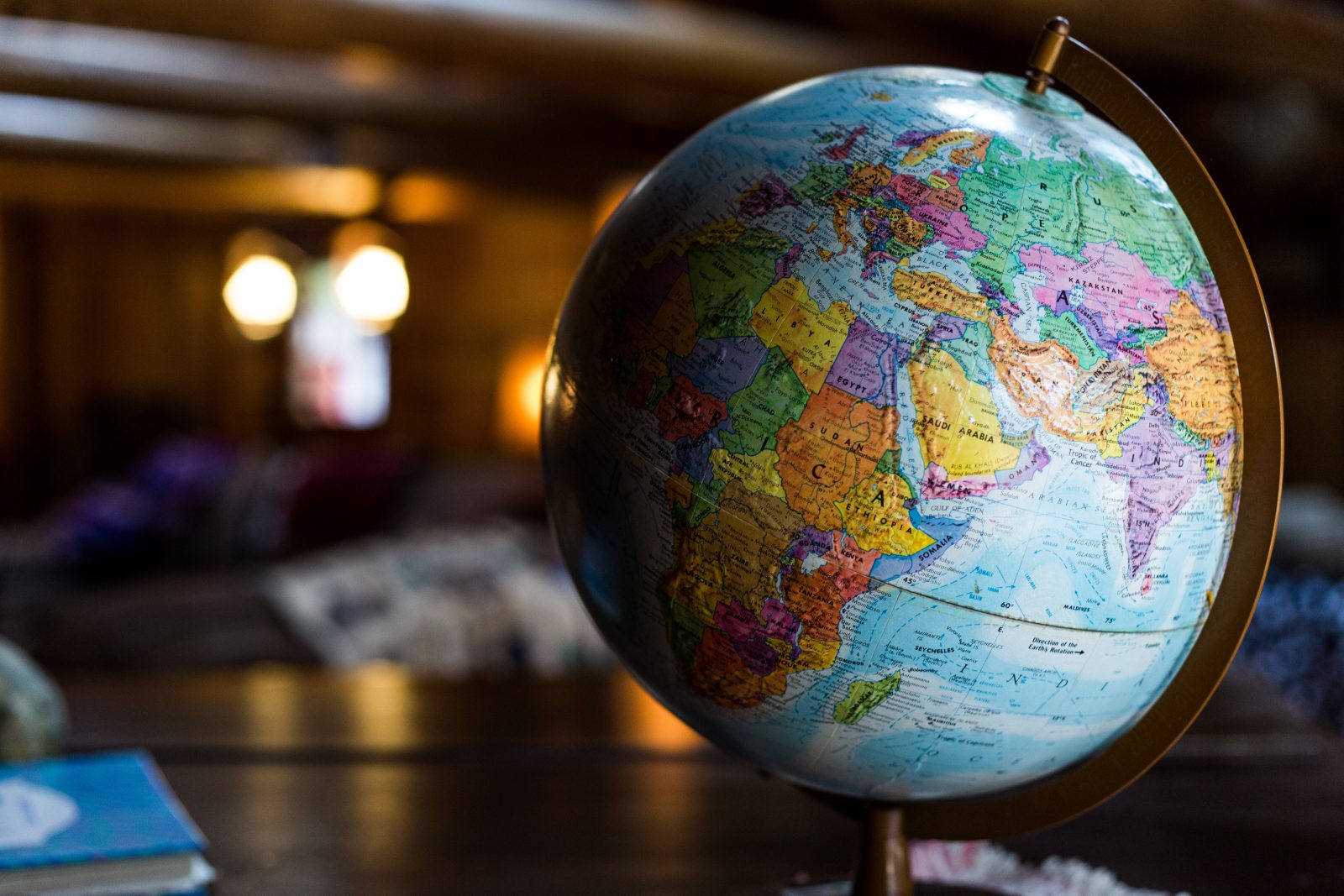
The Many Global Agreement Withdrawals of the Trump Administration
Brief #55—Foreign Policy
President Trump’s campaign was defined by the complete rejection of international cooperation and multilateral agreements. According to Trump’s mindset, in every deal the United States was either being cheated or doing the cheating, and his predecessors had been doing too much of the former. This turned out to be a popular message, with many of his supporters believing that these agreements were crafted without the interests of common Americans in mind. Trump once would have had to secure the permission of Congress before withdrawing from these agreements, but precedence has changed over the years, allowing the President to single handedly remove the country from agreements which took years of political maneuvering and Congressional approval to sign in the first place. Below we consider the effects of some of Trump’s most notorious withdrawals.
The Iran Deal
The Joint Comprehensive Plan of Action, commonly referred to as the Iran Deal, was a historic product of the Obama administration’s attempts to build a stable network of international cooperation. The deal placed restrictions on the amount of nuclear energy produced by Iran, in the interest of avoiding the possibility of enriched Uranium being used for nuclear weapons, in return for an end to the crippling sanctions levied against them by the United States, EU, and UN. Despite assurances by the International Atomic Energy Agency, who were granted permission under the deal to inspect nuclear facilities, that Iran remain in accordance, President Trump ended US support of the deal in May of 2018.
In response, UK Prime Minister Theresa May and French President Emmanuel Macron declared their continued support for the deal, and the EU threatened to sanction firms who abided by new US sanctions. Nevertheless, the Iranian economy now operates under the weight of both the JCPOA’s energy restrictions as well as US sanctions. The Iranian Rial dropped by 14% in the three days following the announcement of the withdrawal of the United States. The destabilizing of the agreement also encouraged Israel to take the opportunity to strengthen its position against Syria, an ally of Iran. Immediately following Trump’s announcement of withdrawal, the IDF launched artillery strikes at the Syrian city of Baath, which lies in the demilitarized zone just outside of the Golan Heights, a region of Syria which has been under Israeli occupation since 1967. Iran responded, launching missiles towards Israeli bases in the Golan Heights, to which Israel responded with Operation House of Cards, which involved strikes against over 50 Iranian targets across Syria. Iran may continue to comply with energy restrictions for now, assuming the continued support of EU nations, but with continued military tension against neighboring states, and anti-American sentiment rising in response to sanctions, they may give up the hope of international cooperation, never mind enter into to a future deal.
The Paris Climate Accord
On June 1st, 2017, President Trump announced that the United States was withdrawing from the Paris Climate Accords, a historic 2015 international agreement to reduce emissions in an attempt to avoid the worst effects of climate change. In response to the withdrawal, Syria and Nicaragua signed onto the agreement, making the United States the only non-participatory country in the world. Technically, the US is still included in the agreement, and must remain so until after the 2020 elections, as per the initial rules of the agreement. For now, State Department officials continue to show up at all periodic meetings concerning the future of the agreement, but no longer take a leadership role in the proceedings. Trump has continued to cut environmental protections, rolling back the Obama-era Clean Power Plan and canceling a planned $2 billion payment to the Green Climate Fund, which would have helped developing countries transition to renewable energy production. However, the environmental movement in the United States has been invigorated in the face of these cutbacks, with freshman Congresswoman Alexandria Ocasio-Cortez and the Sunrise Movement pushing climate change action to the front of the Democratic party’s platform and calling for a Green New Deal to build a new non-extractive economy.
Trans-Pacific Partnership
Signed in 2016, the Trans-Pacific Partnership (TPP) was a sweeping trade agreement which would have strengthened economic ties between the United States and twelve Pacific nations, primarily through reduced tariffs. The agreement was signed but never ratified, with Trump withdrawing in the first week of his presidency, a month before it would have gone into effect. During his campaign Trump frequently denounced the TPP, along with the modern consensus of low barriers on the international flow of capital from which it came. This globalist tradition was seen to have helped cause the domestic evaporation of manufacturing jobs from which Trump drew so much support.
The remaining nations ended up proceeding without the US, signing the Comprehensive and Progressive Agreement for Trans-Pacific Partnership. The EU has also been forming trade agreements with many of the TPP signatories, and China has been moving forward with their own version of the TPP, the Regional Comprehensive Economic Partnership. Trump suggested last August that the US might rejoin the deal after receiving pushback from Republican lawmakers concerned over the profits of exporting companies in their states. Japan and Vietnam are both major food importers who would have been included in the TPP. Lawmakers were also concerned that the US had given away a strong tool for competing with China in the Pacific region. Returning now would mean that the United States would have given away much of the leverage it built in the original preparation for the deal.
UN Councils
The UN has always been a specific target of Trump’s ire, partially due to the significant funding we have provided for its support. This has so far manifested in our withdrawal from two important UN councils. One is The United Nations Educational, Scientific and Cultural Organization (UNESCO), which promotes international respect and awareness for the importance of human rights, education, and peace. UNESCO originally lost US funding in 2011 when its members voted to recognize Palestine as an independent participant in the agency. Trump pulled the US out of UNESCO in October of 2017 after it designated a Palestinian region of the West Bank as an endangered World Heritage Site. Now the US cannot contribute to the management of the 1,073 World Heritage Sites around the world, and surrenders any possibility of resuming funding for the many programs UNESCO operates to reduce illiteracy and oppression.
The United States is now also the only country other than Iran, North Korea, and Eritrea to refuse to participate in the United Nations Human Rights Council. Former Ambassador to the UN Nikki Haley justified the withdrawal last July by denouncing the council’s five resolutions passed against Israel that year, particularly one which condemned US and Israeli businesses investing in illegal Israeli settlements in the West bank. By removing itself from the Human Rights Council, our government reduces both international oversight over its actions as well as international legitimacy in its criticism of others.
Resistance Resources
- Human Rights Watch – An organization dedicated to fighting oppression from a global perspective
- Roots Action – An online activist group devoted to pushing US domestic and foreign policy in a progressive direction
This Brief was submitted by U.S. RESIST NEWS Foreign Policy Analyst Colin Shanley: Contact Colin@usresistnews.org
Photo by Kyle Glenn

Court of Appeals Issues Ruling Prohibiting Elected Officials From Banning Online Critics on Social Media Platforms
Brief #74—Civil Rights
Policy Summary
Phyllis Randall is an elected official and holds the position of Chair for Loudon County, Virginia, Board of Supervisors. In this role, Ms. Randall opened a Facebook page titled “Chair Phyllis J. Randall’s” Facebook page which contained content that related to her official duties as Chair for the Board of Supervisors. (Ms. Randall also has a separate personal Facebook page for personal and private use). Ms. Randall classified her “Chair Facebook” page as a “government official” page.
On February 3, 2016, Brian Davison, a private citizen, attended a Loudon town hall meeting that also included Ms. Randall and the Loudon County School Board. Later on that evening, Ms. Randall posted information from the meeting which Mr. Davison then responded to with comments he posted on Ms. Randall’s “Chair Facebook” page. Ms. Randall saw that the comments were about accusations of conflict of interests by members of the board. Ms. Randall decided to delete her Facebook meeting post and Mr. Davison’s comments on her post. She then decided to ban Mr. Davison from the “Chair Facebook” page.
Mr. Davison brought a lawsuit against Ms. Randall in the federal district court for the Eastern District of Virginia which ruled Ms. Randall violated Mr. Davison’s Free Speech rights under the First Amendment. Ms. Randall appealed to the Fourth Circuit Court of Appeals which ended up affirming the trial court’s ruling against Ms. Randall. LEARN MORE
Analysis
This case is the first case decided at the Court of Appeals level that has addressed the issue of how elected officials can treat public criticism of their official duties on social media platforms and the First Amendment concerns connected to that. The case will likely be influential in the coming years because of the number of politicians who use social media to interact with their constituents and conduct government policy, most notably President Donald Trump on his Twitter account. The key takeaway from this opinion is how the court determined that social media platforms as used by elected public officials “bear the hallmarks of a public forum.” Under this category, the government (or an elected official) cannot restrict speech on their official government social media accounts based on their content without a compelling state interest. What Ms. Randall attempted to do in her case was censor speech that could have been of interest to the public because of their embarrassing implications to herself and the rest of the Board. Quite simply, this was viewpoint discrimination and has been prohibited by the First Amendment long before social media platforms were developed. Katie Fallow, a senior staff attorney at the Knight Institute, said it best when she said “Public officials…have no greater license to suppress dissent online than they do offline.” The rules regarding Free Speech and the First Amendment and social media platforms are still being developed but this case sends a strong signal that the First Amendment will likely have a strong role to play in the development of free speech rules on social media in the years and decades to come. LEARN MORE, LEARN MORE
Engagement Resources:
- Knight First Amendment Institute – group at Columbia University defending freedom of speech and the press.
- American Civil Liberties Union (ACLU) – blog post on Randall v. Davison ruling.
- Defending Rights and Dissent – non – profit group protecting the right to political expression.
This brief was compiled by Rod Maggay. If you have comments or want to add the name of your organization to this brief, please contact Rod@USResistnews.org.
Photo by ROBIN WORRALL