

JOBS POLICIES, ANALYSIS, AND RESOURCES
Latest Jobs Posts
The Little Covered Big War in Congo and Rwanda (Foreign Policy Brief #201)
To the average westerner, and especially to Americans, the African continent seems to be politically and economically monolithic. One could recall instances where an interviewed passerby on Jay Leno or Jimmy Kimmel’s show would refer to Africa as a country. This point of view makes the western public less capable of discerning and debating foreign policy as it relates to Africa. Therefore, it is the mission of this brief to inform readers of an infamous armed group that has made headlines for its brutality and human rights abuses, but whose history and status remain vague in the casual reader’s news feed: M23.
Ukrainian Refugees and American Citizens Mistakenly Ordered to Leave the U.S. Within Seven Days
In early March, 2025 Reuters reported that the administration of Donald Trump was planning to deprive about 240,000 Ukrainian refugees of their legal status by terminating humanitarian programs. According to the Reuters sources, the decision was expected in April. In response, White House Press Secretary Caroline Leavitt dismissed the report on X, calling it “more fake news” and stating, “No decision has been made at this time.” Meanwhile, the Trump administration has already begun revoking parole status for over 500,000 migrants from Cuba, Haiti, Nicaragua, and Venezuela, who had been living in the U.S. under temporary humanitarian programs. The administration said cases would be reviewed on “a case-by-case basis.”
The Department of Justice Voting Section’s Shift In Priorities
A number of news outlets have recently reported that the United States Department of Justice’s (DOJ) Civil Rights Division Voting Section has changed their mission statement and its priorities.
Trump’s Plan for the Middle East: What’s at Stake for the Palestinians?
The situation in Gaza and the West Bank has deteriorated sharply since October 7, 2023. Gaza faces unprecedented devastation, while economic strangulation and security clampdowns in the West Bank have created intolerable conditions for daily life. Over 400 permanent Israeli checkpoints now divide Palestinian communities across the West Bank, severely disrupting movement, trade, and human dignity.
The Growing 2025 Anti-Trump Protests: Hands Off, No Kings Day, and More
In just over 100 days of Trump 2.0, a reinvigorated Democratic opposition has taken shape. AOC and Bernie have been headlining rallies across the country. Cory Booker broke the record for the longest filibuster in Senate history. Beto O’Rourke is back on the road, holding town halls across Texas. Together, along with others, they’re making it clear: the fight is on. These examples all show how Democrats are fighting against the actions of the Trump administration, raising awareness around the authoritarian tendencies of the administration, & importantly testing the waters for potential runs.
Israel’s Use of AI in Gaza Sparks Protest at Tech Companies in the U.S.
The Israeli military uses Artificial Intelligence to find and target Hamas fighters, but with a civilian death toll estimated at 52,000, critics allege the system is not reliable and may even be providing cover for widespread bombing and ethnic cleansing. And that US companies are complicit.
American Policy in Africa: US Retreats as China Advances
On 22 April, Secretary of State Marco Rubio revealed plans to reorganize the State Department with the justification of increasing efficiency, rooting out ‘radical political ideology’, and delivering Trump’s foreign policy agenda. The details of the plan focus on reducing the size of the State Department and its budget over time: consolidating regional bureaus and embassies, shutting down redundant offices, and ending non-statutory programs that the administration determines to be irrelevant to American interests.
Old Growth Forest Policy Made at the 19th Hole (Environment Policy Brief #180)
Through an Executive Order issued March 1, 2025, there is to be an expansion of American timber production that meets goals to achieve “sound forest management, reduce time to deliver timber, and decrease timber supply uncertainty.” Approximately 100 million acres, the equivalent of 60% of our national forests, are to be within earshot of a chainsaw. In so doing, the Trump administration declares this a “new era” in national forest management. Legally protected forest land and parts of old growth forest are slated be part of the expanded production.
The Trump Administration and the University Communities: Part 1, Funding Suspension
In April 2025, the Trump administration escalated its efforts to reshape American higher education by suspending billions in federal grants to elite universities — including Harvard, Columbia, and others — accused of promoting “critical race theory,” “transgender ideology,” and other Diversity, Equity, and Inclusion (DEI) programs. This move is part of a broader campaign to reorient education policy around conservative cultural values and dismantle what the administration frames as liberal dominance within academia.


The Administration Efforts to Avoid a Judicial Ruling
The Administration Efforts to Avoid a Judicial Ruling
On April 9, 2025 the House of Representatives voted on the No Rogue Rulings Act bill. The bill was sponsored by Rep. Darrell Issa (R-CA). H.R. 1526 would prohibit a federal district court judge from issuing an injunction or prohibition regarding a case unless the injunction or prohibition only applied to the parties of the particular case before the district judge’s court. The bill passed the House by a vote of 219 – 213 in favor of the bill, almost exclusively on party lines. One Republican voted against the bill, Rep. Mike Turner from Ohio.
The bill is in response to President Donald Trump and other Republicans anger at having a number of the President’s executive orders and policy proposals temporarily paused or put on hold by an order from a district court judge. During the first two months of the Trump Administration there have been seventeen nationwide injunctions that have been issued against a Trump Administration executive order or policy proposal. The injunctions have been comprised of temporary restraining orders (TRO) and preliminary injunctions (PI) and most have been applied nationwide. When a TRO or PI are issued in ordinary cases between parties the injunction usually prohibits one of the parties from taking a certain action before the case can be resolved at trial. But since cases brought against a Trump Administration executive order or policy affect the entire country as a whole, the TRO’s and PI’s that have been issued inevitably prohibited the executive order or policy proposal from being implemented for the time being nationwide. The No Rogue Rulings Act is intended to prevent federal district judges from issuing these injunctions by modifying how they may be implemented.
The bill will now move to the Senate where passage in that chamber seems highly unlikely. LEARN MORE
Policy Analysis
Since the beginning of the second Trump Administration the President and many of his supporters have been angry that many of their executive orders and policy proposals have been temporarily halted and paused by the courts. Some GOP members have even openly called for judges to be impeached when a judge has issued rulings that they disagreed with. This prompted a rare rebuke from Supreme Court Chief Justice John Roberts who stated, “Impeachment is not an appropriate response to a disagreement concerning a judicial decision.” Nevertheless, GOP outrage at judges and the judiciary as a whole have persisted during the first two months of President Trump’s term.
The No Rogue Rulings Act bill has intensified this conflict because the bill and the changes and modifications it will provide are not necessary. It is merely a partisan reaction to rulings Republicans do not agree with and so now they are trying to “move the goal posts” to give their policy proposals a greater chance of success if challenged in a court of law. The purpose behind TRO’s and PI’s is not to rule whether a policy is good or bad. A temporary restraining order and a preliminary injunction are often issued at the beginning of a case and merely questions whether a party should be prohibited from doing something while the case moves through trial. It is temporary in nature. A court could decide to allow a policy to be implemented or it could decide to block it’s implementation permanently. A permanent injunction would only come after a trial. A pause does not mean that a policy proposal is instantly rejected. This is what Trump Administration officials are failing to grasp about nationwide injunctions being put on pause temporarily.
Rep. Mike Turner, the only Republican to not support the No Rogue Rulings Act pointed out that “the judicial system works” and that this bill is not necessary. He also pointed out that even if a district judge issued a temporary national injunction like in the recent immigrant deportations flight case, the Supreme Court was there to strike down and overturn the injunction. The judiciary has protections and protocols in place to ensure that a party can appeal and still have their case heard on the merits. Rep. Hank Johnson from Georgia, a Democrat, called it a judicial system, “working exactly as it should.”
Predictably, the bill has gotten a very partisan response which has illustrated the underlying issues. Rep. Pramila Jaypal (D-WA) stated, “If you don’t like the injunctions, don’t do illegal, unconstitutional stuff. That simple” with the implication being that Trump is trying to change the rules because most of his actions are illegal. Republicans have countered that the bill is necessary because a constitutional crisis has emerged where radical “activist judges” have improperly usurped the power of the Executive Branch of the Government to implement their preferred agenda. But the fact of the matter is that Republicans have introduced a bill that is neither needed nor necessary. It is simply feigned indignation for their inability to craft an executive order or policy proposal that can withstand scrutiny during the early stages of a case. They’ve forgotten that these TRO’s and PI’s are temporary and that they can still win their cases at trial even though their policy is temporarily paused. And even if they don’t prevail at trial, the Trump Administration and their allies can appeal to the appropriate appeals court and eventually the Supreme Court. There is no need to change the scope and national reach of a federal district court’s ability to issue an injunction simply because a policy can’t be implemented right now. The No Rogue Rulings Act does nothing but exposes the Republicans and Trump Administration’s hostility towards the judiciary strictly for partisan reasons. LEARN MORE, LEARN MORE, LEARN MORE
Engagement Resources
- The Hill – analysis of the No Rogue Rulings Act bill.
- National Public Radio (NPR) – how the effort to rein in judges has divided the GOP.

Understanding What the U.S. Department of Education Did
Understanding What the U.S. Department of Education Did
Brief # 200 Education Policy | Valerie Henderson | April 22, 2025
The U.S. Department of Education (DOE), established in 1979 under President Jimmy Carter, promotes student achievement, ensures equal access to education, and enforces federal laws prohibiting discrimination in federally funded programs. Historically, it manages Pell Grants, student loans, Title I programs for low-income students, and special education under the Individuals with Disabilities Education Act (IDEA). It also oversees civil rights compliance in educational institutions.
Over time, the DOE’s scope has expanded through legislation such as the Elementary and Secondary Education Act (1965) and the Higher Education Act (1965), and subsequent reauthorizations including the No Child Left Behind Act (2001) and Every Student Succeeds Act (2015).
Analysis
Initially a support system for states, the DOE has increasingly influenced local education policy through conditional funding. Federal initiatives like Common Core, Race to the Top, and standardized testing requirements reflect deeper federal engagement.
Critics argue this undermines local autonomy, while supporters emphasize its role in ensuring nationwide equity—particularly for marginalized populations. While federal funding comprises only 8–10% of total education spending, the conditions attached give it significant policy leverage.
Advocates warn that dismantling the DOE would harm students depending on federal services, particularly children with disabilities and those in underfunded schools. Meanwhile, proponents of abolishment believe local control would promote innovation and reduce bureaucracy.
On March 20, 2025, President Donald Trump signed an executive order to dismantle the Department of Education. A day later, the administration ordered the transfer of federal student loan responsibilities to the Small Business Administration (SBA). This move bypassed pending legislation and triggered concern among legal scholars and policy experts, as the SBA lacks statutory authority and infrastructure to handle the complex $1.6 trillion federal student loan portfolio.
A March 11 reduction in force eliminated nearly one-third of DOE staff, impairing its capacity to carry out core functions. Simultaneously, the SBA—facing its own 43% staff cut—was ill-equipped to manage the scale and complexity of federal student aid, which includes varied loan types, forgiveness programs, and FAFSA infrastructure.
Universities like Seton Hall have publicly reaffirmed their commitments to DEI programs and warned of looming financial instability. Investigations into more than 50 universities have already resulted in the suspension of DEI-related federal grants, with billions in funding at stake.
Without a statutory transfer of authority, legal experts argue that the SBA may be unable to enforce current student loan agreements, potentially violating the Higher Education Act of 1965. Civil rights enforcement under Title VI, Title IX, and IDEA is also at risk if the DOE is dissolved without new federal mechanisms. Experts caution that, without congressional approval, this reorganization faces strong legal resistance. The abrupt withdrawal of federal oversight could severely compromise protections for marginalized students, amplify educational inequities, and destabilize the national education landscape.
I do not support efforts to abolish the Department of Education, as doing so would significantly harm students who depend on federally mandated services, especially those from historically marginalized backgrounds and children with disabilities. The Department plays an essential role in protecting civil rights, funding special education programs, and ensuring equitable access to education across all states. Without its oversight, local disparities in funding, quality, and inclusiveness would likely widen. While there is room for reform and improved collaboration with states, dismantling the DOE would strip away necessary protections and support systems that millions of students rely on daily.
Engagement Resources
- National Education Association (NEA)
Advocates for public education policies that strengthen public schools, enhance educational opportunities, and improve educator working conditions.
https://www.nea.org - Education Trust
Engages in research and advocacy aimed at closing achievement gaps and promoting educational equity across socioeconomic and racial groups.
https://edtrust.org - Center on Education Policy (CEP)
Provides nonpartisan, evidence-based research on public education, helping policymakers understand the implications of educational policies and practices.
https://www.cep-dc.org

United States v. South Africa: US Executive Order 14204
United States v. South Africa: US Executive Order 14204
Brief # 198 Foreign Policy | Damian DeSola | April 21, 2025
The current US administration has altered South Africa’s trajectory as a nation. On 7 February 2025, President Trump signed Executive Order 14204 titled, “Addressing Egregious Actions of The Republic of South Africa”. It outlines two reasons for its existence, first that South Africa’s Expropriation Act (2024) dismantles “equal opportunity” and fuels “disproportionate violence against racially disfavored landowners”. Secondly, the Order states that South Africa’s condemnation of Israel to the International Court of Justice, “poses national security threats to the US.” The provisions of the order also set two major policies that will reverberate across the international community. One is an immediate cut to United States aid to South Africa, second is the promotion of resettling Afrikaners, Dutch-descended South Africans, in the United States as refugees from racial discrimination.
Following this order, Secretary of State Marco Rubio expelled South African Ambassador to the United States Ebrahim Rasool over his comments: “the Maga movement as a response not simply to a supremacist instinct, but to very clear data that shows great demographic shifts in the USA in which the voting electorate in the USA is projected to become 48% white.” Rubio said that Ambassador Rasool is “no longer welcome”. Furthermore, Donald Trump has posted on Truth Social that the United States will not be attending the G20 Summit in South Africa this year under the false claim that, “They are taking the land of white Farmers and then killing them and their families. The Media refuses to report on this.”
Before examining the consequences of these actions, it is necessary to outline basic context of South Africa as it exists in international relations.
With the arrival of Dutch colonizers, the land now known as South Africa has been in a perpetual state of societal complication. The construction of a repressive race-based social hierarchy that legally lasted to the end of the apartheid state in the 1990s, still stains its history. Even now, many public institutions like schools and hospitals remain segregated while most commercial farmland is still owned by white farmers.
No longer a colony nor run by a white supremacist government, South Africa has sought its place in the world. It is the ‘S’ at the end of the acronym for the international economic coalition BRICS; it has strong relationships with European nations, and formerly with the United States.
Whether or not one agrees with the political choices made by the post-apartheid South African governments, the nation seeks to develop its economy and society in a direction that is built on foreign direct investment and anti-apartheid sentiment.
Trump’s rhetoric would make one think that the South African government’s ne3 law orders all land owned by the minority white farmers be immediately nationalized and redistributed to the black majority. The South African government says this law will not be used arbitrarily and only for the purpose of public interest. There is no language in the law that specifically mentions the race of landowners. As of this writing, there has been no confiscation of land reported.
The resettlement of Afrikaners is a policy focus that is closely tied with Trump, Musk, and the administration’s rhetoric condemning the Expropriation Act and of general criticism of South Africa’s government. The false rhetoric that white South Africans are having their land stolen and being murdered by the government and by black South Africans, has become an excuse to accept Afrikaners as refugees in a show of race solidarity. Tens of thousands of Afrikaners have shown interest in the program.
In terms of South Africa’s relationship with Iran, the evidence for anti-American activity that would undermine US national security is sparse at best. The claim that South Africa has taken the side of Hamas, which is supported by Iran, is entirely based on the assumption that accusing Israel of genocide in Palestine is inherently pro-Hamas. However, South Africa’s support for Palestine has existed since the days of Nelson Mandela’s fight against apartheid, where he believed that both South Africa’s and Palestine’s causes for liberty were synonymous.
Trump’s Executive Order, to halt aid and to resettle Afrikaners as refugees in the United States, has considerable implications. The halting of aid to South Africa will be majorly detrimental to U.S. soft power, and to the livelihood of the South African people. Questions also remain over the continuation of HIV aid to South Africa as it flows through USAID, which is being dismantled. If aid is discontinued, the waning HIV epidemic in South Africa, and across Southern Africa will reaccelerate. In terms of soft power, US rivals will be emboldened to step into its place as reliable investors in South Africa’s future.
The Trump administration’s policy decisions and diplomatic actions will have major implications for future US foreign policy in Africa and the ongoing power struggle between the United States and China over international influence. South Africa will continue to act in its interests as its unique post-apartheid system evolves and adapts to these developments.

The Week That Was: Global News in Review
The Week That Was: Global News in Review
Foreign Policy #197 | By Abran C | April 16, 2025
Presidential Elections in Ecuador
Supporters of President Daniel Noboa celebrate early returns showing him in the lead in the presidential election runoff in Quito, Ecuador, Sunday, April 13, 2025. Carlos Noriega/AP
Ecuador President Daniel Noboa has been declared winner of the country’s presidential election, over Luisa González, a protégé of Ecuador’s left-wing former President Rafael Correa. Gonzalez offered an alternative model for security based on what her party described as “prevention, violence reduction and coexistence”. Noboa narrowly beat Ms. González in the first round in February but did not reach the 50 percent threshold required to avoid a second round. Polls show Sunday’s election as a standoff. In the past five years, Ecuador has experienced an explosion in violence linked to drug trafficking. Its justice system is plagued by overcrowding, corruption and has become fertile ground for prison gangs allied with international drug cartels. Noboa declared a state of internal armed conflict last year to address the escalating violence and prison riots, authorizing the military to patrol both the streets and prisons. His victory means he now has a full four year mandate to continue his self-described “war” on narco gangs. He recently signed a security agreement with Erik Prince, the founder of the former U.S. mercenary contractor Blackwater and has proposed changing the constitution to allow foreign military bases in the country again.
Russian Missile Strikes Continue Against Ukraine

https://ichef.bbci.co.uk/news/1536/cpsprodpb/bded/live/35ee3260-19c5-11f0-a455-cf1d5f751d2f.jpg.webp
Two Russian ballistic missiles slammed into the heart of the northern Ukrainian city of Sumy last week, killing 34 people and wounding 117 in the deadliest strike on Ukraine this year. Ukrainian President Volodymyr Zelenskiy demanded a tough international response against Moscow over the attack. Many European leaders condemned the latest attacks. NATO secretary general Mark Rutte visited the southern Ukrainian city of Odesa with President Volodymyr Zelenskyy and declared unwavering support for Ukraine. US president Donald Trump, when asked about the Russian strike, commented that “I was told they made a mistake… but it’s terrible”. Zelensky called on the United States to provide forces as part of an international peacekeeping effort, specifically asking for Washington to help protect Ukrainian airspace with aircraft. A request that is unlikely to be fulfilled as analysts worry that, as the United States attempts to broker a ceasefire in Ukraine, it is set to reward Moscow with territorial and security concessions at Ukraine’s expense.
War in Sudan Nears its Third Anniversary

Fire rages in a livestock market area in al-Fasher, the capital of Sudan’s North Darfur state, in 2023 in the aftermath of bombardment by the paramilitary Rapid Support Forces.AFP – Getty Images
Sudan plunged into civil war on April 15, 2023 after tensions between the Sudanese paramilitary group known as the Rapid Support Forces (RSF) and the country’s military boiled over. The fighting began in the capital Khartoum and quickly spread across the country. The conflict has pushed many parts of the country into famine and displaced more than 14 million people from their homes. Many have fled into neighboring countries such as South Sudan, Chad and Egypt. The World Food Program estimates that nearly 25 million people or half of Sudan’s population, face extreme hunger.
Recently the Sudanese government appealed to the International Criminal Court for a case of genocide against the United Arab Emirates (UAE). The claim is that the RSF is responsible for serious human rights violations including mass killings, rape and the forced displacement of the non-Arab Masalit people in West Darfur. The application claims the UAE “is complicit in the genocide of the Masalit people through its direction and provision of extensive financial, political, and military support for the rebel RSF militia”.
International Travel to the US Declines

Photo: Eduardo Munoz Alvarez April 15, 2024 (Getty Images)
According to a recent report by the research firm Tourism Economics, inbound travel to the US is projected to decline by 5.5% this year, instead of growing by 9% as had previously been forecast. Dissuaded by reports of tourists being arrested at the border, Trump’s rhetoric, tariffs and threats of invasions, some citizens of other countries are staying away from the US and choosing to travel elsewhere. Some of the steepest declines in tourism stem from Canada, where Trump’s repeated suggestion that the country should become the 51st state and tariffs have angered Canadian residents. Canada was the largest source of visitors to the US in 2024, with more than 20.2 million. Airline bookings from Canada to the US have sunk 70%compared to the same period last year. Air Canada has reportedly reduced its schedule of spring flights due to lack of demand. The 2024 reelection of Donald Trump and the consequential changes in foreign policy and diplomacy, alongside internal turmoil, has started to change global attitudes towards America, and this shift in attitude has begun affecting tourists’ desire to travel to the United States.

How the Twenty-Second And Twelfth Amendments Prohibit a Third Trump Term
How the Twenty-Second And Twelfth Amendments Prohibit a Third Trump Term
Civil Rights Brief No. 240 | Rodney Maggay | April 13, 2025
Section 1 of the Twenty – Second Amendment to the United States Constitution provides, “No person shall be elected to the Office of the President more than twice.” President Donald Trump was elected to the presidency in 2016 and again in 2024 after he was defeated in his bid for re – election in 2020.
On March 30, 2025 in a phone call to an MSNBC Sunday morning talk show President Donald Trump did not eliminate the possibility of seeking a third term for the White House in 2028. The President also clarified to his interviewers that he “was not joking” and that he was seeking ways to make it possible that he could serve a third term in office. The President further clarified that there was still a long way to go but eventually added, “A lot of people want me to do it.” LEARN MORE
Analysis
It is unclear if the President is merely joking in a manner to antagonize his opponents or if he is truly considering seeking the White House in 2028 for a third term. His comments however has caused legal scholars and news pundits to analyze the Twenty – Second Amendment to see if there is any possibility, however slim, that the President could serve a third term.
The text of the Twenty – Second Amendment on its face prohibits Mr. Trump from running for the White House again. The text prohibits a “person” from being elected President more than twice. There is no ambiguity or confusion in these words and it would appear to shut the door on Donald Trump from running for President after his current term is complete.
But in the days after Mr. Trump’s win in the 2024 election options have been floated to try and change the eligibility rules and allow Mr. Trump to run again. It would seem straightforward that if Mr. Trump would have any chance to run again that the first step would be to amend the Constitution and/or repeal the Twenty – Second Amendment. However, this path requires a high bar to clear because of the requirements needed to amend the Constitution.
Article V of the Constitution refers to the Amendment Process and requires that any amendment by ratified by 2/3 of both the House of Representatives and the Senate and also be ratified by 3/4 of the states. With the current political gridlock in Washington it is nearly impossible to reach this threshold of votes in both houses of Congress and among the states. But that still hasn’t stopped some congressman from introducing resolutions even though they probably know their resolution will fail. Rep. Andy Ogles (R) of Tennessee introduced a resolution that would get the amendment process started that would allow a person to seek a third term only if their two prior terms were served non – consecutively which would apply to Trump. (Rep. Ogles crafted his resolution in this manner in order to allow Trump to run again but still prohibit previous two term Presidents like Barack Obama and Bill Clinton from running.) Even though Rep. Ogles’ resolution has minimal chance of passing, it prompted a competing resolution from Rep. Dan Goldman (D) of New York affirming that the Twenty – Second Amendment applied to President Trump’s two non – consecutive terms and effectively barred him from running again. While both resolutions from the Congressmen do not appear likely to pass they appear to have also been appeals to their constituents in the context of what the Twenty – Second Amendment means for the future of their respective party’s presidential candidates.
But one theory that has gained traction lately is if in 2028 current Vice – President JD Vance runs for President with Donald Trump as his Vice – Presidential running mate. If Vance wins, he could step down and allow Vice – President – elect Donald Trump to assume the Presidency again. However, there is a separate Constitutional Clause that could help enforce the Twenty – Second Amendment and scuttle those plans. The last sentence of the Twelfth Amendment to the U.S. Constitution states, “But no person constitutionally ineligible to the office of President shall be eligible to that of Vice-President of the United States.” So, if the Twenty – Second Amendment is taken at face value and bars Donald Trump from running for a third term, then the last sentence of the Twelfth Amendment would also prohibit Mr. Trump from running as a Vice – Presidential running mate in order to try and succeed to the Presidency in some kind of work – around the Constitution.
While these are all academic debates and just chatter for the moment, any serious effort by the President to run again would likely end up in a case before the Supreme Court to decide the constitutional question. LEARN MORE, LEARN MORE,
Engagement Resources
- FactCheck.org – analysis of constitutional loophole for Trump to try and run for a third term.
- Democracy Docket – analysis of alternative theories to avoid the Twenty – Second Amendment.

The Growing Global Battle for Rare Earth Minerals (Environment Policy Brief #179)
The Growing Global Battle for Rare Earth Minerals
Where there’s oil, there’s the United States of America. It’s an old joke, fostered by a century of U.S.-backed coups and military interventions in the name of cheap access to oil reserves. But the age of oil politics may be giving way to a new age of mineral politics.
Rare earths are a group of 17 elements that are increasingly important in today’s day and age. From smartphones and wind turbines to radar systems and F-35 fighter jets, rare earths are vital to the functioning of any modern nation. Other metals, like nickel, cobalt, graphite, and lithium, are equally important for modern technology including their use in batteries. But there are only so many reserves of these resources, and the great powers of today are beginning to recognize the importance of securing access to them.
The most notable examples of this have been the U.S.’ desire to annex Greenland, which has rich, vast, and untapped (for environmental reasons) reserves, and the U.S.’ push for a minerals deal in Ukraine. The U.S. currently only has one functioning rare earth mine, and imports almost all of what it needs. What is driving this renewed push by the U.S. specifically is the knowledge that China produces upwards of 90% of the world’s rare earth metals, giving them a de facto monopoly over an industry that America has only recently begun developing.
Analysis
The Ukraine mineral deal has gone through many iterations, with the most recent giving the U.S. 50% of future revenues generated from minerals, oil, and other resources. While a draft as of April 6 only shows the American side of the deal, it emphasizes the central role minerals are playing in today’s geopolitics.
Greenland, on the other hand, has 43 of the 50 minerals deemed “critical” to American security, according to a recent study. These minerals include, graphite, uranium, nickel, and copper, and they are a large part of the reason that Donald Trump has pushed for annexing Greenland. Besides its strategic position near the Arctic and his own personal yearning to cement his legacy, those minerals attract a lot of eyes. 25 of the 34 minerals deemed “critical raw materials” by the European Commission, according to a 2023 survey, were found in Greenland. Denmark controls Greenland, and should push come to shove, the EU could hypothetically access those minerals.
But what hasn’t been attracting a lot of eyes is the third country that the U.S. has been seeking a minerals deal with. Democratic Republic of Congo has been waging a war since 2022 against the M23 paramilitary group, which is allegedly backed by neighboring Rwanda. In early April, the Trump administration acknowledged that it was open to a minerals-for-security deal with the DRC.
Whether or not this deal goes through, part of the reason this conflict began in the first place was because Rwanda wanted access to the DRC’s mineral deposits, something they’ve pushed for since the 1990s. Now, according to the Wall Street Journal, the mineral-rich battleground eastern regions of the DRC have evolved into smash-and-grab smuggling operations. While Rwanda has been seizing Coltan deposits, even neighboring Uganda has gotten involved in the conflict and begun taking over gold mines to the northeast, according to United Nations and Ugandan officials.
The U.S. is not alone in vying for rare earth access. At the moment, the EU is incredibly dependent on China’s exports of rare earth metals. With the global trade system being shaken up by President Trump, many nations like Spain are eyeing increasing trade with China. But others in the bloc are trying to invest in European endeavors. In March, the EU selected 47 rare earth projects across member states, a major step towards fully implementing its 2023 Critical Raw Materials Act, which aims to reduce dependence on China’s exports.
Finally, China’s rare earth exports are also increasingly becoming a tool for geopolitics. After Trump’s tariff “Liberation Day”, China hit back with export restrictions on its rare earths. Those restrictions also include permanent magnets and other finished products that will be difficult to replace, showing just how effective a geopolitical cudgel China has due to its mining operations.
How much and how aggressively China wields that cudgel is yet to be seen, but minerals are becoming the new oil across the board. From Greenland, to the DRC and China, the resources that make our phones and fighter jets work are beginning to become vital national security interests. And blood is already being spilt to claim them.
Engagement Resources:
- The Council on Foreign Relations’ Global Conflict Tracker provides updates for ongoing conflicts. They also have a litany of experts on foreign policy.
- The American Geosciences Institute provides information services and education about the importance of geosciences to society.
- The Payne Institute for Public Policy at Colorado School of Mines is a research institute focused on the environment and natural resources.

Strategies for the Democrats for the Democrats to Push Back
Op Ed: Strategies for the Democrats for the Democrats to Push Back
Since last year’s election, in which Republicans gained control of all three branches of government, the Democrats have seemed somewhat lost and unable to develop a pushback strategy to counter the new administrations policies. The Op Ed team at USRESIST NEWS has the following suggestions to help the Democratic party get its act together.
# 1 Fight Back Harder: Until Corey Booker’s recent record-breaking filibuster speech, Democratic voices have been mostly soft and timid. They have made some moderate suggestion but their leadership has not spoken out forcibly against the Trump administration’s seemingly chaotic policies and actions. It is time to change that approach—to speak out when a new administration policy is proposed that seems misguided and not ell thought out; to make greater use of broadcast and social media to get their message across; and to make sure the message is loud and clear, has the backing of all concerned, and is consistently promoted by all party members.
# 2 Focus on Kitchen-table Issues: The Democrats have been failing to emphasize the key “kitchen-table” issues that motivate people to vote. These issues include access to health care, education, housing, child care, jobs, and the price of basic goods and services. President Trump’s election campaign focused on these issues, but so far he has failed to deliver on them. The Democrats need to take advantage of this gap between campaign promise and reality, and emphasize their long history of support for daily challenges facing working families.
# 3 Identify Republicans as the Party of Billionaires: Keep a spotlight on the way in which the Trump administration is run by Elon Musk and other super wealthy billionaires; how Trump’s tax policies are designed to help the rich get richer and ignore the needs of the middle class; and how Trump and his family often seem to use their political positions to increase their own wealth.
# 4 Identify Democrats as Protectors of Your Benefits and Rights: Speak out loudly against efforts by the Administration to reduce/eliminate Social Security, Medicare, and Medicaid; point out how the Democrats were the party responsible for initiating these programs and how they have fought long and hard to preserve them.
# 5 Fight Against Isolationism: Stress the value of keeping the US connected to the world; and how we need to strengthen rather than run away from our alliances such as NATO; Point out how administration policies on tariffs and other issues are limiting America’s ability to connect with other nations. Show how collaborating with other countries helps grow our economy, combat enemies, enhance our workforce, and enrich our culture.
# 6 Build Better and Newer Constituencies; Make a special effort to connect with voters whom the Democrats have lately ignored, such as working class, rural-based and young voters: speak to these constituencies about the issues that concern them such as access to jobs and housing, broad-band Internet, and student loans.
# 7 Identify and Promote Young Leaders: It is time for the Democrats to usher in a new generation of leaders who can speak to the needs of young people, who understand and have ideas on how to maximize the use of technology, and limit its downside; and who can bring new life and energy to the Democratic party.

MAGA Against College: A Fight for America’s Minds
MAGA Against College: A Fight for America’s Minds
Education Policy Brief # 201 | Damian DeSola | April 4, 2025
Featured Photo By: MSNBC
It is no secret that the past two months of Trump’s second term have rattled both American and international societies to their core. Racing out of the gates, the administration has enacted executive orders and taken initial action against those who stand against its policy agenda; these actions are illegal and fundamentally violate the Constitution. A prime example is the administration’s crusade against higher education institutions and their students across the country. Believing in a “mandate” from the American people, Trump and his executive compatriots seek to focus not only on influencing the people’s hearts but also shaping their minds.
Two different academic targets are implicitly named by the administration, the students at Universities and the Universities themselves.
Targeted students are of international origin and are legally in the United States on student visas or, in one instance, a permanent resident via a green card. They have been the focus of the administration as their supposed mandate to fight immigration has provided political cover for action against these students.
In one currently unresolved incident, a Turkish PhD student at Tufts University, Rumeysa Ozturk, was detained by plainclothes secret police officers wearing masks. Once arrested, Ms. Ozturk was flown from Massachusetts to Louisiana and is being held there. As of now, there is no official statement as to why Ms. Ozturk was arrested, as some speculate that her publication of an article arguing support for Palestine along with her non-citizen status made her a target by the administration. It is reported that outside of this article, which shows no favor for Hamas, Ms. Ozturk was not involved in mass protests or any other form of explicit activism.
Another infamous case is the much-publicized detention of Mahmoud Khalil by ICE. A graduate of Columbia University and a lawful permanent resident with a green card, Khalil participated in various pro-Palestine protests on campus and worked as a lead negotiator with the University. On March 8th, Mr. Khalil was detained by ICE without charging him with a criminal offense but under the Immigration and Nationality Act of 1952, a McCarthy era act used to deport immigrants that the Secretary of State determines threaten U.S. foreign policy. The State Department said they will remove his status as a permanent resident, and that his arrest was supposedly because he “led activities aligned to Hamas, a designated terrorist organization.”
University officials have also faced challenges from the Trump administration. By threatening to remove funding and grants, the administration has achieved some success in bending the operation of these schools to its will.
Most notably, is the accession to the administration’s demands by Columbia University. The administration announced that around $400 million of federal funding would be withheld unless the University agreed to their demands. In response, the University relented and declared they would be reforming campus protest rules by banning face-concealing masks and requiring ID checks, and altering the Middle Eastern, South Asian, and African Studies department, including the appointment of a new department head.
There have also been demands to allow police to arrest “agitators”, change the school’s definition of antisemitism, change how the university disciplines students, and reform the admissions process. All of this is under the pretense of fighting antisemitism and DEI on campus. The accession to the demands resulted in the president of the university stepping down.
Broadly, the administration is investigating hundreds of colleges and research institutions, with sixty receiving letters from the Department of Education’s Office for Civil Rights notifying them of their ongoing investigation; the goal is to achieve similar results as Columbia’s case by threatening to withhold federal funding at their discretion. On April 3 the administration announced a pause of $510 million in federal funding to Brown University. Other major cases have involved the pausing of grants and contracts have also developed at Harvard, Princeton, and the University of Pennsylvania.
Analysis
Trump and the Republican party have long-standing grievances with higher education institutions. From their perspective, colleges and universities, and the voting alumni they produce, hold and espouse political philosophies that run counter to conservative values. University campuses are also liable for becoming the stomping grounds for disgruntled and bold students who protest national policies.
Furthermore, Universities retain curriculums and admissions processes that conservatives consider anti-American and unfair. Fields like Critical Race Theory and other critical sociological and historical fields have drawn conservative criticism for teaching points of view that consider American and European history and philosophy as less than perfect. In terms of admissions, the practice of DEIA in the selection process, which ensures a wide pool of diverse candidates that are fairly treated regardless of generally discriminated against features, has received massive scrutiny by the administration. They claim that this method of candidate selection results in choosing specific applicants based on their skin color, thereby reducing the opportunities for white applicants that have been passed over for minority candidates.
However justified the conservatives are for naming Universities as a source of political opposition, their actions that suppress free speech and bend independent institutions of study to their will is unacceptable. The value of independent educational institutions in a liberal democracy is incalculable as their capacity for promoting critical thinking skills and producing minds that create innovative solutions is an absolute necessity. Without free debate and peer review, democracy will wither in the shadow of a monolithic thought process that is incapable of providing the necessary hypotheses and frameworks for contemporary social and technological evolution.
Engagement Resources:
- A letter of support to US College and University Presidents from the ACLU
- An explanation of DEIA from the American Association of People with Disabilities
- ACLU petition to free Mahmoud Khalil
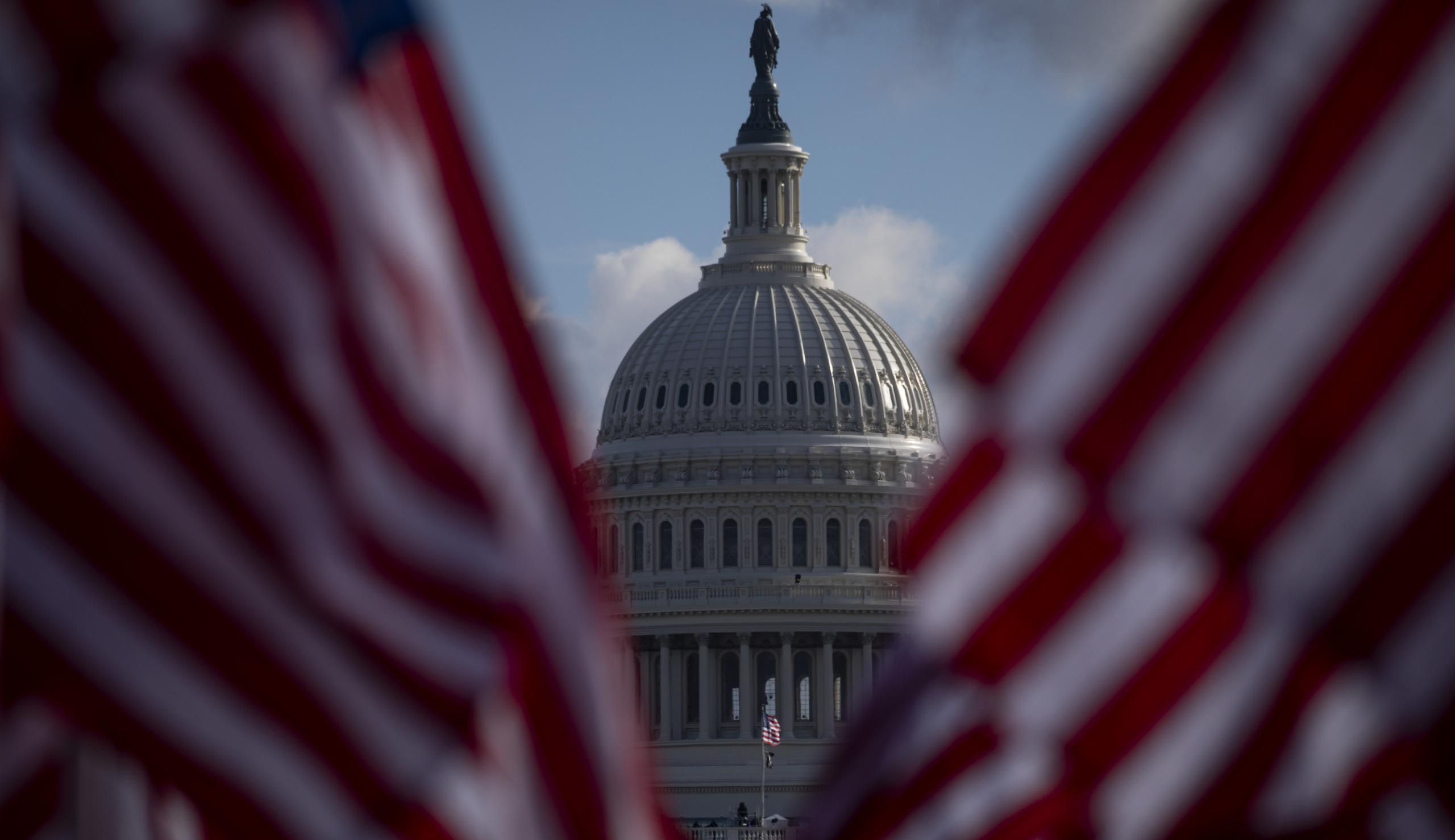
Where Democrats can aim for the 2026 midterms: House Edition
Where Democrats can aim for the 2026 midterms: House Edition
Summary
After two months into Donald Trump’s second presidency, many voters and Congresspeople are already eyeing the 2026 Congressional elections. The November 3rd elections could mark a pivotal moment in President Donald Trump’s second term.
The House of Representatives is far more flexible than the Senate because all 435 of its members are up for election every two years. Its unique duties include initiating revenue bills, impeaching federal officials, and electing the President in the case of an electoral college tie.
This flexibility may allow the Democrats to win enough seats to gain a majority and mount a resistance to Donald Trump’s agenda. The razor-thin majority the Republicans have may be more easily flipped than in the Senate for a number of reasons including how the midterms generally favor the opposition party. However, there are still factors that could moderate the advantage that Democrats might have.
Analysis
The elections in the House of Representatives are very wide-ranging, as all 435 seats are on the line. Democrats currently control 213 and Republicans control 218, with 4 vacancies. A net gain of just 3 would give the Democrats a majority. But the Cook Political Report identifies 18 seats (10 blue, 8 red) that are likely toss-ups.
Democrat-held
- CA-13 Gray
- CA-45 Tran
- ME-02 Golden
- NC-01 Davis
- NM-02 Vasquez
- NY-04 Gillen
- OH-09 Kaptur
- OH-13 Sykes
- TX-34 Gonzalez
- WA-03 Perez
Republican-held
- AZ-01 Schweikert
- AZ-06 Ciscomani
- CO-08 Evans
- IA-01 Miller-Meeks
- MI-07 Barrett
- NE-02 Bacon
- PA-07 Mackenzie
- PA-10 Perry
Most of these races are in districts where the current representative won by minute margins, sometimes as small as 788 in Rep. Miller-Meeks’ case. But instead of going race-by-race and highlighting which ones are likely to flip, it would be more worthwhile to look at the trends that may decide control of the House come 2026.
Firstly, midterm elections often favor the party who’s not represented by the president. This also applies to the Senate, but it is doubly important for the House because of the sheer number of seats up for grabs. Since the Civil War, the President’s party has lost ground in the House in 38 out of 41 elections, and with an administration as divisive as Donald Trump’s, there is a very real possibility of a blue wave. Additionally, because the opposition historically gains ground, it means that the opposition incumbentsin toss-up races generally can hold onto their seat, meaning those 10 seats mentioned above may be ever so slightly harder to flip than the 8 Republican-held seats.
But while the Democrats may enjoy increased support due to being the opposition, midterms often mean a lower voter turnout that attracts older, white, and college-educated voters. While it is unclear the extent to which having a lower-voter turnout will help or hurt Democrats, older white voters will likely skew towards Republicans like they did in the 2022 midterms, with 57% voting Republican. When it comes to college-educated voters, they tend to vote Democrat across the board, with 56% voting blue in 2022. Whether the college-educated vote will cancel out the elderly white vote will only become clear as time goes on.
Finally, there are a wide range of Democratic representatives who are eyeing higher office or running for Senate seats. As a result, once safe Democratic seats could become far more uncertain races, and battleground races could become all the more competitive. For example, in Maine Democratic Rep. Jared Golden, who narrowly won his race, is reportedly eyeing a run at a Senate seat to challenge GOP Sen. Susan Collins, or to replace the current Democratic Gov. Janet Mills, who can’t run again due to a term limit.
In Michigan, Rep. Kristen McDonald Rivet, is also considering a run for the Senate after Sen. Gary Peters announced his retirement, while in Minnesota the same story is playing out with Democratic Rep. Angie Craig gunning for outgoing Sen. Tina Smith’s seat.
In some of these cases, there are Democrat candidates who are ready to step forward to the race’s starting line. But new faces on the block aren’t always loved by voters, especially in turbulent times like these when stability and experience are extra appealing.
While the Democrats likely have a better chance at gaining a majority in the House than in the Senate, it still will likely not be an easy road or even a large majority that they get. As time goes on, the picture will become clearer. But regardless of the outcome, the 2026 midterm elections will be far more consequential than normal.
Engagement Resources:
- Sabato’s Crystal Ball at the Center for Politics is a comprehensive, nonpartisan political analysis newsletter.
- Cook Political Report is another independent, non-partisan newsletter that analyzes U.S. elections and campaigns.
- U.S. Vote Foundation is a private, nonprofit, nonpartisan public charity founded in 2005 that provides voting services and election data.

The Reasons We’ve Had a Department of Education
The Reasons We’ve Had a Department of Education
Education Policy Brief #200 | Valerie Henderson | March 31, 2025
Featured Photo: ABC News
Summary
The U.S. Department of Education (DOE), established in 1979 under President Jimmy Carter, operates to promote student achievement, ensure equal access to education, and enforce federal laws prohibiting discrimination in federally funded programs. Historically, the DOE controls policies related to federal financial aid, collects education data, and administers funding for education research. It notably manages Pell Grants, student loans, Title I programs (support for low-income students), special education through the Individuals with Disabilities Education Act (IDEA) and oversees compliance with federal civil rights laws in educational institutions.
Over time, the Department’s scope has evolved, driven by landmark legislations such as the Elementary and Secondary Education Act (ESEA) of 1965, the Higher Education Act (HEA) of 1965, and subsequent reauthorizations, including No Child Left Behind Act (2001) and Every Student Succeeds Act (2015).
Analysis
Historically, the DOE’s role has expanded significantly from its original mission. Initially intended as a support system for states and localities, it has increasingly influenced local education policy through conditional funding mechanisms. Federal initiatives such as Common Core standards adoption, Race to the Top grants, and the enforcement of standardized testing illustrate a shift toward increased federal involvement in local education policy.
Critics argue that excessive federal mandates may undermine local innovation and flexibility. While supporters claim the DOE’s role ensures consistency in quality and equity across states, particularly benefiting marginalized populations such as students with disabilities and those from low-income backgrounds.
Advocates for maintaining the DOE emphasize its pivotal role in safeguarding educational equity and civil rights. They argue that federal oversight is essential to ensure that all students, regardless of geographic location or socioeconomic status, have access to quality education. The DOE’s enforcement of anti-discrimination laws and support for underfunded schools through programs like Title I are cited as critical mechanisms for promoting fairness and addressing historical disparities in the education system.
Conversely, proponents of abolishing the DOE contend that education should be primarily a state and local responsibility, free from federal intervention. They argue that the DOE imposes one-size-fits-all mandates that stifle local innovation and burden schools with bureaucratic requirements. By eliminating the department, they believe that states and local communities would have greater autonomy to tailor education policies that best fit their unique needs and priorities.
Historically, federal funding accounts for only about 8-10% of total educational expenditures, yet these funds significantly shape local and state policy due to the conditions attached. Experts frequently debate whether such leverage ultimately enhances or constrains educational quality.
In March 2025, President Donald Trump signed an executive order directing the dismantling of the Department of Education. The order instructs the Secretary of Education to “take all necessary steps to facilitate the closure of the Department of Education and return authority over education to the States and local communities.” While the executive order sets the framework for reducing the department’s functions, completely abolishing it would require congressional approval. The administration asserts that this move aims to empower states and local communities by reducing federal oversight and bureaucracy in education.
I do not support efforts to abolish the Department of Education, as doing so would significantly harm students who depend on federally mandated services, especially those from historically marginalized backgrounds and children with disabilities. The Department plays an essential role in protecting civil rights, funding special education programs, and ensuring equitable access to education across all states. Without its oversight, local disparities in funding, quality, and inclusiveness would likely widen. While there is room for reform and improved collaboration with states, dismantling the DOE would strip away necessary protections and support systems that millions of students rely on daily.
Engagement Resources
- National Education Association (NEA)
Advocates for public education policies that strengthen public schools, enhance educational opportunities, and improve educator working conditions.
https://www.nea.org - Education Trust
Engages in research and advocacy aimed at closing achievement gaps and promoting educational equity across socioeconomic and racial groups.
https://edtrust.org - Center on Education Policy (CEP)
Provides nonpartisan, evidence-based research on public education, helping policymakers understand the implications of educational policies and practices.
https://www.cep-dc.org