

JOBS POLICIES, ANALYSIS, AND RESOURCES
Latest Jobs Posts
Ukrainian Drones Have Changed the Rules of War (Foreign Policy Brief #225)
The geography of the war has changed. Once, the war in Ukraine was measured in miles of trenches, destroyed towns, and incremental advances across the Donbas steppe. Over the past two years, however, the conflict has expanded both vertically and territorially, carried not only by missiles and aircraft but also by relatively inexpensive drones assembled in workshops across Ukraine. The battlefield no longer ends at the front line. It now stretches hundreds—and sometimes thousands—of kilometers into Russian territory, reaching oil depots, military plants, logistics hubs, and even Moscow itself.
With his Iran war, Trump Creates Confusion and Squanders Credibility (Foreign Policy Brief #226)
Now three months into his Iran war, President Trump continues to spew so much contradictory nonsense on the conflict that anyone attempting to take the president at his word would be lost in the morass. One moment Trump is threatening to annihilate Iran’s civilization, hurling churlish curses at the country’s leadership for not doing what he wants, the next he’s saying a deal is nearly complete. One minute he’s claiming the goal of regime change, the next he’s abandoning it in favor or “winding down” the war. One hour he’s saying “you don’t do a ceasefire when you’re literally obliterating the other side,” the next he’s gladly accepting a ceasefire.
A Preview of Supreme Court June Cases (Civil Rights Policy Brief #253)
President Donald Trump may have gotten what he most wanted from the U.S. Supreme Court when it ruled on July 1, 2024 – by a 6-3 vote – that former presidents have absolute immunity from criminal prosecution by, essentially, being president. Trump named three justices to the high court during his first term in office – Neil Gorsuch, Brett Kavanaugh and Amy Coney Barrett – and all three ruled in his favor in Trump v. United States (Barrett in part). The latest raft of major SCOTUS rulings, due next month, may continue to largely meet with Trump’s approval, or at least conservative priorities, but by no means is the court’s October 2025 term, as it’s officially known, likely to be a slam dunk for the right.
Why Louisiana v. Callais Is Problematic For The Voting Rights Act (Civil Rights Policy Brief #252)
After the 2020 United States Decennial Census Louisiana was allocated six congressional seats in the U.S. House of Representatives. Accordingly the Louisiana State Legislature drew its state congressional map that had five districts with white majorities and one with a black majority.
Missouri (2026 Democratic Primary Preview Series Brief #24)
Missouri, the “Show Me State,” enters the 2026 election cycle as a firmly Republican-controlled state, with all eight U.S. House seats on the ballot and no Senate race this cycle. Democrats currently hold just two congressional districts, MO-01 and MO-05, represented by Wesley Bell and Emanuel Cleaver, respectively. Both districts are anchored in the state’s urban cores of St. Louis and Kansas City and are considered safely Democratic.
When War Becomes Routine (Foreign Policy Brief #225)
The war in Ukraine, which is Europe’s largest land war since 1945, has entered the peculiar phase familiar to historians and unbearable to those living through it — the phase in which catastrophe becomes routine. Loud air raid sirens still interrupt dinners in Kyiv. Young men still disappear into the trench lines of Donetsk and Zaporizhzhia. Russian drones still arrive nightly, buzzing in the dark like giant mechanical mosquitoes. As the rumble draws nearer, exhausted people rise from their beds and head into the narrow corridors of their apartments or into the basements of their houses. It happens night after night, year after year, while outside the region, the war increasingly competes with other crises for attention, just becoming a part of the atmospheric background of modern life.
Crony Diplomacy Is Failing U.S. Foreign Policy (Foreign Policy Brief #233)
At a recent press conference, U.S. Defense Secretary and Christian nationalist Pete Hegseth justified the Trump administration’s unconstitutional act of starting the war with Iran by saying that before launching missiles, “We sent our best people to negotiate — Steve and Jared.”
The Value of NATO—Past, Present, and Future (Foreign Policy Brief #224)
The North Atlantic Treaty Organization, better known as NATO, has been one of the most influential political and military alliances in modern history. Formed in 1949 by 12 countries, NATO has grown into a 32-member alliance across Europe and North America, with Sweden becoming the newest member in March 2024. Its stated purpose is to guarantee the freedom and security of its members through political and military means, especially through the principle of collective defense: under Article 5, an attack against one member is treated as an attack against all.
California Seeks to Limit Passenger Abuse by Uber Drivers (Technology Policy Brief #167)
Uber has buried statistics on assaults and accidents on its platform for years. Journalists and advocates have dug hard and are revealing disturbing levels of both. As more customers are suing the company for its inadequate safety measures, Uber is responding with a ballot initiative in California that would limit its liability for accidents, and consumer attorneys are supporting measures that would increase Uber’s liability and accountability.

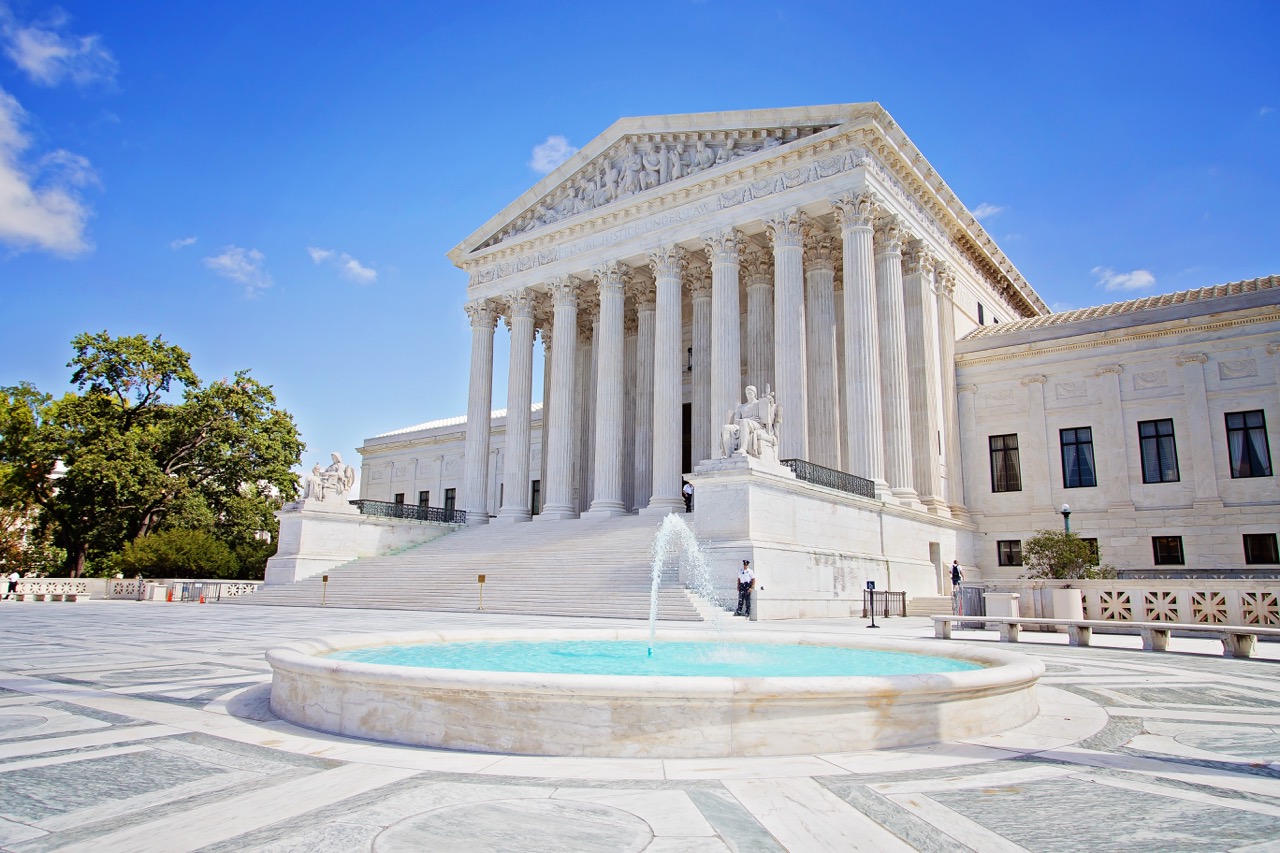
A Preview of Supreme Court June Cases (Civil Rights Policy Brief #253)
Civil Rights Policy Brief #253 | Todd Hill | May 5, 2026
President Donald Trump may have gotten what he most wanted from the U.S. Supreme Court when it ruled on July 1, 2024 – by a 6-3 vote – that former presidents have absolute immunity from criminal prosecution by, essentially, being president. Trump named three justices to the high court during his first term in office – Neil Gorsuch, Brett Kavanaugh and Amy Coney Barrett – and all three ruled in his favor in Trump v. United States (Barrett in part). The latest raft of major SCOTUS rulings, due next month, may continue to largely meet with Trump’s approval, or at least conservative priorities, but by no means is the court’s October 2025 term, as it’s officially known, likely to be a slam dunk for the right.
Here is a rundown of what we can expect from the U.S. Supreme Court by late June:
Gun rights (Wolford v. Lopez)
The court is reviewing a decision by the U.S. Court of Appeals for the Ninth Circuit supporting a Hawaiian law that made it illegal for Christopher Wolford, a private citizen, to take a gun onto private property without the property owner’s consent.
Hawaii has a history and tradition of restrictive laws concerning weapons, dating to the reign of King Kamehameha III in the 1830s. In keeping with that, the state in 2023 decided that gun owners there must acquire permission to take a gun onto private property, a law that last year was upheld by the U.S. Court of Appeals for the Ninth Circuit. Christopher Wolford, a Hawaiian gun owner and private citizen, argued the state’s law flies in the face of the Second Amendment. In 2022, in New York State Rifle & Pistol Association v. Buren, the Supreme Court came down on the side of gun owners, creating the so-called Bruen test, intended to measure if gun laws are in keeping with the country’s “history and tradition.” That test will likely be relevant in the court’s review of this appeal.
Transgender athletes (Little v. Hecox and West Virginia v. B.P.J., consolidated)
The court has been asked to consider whether the states of Idaho and West Virginia can ban transgender girls from participating in girls’ school sports without violating federal law and the U.S. Constitution.
Two cases are giving the court the opportunity to decide whether banning transgender girls from participating in girls’ school sports is unconstitutional, expanding the issue into the realm of civil rights law. During arguments earlier this year, a majority of justices seemed inclined to support these bans, which would also narrow the scope of the Title IX ban on discrimination in schools. Even the court’s liberal justices noted that the plaintiffs may be better off pursuing individual legal challenges at this point, although one of them has since stopped trying to participate in sports at her school.
Campaign finance (National Republican Senatorial Committee v. Federal Election Commission)
The court is debating the limits on how much political parties can spend in coordination with candidates; a ruling in favor of the plaintiff could once again significantly expand the role of money in elections.
The court fundamentally changed the elections landscape in 2010 with its Citizens United decision, ruling that corporate mega-spending on elections was free speech. The court is now considering the Republican Party’s wish to allow political parties to spend more in coordination with candidates, although that could, ironically, dilute the impact of Citizens United. But ultimately, a decision in favor of the NRSC is still likely to benefit Republican candidates, largely because super PACs would have access to the lower rates for broadcast advertising time that have long benefited Democrats. The U.S. District Court for the District of Columbia ruled for FEC, following precedent, which the appellant is asking the SCOTUS to reconsider.
Immigration (Trump v. Miot and Mullin v. Doe, consolidated)
The court is reviewing whether a decision by President Trump to end Temporary Protected Status for hundreds of thousands of immigrants from Haiti and Syria constitutes a discretionary executive act.
Does the court even have the right to review refugees’ Temporary Protected Status (TPS)? Should the justices decide it doesn’t, Trump’s desire to remove TPS for scores of Haitians and Syrians in this country could ultimately impact 1.3 million people living here, from dozens of countries. His administration argues that TPS has essentially become permanent for refugees from places like Haiti and Syria, long wracked by various humanitarian crises. He has already shut down virtually all asylum cases. But if the SCOTUS gives Trump what he wants on TPS, the U.S. cities that have taken in most of these refugees would see their populations plummet.
Birthright citizenship (review of presidential executive order)
Multiple lawsuits were filed after Trump declared birthright citizenship unconstitutional, and several federal courts blocked the order; the president is appealing those rulings.
This case may be the most vital of the term to Trump, who actually showed up for the court’s arguments, which was unprecedented. It’s also the case he’s least likely to win. At stake here is the citizenship clause of the Fourteenth Amendment, which guarantees that virtually anyone born in the U.S. is an American citizen. A ruling in Trump’s favor would strip millions of people living here of that status. The president’s lawyers described today’s America as a new world because of something they called “birth tourism.” The skeptical chief justice responded, “New world, same constitution.” In this case and previous ones, federal district courts and appellate courts have relied on the 1898 SCOTUS ruling in United States v. Wong Kim Ark, the foundational case on birthright citizenship. The high court is likely to do the same.
Take Action
- Everytown for Gun Safety is one of the nation’s largest gun-control advocacy organizations – www.everytown.org; 3 Columbus Circle, New York, NY 10019, or info@everytown.org.
- The American Civil Liberties Union is a major legal advocacy group that’s actively involved in transgender athlete cases and broader LGBTQ rights – www.aclu.org; 125 Broad St., 18th floor, New York, NY 10004; 212-549-2500; info@aclu.org.
- The Brennan Center for Justice is highly influential in campaign reform and election law – www.brennancenter.org; 120 Broadway, Suite 1750, New York, NY 10271; 646-292-8310; info@brennancenter.org.
- The American Immigration Council focuses on immigration policy, legal advocacy and public education – www.americanimmigrationcouncil.org; 1331 G St. NW, Suite 200, Washington, DC 20005; 202-507-7500; info@immcouncil.org.
- The National Immigration Law Center is tasked with providing legal protections for immigrants, including those involving citizenship issues – www.nilc.org; 3450 Wilshire Blvd., Suite 108-62, Los Angeles, CA 90010; 213-639-3900; nilc@nilc.org

Why Louisiana v. Callais Is Problematic For The Voting Rights Act (Civil Rights Policy Brief #252)
Civil Rights Policy Brief #252 | Rodney Maggay | May 6, 2026
Policy Summary: On April 29, 2026 the United States Supreme Court handed down its decision in the case Louisiana v. Callais.
After the 2020 United States Decennial Census Louisiana was allocated six congressional seats in the U.S. House of Representatives. Accordingly the Louisiana State Legislature drew its state congressional map that had five districts with white majorities and one with a black majority.
Subsequently, these maps were challenged in court where the plaintiffs alleged the maps violated Section 2 of the Voting Rights Act (VRA) of 1965. After a trial, the Louisiana state congressional map was ruled to be in violation of the VRA and new maps to be drawn and in addition to draw a second black majority district to be more reflective of the demographics of the state after the 2020 census.Louisiana sought a stay of the order from the Fifth Circuit Court of Appeals but was denied by theappeals court. An appeal was made to the U.S. Supreme Court which stayed the trial court order to drawnew maps. After a ruling in a separate Supreme Court case in 2023, the stay in the Louisiana case was lifted and returned to the Fifth Circuit. The appeals court ordered a new congressional district map be drawn and the Louisiana state legislature drew and approved a new map in 2024 that now included a second black majority district among Louisiana’s six total congressional districts.
These new maps from 2024 were again challenged in court. The case was heard by a three judge panel in the District Court for the Western District of Louisiana. They ruled the map unconstitutional. Anotherappeal to the U.S. Supreme Court followed which ordered the map to be used for the 2024 elections due to the 2024 elections being so close in time. However, the
U.S. Supreme Court allowed for a future appeal on the district court’s ruling that the map is unconstitutional. An appeal to the high court was approved in November 2025.
On April 29, 2026, the Supreme Court in a 6 – 3 decision held that the drawing of the 2024 Louisianacongressional district map with the second black majority district unconstitutional. LEARN MORE
Policy Analysis: In the aftermath of the Louisiana v. Callais decision, words and phrases such as abomination, the Voting Rights Act is dead and the Voting Rights has been gutted have been used to describe the effect of the Supreme Court’s decision.
Why?
Many legal scholars have reached back to try to give a history of the Voting Rights of 1965 and its sections and subsequent amendments in order to try and understand why the Callais decision is such adisastrous case. Specifically, Section 2 of the Voting Rights Act prohibits voting practices or procedures that discriminate on the basis of race, color or membership in a language minority group. In 1980 aSupreme Court case interpreted the section to require proof of intentional racial discrimination.However, this standard was seen as impossibly high to meet since no public election official would admit to implementing a practice or procedure that intentionally discriminated against a group of people. So two years later Congress passed an amendment that changed the standard from “intent” to discriminate to an “effects” test – meaning, a practice, procedure or map could be invalidated if the results show discrimination based on race. This is the legal framework of Section 2 that had been in place since 1982.
However, under the Roberts Court, the court began to chip away at the protections the VRA provided to minority voting groups. The 2013 Shelby decision required a new formula to determine which statesrequired pre – clearance prior to implementing a voting procedure; a new formula seemed unlikely topass in Congress which effectively rendered parts of the VRA unenforceable.
But for the Callais decision, the Court called the redrawn map with the second black majority district unconstitutional. While that was a likely outcome, what makes the decision by Justice Samuel Alito worse is his reasoning and how states that want to favor Republican candidates can do about it. While those districts drawn to give a minority community a majority in a selected district, e.g., black majority districts like in Louisiana, Justice Alito calls these districts unconstitutional because it is based on race. Justice Alito does not seem to understand that these minority – majority districts came about in the first place because minority communities had historically been prohibited from voting in significant numbers in the first place because of their race! But the key point from the opinion is that Justice Alito actually writes that to get around being accused of suppressing voters based on race, the easiest thing to do nowis simply draw a district that weakens minority voting power and simply say the district is being drawn based for partisan reasons and not for race since partisan gerrymanders are constitutionally permissible. What Justice Alito did is tell state election officials to say publicly one thing – that districts are drawn togive a political party an advantage. Even if privately their reason to draw it that way is to suppress the voting power of minority groups. Justice Alito basically just allowed racist efforts at re – districting as long as election officials don’t say it out loud.
In one fell swoop, the majority opinion in the Callais case weakened the protection the VRA provides to minority communities by changing the legal standard to be met to prove a violation and then toldelection officials how to suppress the voting power of racial groups by calling their actions drawing districts and state maps something else. Simply a terrible Supreme Court decision. LEARN MORE
Take Action
- Common Cause – non – profit group’s take on the Callais decision and what to do moving forward.
- Fair Elections Center – statement from non – profit group on Callais decision and resources to fight back and encourage fair elections.

Missouri (2026 Democratic Primary Preview Series Brief #24)
2026 Democratic Primary Preview Series | Morgan Davidson | April 29, 2026
Missouri, the “Show Me State,” enters the 2026 election cycle as a firmly Republican-controlled state, with all eight U.S. House seats on the ballot and no Senate race this cycle. Democrats currently hold just two congressional districts, MO-01 and MO-05, represented by Wesley Bell and Emanuel Cleaver, respectively. Both districts are anchored in the state’s urban cores of St. Louis and Kansas City and are considered safely Democratic.
Missouri’s congressional delegation reflects a broader partisan shift that has taken place over the past decade. The last time Democrats held more than two House seats in the state was in 2012, when the party maintained a more competitive statewide presence. Since then, Republican gains, particularly in rural and suburban areas, have solidified the GOP’s dominance across much of the state.
Looking ahead to 2026, there is little indication that this trend will reverse. According to ratings from Cook Political Report, the remaining six districts are considered safely Republican, leaving Democrats with limited offensive opportunities. Absent a significant shift in the national political environment or unexpected candidate dynamics, Republicans are well-positioned to maintain their advantage, while Democrats are likely to remain concentrated in their established urban strongholds.
While Missouri remains firmly Republican at the statewide level, several issue areas present potential openings for Democrats, particularly when paired with the right candidates and targeted geographic strategies.
One of the most salient issues in Missouri politics continues to be healthcare access, especially in rural communities. Hospital closures and limited provider availability have created persistent gaps in care, even as Medicaid expansion has helped broaden coverage. Democrats have an opportunity to frame healthcare as a quality-of-life and economic issue, particularly in regions where access remains inconsistent.
Economic concerns and cost of living also remain central for Missouri voters. Rising costs for housing, groceries, and energy have affected both urban and rural populations, creating space for candidates who can effectively connect economic messaging to everyday experiences. Democrats who emphasize wage growth, infrastructure investment, and support for working families may find traction, particularly in suburban districts.
Another key area is reproductive rights, which has emerged as a mobilizing issue following recent policy changes at the state level. Ballot initiatives and public opinion trends suggest that Missouri voters are not uniformly aligned with Republican leadership on this issue, offering Democrats a potential wedge, especially among suburban voters and younger demographics.
From a geographic standpoint, Democratic opportunities are limited but not nonexistent. The most viable path remains in suburban regions, particularly in districts like Missouri’s 2nd Congressional District, where shifting demographics and education levels have created a more competitive environment. While rural Missouri has trended decisively Republican, Democrats may still find marginal gains by focusing on economic messaging and local issues that cut across partisan lines.
Ultimately, Democratic success in Missouri will depend less on broad statewide appeal and more on targeted strategies that align issue priorities with specific voter blocs. While the overall map favors Republicans, these issue areas represent the clearest avenues for Democrats to remain competitive in an otherwise challenging political landscape. At the same time, the party’s long-term strategy should focus on expanding engagement beyond its urban base, reaching disaffected voters, increasing visibility in traditionally Republican areas, and investing in the organizational infrastructure needed to rebuild competitiveness over time. Voters can cast their ballots in the primary on August 4th followed by the general on November 3rd.
House
Wesley Bell is a Democratic freshman representing Missouri’s 1st Congressional District, which covers much of the St. Louis metropolitan area. A male in his 50s, Bell built his political career as a prosecutor and local official, most notably serving as St. Louis County Prosecuting Attorney prior to his election to Congress. His background in criminal justice reform and public safety has been central to his political identity, particularly during his tenure handling high-profile cases tied to police accountability and community relations in the region.
Bell’s seat is considered safely Democratic in the general election due to the district’s strong partisan lean and urban composition, anchored by a reliable Democratic base in St. Louis. However, his primary outlook is more complex. Bell unseated incumbent Cori Bush in 2024 in a race shaped in part by significant outside spending, including support from pro-Israel groups. That dynamic could carry into a potential 2026 rematch, though the political environment has shifted. Public opinion toward Israel has declined sharply, particularly among Democrats and younger voters, introducing new uncertainty into how salient the issue will be in a primary context. At the same time, available evidence suggests that foreign policy issues may not rank among the top priorities for voters in MO-01, a majority-Black district where local economic and community concerns have historically been more decisive.
As a result, while Israel-related spending and positioning may again play a role in shaping the race, the outcome is more likely to be determined by turnout, coalition composition, and intra-party dynamics. Bell remains well-positioned overall, though his most meaningful challenge is likely to come from within his own party rather than from Republicans in the general election.
Emanuel Cleaver is a veteran Democratic congressman representing Missouri’s 5th Congressional District, which is centered in Kansas City. Cleaver, a male (81), has had a long career in public service, including serving as Mayor of Kansas City before being elected to Congress in 2004. Ordained as a United Methodist pastor, he has built a reputation as a pragmatic and community-oriented leader, with a legislative focus on economic development, housing, and urban investment.
Cleaver’s seat is considered safely Democratic due to the district’s strong partisan alignment and urban base. Missouri’s 5th District consistently delivers large Democratic margins, driven by Kansas City’s population and voting patterns. While Cleaver’s tenure and incumbency provide additional stability, the underlying partisan structure of the district makes a Republican challenge highly unlikely to succeed, positioning him as a secure incumbent heading into 2026.
Democrat’s Best Chance to Flip
If any district in Missouri were to come into play in 2026, it would be Missouri’s 2nd Congressional District (MO-02), currently represented by Ann Wagner. Anchored in the St. Louis suburbs, MO-02 is structurally different from the rest of the state’s Republican-held districts, with higher levels of educational attainment, suburban growth, and a history of closer electoral margins. While it still leans Republican, these characteristics make it the most electorally elastic district in the state.
For Democrats, MO-02 represents the clearest, though still challenging, path to competitiveness. Success in the district would likely depend on strong performance among suburban voters, particularly college-educated constituencies, as well as the ability to nationalize the race around issues that resonate beyond Missouri’s broader partisan divide. While the district does not currently rate as a top-tier battleground, it remains the most important to watch as the cycle develops and the best opportunity for Democrats to make inroads in Missouri at the congressional level in 2026.
On the Democratic side, Frederick Wellman has emerged as the apparent frontrunner in the primary. Wellman has led the field in fundraising, maintains the strongest cash-on-hand position, and has secured key endorsements, giving him a clear organizational advantage. In contrast, Joan Vondrass has relied heavily on self-funding, contributing over $200,000 of her own resources to her campaign. While self-financing can provide early viability, it may present limitations in a political environment where Democratic voters have shown increasing skepticism toward wealth-driven campaigns. Taken together, the available indicators suggest Wellman is well-positioned to secure the nomination, though the race is not entirely settled.
Frederick Wellman is a political newcomer and former U.S. Army officer running in Missouri’s 2nd Congressional District. A male in his 50s, Wellman is a combat veteran who later transitioned into political communications and advocacy, becoming known for his commentary on national security and Democratic politics. He has built a public profile through media appearances and digital platforms, and has been associated with political advocacy networks including MeidasTouch and The Lincoln Project, which have helped amplify his messaging and visibility within Democratic and anti-Trump circles.
In the 2026 cycle, Wellman has emerged as the leading Democratic contender in MO-02, backed by strong fundraising, early endorsements, and a consolidated position within the party field. His campaign blends a traditional candidate profile, veteran, Midwestern background, with a more modern, media-driven approach to political engagement, positioning him to compete in a district where visibility and messaging to suburban voters will be critical.
In the general election, Democrats face a more difficult path. Incumbent Ann Wagner has shown some vulnerability, including trailing a generic Democrat in early public polling. However, structural factors continue to favor Republicans in the district. Historically, partisan reversion, where voters ultimately return to their party alignment, has played a significant role in districts like MO-02 as elections approach. While external indicators such as betting markets suggest this race is among the most competitive in the state, they still consistently reflect a clear Republican advantage. As a result, while Democrats may be able to narrow the margin, flipping the seat would likely require a favorable national environment and sustained crossover appeal among suburban voters.
Recent Interviews
- Wesley Bell C-SPAN profile interview- https://www.c-span.org/program/interview/representative-wesley-bell-profile-interview/655626
- Wesley Bell Interrogation of Pete Hegseth- https://www.youtube.com/watch?v=Q4pH2gpx06Q
- Cori Bush Announcement Video- https://www.instagram.com/reel/DRfv9gSEoA5/
- Cori Bush Breakfast Club Interview/Running Against Wesley Bell- https://www.instagram.com/reel/DVYlfb6gd5n/
- Emanuel Cleaver on Ceasefire Podcast- https://www.youtube.com/watch?v=vVTozXh4yeI
- Fred Wellman- https://www.instagram.com/p/DXfOGVbvirk/?__d=1%E5%BE%AE%E5%8D%9A%E7%A7%81%E4%BA%BA%E5%8F%B7%E4%BA%A4%E6%98%93%E4%B8%AD%E5%BF%83%2B-%2B%E5%92%8C%E5%B9%B3%E7%B2%BE%E8%8B%B1%E5%B0%8F%E5%8F%B7%E7%BD%91%2B%E2%9C%94%EF%B8%8Fhaoba.cyou-%E5%BE%AE%E5%8D%9A%E5%B0%8F%E5%8F%B7%E5%B7%B2%E5%AE%9E%E5%90%8D%E8%B4%A6%E5%8F%B7%E5%87%BA%E5%94%AE
Engagement Resources
- Ballotpedia- serves as an initial go-to for candidates and races at all levels: https://ballotpedia.org/Missouri_elections,_2026
- Cook Political Report- CPR evaluates races by competitiveness: https://www.cookpolitical.com/
- The Missouri Independent is a nonprofit outlet known for tracking political happenings in the Show Me State. https://missouriindependent.com/

When War Becomes Routine (Foreign Policy Brief #225)
Foreign Policy Brief #225 | Yelena Korshunov | May 4, 2026
The war in Ukraine, which is Europe’s largest land war since 1945, has entered the peculiar phase familiar to historians and unbearable to those living through it — the phase in which catastrophe becomes routine. Loud air raid sirens still interrupt dinners in Kyiv. Young men still disappear into the trench lines of Donetsk and Zaporizhzhia. Russian drones still arrive nightly, buzzing in the dark like giant mechanical mosquitoes. As the rumble draws nearer, exhausted people rise from their beds and head into the narrow corridors of their apartments or into the basements of their houses. It happens night after night, year after year, while outside the region, the war increasingly competes with other crises for attention, just becoming a part of the atmospheric background of modern life.
By the fifth year of the war, the conflict had altered the very structure of ordinary life — not only in Ukraine, but in Russia as well. What once felt exceptional has become ambient. People check news alerts between work calls, distinguish drones by sound, and live their routine life while air defense systems operate somewhere beyond the edge of the city.
Russia continues to strike Ukrainian cities. Residential buildings, energy infrastructure, schools, and hospitals regularly come under attack. After each strike, nearly identical photographs emerge: shattered windows, rescue workers coated in dust, children’s toys lying among broken concrete. The repetition of these images creates a psychological weight. War no longer appears as a sequence of separate tragedies, but as a permanent condition of life and death.
Meanwhile, Ukraine has increasingly targeted oil depots, refineries, and fuel infrastructure inside Russia. These attacks are strategic as much as symbolic. Modern warfare depends on fuel almost as much as it does on weapons. At the same time, long-range drone strikes have begun to erode the traditional sense of distance within Russia itself. A war that for many Russians existed largely as a TV reality is becoming physically tangible. The defining feature of this stage is that both sides are now attempting to exhaust each other not only militarily, but psychologically. Russia continues to rely on pressure against civilian infrastructure and the slow fatigue of society. Ukraine relies on technological adaptability, strikes against logistics, and its ability to maintain the attention and support of its allies.
According to The Guardian, this spring, Ukrainian officials have cautiously described their battlefield position as the strongest it has been in more than a year, thanks largely to the expanding use of domestically produced drones and localized counteroffensives in the south.The war no longer resembles the sweeping armored advances of 2022. Instead, it has evolved into something more technological, more dispersed, and in many ways more psychologically exhausting through screens, algorithms, and industrial endurance.
The front itself stretches more than seven hundred miles. Villages captured at staggering human cost are sometimes little more than piles of brick. What matters increasingly is not symbolic territory but logistics such as rail nodes, fuel depots, drone manufacturing sites, and the electronic warfare systems that now determine whether soldiers live or die. A correspondent of The Washington Post wrote on April 30th that Ukraine’s expanding drone campaign has altered the emotional geography of the war. Russia, long accustomed to fighting at a distance from its urban centers, now confronts increasingly regular strikes deep inside its territory. It looks symbolic that Moscow has reportedly scaled back portions of its annual Victory Day military parade on May 9th out of concern that Ukrainian long-range drones could target the capital.
At the same time, Ukraine faces the deeper problem common to all prolonged wars — exhaustion. President Volodymyr Zelensky has warned repeatedly that the coming months will bring intense military and diplomatic pressure, – points out Reuters. Recruitment remains politically sensitive. Casualty numbers are guarded with near-religious secrecy. And this week, Ukraine’s army chief introduced mandatory troop rotation limits after public outrage over reports of frontline soldiers being left in impossible conditions for extended periods.
That decision revealed something important about the current stage of the conflict. In earlier years, Ukraine’s greatest strategic asset was morale — the electrifying sense that national survival depended on collective sacrifice. Sadly, four years into the full-scale invasion, sacrifice remains abundant. Diplomatically, the war has entered an equally ambiguous chapter. Al Jazeera reported that a brief Easter ceasefire earlier this month collapsed almost immediately amid mutual accusations of violations. Behind the scenes, various rounds of international talks continue in places like Abu Dhabi and Geneva, but expectations remain low. Even some European leaders have begun quietly discussing territorial compromise as a possible component of eventual negotiations — language that would once have been politically unthinkable.
Russia too appears trapped inside the war it began. Western sanctions have not produced economic collapse, but the cumulative strain is visible. Ukraine continues targeting Russian oil infrastructure with increasingly sophisticated drone operations. Meanwhile, Russia’s military machine consumes extraordinary amounts of manpower and material simply to maintain incremental gains.
While countless domestic and international political developments compete for Americans’ attention, on another continent across the ocean Ukrainian soldiers continue, for a fifth year, to give their lives in cold, rain-soaked trenches for the independence of Europe’s largest country by territory — a country where people, including young children, die every day in Russia’s attacks. The danger for the outside world is not merely geopolitical fatigue. It is moral adaptation — the slow acceptance that devastation, if sufficiently prolonged, begins to seem inevitable. Ukraine’s future remains uncertain. Russia’s ambitions remain dangerous. But perhaps the most consequential question now is whether democracies can maintain attention spans longer than authoritarian regimes can sustain destruction.
Take Action
- Ukraine war briefing: Kyiv hails frontline position as ‘strongest in a year’, https://www.theguardian.com/world/2026/apr/23/ukraine-war-briefing-kyiv-hails-frontline-position-as-strongest-in-a-year?utm_source=chatgpt.com
- Ukraine and Russia accuse each other of breaching Easter ceasefire, https://www.aljazeera.com/news/2026/4/12/ukraine-and-russia-accuse-each-other-of-breaching-easter-ceasefire?utm_source=chatgpt.com
- Ukraine war latest: German chancellor suggests Ukraine may cede territory to secure peace, EU path, https://kyivindependent.com/ukraine-war-latest-german-chancellor-suggests-ukraine-may-cede-territory-for-peace-eu-path/?utm_source=chatgpt.com
Crony Diplomacy Is Failing U.S. Foreign Policy (Foreign Policy Brief #233)
Foreign Policy Brief #233 | Nicholas Gordon | May 4, 2026
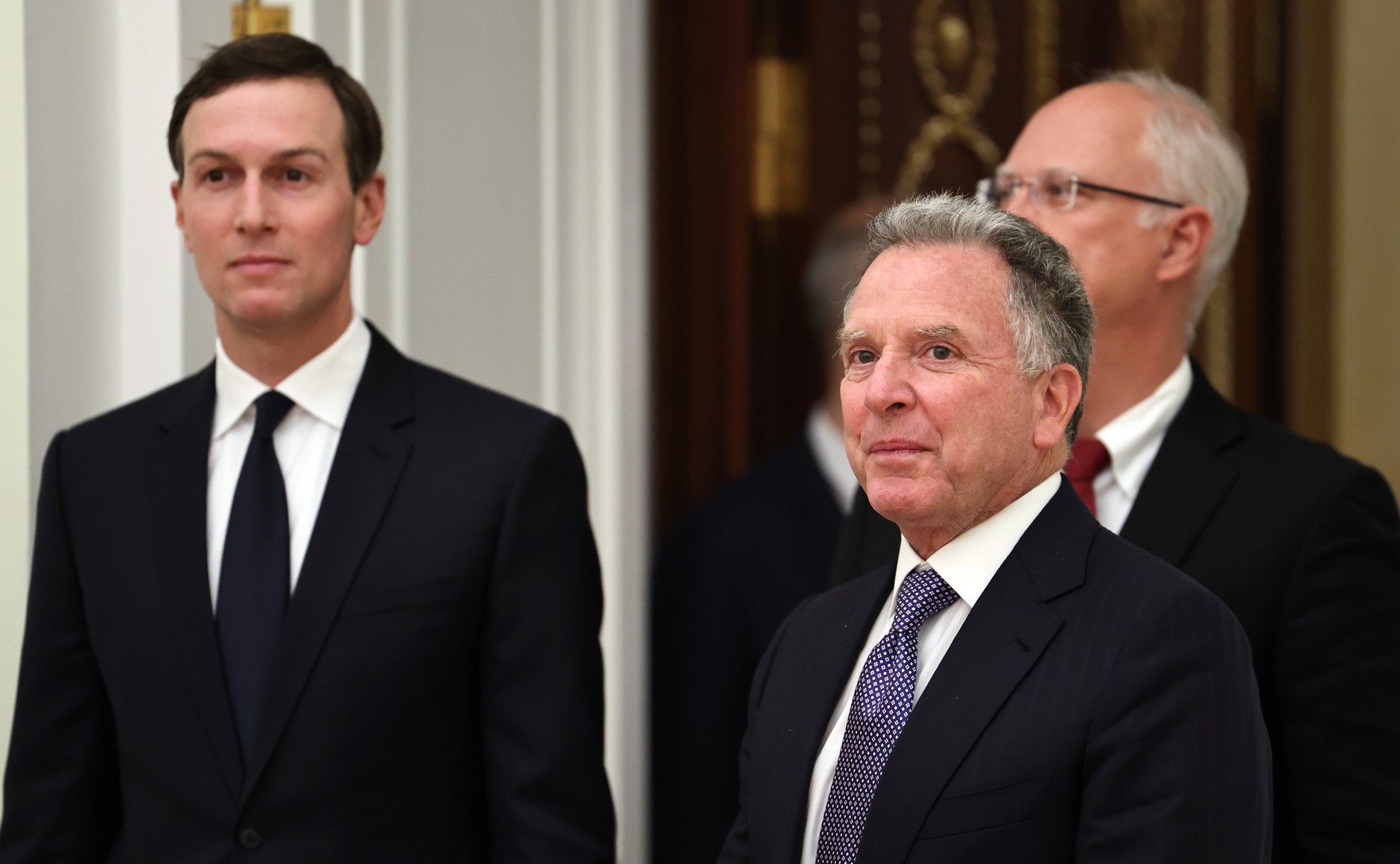
At a recent press conference, U.S. Defense Secretary and Christian nationalist Pete Hegseth justified the Trump administration’s unconstitutional act of starting the war with Iran by saying that before launching missiles, “We sent our best people to negotiate — Steve and Jared.” But that duo, Trump’s billionaire real estate buddy Steve Witkoff and son-in-law Jared Kushner, were unsuccessful in negotiating with Iran. Trump then started the war that has so far killed thirteen U.S. service members and wounded more than 300.
As the war drags on into its third month with no deal in sight and another round of botched negotiations in the rearview, many analysts and foreign policy experts have identified Witkoff and Kushner not as “the best people” serving U.S. diplomacy, but rather as dangerously inept and inexperienced envoys with serious conflicts of interest who risk prolonging the war.
Analysis
Witkoff and Kushner are symbolic of Trump’s cronyism, that is, his favoring of personal allies and business associates over qualified professionals for government roles. Whereas for decades professional diplomats from the State Department and the National Security Council have handled negotiations in global crises, Kushner and Witkoff come to the negotiating table with zero diplomatic expertise. Moreover, because they’re not formal U.S. government employees, they’re not subject to the guardrails of public financial disclosure laws or ethics laws, not to mention Senate confirmation.
The pair’s lack of accountability is reflected in their loosely defined titles. While engaging in crucial negotiations in the last year with heads of state from Russia, Ukraine, Iran, and Israel, Witkoff was called a special envoy, and Kushner deemed a volunteer. More recently, each of them has been designated by Trump as a Special Envoy of Peace Missions, set to continue high-level negotiations on behalf of the U.S. government. Further plaguing their lack of foreign policy experience, both Witkoff and Kushner bring serious conflicts of interest to their government work, in keeping with their boss’s well-documented self-dealing.
Witkoff’s Conflicts of Interest
In a public letter to the White House and the U.S. Office of Government Ethics, Sens. Elizabeth Warren and Christopher Murphy document Witkoff’s numerous conflicts of interest and the inaccuracies of his financial disclosure form. For example, the senators cite how in 2024 Witkoff partnered with the Trump family to launch the cryptocurrency company, World Liberty Financial. Later that year, after Witkoff was appointed U.S. Special Envoy to the Middle East, a UAE government-backed firm invested $2 billion in World Liberty Financial.
The senators point out that no agency ethics officials have signed Witkoff’s financial disclosure forms or stated that he is in compliance with ethics laws and regulations. They also show that the form lists June 30, 2025 as the appointment date of Witkoff’s government role, stating that he held no prior federal positions. However, records show that by January 2025 he was working in an official capacity, representing the Trump administration in high-level meetings in Saudi Arabia and Gaza, and participating in diplomatic negotiations concerning Israel and Gaza.
Kushner’s Conflicts of Interest
During his tenure as special advisor in Trump’s first term, Kushner exploited his government role to reap hundreds of millions of dollars in personal profit. When the role ended, he continued to capitalize on his government job by securing billions of dollars for his investment firm, Affinity Partners, from the very governments he had worked with in his official capacity.
This month, House Judiciary Committee ranking member Rep. Jamie Raskin opened a sweeping investigation of Kushner’s “staggering conflicts of interest,” warning that Kushner’s “dual role as Middle East negotiator and financier funded by Middle Eastern governments poses grave national security risks and likely violates federal law.” Raskin notes that Kushner’s firm has received more than $6 billion in assets and investments from foreign states, including Saudi Arabia, the United Arab Emirates, and Qatar, during Kushner’s time as a government operative. With such flagrant opportunism on display, it’s not shocking that Kushner misled the public about his intention of staying out of government service ahead of Trump’s return to office.
Their Diplomatic Efforts
While the pair did help broker a ceasefire in Gaza and secure the release of Israeli hostages held by Hamas, critics argue that isolated successes do not offset a broader pattern of inconsistency and inexperience in foreign policy, such as Witkoff’s and Kushner’s failed negotiations between Russia and Ukraine. Regarding their mishandling of the Iran negotiations, Aaron David Miller, who served in the State Department as an advisor for Middle East negotiations from 1978 to 2003, recently gave Kushner and Wikoff “an F in diplomacy.”
Conclusion
Iranian political analyst Ahmad Zeidabadi asserted that as a negotiator Kushner “represents the pragmatic and softer side of Trump.” But what Kushner—and Witkoff—mostly represent is Trump’s right-wing populist disdain for subject matter expertise and professional ethics in favor of, well, favoritism, and opportunities for personal financial gain.
American citizens—who continue to suffer the exorbitant costs of rising fuel prices spurred by the war and a wartime president who alienates foreign allies, threatens armageddon on Iran’s civilization, and sows confusion and doubt over the status of and goals for the war—deserve competent, uncompromised diplomats leading negotiations in an effort to end the Iran conflict.
Take Action
- Citizens for Responsibility and Ethics in Washington (CREW)
- “Fights for the democracy Americans deserve and aims to build a government that is accountable, transparent and ethical”
- Brennan Center for Justice
- A nonpartisan law and policy organization working to reform, revitalize, and defend the U.S. systems of democracy and justice
- House Judiciary Committee
- Established in 1813, the Committee strives “to protect U.S. Constitutional freedoms and civil liberties, oversight of the U.S. Departments of Justice and Homeland Security, legal and regulatory reform, innovation, competition and anti-trust laws, terrorism and crime, and immigration reform. The House Judiciary Committee has jurisdiction over all proposed amendments to the Constitution, and usually sends the greatest number of substantive bills to the House floor each year.”

The Value of NATO—Past, Present, and Future (Foreign Policy Brief #224)
Foreign Policy Brief #224 | Inijah Quadri | April 27, 2026
Policy Issue Summary
The North Atlantic Treaty Organization, better known as NATO, has been one of the most influential political and military alliances in modern history. Formed in 1949 by 12 countries, NATO has grown into a 32-member alliance across Europe and North America, with Sweden becoming the newest member in March 2024. Its stated purpose is to guarantee the freedom and security of its members through political and military means, especially through the principle of collective defense: under Article 5, an attack against one member is treated as an attack against all.
A fair assessment of NATO must recognize both its achievements and its controversies. On one hand, NATO has often been criticized for military interventions, high defense spending, and the risk that expansion can heighten tensions with rivals such as Russia. On the other hand, it is also widely viewed as one of the most successful defensive alliances in history. For more than 75 years, NATO has helped deter aggression against its members, contributed to stability in Europe, supported democratic cooperation among allies, and adapted to new threats such as terrorism, cyberattacks, and Russia’s full-scale invasion of Ukraine.
One important example of NATO helping the United States came after the September 11, 2001 attacks, when the alliance invoked Article 5 for the first time in its history. That moment matters because it shows NATO is not only an American security guarantee for Europe; it has also been a European and Canadian commitment to defend the United States when the United States was attacked. NATO allies later contributed to the Afghanistan mission, showing that the alliance’s collective-defense promise has worked in both directions.
The central policy issue is not whether NATO is simply “good” or “bad,” but how the alliance can preserve its defensive purpose while avoiding unnecessary escalation, wasteful spending, and overreliance on military solutions. NATO’s future value depends on whether it can balance deterrence with diplomacy, burden-sharing with social responsibility, and collective security with respect for international law.
Analysis
In the present geopolitical landscape, NATO has experienced renewed importance because of Russia’s invasion of Ukraine and growing uncertainty about global security. Vladimir Putin has long opposed NATO enlargement, seeing the alliance’s eastward expansion as a threat to Russian influence. However, NATO argues that enlargement is based on Article 10 of the North Atlantic Treaty, which allows European countries to seek membership if they can contribute to Euro-Atlantic security. The decisions by Finland and Sweden to join NATO after Russia’s 2022 invasion of Ukraine show that Russian aggression has, in practice, strengthened the alliance rather than weakened it.
NATO’s strongest argument is its record as a defensive alliance. During the Cold War, NATO helped deter direct conflict between the Soviet Union and Western Europe without a major war between the superpowers. After the Cold War, NATO also played roles in crisis management and peace-support operations, including in the Balkans. Its Kosovo Force, known as KFOR, continues to help maintain a safe and secure environment and freedom of movement in Kosovo. These examples support the view that NATO has not only projected military power, but has also helped manage instability in regions where conflict could have spread.
At the same time, NATO’s record is not perfect. Interventions in Afghanistan and Libya remain controversial and show the limits of military power. NATO’s Afghanistan mission ended in 2021 after the rapid collapse of the Afghan government and security forces, leading the alliance to conduct a lessons-learned process. This demonstrates that NATO can organize multinational military action, but it cannot guarantee political success when deeper local, regional, and governance problems remain unresolved.
Another major concern is defense spending. Critics argue that the enormous resources devoted to military budgets could otherwise support healthcare, housing, education, climate action, and poverty reduction. This concern is real, especially as global military expenditure continues to rise. SIPRI reported that NATO members accounted for a major share of global military spending, while NATO’s own figures show that allies have sharply increased defense investment since 2014.
However, NATO supporters argue that defense spending cannot be judged only as a cost. For smaller European states, especially those near Russia, NATO membership provides security guarantees they could not realistically provide on their own. The burden-sharing debate has also become more important because U.S. President Donald Trump has repeatedly criticized NATO members for not paying their “fair share” and has questioned the reliability of U.S. support for allies. This has pushed European members and Canada to spend more on their own defense, with NATO reporting that all allies met or exceeded the older 2% of GDP target in 2025.
Under Trump, the United States is pushing NATO toward a more burden-sharing model. Rather than acting as the nearly automatic lead spender and security manager for Europe, Washington is pressing allies to take primary responsibility for European defense and to meet the new Hague defense investment commitment of 5% of GDP by 2035, with 3.5% for core defense and 1.5% for broader security-related needs. This does not make the United States irrelevant to NATO, but it changes the political bargain: Europe is being asked to provide more money, readiness, and leadership while the United States remains the alliance’s strongest military member.
The war in Ukraine has also shown both NATO’s strengths and its internal challenges. NATO members have provided major political, military, and financial support to Ukraine, while avoiding a direct NATO-Russia war. Yet alliance politics can be complicated. Hungary under Viktor Orbán resisted some Ukraine-related support, but the clearest funding block was within the European Union, even as Hungary delayed major EU assistance. Within NATO, Orbán agreed in 2024 not to veto NATO support for Ukraine, while Hungary itself opted out of providing funds or military personnel for that effort.
Orbán’s defeat in Hungary also changed the Ukraine funding debate. After his government had been the main EU holdout, Hungary’s shift under Prime Minister-elect Péter Magyar helped clear the way for a €90 billion EU loan for Ukraine. Although this is EU funding rather than NATO funding, it matters for NATO because keeping Ukraine financially and militarily afloat reduces pressure on NATO’s eastern members and helps maintain a united Western front without requiring direct NATO combat involvement.
Looking toward the future, NATO’s value will depend on whether it remains a defensive alliance rather than becoming an engine of unnecessary militarization. The alliance should continue deterring aggression against its members, supporting Ukraine’s sovereignty, strengthening cyber and infrastructure resilience, and encouraging European allies to carry a fairer share of the security burden. At the same time, NATO should be careful not to treat every global problem as a military problem.
The importance of NATO to Europe was also highlighted by King Charles III in his recent address to the U.S. Congress, where he linked support for Ukraine, the transatlantic partnership, and NATO unity. The reference is useful because it shows that, in European diplomacy, NATO is treated not only as a military arrangement, but also as a political symbol of shared democratic security. For Europe, NATO remains the structure that connects national defense, U.S.-U.K. cooperation, and support for countries threatened by Russian aggression.
A balanced social policy approach should support NATO’s core mission of collective defense while demanding accountability, transparency, and diplomacy. Policymakers should ensure that defense spending is tied to real security needs rather than waste, corruption, or the profit motives of weapons manufacturers. They should also invest seriously in nonmilitary forms of security, including energy independence, climate resilience, democratic institutions, humanitarian aid, and conflict prevention.
Ultimately, NATO remains valuable because it gives democratic countries a shared security framework in a dangerous world. Its history includes mistakes, but also major successes. The best path forward is not to dismiss NATO as a conspiracy or to praise it uncritically, but to strengthen its defensive purpose while limiting the risks of escalation, overreach, and excessive militarization.
Take Action
- The Atlantic Council (https://www.atlanticcouncil.org/): A nonpartisan organization that focuses on shaping global solutions and deeply analyzing the vital importance of the transatlantic alliance in maintaining international stability.
- The Council on Foreign Relations (https://www.cfr.org/): An independent think tank offering research on international relations, providing accessible insights into how defense alliances are adapting to modern global threats.
- The Official NATO Portal (https://www.nato.int/): The primary resource for understanding the group’s stated missions, its 75-year timeline of collective defense, and current policy updates from all 32 member states.
- Quincy Institute for Responsible Statecraft (https://quincyinst.org/): A foreign policy think tank that argues for restraint, diplomacy, and caution about military overreach.

California Seeks to Limit Passenger Abuse by Uber Drivers (Technology Policy Brief #167)
Technology Policy Brief #167 | Mindy Spatt
Summary
Uber has buried statistics on assaults and accidents on its platform for years. Journalists and advocates have dug hard and are revealing disturbing levels of both. As more customers are suing the company for its inadequate safety measures, Uber is responding with a ballot initiative in California that would limit its liability for accidents, and consumer attorneys are supporting measures that would increase Uber’s liability and accountability.
Analysis
A recent expose in the New York Times revealed how frequent sexual assaults are on Uber, and exposed the company’s efforts to hide the problem, limit its liability, and silence victims. According to the Times, Uber received a report of sexual assault or sexual misconduct in the United States almost every eight minutes on average between 2017 and 2022 — far more than what the company had ever publicly disclosed. Uber executives have long been aware of the extent of sexual violence occurring through its app, but have done next to nothing to address the problem.
Shortly after that news hit, an Arizona federal jury found Uber liable for a sexual assault by a driver on a passenger, awarding $8.5 million in compensatory damages. Uber was not found negligent in its safety measures but was held responsible for the driver as an “agent” of the company. Hundreds more lawsuits are pending, many in California.
Accidents have also been difficult to track. Here in California, a months-long investigation by the San Francisco Public Press revealed that the California Public Utilities Commission — the agency charged with regulating the state’s ride-hailing companies — had failed to publicly release data on thousands of accidents involving Uber and Lyft.
Available information indicates that in just one year, 2019- 2020, there were a whopping 27,000 reported rideshare accidents, more than 14,800 of them attributable to Uber.
Could the problem be with the drivers? Uber doesn’t think so; its latest ballot initiative campaign in California, thinly disguised as an attempt to protect accident victims from unscrupulous attorneys, would limit its own financial liability for accidents. It would cap lawyers’ fees and even limit medical damages, and would apply to all car accidents in California, not just Uber crashes.
Uber has had great success with purchasing public policy in California in the past. In 2020, the company spent $50 million on a deceptive and misleading campaign to deny workers the right to be classified as employees, succeeding in getting a legislatively approved law to do so overturned.
| The company has put about $32.5 million into this recent effort to reshape California law in its own favor so far, according to campaign finance records. Its opposition, led by the Consumer Attorneys of California, has said it will spend even more to fight Uber’s proposal as well as to promote its own competing initiatives. | ” |
The conflict was on display during the Super Bowl, when Uber’s “A More Affordable California” ran a spot denouncing personal injury attorneys as ambulance chasers who simply take advantage of accident victims to line their own pockets. It declared: “The billboard lawyers make millions, while Californians are left broke and broken.”
The billboard lawyers didn’t take this lying down. Ads they ran in California during the Super Bowl referenced the NY Times articles about sexual assaults, setting the stage for a pair of ballot initiatives that would increase corporate liability for passenger injuries on ride-sharing platforms and increase liability for sexual misconduct, whether by drivers or riders.
One measure would require rideshare companies to fingerprint drivers and run background checks before hiring them, and prevent the hiring of drivers who have been convicted of violent crimes, which is now allowed in some cases. The other would increase companies’ legal liability for vehicle accidents and sexual misconduct or assault committed by its drivers.
Doctors and other medical providers are also fighting back and formed a political action committee, “Providers for Patient Care,” to oppose Uber’s initiative, which would limit recoverable medical costs. According to a report by California nonprofit Consumer Watchdog, Uber’s initiative would reduce the medical costs that injury victims can recover after a car crash by tying reimbursements to Medicare levels.
The way attorney fees work in these cases is that accident victims seeking damages usually hire a lawyer on a contingency basis, which means the attorney is paid only through an award of damages- if they don’t win, the customer pays nothing. If damages are won, the attorney will usually take 30-40% of the award as their fee. Uber would limit that to 25%. Of course, Uber puts no such restrictions on its own attorneys; their top lawyer, Tony West, was paid over $12.7 million last year.
Consumer Watchdog says “that imbalance could alter settlement dynamics and tilt leverage toward corporate defendants, particularly in rideshare cases involving companies with substantial defense budgets.”
To date, none of the initiatives have qualified for the ballot, which requires a set number of voter signatures depending on the type of initiative.
Take Action
- https://ballotpedia.org/California_Establish_Personal_Injury_Lawyer_Regulations_Initiative_(2026)(Limits Attorney Fees and Medical Expenses Recovery)
- https://ballotpedia.org/California_Classify_Rideshare_Companies_as_Common_Carriers_Initiative_(2026)(Expands rideshare companies’ liability for passenger injuries. Initiative statute.)
- https://ballotpedia.org/California_Require_Background_Checks_and_Sexual_Assault_Reporting_by_Rideshare_Companies_Initiative_(2026)
- Consumer Alert Warns CA Voters Not To Sign Uber’s ‘License to Kill’ Ballot Measure: Uber Reviving Deadly Robotaxis In Conjunction With Proposal For Loss of Legal Accountability, by Jamie Court, December 23, 2025, https://consumerwatchdog.org/accountability/consumer-alert-warns-ca-voters-not-to-sign-ubers-license-to-kill-ballot-measure-uber-reviving-deadly-robotaxis-in-conjunction-with-proposal-for-loss-of-legal-accountability/

Oklahoma (2026 Democratic Primary Preview Series Brief #23)
2026 Democratic Primary Preview Series | Oklahoma | Ryan Dulaney | April 21, 2026
Summary
Oklahoma’s 2026 federal elections will feature one U.S. Senate race and five House contests. The state is reliably Republican across all five congressional districts, and post-redistricting maps have made each seat structurally safe for the GOP. However, 2026 presents unusual circumstances: incumbent Sen. Markwayne Mullin vacated his seat in March 2026 after being confirmed as Secretary of Homeland Security, creating an open Senate seat for the first time in years. The Republican primary to replace him is highly competitive, while Democrats are fielding a primary field of their own for the general election. Democrats hold no realistic path to winning any of the five House seats following the 2020 redistricting, but are running candidates in all districts to build infrastructure and candidate pipelines. The Senate Democratic primary is the main organizational focal point for the party in 2026.
Most Competitive Races
U.S. Senate (Open Seat)
Oklahoma’s Senate seat became open when Mullin was confirmed as Secretary of Homeland Security on March 23, 2026. Gov. Kevin Stitt appointed oil and gas executive Alan Armstrong as interim senator, though Armstrong is prohibited by a state law oath from running for the full term. The Republican primary to fill the seat is highly contested, with Rep. Kevin Hern, who vacated his Tulsa-area House seat to run, entering as a frontrunner alongside several other candidates. Democrats are fielding a primary of their own on June 16, with a potential runoff on August 25 if no candidate clears 50%. The general election will be November 3, 2026. No Democratic candidate is considered competitive in the general, but the open seat dynamic and the unsettled Republican field make it a higher-visibility race than typical Oklahoma Senate contests.
OK-05 (Oklahoma City Suburbs)
Oklahoma’s 5th Congressional District, centered on Oklahoma City and its suburbs, is the historically most competitive district in the state. Democrat Kendra Horn held the seat from 2019 to 2021, and the district has since been redrawn to a Cook PVI of R+9 — more Republican than before, but still the most reachable of the state’s five districts for Democrats in a favorable national environment. Incumbent Republican Stephanie Bice is running for a fourth term. Democrat Jena Nelson, a former educator who ran for State Superintendent in 2022, is the most publicly visible Democratic challenger. The race is rated Safely Republican by forecasters, but it remains the only district where a hypothetical Democratic wave scenario could produce a competitive outcome.
OK-01 (Tulsa Area — Open Seat)
The Tulsa-area 1st Congressional District became an open seat after Rep. Kevin Hern announced his Senate bid on March 11, 2026. The open Republican primary features a crowded field of twelve Republican candidates, including state Corporation Commission Chair Kim David, state Rep. Mark Tedford, combat veteran Dan Rooney, and country singer Ty England. One Democrat has filed. The district carries a Cook PVI well above R+15 and is not considered competitive at the general election level. However, the open-seat dynamic and multi-candidate Republican primary make the primary itself the main event. Democrats are running a candidate primarily to maintain ballot presence and conduct voter registration activity.
Most Competitive Candidates — U.S. Senate Democratic Primary
Jim Priest
Priest is a lawyer and former nonprofit executive who previously served as CEO of Sunbeam Family Services and Goodwill Industries of Central Oklahoma. He is running on a platform centered on economic opportunity, workforce development, and restoring institutional trust. His background in nonprofit leadership and civic engagement gives him credibility with moderate and socially-minded Democratic voters in Oklahoma City and Tulsa. He is viewed by party insiders as one of the more electable general-election profiles in the field.
Troy Green
Green is a former law enforcement officer and longtime martial arts instructor who founded Safe Haven Oklahoma, a nonprofit focused on combating human trafficking and child exploitation. He retired from teaching in 2022 after 30 years and has built a community profile around public safety and family protection. His campaign draws on grassroots networks in the nonprofit and veterans communities. He appeals to voters looking for a candidate with law enforcement credibility and a record of community service outside elected politics.
Rebekah LaVann
LaVann is running in the Democratic Senate primary and draws support from progressive and activist circles within the state party. Her candidacy reflects the grassroots organizing energy that has built within Oklahoma’s Democratic base in response to Republican governance on education, healthcare, and social policy. She is positioned to the left of Priest in the field and appeals to younger, college-educated Democratic primary voters in the Oklahoma City and Norman areas.
N’Kiyla Thomas
Thomas, who goes by ‘Jasmine,’ is running in the Democratic Senate primary and is listed as a federal candidate on the Oklahoma Democratic Party’s official candidate page. She represents the diversity-focused and community-activist wing of the primary electorate. Limited public information is currently available about her campaign platform and organizational infrastructure, though her presence in the race reflects the party’s effort to field a broad and representative primary field.
Most Competitive Candidates — U.S. House Democratic Primaries
Jena Nelson (OK-05)
Nelson is running in the Democratic primary for Oklahoma’s 5th Congressional District, the most visible House Democratic candidacy in the state. A former educator, she previously ran for State Superintendent of Public Instruction in 2022 against Ryan Walters, giving her statewide name recognition and experience running in a contested race. She has been active in education advocacy through the organization We’re Oklahoma Education (WOKE), which focuses on defending public education from what it views as partisan interference at the state Board of Education. She draws support from teachers, education advocates, suburban moderates, and voters energized by opposition to Walters-era education policy. She faces Republican incumbent Stephanie Bice in a district rated R+9.
Erica Watkins (OK-01)
Watkins is running as the Democratic candidate in Oklahoma’s newly-open 1st Congressional District (Tulsa area) following Rep. Kevin Hern’s departure to run for Senate. She served in the U.S. Army National Guard from 2007 to 2017 and was among the first groups of women to serve as combat assets. She earned degrees in Sociology and Global Affairs and is the Executive Director of We’re Oklahoma Education (WOKE). Her campaign draws on both her military background and her education advocacy work, positioning her to reach veterans, women, and education-focused Democratic voters. The district is heavily Republican and rated Safe Republican, but the open seat creates an elevated profile for her candidacy.
State Political Context
Oklahoma has not elected a Democrat to statewide federal office since 2004. The 2020 redistricting effectively ended the competitiveness of OK-05, which had been a swing seat. The state Democratic Party is in a rebuilding phase under new leadership and is focused on fielding candidates in all races to develop future infrastructure. The 2026 cycle features unusual federal volatility due to the Mullin vacancy, an open Tulsa House seat, and statewide Republican primaries that will shape the GOP brand heading into the general election. Primary date: June 16, 2026. Runoff (if needed): August 25, 2026. General election: November 3, 2026. Note: Oklahoma primaries are closed — only registered Democrats may participate in the Democratic primary in 2026, following the state election board’s December 2025 decision to close all primaries.

North Dakota (2026 Democratic Primary Preview Series Brief #22)
2026 Democratic Primary Preview Series | Ryan Dulaney | April 21, 2026
Summary
North Dakota’s 2026 federal elections will feature a single at-large U.S. House race, the state’s only federal contest. The state remains among the most reliably Republican in the nation — no Democrat has won statewide since Heidi Heitkamp’s Senate victory in 2012 — and the at-large House seat is not considered competitive by national forecasters. However, the Democratic-NPL Party has consolidated behind a strong, organized candidate in Trygve Hammer, making the primary outcome largely settled. The central story for Democrats is less about a contested primary and more about whether an energized base, anti-tariff sentiment among farmers, and national backlash politics can move a deeply red state in an unusually volatile environment.
Most Competitive Races
ND At-Large (U.S. House)
North Dakota has a single at-large congressional district covering the entire state. The seat is held by Republican Julie Fedorchak, who won with nearly 70% of the vote in 2024. The district carries a Cook PVI of approximately R+20, making it a structural long-shot for Democrats. Nonetheless, the Dem-NPL convention in March 2026 demonstrated significant party energy and organizational strength, drawing a large crowd to Bismarck State College. Democrats have pointed to farm-country anxiety over Trump-era tariffs and proposed healthcare cuts in the One Big Beautiful Bill Act as potential wedge issues that could improve their margin, if not flip the seat outright. The race is rated Safe Republican by all major forecasters.
Most Competitive Candidates
Trygve Hammer (ND At-Large)
Hammer is the Dem-NPL endorsed candidate for the at-large U.S. House seat and the overwhelming favorite in the June 9 Democratic primary. A Naval Academy graduate and former Marine helicopter pilot who served a combat deployment in Iraq, Hammer has also worked in North Dakota’s oil industry and as a public school science teacher in Minot. He received the party’s endorsement by a commanding margin of 360 convention votes to 64 for Vern Thompson and 25 for Helene Neville. His campaign focuses on opposition to tariffs, defense of healthcare programs threatened by federal spending cuts, and criticism of incumbent Fedorchak for avoiding public town halls. He draws support from the full breadth of the Dem-NPL coalition, including veterans, agricultural communities concerned about trade policy, organized labor, and progressive activists. Hammer previously ran against Fedorchak in 2024, earning about 30% of the vote.
Vern Thompson (ND At-Large)
Thompson is a former state legislator and independent trucker who ran in the Democratic primary to give voice to rural and agricultural concerns. He served in the North Dakota House from 1989 to 1990 and in the Senate from 1997 to 2000, representing the Devils Lake/Minnewaukan area. Thompson drew on his personal history as a farmer during the 1980s farm crisis to argue for stronger protections against Trump tariff policies he views as devastating to North Dakota agriculture. He received 64 convention votes and did not secure the party endorsement, but will remain on the June primary ballot. His support base consists of rural populists, independent-minded voters, and farmers skeptical of both parties.
Helene Neville (ND At-Large)
Neville entered the Democratic primary race for the at-large seat and competed for the party convention endorsement, receiving 25 delegate votes. She did not secure the endorsement and has a limited public profile compared to Hammer or Thompson. Her candidacy represents the broader desire within the Dem-NPL base to field as many voices as possible in the primary and build grassroots capacity for future cycles.
State Political Context
North Dakota has not elected a Democrat to federal office since Heitkamp’s narrow 2012 Senate win. The state has experienced over three decades of Republican trifecta control at the state level. The Democratic-NPL Party — the state’s fusion of the Democratic Party with the progressive Nonpartisan League tradition — operates as a minority party with limited resources but retains pockets of organizational strength in Fargo, Grand Forks, and Bismarck. Former Sen. Heitkamp spoke at the March 2026 convention and challenged attendees to hold Republican officeholders accountable, lending credibility and visibility to the party’s 2026 effort. Primary date: June 9, 2026. General election: November 3, 2026.

Minnesota (2026 Democratic Primary Preview Series Brief #21)
2026 Democratic Primary Preview Series | Morgan Davidson | April 18, 2026
Minnesota has emerged as a central battleground in the broader political and cultural conflicts shaping the country in recent years. From the police killing of George Floyd in 2020 to renewed clashes over federal immigration enforcement and ICE activity, the state, particularly the Twin Cities, has become a focal point for activism, protest, and national political attention. These developments have helped shape both voter engagement and partisan dynamics heading into the 2026 election cycle.
In 2026, Minnesota will host a full slate of major elections, including an open U.S. Senate race and all eight of its U.S. House seats. Primary elections are scheduled for August 11th, followed by the general election on November 3rd.
At the statewide level, Minnesota remains reliably Democratic. Democrats currently hold both Senate seats and the governorship, and the state has not supported a Republican presidential candidate since 1972. However, the political landscape is more competitive down ballot. The state House is effectively split, reflecting a persistent urban–rural divide: the Twin Cities metro anchors Democratic strength, while greater Minnesota continues to provide a durable Republican base.
Despite this competitiveness in certain areas, early indicators suggest Democrats enter 2026 with structural advantages. Recent polling shows Democratic candidates leading in key statewide matchups, with voters citing concerns about threats to democracy and federal policy actions as major factors shaping their preferences. Additionally, ongoing tensions between state leaders and the Trump administration over immigration enforcement have further mobilized Democratic-aligned constituencies.
Taken together, Minnesota’s recent political climate, marked by high levels of civic engagement, national attention, and sustained partisan polarization, positions Democrats favorably heading into 2026. While Republicans retain strength in rural regions and could remain competitive in select districts, the broader environment suggests Democratic candidates are well-positioned to maintain, and potentially expand, their influence across the state.
Senate
Minnesota Senator Tina Smith (68) announced she will not seek re-election in 2026, citing personal reasons and a desire to spend more time with her family. Her retirement creates an open seat, an uncommon development in a state where Democratic incumbents typically hold a structural advantage.
Despite the absence of an incumbent, the seat is still expected to remain in Democratic hands. While an open seat can, under the right conditions, create a pickup opportunity for Republicans, Minnesota’s underlying partisan lean and recent electoral trends suggest Democrats remain favored in both the primary and general election.
On the Democratic side, the primary has largely consolidated around two major candidates: Peggy Flanagan and Angie Craig. Flanagan, the state’s current Lieutenant Governor, has consistently held an advantage in available polling. Early surveys in 2025 showed her with a substantial lead, at times exceeding 30 points, though more recent data suggests the race has tightened.
Recent polling presents a mixed but directionally consistent picture. Some surveys show Flanagan leading by double digits, including margins in the low teens, while others, particularly internal polls from the Craig campaign, indicate a narrower gap in the low single digits. Flanagan-aligned polling similarly reinforces her advantage, though with margins comparable to independent estimates. Taken together, the data suggests a race that has become more competitive over time but still leans clearly in Flanagan’s favor.
At this stage, the primary appears to be Flanagan’s to lose. While Craig has demonstrated viability and the ability to narrow the gap, she has not yet established consistent parity across polling. In the general election context, both candidates appear well-positioned. Available data indicates either Democrat would enter the race with a measurable advantage over a Republican challenger, reinforcing the broader expectation that the seat is likely to remain under Democratic control.
Peggy Flanagan enters the race as one of the most prominent Democratic figures in Minnesota, currently serving as the state’s Lieutenant Governor alongside Governor Tim Walz. First elected to the role in 2018, Flanagan has built a profile rooted in both executive governance and long-standing ties to progressive grassroots movements.
Flanagan’s background is central to her political identity. Raised by a single mother and relying on public assistance programs such as food stamps and Medicaid, she frequently frames her career as a product of government investment in working families. Before entering statewide office, she served in the Minnesota House of Representatives and worked as a community organizer, giving her both legislative and on-the-ground political experience.
Ideologically, Flanagan aligns with the progressive wing of the Democratic Party. Her campaign messaging emphasizes economic equity, expanding access to healthcare, and confronting systemic barriers facing working-class communities. She has also positioned herself as a strong critic of former President Donald Trump, framing the 2026 election as part of a broader fight over democratic institutions and federal policy direction.
In terms of political positioning, Flanagan benefits from a combination of statewide name recognition, executive experience, and support from key Democratic constituencies, particularly within the Democratic–Farmer–Labor (DFL) coalition. Her profile as a historic figure, she is the first Native American woman elected statewide in Minnesota, also contributes to her appeal among progressive and identity-based voting blocs.
Taken together, Flanagan’s candidacy is defined by a blend of personal narrative, progressive policy priorities, and institutional backing, making her a formidable contender in both the Democratic primary and the general election.
House
Turning to the House, Minnesota’s Democratic-held districts appear largely stable heading into 2026. Incumbents Kelly Morrison (MN-03), Betty McCollum (MN-04), and Ilhan Omar (MN-05) are all expected to retain their seats, with each representing safely Democratic districts anchored in the Twin Cities metro area.
Minnesota’s 2nd Congressional District (MN-02), currently held by Angie Craig, presents a more nuanced situation. Craig’s decision to run for Senate creates an open seat in a district that has trended competitive in recent cycles. While Craig built her profile by flipping and holding a historically Republican-leaning district, her departure introduces some risk for Democrats. That said, given recent performance and the broader political environment, Democrats are still positioned as slight favorites to hold the seat, though it is likely to attract significant attention from both parties.
The most competitive and politically consequential districts remain in greater Minnesota. Minnesota’s 1st (MN-01), 6th (MN-06), 7th (MN-07), and 8th (MN-08) Congressional Districts,currently held by Republicans, represent the clearest opportunities for partisan competition. However, each presents structural challenges for Democrats, as these districts are anchored in more rural and conservative regions of the state.
Among Republican-held districts, Minnesota’s 1st Congressional District (MN-01) stands out as the most viable pickup opportunity for Democrats. While still leaning Republican, the district’s mix of rural and mid-sized population centers creates a more competitive environment than other GOP-held seats in the state. If national conditions break strongly in Democrats’ favor, MN-01 could emerge as a secondary battleground worth watching.
Jake Johnson (D) has emerged as the party’s only declared candidate, effectively clearing the primary field and allowing him to focus early on building name recognition and consolidating Democratic support. While Johnson does not yet enter the race with the same level of institutional backing or visibility as more established candidates, his uncontested path to the nomination provides a structural advantage in organizing and fundraising ahead of the general election.
Jake Johnson (Democrat) is a first-time candidate running to represent Minnesota’s 1st Congressional District. A high school math teacher in Rochester for nearly two decades, Johnson has built his career in public education, teaching a wide range of students from remedial math to advanced coursework.
Raised in southern Minnesota in a working-class family, Johnson frequently emphasizes his upbringing as the son of a garbage worker and a meter reader, as well as his reliance on public programs growing up. His background, combined with his experience as a teacher and union member, forms the foundation of a campaign focused on affordability, rural investment, and opposition to corporate influence in politics.
Johnson has also gained early institutional support within the Democratic–Farmer–Labor (DFL) Party, including a provisional endorsement that has helped consolidate the Democratic field behind his candidacy. As the only declared Democrat in the race, he enters the general election phase without a contested primary, allowing him to focus on organizing and fundraising earlier than a typical challenger.
For Johnson to mount a credible challenge, Democrats will need a favorable national environment, strong turnout in population centers within the district, and the ability to cut into Republican margins in more rural areas. While MN-01 remains Republican-leaning, it stands apart from other GOP-held districts in Minnesota as the most realistic pathway for a Democratic flip under the right conditions.
Taken together, Minnesota enters the 2026 cycle as a state where Democrats hold clear structural advantages but still face meaningful contests that will test the depth of that strength. From a Senate primary that appears to be consolidating around a frontrunner, to a House map defined more by defense than expansion, the overall landscape favors Democrats maintaining control across the ballot. That said, open seats and competitive districts, particularly in southern Minnesota, ensure that outcomes are not predetermined. In a midterm environment shaped by national dynamics and heightened political engagement within the state, Minnesota will serve less as a battleground for partisan control and more as a proving ground for how effectively Democrats can translate favorable conditions into sustained electoral success.
Recent Interviews:
- Peggy Flanagan at DNC- https://www.youtube.com/watch?v=b67b6KreswE
- Peggy Flanagan No Kings! Speech- https://www.youtube.com/watch?v=9gZOVkpn1e0
- Angie Craig On The Record Interview- https://www.youtube.com/watch?v=IaJ2bgVKefo
Engagement Resources:
- Ballotpedia- serves as an initial go-to for candidates and races at all levels: https://ballotpedia.org/Minnesota
- Cook Political Report- CPR evaluates races by competitiveness: https://www.cookpolitical.com/
- Minnesota Public Radio covers the political happenings within the state- https://www.mprnews.org/politics