
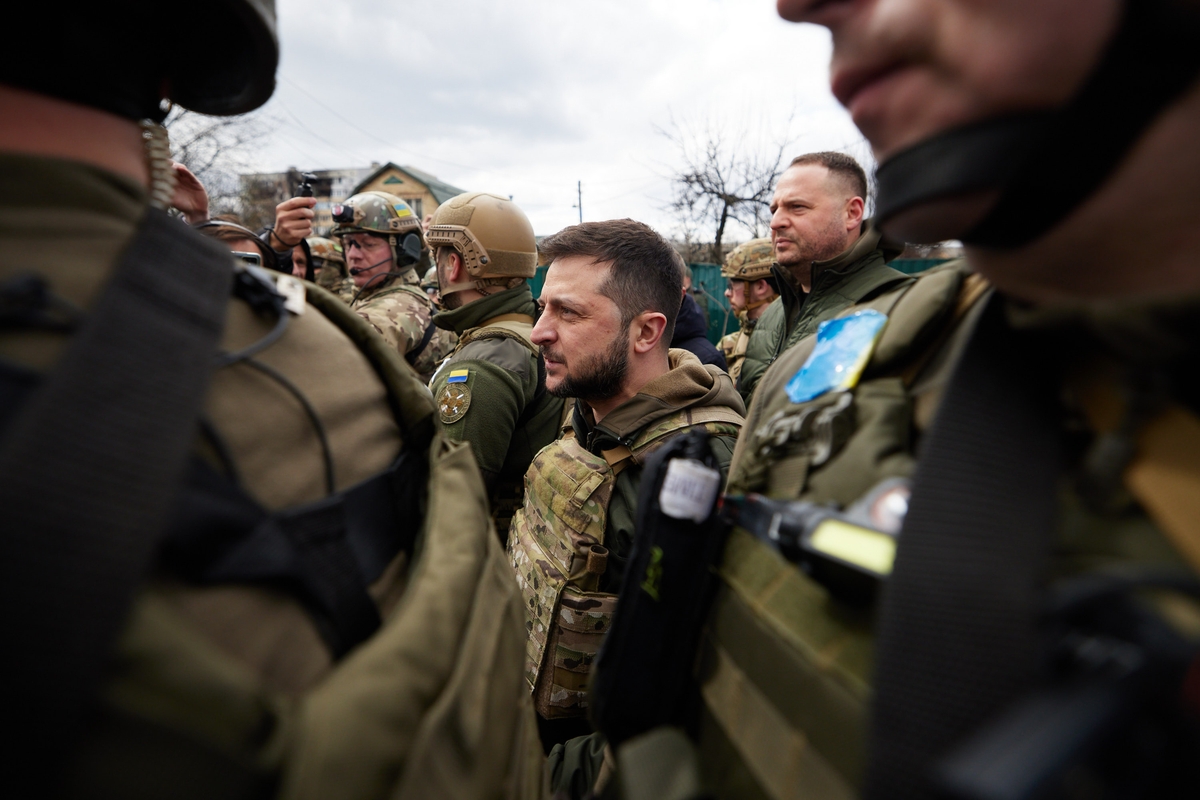
The war in Ukraine, which is Europe’s largest land war since 1945, has entered the peculiar phase familiar to historians and unbearable to those living through it — the phase in which catastrophe becomes routine. Loud air raid sirens still interrupt dinners in Kyiv. Young men still disappear into the trench lines of Donetsk and Zaporizhzhia. Russian drones still arrive nightly, buzzing in the dark like giant mechanical mosquitoes. As the rumble draws nearer, exhausted people rise from their beds and head into the narrow corridors of their apartments or into the basements of their houses. It happens night after night, year after year, while outside the region, the war increasingly competes with other crises for attention, just becoming a part of the atmospheric background of modern life.
By the fifth year of the war, the conflict had altered the very structure of ordinary life — not only in Ukraine, but in Russia as well. What once felt exceptional has become ambient. People check news alerts between work calls, distinguish drones by sound, and live their routine life while air defense systems operate somewhere beyond the edge of the city.
Russia continues to strike Ukrainian cities. Residential buildings, energy infrastructure, schools, and hospitals regularly come under attack. After each strike, nearly identical photographs emerge: shattered windows, rescue workers coated in dust, children’s toys lying among broken concrete. The repetition of these images creates a psychological weight. War no longer appears as a sequence of separate tragedies, but as a permanent condition of life and death.
Meanwhile, Ukraine has increasingly targeted oil depots, refineries, and fuel infrastructure inside Russia. These attacks are strategic as much as symbolic. Modern warfare depends on fuel almost as much as it does on weapons. At the same time, long-range drone strikes have begun to erode the traditional sense of distance within Russia itself. A war that for many Russians existed largely as a TV reality is becoming physically tangible. The defining feature of this stage is that both sides are now attempting to exhaust each other not only militarily, but psychologically. Russia continues to rely on pressure against civilian infrastructure and the slow fatigue of society. Ukraine relies on technological adaptability, strikes against logistics, and its ability to maintain the attention and support of its allies.
According to The Guardian, this spring, Ukrainian officials have cautiously described their battlefield position as the strongest it has been in more than a year, thanks largely to the expanding use of domestically produced drones and localized counteroffensives in the south.The war no longer resembles the sweeping armored advances of 2022. Instead, it has evolved into something more technological, more dispersed, and in many ways more psychologically exhausting through screens, algorithms, and industrial endurance.
The front itself stretches more than seven hundred miles. Villages captured at staggering human cost are sometimes little more than piles of brick. What matters increasingly is not symbolic territory but logistics such as rail nodes, fuel depots, drone manufacturing sites, and the electronic warfare systems that now determine whether soldiers live or die. A correspondent of The Washington Post wrote on April 30th that Ukraine’s expanding drone campaign has altered the emotional geography of the war. Russia, long accustomed to fighting at a distance from its urban centers, now confronts increasingly regular strikes deep inside its territory. It looks symbolic that Moscow has reportedly scaled back portions of its annual Victory Day military parade on May 9th out of concern that Ukrainian long-range drones could target the capital.
At the same time, Ukraine faces the deeper problem common to all prolonged wars — exhaustion. President Volodymyr Zelensky has warned repeatedly that the coming months will bring intense military and diplomatic pressure, – points out Reuters. Recruitment remains politically sensitive. Casualty numbers are guarded with near-religious secrecy. And this week, Ukraine’s army chief introduced mandatory troop rotation limits after public outrage over reports of frontline soldiers being left in impossible conditions for extended periods.
That decision revealed something important about the current stage of the conflict. In earlier years, Ukraine’s greatest strategic asset was morale — the electrifying sense that national survival depended on collective sacrifice. Sadly, four years into the full-scale invasion, sacrifice remains abundant. Diplomatically, the war has entered an equally ambiguous chapter. Al Jazeera reported that a brief Easter ceasefire earlier this month collapsed almost immediately amid mutual accusations of violations. Behind the scenes, various rounds of international talks continue in places like Abu Dhabi and Geneva, but expectations remain low. Even some European leaders have begun quietly discussing territorial compromise as a possible component of eventual negotiations — language that would once have been politically unthinkable.
Russia too appears trapped inside the war it began. Western sanctions have not produced economic collapse, but the cumulative strain is visible. Ukraine continues targeting Russian oil infrastructure with increasingly sophisticated drone operations. Meanwhile, Russia’s military machine consumes extraordinary amounts of manpower and material simply to maintain incremental gains.
While countless domestic and international political developments compete for Americans’ attention, on another continent across the ocean Ukrainian soldiers continue, for a fifth year, to give their lives in cold, rain-soaked trenches for the independence of Europe’s largest country by territory — a country where people, including young children, die every day in Russia’s attacks. The danger for the outside world is not merely geopolitical fatigue. It is moral adaptation — the slow acceptance that devastation, if sufficiently prolonged, begins to seem inevitable. Ukraine’s future remains uncertain. Russia’s ambitions remain dangerous. But perhaps the most consequential question now is whether democracies can maintain attention spans longer than authoritarian regimes can sustain destruction.
Take Action
- Ukraine war briefing: Kyiv hails frontline position as ‘strongest in a year’, https://www.theguardian.com/world/2026/apr/23/ukraine-war-briefing-kyiv-hails-frontline-position-as-strongest-in-a-year?utm_source=chatgpt.com
- Ukraine and Russia accuse each other of breaching Easter ceasefire, https://www.aljazeera.com/news/2026/4/12/ukraine-and-russia-accuse-each-other-of-breaching-easter-ceasefire?utm_source=chatgpt.com
- Ukraine war latest: German chancellor suggests Ukraine may cede territory to secure peace, EU path, https://kyivindependent.com/ukraine-war-latest-german-chancellor-suggests-ukraine-may-cede-territory-for-peace-eu-path/?utm_source=chatgpt.com