
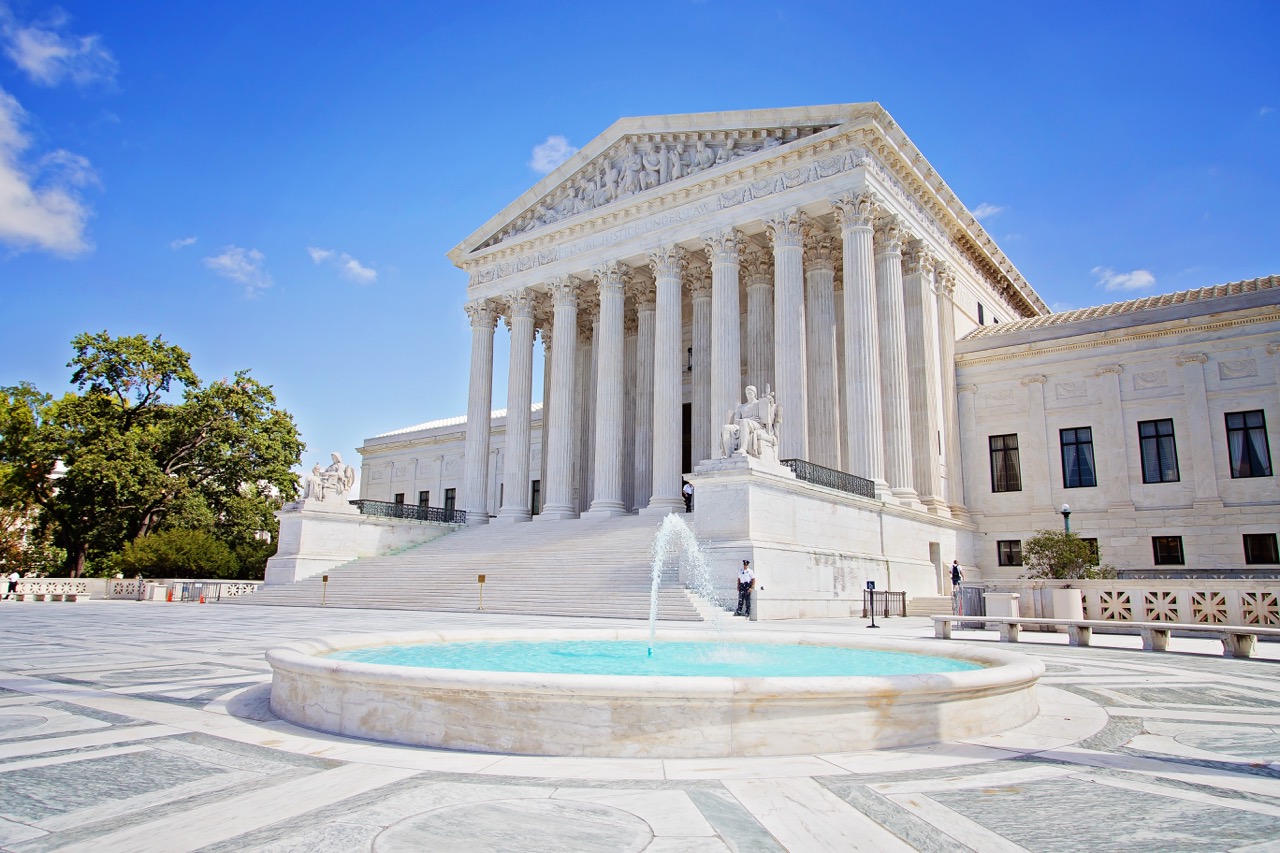
President Donald Trump may have gotten what he most wanted from the U.S. Supreme Court when it ruled on July 1, 2024 – by a 6-3 vote – that former presidents have absolute immunity from criminal prosecution by, essentially, being president. Trump named three justices to the high court during his first term in office – Neil Gorsuch, Brett Kavanaugh and Amy Coney Barrett – and all three ruled in his favor in Trump v. United States (Barrett in part). The latest raft of major SCOTUS rulings, due next month, may continue to largely meet with Trump’s approval, or at least conservative priorities, but by no means is the court’s October 2025 term, as it’s officially known, likely to be a slam dunk for the right.
Here is a rundown of what we can expect from the U.S. Supreme Court by late June:
Gun rights (Wolford v. Lopez)
The court is reviewing a decision by the U.S. Court of Appeals for the Ninth Circuit supporting a Hawaiian law that made it illegal for Christopher Wolford, a private citizen, to take a gun onto private property without the property owner’s consent.
Hawaii has a history and tradition of restrictive laws concerning weapons, dating to the reign of King Kamehameha III in the 1830s. In keeping with that, the state in 2023 decided that gun owners there must acquire permission to take a gun onto private property, a law that last year was upheld by the U.S. Court of Appeals for the Ninth Circuit. Christopher Wolford, a Hawaiian gun owner and private citizen, argued the state’s law flies in the face of the Second Amendment. In 2022, in New York State Rifle & Pistol Association v. Buren, the Supreme Court came down on the side of gun owners, creating the so-called Bruen test, intended to measure if gun laws are in keeping with the country’s “history and tradition.” That test will likely be relevant in the court’s review of this appeal.
Transgender athletes (Little v. Hecox and West Virginia v. B.P.J., consolidated)
The court has been asked to consider whether the states of Idaho and West Virginia can ban transgender girls from participating in girls’ school sports without violating federal law and the U.S. Constitution.
Two cases are giving the court the opportunity to decide whether banning transgender girls from participating in girls’ school sports is unconstitutional, expanding the issue into the realm of civil rights law. During arguments earlier this year, a majority of justices seemed inclined to support these bans, which would also narrow the scope of the Title IX ban on discrimination in schools. Even the court’s liberal justices noted that the plaintiffs may be better off pursuing individual legal challenges at this point, although one of them has since stopped trying to participate in sports at her school.
Campaign finance (National Republican Senatorial Committee v. Federal Election Commission)
The court is debating the limits on how much political parties can spend in coordination with candidates; a ruling in favor of the plaintiff could once again significantly expand the role of money in elections.
The court fundamentally changed the elections landscape in 2010 with its Citizens United decision, ruling that corporate mega-spending on elections was free speech. The court is now considering the Republican Party’s wish to allow political parties to spend more in coordination with candidates, although that could, ironically, dilute the impact of Citizens United. But ultimately, a decision in favor of the NRSC is still likely to benefit Republican candidates, largely because super PACs would have access to the lower rates for broadcast advertising time that have long benefited Democrats. The U.S. District Court for the District of Columbia ruled for FEC, following precedent, which the appellant is asking the SCOTUS to reconsider.
Immigration (Trump v. Miot and Mullin v. Doe, consolidated)
The court is reviewing whether a decision by President Trump to end Temporary Protected Status for hundreds of thousands of immigrants from Haiti and Syria constitutes a discretionary executive act.
Does the court even have the right to review refugees’ Temporary Protected Status (TPS)? Should the justices decide it doesn’t, Trump’s desire to remove TPS for scores of Haitians and Syrians in this country could ultimately impact 1.3 million people living here, from dozens of countries. His administration argues that TPS has essentially become permanent for refugees from places like Haiti and Syria, long wracked by various humanitarian crises. He has already shut down virtually all asylum cases. But if the SCOTUS gives Trump what he wants on TPS, the U.S. cities that have taken in most of these refugees would see their populations plummet.
Birthright citizenship (review of presidential executive order)
Multiple lawsuits were filed after Trump declared birthright citizenship unconstitutional, and several federal courts blocked the order; the president is appealing those rulings.
This case may be the most vital of the term to Trump, who actually showed up for the court’s arguments, which was unprecedented. It’s also the case he’s least likely to win. At stake here is the citizenship clause of the Fourteenth Amendment, which guarantees that virtually anyone born in the U.S. is an American citizen. A ruling in Trump’s favor would strip millions of people living here of that status. The president’s lawyers described today’s America as a new world because of something they called “birth tourism.” The skeptical chief justice responded, “New world, same constitution.” In this case and previous ones, federal district courts and appellate courts have relied on the 1898 SCOTUS ruling in United States v. Wong Kim Ark, the foundational case on birthright citizenship. The high court is likely to do the same.
Take Action
- Everytown for Gun Safety is one of the nation’s largest gun-control advocacy organizations – www.everytown.org; 3 Columbus Circle, New York, NY 10019, or info@everytown.org.
- The American Civil Liberties Union is a major legal advocacy group that’s actively involved in transgender athlete cases and broader LGBTQ rights – www.aclu.org; 125 Broad St., 18th floor, New York, NY 10004; 212-549-2500; info@aclu.org.
- The Brennan Center for Justice is highly influential in campaign reform and election law – www.brennancenter.org; 120 Broadway, Suite 1750, New York, NY 10271; 646-292-8310; info@brennancenter.org.
- The American Immigration Council focuses on immigration policy, legal advocacy and public education – www.americanimmigrationcouncil.org; 1331 G St. NW, Suite 200, Washington, DC 20005; 202-507-7500; info@immcouncil.org.
- The National Immigration Law Center is tasked with providing legal protections for immigrants, including those involving citizenship issues – www.nilc.org; 3450 Wilshire Blvd., Suite 108-62, Los Angeles, CA 90010; 213-639-3900; nilc@nilc.org