Search Results

Should Euthanasia and Assisted Suicide be Legal in the United States?

Should Euthanasia and Assisted Suicide be Legal in the United States?

Brief #137 – Health & Gender
By Inijah Quadri

The debate surrounding euthanasia and assisted suicide in the United States is a complicated one. On one side of the argument are those who believe that people have a right to die with dignity, and that euthanasia and assisted suicide should be legal options for individuals who are terminally ill or suffering from a debilitating condition. On the other side of the argument are those who believe that euthanasia and assisted suicide are immoral, and that they should not be legal options for anyone.


The New Composition of the Supreme Court

The New Composition of the Supreme Court

Brief #33 – Elections and Politics
By Inijah Quadri

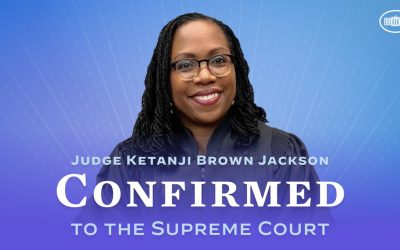
The Supreme Court is composed of nine justices. The newest justice, Ketanji Brown Jackson, was appointed by President Biden on February 25, 2022. This brief discusses how the composition of the Supreme Court has changed over time, and what the implications of its new makeup are for the future of our democracy.

The Remington Deal With the Sandy Hook School Massacre Victims’ Parents

The Remington Deal With the Sandy Hook School Massacre Victims’ Parents

Brief #33 – Social Justice
By Inijah Quadri

On the 14th of December, 2012, Adam Lanza, a 20-year-old shooter, murdered children and educators using a Remington rifle lawfully owned by Lanza’s mother.
 
Before turning the handgun on himself as police closed in on their Newtown house, Lanza killed his mother in her bed and then took the rifle to the school and opening fire for five minutes.
 
As a result of Lanza’s mental illness, fascination with violence, and access to his mother’s firearms, Connecticut’s child advocate called it “a prescription for mass murder”.

Space Junk and Corporate Accountability in Orbit (Foreign Policy Brief # 231)

Space Junk and Corporate Accountability in Orbit (Foreign Policy Brief # 231)

Space exploration has transitioned from a public endeavor driven by international cooperation to a heavily privatized industry dominated by billionaire-backed mega-corporations. At the center of this shift is Low Earth Orbit (LEO), defined by the Inter-Agency Space Debris Coordination Committee (IADC) and NASA as the region of space at an altitude of 2,000 kilometers (1,240 miles) or less. Low Earth Orbit, once viewed as a pristine global commons, is rapidly becoming a celestial dumping ground. The exponential deployment of satellite megaconstellations by private tech monopolies has drastically accelerated the accumulation of space junk, raising profound environmental and safety concerns. While these networks boast of bridging global connectivity gaps, their unchecked proliferation commodifies the orbital environment, prioritizing corporate dominance over the long-term sustainability of the cosmos.

x
x
Support fearless journalism! Your contribution, big or small, dismantles corruption and sparks meaningful change. As an independent outlet, we rely on readers like you to champion the cause of transparent and accountable governance. Every donation fuels our mission for insightful policy reporting, a cornerstone for informed citizenship. Help safeguard democracy from tyrants—donate today. Your generosity fosters hope for a just and equitable society.

Pin It on Pinterest