Brief #73—Environment
By Todd J. Broadman

Brief #73—Environment
By Todd J. Broadman
Scientists first suspected a link between greenhouse gases and climate in the mid-19th century. Swedish scientist Svante Arrhenius won the Nobel Prize in chemistry with calculations in 1897 that linked burning coal to global warming. From that time onwards, scientists took up studying this linkage with better tools, more resources, and coordination.
A year ago, at the beginning of Donald Trump’s second term as President, he signed Executive Order 14199, requesting a “government‑wide review” of all international intergovernmental organizations, conventions, and treaties that the United States formally supports. That review resulted in a signed a memorandum on January 6th of this year that specifies that the U.S. formally withdraw from 66 “organizations, conventions, and treaties.” Included in the 66 are the UN Framework Convention on Climate Change (UNFCCC), the Intergovernmental Panel on Climate Change (IPCC), and other important climate treaties. In all, the U.S. withdrew from 31 UN bodies.
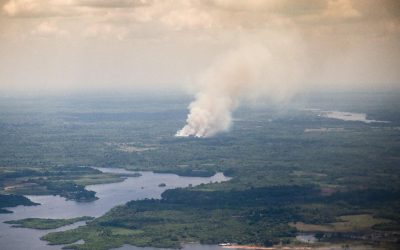
The Amazon rainforest is rapidly degrading. The ecological functions of the rainforest such as absorbing greenhouse gases and releasing oxygen into the atmosphere are diminishing as the size of the rainforest shrinks. Global precipitation patterns depend upon the Amazon’s unique location on the planet. The diversity of plant life in the Amazon constitutes about a quarter of the globe’s stock of carbon biomass. There are 80,000 species of plants.
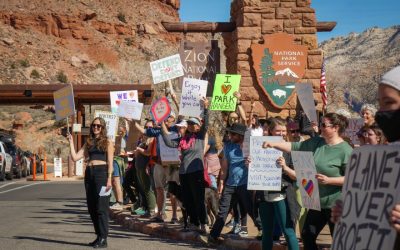
For the 2026 federal budget year, beginning October 1st, the White House has proposed a $1.2 billion – or 36% – cut to the National Park Service (NPS). Prior to this proposed budget cut, around 2,800 NPS employees had either been fired or resigned their positions under an early retirement buyout. Under the Biden administration, the NPS employed around 20,000 staff. The NPS manages 63 national parks and 370 other sites that include lesser-known historic sites, monuments, and national seashores.
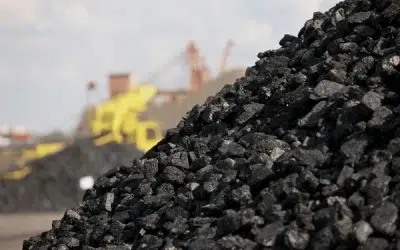
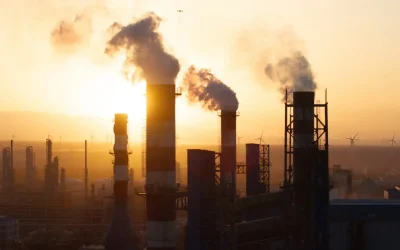
Coal is not going away anytime soon; it remains the dominant source of the world’s electricity. 15% of U.S. electricity is fueled by coal. Globally, it is forecasted that carbon in the form of coal will still contribute 22% of power generation by 2040. In China and India, the reliance upon coal is significantly higher, almost double that of the U.S. and Europe. And for good reasons: it is the most economical, stable, and reliable power source.

Through an Executive Order issued March 1, 2025, there is to be an expansion of American timber production that meets goals to achieve “sound forest management, reduce time to deliver timber, and decrease timber supply uncertainty.” Approximately 100 million acres, the equivalent of 60% of our national forests, are to be within earshot of a chainsaw. In so doing, the Trump administration declares this a “new era” in national forest management. Legally protected forest land and parts of old growth forest are slated be part of the expanded production.

For the last 475 years, the expanse of ocean from western Florida to southern Texas has been called the “Gulf of Mexico.” English geographer Richard Hakluyt referred to the “Gulfe of Mexico” in his work of 1589. With the stroke of a pen on February 9, 2025, the President of the United States signed Executive Order 14172 and renamed the body of water “Gulf of America.” In addition to “restoring American pride,” President Trump justified the name change by referencing territorial rights over much of the area and that those waters have “long been an integral asset to our once burgeoning Nation and has remained an indelible part of America.” Trump considers the Gulf a business asset.

40% of the U.S. population line our coasts. That equates to approximately 130 million people residing in coastal counties. In addition to those who retire seaside, entire economies are integrated into the coastal industries of fishing, tourism, energy, shipbuilding, and recreation. Even a cursory glance using google maps shows how tightly clustered the built space is, all on only 10% of the total U.S. land mass. Shoreline communities have five times the population density as compared to the U.S. average.

Don’t Expect Trump 2.0 to be Climate Friendly Environment Policy #177 | By: Todd J. Broadman | January 10, 2025 Photo by Documerica on Unsplash __________________________________ POLICY SUMMARY President-elect Trump is set to take office on January 6, 2025 and has...