
POLICY
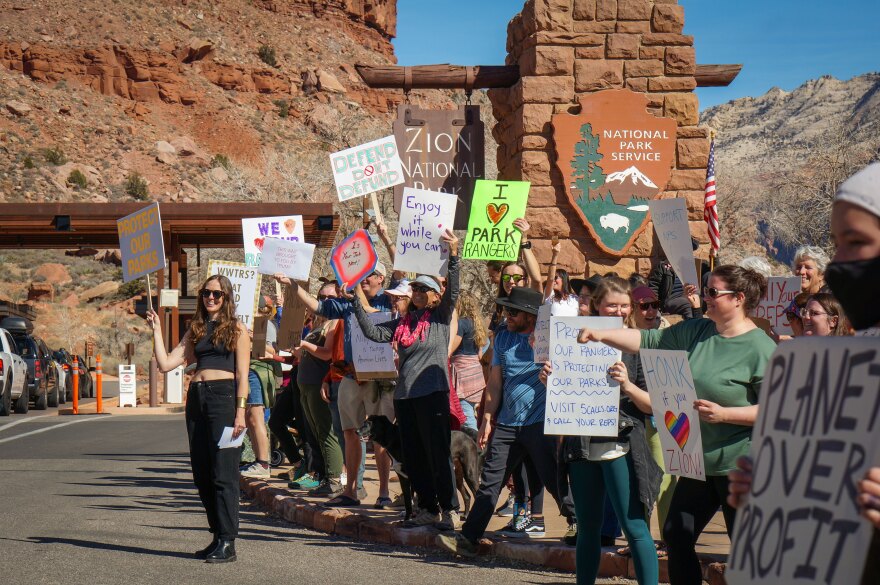
For the 2026 federal budget year, beginning October 1st, the White House has proposed a $1.2 billion – or 36% – cut to the National Park Service (NPS). Prior to this proposed budget cut, around 2,800 NPS employees had either been fired or resigned their positions under an early retirement buyout. Under the Biden administration, the NPS employed around 20,000 staff. The NPS manages 63 national parks and 370 other sites that include lesser-known historic sites, monuments, and national seashores.
Amid these cuts, Interior Secretary Doug Burgum has required parks to remain open. Reasons given for the cuts by the Trump administration center on making government more efficient and a shifting of budget dollars to agencies and programs that can demonstrate immediate economic growth and job creation.
In addition to the NPS budget cuts, the administration is looking at ways to transfer NPS-managed parks to the states and tribal governing bodies. This is in line with similar transfers being explored with varying agencies under the federal umbrella. Given that most of the agencies were established by federal legislation, new legislation will be required to complete the proposed shifts. That raises the question: where would the funding come from at the state level?
Among the organizations actively opposing these moves are the Coalition to Protect America’s National Parks and the National Parks Conservation Association (NPCA). The Coalition is made up of 4,600 former, current, and retired NPS employees. They see the great risks and have dedicated their careers to restoring and maintaining these natural and cultural treasures. They foresee an additional 35% – 40% drop in Forest and Park Service staff. (At the time of this writing, there is a government shutdown due to a stalemate over the fiscal budget resulting in 60% of NPS employees on furlough until a budget is approved).
The concerns of rangers and biologists and other senior NPS staff are not the concerns of the Trump administration. The dedicated professionals in the field have a conservation mindset that runs counter to the economic development mindset of those in the Oval Office and at the Department of the Interior. The immediate impact will be the closure of campgrounds, visitor centers, museums, and guided programs. Trails will have no rangers present. Basic services like sanitation and emergency response will not be available.
Most environmental groups are asking the government to temporarily close the parks for safety reasons. A key aspect of the staffing cuts is that many senior staff have left or are in the process of leaving, and this too impacts safety and overall park management. They hold vital institutional knowledge.
ANALYSIS
As with other federal agency cuts, we have a populist President who has turned a deaf ear to those who voted him in office. Over 80% of those polled by Data for Progress actually want to maintain or even increase funding for our national parks, and the NPS enjoys “favorable views” from over 75% of respondents. In line with the downsizing of other agencies, this administration makes across the board cuts before a detailed look into the “waste, fraud, and abuse” it claims to be targeting. The American public sees no reported details of “enhanced efficiencies.”
What does seem to be clear is that staff cuts are focused on senior researchers who are actively trying to protect endangered plant and animal species, as this research poses an obstacle to commercial resource development. Commenting on the U.S. Fish and Wildlife Service (FWS), Desirée Sorenson-Groves, president and CEO of the National Wildlife Refuge Association, says that “staff were forced out because of the issues they work on.” The 9,000 employees of the FWS oversee the National Wildlife Refuge Systems, conduct vital population surveys, manage invasive species removal, and recover threatened and endangered species.
Patrick Donnelly, Great Basin director at the Center for Biological Diversity, had a starker take: “It’s a travesty that Senate Republicans are putting more than 3 million acres of our beloved public lands on the chopping block to sell at fire-sale prices to build mega mansions for the ultrarich.”
With Interior Secretary Doug Burgum’s White House orchestrated emphasis on “development,” federal lands are not only for mega mansions; those initial 3 million acres are primarily to be opened for drilling, logging, mining and grazing. These moves are no surprise as Trump promised this action (along with immigration reform) during his campaign. Most of the federal land holdings to be earmarked for drilling and excavation are in Alaska, California, Nevada, New Mexico, Utah and Wyoming. Additional land will be open for recreation, logging, and grazing.
Asserting dominion over the land by making it commercial productive “protects our American way of life,” according to Secretary Burgum. To be fair, it does reflect the voice of Trump’s hardcore MAGA supporters, and in that limited sense does, as Burgum says, “give our communities a voice in the land that they depend on.” 1 million square miles of underground mineral reserves – primarily for coal and lithium, will be fast-tracked for development.
In a related move, Trump signed the “Restoring Truth And Sanity To American History” Executive Order. Signage, statues, and other historical references at our national parks and forts will be subject to a re-reading of history that no longer vilifies the Indian genocides or African American slavery. Places and monuments named for confederate figures will be restored. A photo of a slave’s scars entitled “Scourged Back” has been removed from Fort Pulaski National Monument in Georgia, according to the New York Times. “The decision to remove this photograph from the interpretive displays at national parks is as shameful as it is wrong,” comments Alan Spears, NCPA’s Senior Director of Cultural Resources.
According to the official line in Washington D.C., we get this from Department of the Interior’s Elizabeth Peace: “As the President has stated, federal historic sites and institutions should present history that is accurate, honest and reflective of shared national values.”
Theresa Pierno, president and CEO of the NPCA, reflects on another set of American values. “Losing a quarter of the Park Service’s permanent workforce,” she says, “has made it nearly impossible for some parks to operate safely or effectively. And sadly, this is just the beginning.” Over and above their beauty, America’s public lands tell stories, they convey a history – that’s true of smaller ones like John Muir and grand ones like Yellowstone. For 38-year NPS career veteran, Sue Fritzke, the stories are being abandoned. She retired recently, to tell her own stories, in her new home in Canada.
In total, there are 640 million acres of federal land in the United States. That equates to 28% of the U.S. land mass. Over 3 million of those acres could be sold in the next five years, after Senate Republicans on the Energy and Natural Resources Committee, with Trump’s endorsement, placed that land into the party’s major spending bill. Their aim is for extensive transfers of U.S. Forest Service and Bureau of Land Management lands for commercial development. The House Natural Resources Committee passed a version of the spending bill that called for 500,000 acres of public land sales in Nevada and Utah.
The budget thrashing at the NPS and related agencies, including the EPA, is a part of a much larger plan that envisions a restoration of America to its pioneer beginnings. The “great” in MAGA means there is a divine manifest destiny in stewarding God’s land through damming rivers, mining, logging, and oil extraction. Conservation efforts (and funding) is not part of “great.” (An exception is carved out to protect wild lands for hunters). There will be short-term economic gains for sure. The losses though, will be felt for decades to come.
US Resist Resources:
- https://www.npca.org/ the voice of America’s national parks, working to protect and preserve our nation’s most iconic and inspirational places for present and future generations.
- https://www.americanprogress.org/ an independent nonpartisan policy institute that is dedicated to improving the lives of all Americans through bold, progressive ideas, as well as strong leadership and concerted action.
- https://www.lcv.org/ the League of Conservation Voters builds political power to protect people and the planet.