Search Results

Outdoor Sports and Exercise Can Help Fight Pandemic Depression

Outdoor Sports and Exercise Can Help Fight Pandemic Depression

Brief #127 – Health Policy
By Yelena Korshunov

“Depression on my left. Loneliness on my right. They don’t need to show me their badges. I know these guys very well,” wrote Elizabeth Gilbert in her New York Times bestseller, Eat Pray Love. Can you imagine that one in three of your neighbors suffers from pandemic depression? Or maybe you are the one who knows what depression feels like?

Students Abandon Class and Demand Remote Learning During COVID Spike

Students Abandon Class and Demand Remote Learning During COVID Spike

Brief #64 – Education Policy
By Yelena Korshunov

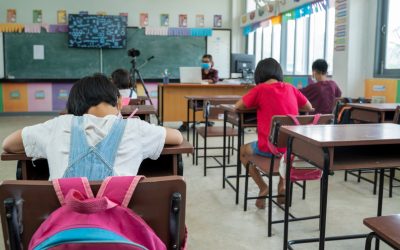
“Is my child safe in school?” This is a question that millions of parents ask themselves today. Remote learning vs. in-person. In-person vs. remote. Multiple pros and cons, dipped in wordy discussions without being resolved, challenge students and their parents to solve this dilemma on their own. On Monday, January 10th, the New York City Department of Education reported 11,825 students and 2,298 staff COVID cases.

When War Becomes Routine (Foreign Policy Brief #225)

When War Becomes Routine (Foreign Policy Brief #225)

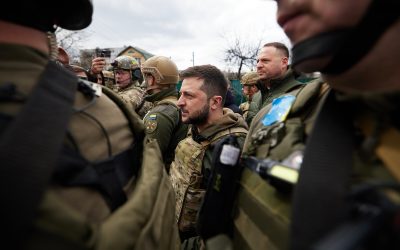
The war in Ukraine, which is Europe’s largest land war since 1945, has entered the peculiar phase familiar to historians and unbearable to those living through it — the phase in which catastrophe becomes routine. Loud air raid sirens still interrupt dinners in Kyiv. Young men still disappear into the trench lines of Donetsk and Zaporizhzhia. Russian drones still arrive nightly, buzzing in the dark like giant mechanical mosquitoes. As the rumble draws nearer, exhausted people rise from their beds and head into the narrow corridors of their apartments or into the basements of their houses. It happens night after night, year after year, while outside the region, the war increasingly competes with other crises for attention, just becoming a part of the atmospheric background of modern life.

Trump’s Efforts in Making Peace Between Russia and Ukraine (Foreign Policy Brief #217)

Trump’s Efforts in Making Peace Between Russia and Ukraine (Foreign Policy Brief #217)

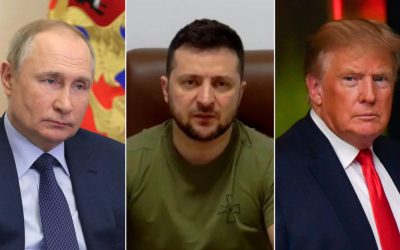
On August 15, after his meeting with Russia’s President Vladimir Putin, Donald Trump said it had been “a great and very successful day in Alaska.” In phone calls with Ukrainian President Volodymyr Zelensky, European leaders, and NATO Secretary-General Mark Rutte, Trump added that his talks with Putin had gone “very well.” He later wrote: “It was determined by all that the best way to end the horrific war between Russia and Ukraine is to go directly to a peace agreement, which would end the war, and not a mere ceasefire agreement, which oftentimes does not hold up.”

New Trump Rule Targets The Head Start Program (Education Policy Brief #206)

New Trump Rule Targets The Head Start Program (Education Policy Brief #206)

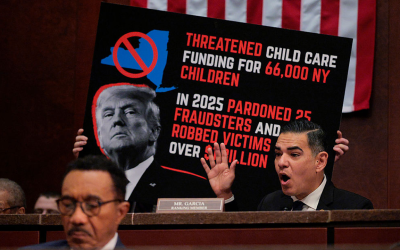
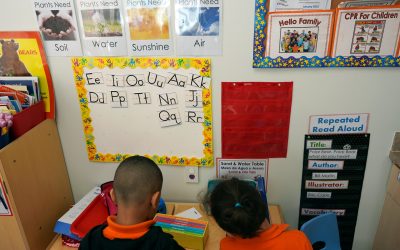
Earlier this month, on Thursday, July 10, Health and Human Services Secretary Robert F. Kennedy Jr. announced that children of undocumented immigrants will no longer be allowed to attend Head Start—the free, federally funded program for low-income families that provides education, nutrition, and health services to 800,000 infants, toddlers, and preschoolers. Head Start is remarkable for enjoying bipartisan support for most of its 60-year existence.

Ukrainian Refugees and American Citizens Mistakenly Ordered to Leave the U.S. Within Seven Days

Ukrainian Refugees and American Citizens Mistakenly Ordered to Leave the U.S. Within Seven Days

In early March, 2025 Reuters reported that the administration of Donald Trump was planning to deprive about 240,000 Ukrainian refugees of their legal status by terminating humanitarian programs. According to the Reuters sources, the decision was expected in April. In response, White House Press Secretary Caroline Leavitt dismissed the report on X, calling it “more fake news” and stating, “No decision has been made at this time.” Meanwhile, the Trump administration has already begun revoking parole status for over 500,000 migrants from Cuba, Haiti, Nicaragua, and Venezuela, who had been living in the U.S. under temporary humanitarian programs. The administration said cases would be reviewed on “a case-by-case basis.”

x
x
Support fearless journalism! Your contribution, big or small, dismantles corruption and sparks meaningful change. As an independent outlet, we rely on readers like you to champion the cause of transparent and accountable governance. Every donation fuels our mission for insightful policy reporting, a cornerstone for informed citizenship. Help safeguard democracy from tyrants—donate today. Your generosity fosters hope for a just and equitable society.

Pin It on Pinterest