Search Results

Federal Court Blocks Texas’ Racially Discriminatory Redistricting Map (Social Justice Policy Brief #184)

Federal Court Blocks Texas’ Racially Discriminatory Redistricting Map (Social Justice Policy Brief #184)

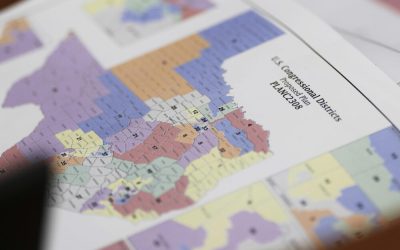
In a major ruling upholding the rights of minority voters, a three-judge federal panel on November 18, 2025, issued a preliminary injunction blocking Texas from using its newly adopted 2025 congressional redistricting map for the upcoming 2026 elections. The map, enacted during a special legislative session in August, was found to be an unconstitutional racial gerrymander that harmed the voting power of Black and Hispanic Texans. The panel ordered that the elections proceed under the state’s 2021 map. Opponents, including State Senator Juan “Chuy” Hinojosa, applauded the decision, stating the map was a clear effort by the Trump administration and Texas Republicans to “silence the voices” of minority-majority districts. Texas has already filed a notice of appeal to the U.S. Supreme Court.

Reclaiming the Pedestal: Monument Removal and the Struggle for Public Memory (Social Justice Policy Brief #183)

Reclaiming the Pedestal: Monument Removal and the Struggle for Public Memory (Social Justice Policy Brief #183)

The ongoing, contentious debate over public monuments is not a referendum on history, but a profound struggle over power, memory, and the definition of public space. For generations, city squares, parks, and government buildings have been dominated by statues celebrating figures of colonialism, slavery, and state violence—from Confederate generals and slave traders to architects of Indigenous genocide. These monuments have never been neutral historical markers. They are active political statements, erected to assert a specific, dominant narrative of power and to legitimize a social hierarchy built on white supremacy.

The Potential Harm Posed to Society Due to the Inaccuracies of AI (Technology Policy Brief #159)

The Potential Harm Posed to Society Due to the Inaccuracies of AI (Technology Policy Brief #159)

The future of Artificial Intelligence (AI) is not fully determined, but it will continue to have a significant impact on our society and the way we live. The ways it currently impacts society are through improvements in efficiency, productivity, and accessibility. Self-driving cars relying on AI, AI-powered robots are used to provide aid and assistance in the healthcare system, and AI security systems are used to automate threat detection, among other examples. Although AI creates positive advantages and impacts, it also creates negative effects. The negative effects cover the environment, employment and other fields. These examples are often caused by  products that use and incorporate AI, but what (potential) harm is created due to inaccuracies within the actual systems of AI?

Antisemitism Is the Weapon, Teachers are the Target (Education Policy Brief #213)

Antisemitism Is the Weapon, Teachers are the Target (Education Policy Brief #213)

Educators who are critical of the Israeli government or the occupation, or who voice support for Palestinian statehood, are increasingly at risk of disciplinary action or even job loss.  Extremist pro-Israel groups are advocating for and winning statutory and regulatory limits on educational content critical of Israel, all under the guise of fighting rampant Antisemitism.  Even the use of pro-Palestinian slogans like “From the River to the Sea, Palestine will be Free” on social media has led to teachers being placed on leave.  Educators and free speech advocates are organizing to fight back, and a recently approved law in California, ostensibly to curb antisemitism, is being challenged in federal court by the ADC.

 The Week That Was: Global News in Review  Week (Foreign Policy Brief #221)

 The Week That Was: Global News in Review  Week (Foreign Policy Brief #221)

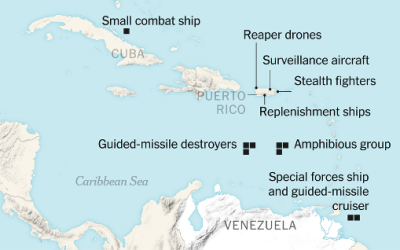
Since early September, the United States has carried out at least 14 strikes against alleged drug smuggling boats in the Caribbean and Pacific. The US has now deployed fighter jets, warships and thousands of troops to the Caribbean. The military buildup in the region is the largest since 1994 when the United States sent two aircraft carriers and more than 20,000 troops into Haiti to take part in “Operation Uphold Democracy.”

Strategies To Win The Mid-Terms (Op Ed)

Strategies To Win The Mid-Terms (Op Ed)

Democrats lost considerable power in the 2024 elections-relinquishing control over the House, the Senate, and the Presidency. In the upcoming  2026 mid-terms they have a chance to regain at least partial control of the levers of government — if they win majorities in the House and the Senate. Can they learn from their mistakes of the past? Can they take advantage of the poor performance of the Republicans since 2024? Can they actually win in 2026? A USRESIST NEWS Editorial team recently met to consider strategic options for the Dems to pursue in their upcoming mid-term campaign. Here’s what was suggested:

Silence as Strategy: U.S. Denial of Genocide in Gaza (Foreign Policy Brief #220)

Silence as Strategy: U.S. Denial of Genocide in Gaza (Foreign Policy Brief #220)

In September 2025, a United Nations Commission of Inquiry concluded what many on the ground have known for months: Israel is committing genocide in Gaza. The commission cited deliberate acts—mass civilian killings, destruction of vital infrastructure, deprivation of basic needs, and explicit incitement from Israeli officials—that collectively meet the threshold under the 1948 Genocide Convention.

x
x
Support fearless journalism! Your contribution, big or small, dismantles corruption and sparks meaningful change. As an independent outlet, we rely on readers like you to champion the cause of transparent and accountable governance. Every donation fuels our mission for insightful policy reporting, a cornerstone for informed citizenship. Help safeguard democracy from tyrants—donate today. Your generosity fosters hope for a just and equitable society.

Pin It on Pinterest