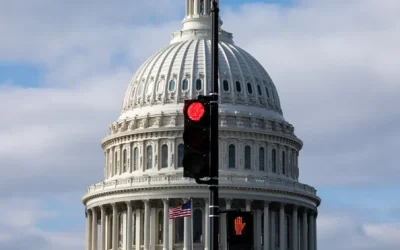
Push has come to shove, and for the first time in six years, the United States government has shut down. Driven by disagreements over the Republican federal spending bill, which would let tax credits for many American’s healthcare insurance expire at the end of the year, this shutdown is shaping up to be different from the rest.
Search Results
The Youth Vote: Is There Much of One? Can It Make a Difference? (Social Justice Policy Brief #179)
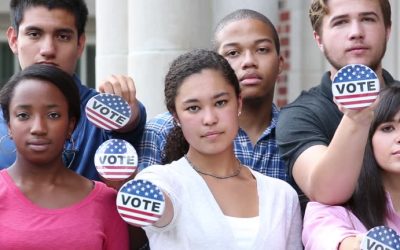
Young voters are often called a “sleeping giant,” and in 2024, nearly half of eligible 18–29-year-olds voted—about 47%. That’s slightly less than in 2020 but more than in 2016. Turnout varied widely: states like Minnesota and Maine had over 60%, while Oklahoma and Arkansas were in the low 30s. These differences are closely tied to state policies. Places with easy registration and voting options—like online registration, same-day registration, and mail voting—had higher turnout. States with strict ID laws and limited access saw lower participation. In short: young voters showed up in 2024, but where and how much they participated depended heavily on state policies and systemic barriers. You can explore more in CIRCLE’s full analysis or theMAP youth voting report.
How To Ensure A Fair And Safe 2026 Midterm Election (Election and Politics #197)
With only nine months of his presidency in the books, President Donald Trump has undertaken a radical reshaping of American democracy. From its courts to its liberties, Trump is actively pushing for an American society that serves him and his movement.
Trump’s Efforts in Making Peace Between Russia and Ukraine (Foreign Policy Brief #217)
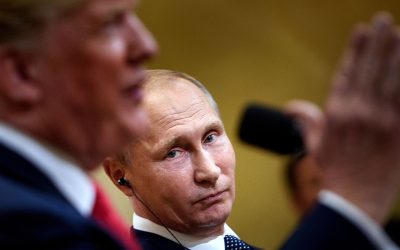
On August 15, after his meeting with Russia’s President Vladimir Putin, Donald Trump said it had been “a great and very successful day in Alaska.” In phone calls with Ukrainian President Volodymyr Zelensky, European leaders, and NATO Secretary-General Mark Rutte, Trump added that his talks with Putin had gone “very well.” He later wrote: “It was determined by all that the best way to end the horrific war between Russia and Ukraine is to go directly to a peace agreement, which would end the war, and not a mere ceasefire agreement, which oftentimes does not hold up.”
Is It Time to Take a Look at Our Own Gun Laws? (Social Justice Policy Brief #178)
Gunfire remains a defining crisis in the United States. On an average day, roughly 125 people are killed with guns and many more are wounded, a toll that reverberates through classrooms, workplaces, and families. Recent data compilations show that by late August 2025 the country had already endured more than 300 mass shootings this year, with hundreds killed and well over a thousand injured. These are not abstractions; they are neighbors, classmates, and coworkers.
AI Dirties the Air and Drives Demands for Environmental Justice (Technology Policy Brief #155)
Artificial Intelligence is more ubiquitous in our daily lives than you may realize. It drives the constant stream of personalized ads, instant navigation directions when driving, voice assistants such as Siri and Alexa, shows up first in our Google searches, and much more. The massive data centers powering all that instant intelligence are less visible to those of us who use it the most. But they have become ubiquitous in lower-income communities of color, communities with the least access to high-speed home internet and some of the worst air pollution in the country.
The Week That Was Around The Globe (Foreign Policy Brief #216)
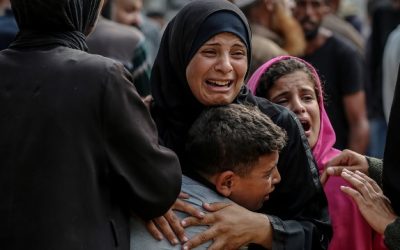
Relatives of people killed by Israeli fire while they were waiting to receive humanitarian aid mourn outside al-Shifa hospital in Gaza City. Photograph: Anadolu/Getty Images
Law and Order or Overreach? When Soldiers Become Police (Immigration Policy Brief #191)
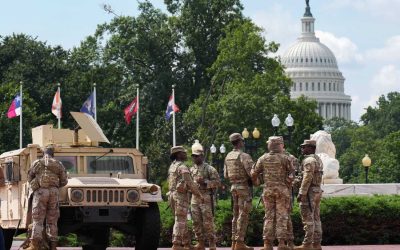
As summer draws to an end, President Trump is once again utilizing federal military forces for law enforcement, this time in the nation’s capital. In California, Trump cited immigration protests for the use of the National Guard & ultimately the deployment of U.S. Marines. Now we see the President citing crime & the inability of D.C. Democrats to stop it. President Trump’s coast-to-coast use of federal military force in Los Angeles and Washington, D.C. during 2025 highlights the growing tensions between public safety, constitutional boundaries, and presidential power, raising critical questions about the future of American democracy and civil-military relations.
The Downsizing of Student Learning Assessments (Education Policy Brief #208)
As the Trump Administration carries out its crusade to reduce the size of government, one of the targets has been the Department of Education (DOE). The DOE is made up of a number of agencies and offices that have been severely impacted by these actions, one of which is the Institute of Education Sciences (IES).
Duped by Putin for months on end, Trump must now hold the line on Russia (Foreign Policy Brief #212)
Trump’s egregious pre-election claim that he could “end the war in a day” between Russia and Ukraine has instead resulted in Russia’s huge surge of attacks on Ukraine and an increasing number of civilian deaths. While Trump often tries to deflect his responsibility for handling this war onto past U.S. presidents, he is now in fact the commander in chief and must take action to support an ally in Ukraine, help prevent further carnage, and demonstrate American democratic mettle vis-a-vis a ruthless dictator in Putin.