Elon Musk’s corporate empire—Tesla, SpaceX/Starlink, X, Neuralink and the Boring Company—has become a single, privately steered ecosystem whose combined annual revenues now rival the GDP of a midsize nation.
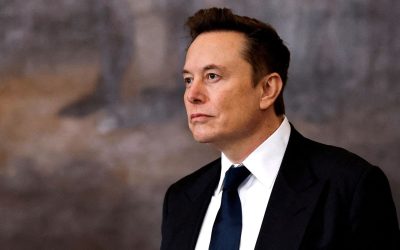

Elon Musk’s corporate empire—Tesla, SpaceX/Starlink, X, Neuralink and the Boring Company—has become a single, privately steered ecosystem whose combined annual revenues now rival the GDP of a midsize nation.

Artificial intelligence (AI) is the discipline of designing computer systems that can perform tasks normally requiring human cognition—pattern recognition, language generation, planning—by learning statistical relationships from large data sets. Modern AI works by training vast machine-learning models on petabytes of text, images, audio, and code and then applying those models to new inputs to produce predictions or content; it now powers everything from chatbots and fraud detection to medical imaging and autonomous drones.

According to estimates from Pew & the American Community Survey, there are between 10.5 & 11 million undocumented people living in the United States. For perspective, that’s fewer—by about 2 million—than the population of the L.A. metro area. On the one hand, that’s a large number; on the other, it’s far from an invasion in a country of 340 million people.

In 2025, the Texas Legislature passed House Joint Resolution 6 (HJR 6), placing a proposed constitutional amendment on the ballot for the November 4, 2025, election. If approved by voters, the amendment would permanently prohibit Texas from ever imposing a tax on individuals’ net capital gains.

The United States and its neighbors have long had a successful, and peaceful (mostly) existence. The United States, Canada, and Mexico have had free-trade agreements; entered into military alliances together; fought in wars together. However, since the inauguration of President Trump, these relationships have been tested – dramatically. The White House has called for Canada to become the “51st State”; the United States has changed the name of the Gulf of Mexico to the “Gulf of America”. Publicly, President Sheibaum and Prime Minister Carney, of Mexico and Canada, respectively, have criticized President Trump and his policies both from afar and in-person.
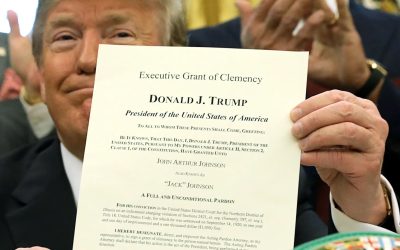
The presidential pardon is a constitutional power granted to the President of the United States under Article II, Section 2 of the U.S. Constitution. It allows the President to grant reprieves and pardons for federal offenses, except in cases of impeachment. While originally intended to offer clemency as a form of mercy or to correct miscarriages of justice, the use of pardons has evolved—and at times, been weaponized for political purposes.

It is no secret the disdain the Trump Administration has shown towards the Justice system in America. On Truth Social, President Donald Trump has blasted the judges who have ruled against his agenda as “Crazed”, “Trump Hating”, and rogue, “activist judges” who hate the legal system.

There are over 3 million cases currently pending in U.S. immigration courts, with the trend steadily rising since 2012, according to Syracuse University’s TRAC project. These cases reflect more than just bureaucratic dysfunction—they represent a failing immigration system. The problem goes beyond inefficient government & red tape; it’s a legal & human rights crisis affecting families, asylum seekers, & entire communities.

In an era marked by escalating global crises—from climate change and geopolitical conflicts to rising authoritarianism and social inequality—spiritual leaders continue to wield significant influence over billions worldwide. Their roles transcend religious rituals, often intersecting with geopolitics, human rights, and social justice. This article profiles the current heads of major global faiths—Catholicism, Tibetan Buddhism, Judaism, Islam, Hinduism, Anglicanism, and Eastern Orthodoxy—examining their leadership styles, political entanglements, and the size of their followings. These figures shape not only the spiritual lives of their adherents but also the moral frameworks through which societies interpret justice, peace, and progress.
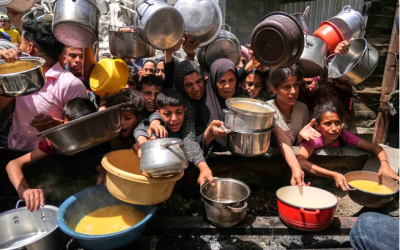
International pressure has been mounting as Israel continues its bombardment and siege of Gaza. The renewed assault has left thousands more dead in just the last weeks since the breaking of the ceasefire deal in January 2025. Over 52,615 Palestinians are reported to have been killed, though the true number is likely to be far higher and to remain unknown until international journalists and aid agencies are allowed into the strip. Last week, United Nations Secretary-General Antonio Guterres, warned that Israel’s escalating aggression and prolonged blockade have pushed the population to the brink of famine, stating Palestinians are enduring “what may be the cruelest phase of this cruel conflict”. The UN has released projections that up to 14,000 children are at risk of dying of famine in the Gaza strip if aid is not allowed in soon.