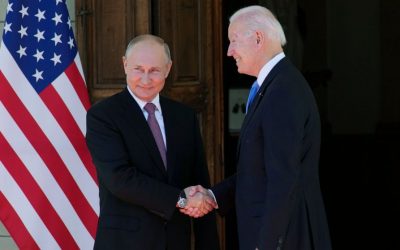
Russia’s invasion and war with Ukraine has been unfolding in real time in front of our eyes. The war has succeeded in bringing out the courage of Ukrainian President Zelensky and the Ukrainian people and the ruthlessness and cruelty of President Putin and the Russian army.
Search Results
How the U.S. Should Counter Russian Aggression in Ukraine
Brief #142 – Foreign Policy
By Abran C
The crisis and possible looming war in Ukraine have historical implications that include more than just Russia and Ukraine. Though the ties between Russia and Ukraine run far back into history, the conflict also involves the historical involvement of the United States and its NATO allies in Europe.
Update on US-Russian Diplomatic Talks on Ukraine Crisis
Brief #140 – Foreign Policy
By Abran C
On January 10, 2022, US, its NATO allies and Russian officials began a week of talks in Vienna and other European cities in an attempt to de-escalate the rising tensions on the Ukrainian border. The meetings ended without any breakthrough and did not succeed in their key objective: removing the immediate threat of tens of thousands of Russian troops stationed at the Ukrainian border.
Variant of Concern – Omicron
Brief #125 – Health & Gender Policy
By S Bhimji
Over the weekend, the world learned about another heavily mutated coronavirus variant named Omicron. First detected in South Africa, Omicron has now been detected in many nations. While not much is known about it, experts suggest that it could be more infectious than the delta variant.
Bipartisan Outrage Over Biden Administration Rapid Deportation of Haitian Refugees
Brief #130 – Immigration Policy
By Kathryn Baron
After the July 2021 assassination of the Haitian president that plunged the nation into political turmoil and exacerbated existing violence, a 7.2 earthquake and major tropical storm hit the following month, displacing and killing thousands. The Biden Administration extended an existing Temporary Protected Status for Haitians already living in the US from deportation as a result.
Global Perspectives: Nigeria: A Case Study In The Slow Creep of Digital Authoritarianism
Brief #57 – Technology
By Scout Burchill
On June 4th, the Nigerian government announced an “indefinite suspension” of Twitter after the social media company deleted a controversial tweet by Nigerian President Muhammadu Buhari. The Nigerian government’s Twitter ban and its recent history of attempts to more stringently regulate online speech present a cautionary tale about the rise of digital authoritarianism.
U.S., U.K. Warn of Ongoing Russian Hacking Efforts
Brief # 53 – Technology Policy
By Henry Lenard
U.S. and British government agencies released details on July 1 of an ongoing cybersecurity threat linked to Russia’s military intelligence agency GRU against hundreds of government agencies, energy companies and other organizations worldwide.
What Will Iranian Election Outcomes Mean for Relations with the US?
Brief # 118 – Foreign Policy
By Abran C
On June 18, 2021, Iran held its thirteenth presidential elections since the establishment of the Islamic Republic. National Elections are held every four years in the Shia majority nation. In order to run for president a candidate must be pre-approved by Iran’s Guardian Council. For the recent election cycle the council only approved seven candidates out of nearly 600, and it disqualified many moderates and women from running.
Global Perspectives: India’s Draconian New Digital Media Laws and the Responsibilities of U.S. Tech Companies
Brief # 49 – Technology
By Scout Burchill
In late May, the Indian government enacted sweeping new laws to regulate social media companies and digital platforms. The laws will require digital content providers, from Twitter and Facebook to Netflix and independent news organizations, to remove content that government authorities find objectionable within 36 hours of being flagged.
The Biden Administration Struggles to Find a Response to the Israeli-Palestinian Conflict
Brief #111—Foreign Policy
By Reilly Fitzgerald
The Biden-Harris Administration has made it very clear throughout their first several months in the White House that their Middle East policy will be a divergence from the one that the Trump Administration had imposed throughout their term. The Trump White House’s Middle East policy was one of aggression and this was exhibited by assassinating Iranian officials, pulling out of the JCPOA (‘Iran nuclear deal’), consistently backing Israel, moving the US Embassy from Tel Aviv to Jerusalem, and other major decisions.
Earlier this week, Israeli and Palestinian tensions reached a high point as Palestinian militants (backed by Hamas) fired rockets into Israel. Israel has responded with violence as well and has killed numerous Palestinians. President Biden’s administration has said that it will maintain its support of a two-state solution; however, they did also express their support for Israel to be able to defend itself from attacks.