Search Results

# 5 Fishing Boat Dispatch

# 5 Fishing Boat Dispatch

Brief #5—Fishing Boat Dispatch
By Katherine Cart
Prince William Sound is a quiet place. Storms in the Gulf of Alaska die on the western edges of islands; Montague, Hitchinbrook and Hawkins Islands rise like barbicans about the calm inlets. When one flies low over the Sound, little islands appear as shadows stretched westward: storm waves crush beaches from craggy outcrop. On the leeward side rise unblunted cliffs. At the scooped back of the Sound, one can, in most seasons, drive aluminum skiffs for miles on flat water, jigging for halibut and pulling from 30 fathoms by hand shrimp pots in which an octopus is more likely to be found than shrimp. Treed mountains rise up from the water, are striated by waterfall from glacial seeps, summits. In winter, the bays beneath slush are aquamarine, incredibly clear – the season of rot not yet begun – and the hills are stilled beneath a fathom of snow. The winter nights are long: sun up and down occur near the middle of the working day. In clear dawns and twilights, if one stands in view of the sweep of the Sound, all the snowed islands blaze in alpenglow. On Esther Island, where storms rarely come, the winter sun flits around the periphery of the bay, slinking behind mountain ridge. There is a small cluster of buildings on Esther Island, in which a dozen or so people live and work, hatching and releasing Chum salmon[1] by the millions each year. In the darkest months, daylight is the blued shadow of the mountain across the bay, and night is, with clear skies and luck, the greenish aurora borealis beyond the humped blocks of snowed peaks. Strong moons reflect silver on frozen waterfalls.

Defendant Trump: A Review of Outstanding Charges

Defendant Trump: A Review of Outstanding Charges

Brief #2—U.S. Resist News Blog
By Sean Gray
Post-presidential life promises little relief from the civil, and potentially criminal litigation. Whilst occupying the White House, Trump was able to weaponize the Justice Department to insulate him from trouble. Those protections are gone, and many chickens may be coming home to roost.The Department of Justice’s Office of Legal Counsel holds that indicting a sitting president would unconstitutionally undermine his ability to execute his duties. That is no longer at issue, and private citizen Trump has no further pretense for refusing to comply with the subpoenas.

New Top Dogs, Same Old Tricks: Uncovering the Power of Big Tech, Part 1 Washington’s Biggest Influencers

New Top Dogs, Same Old Tricks: Uncovering the Power of Big Tech, Part 1 Washington’s Biggest Influencers

Brief #44—Technology
By Scout Burchill
Move over Big Oil and Big Tobacco. According to a new report by Public Citizen, Big Tech companies now run the largest lobbying operations in Washington. For the first time ever, Facebook and Amazon topped the 2020 list of individual corporate lobbying spenders. Facebook spent close to $20 million and Amazon was not far behind spending close to $19 million, about 30% more than Comcast Corporation, the third highest spender. Since 2018, Amazon and Facebook have increased their spending by 30% and 56%, respectively.

These sums only represent reported federal lobbying dollars. Additional spending to gain influence through campaign contributions, Super Pacs, advertising campaigns, research funding, non-profits, associations, federations or trade groups, as well as state, local and international political spending are not included. Taking reported campaign contributions into account, Amazon and Facebook spent a combined $124 million in lobbying and campaign contributions during the 2020 election cycle alone.

Will Biden Save OSHA? An Assessment of the Weakened Regulatory Agency

Will Biden Save OSHA? An Assessment of the Weakened Regulatory Agency

Brief #103—Health And Gender
By Lily Lady Cook
The Occupational Safety and Health Administration (OSHA) was founded in 1971 to protect workers from hazards on the job. OSHA has faced intermittent funding challenges since the ‘70s, and reached new lows under the previous administration. Currently, the U.S. has one labor inspector for every 70,000 people although The International Labor Organization recommends one for every 10,000 people. This means that about 1,850 inspectors are responsible for overseeing the safety of 130 million workers. At the height of the COVID-19 pandemic, the Department of Labor criticized OSHA for its lack of regulatory guidance and decreased on-site inspections. On the campaign trail, President Biden called upon then-President Trump to double the amount of OSHA investigators; once in office, he instructed OSHA to release Emergency Temporary Standard (ETS) guidelines for employers by March 15. OSHA did not follow through on this order, possibly due to legal barriers related to the ‘grave danger’ precondition necessary for their release. In the absence of federal guidelines, separate states established their own ETSs. OSHA did, however, issue a National Emphasis Program in March, which increased pandemic-related inspection mandates for high hazard industries.

American Withdrawal From Afghanistan

American Withdrawal From Afghanistan

Brief #108—Foreign Policy
By Will Solomon
Last week, President Biden announced plans for an American military withdrawal from Afghanistan by September 11 of this year. The date will mark the 20th anniversary of the 9/11 attacks, the events that precipitated the invasion of that country, and the catalyst for what subsequently became the longest-running war in American history. Biden’s announcement was received largely positively, both by those who have demanded the withdrawal for a long time (Biden himself once stated that America would leave Afghanistan by 2014) and even by some more traditionally hawkish members of the national security establishment, who recognize the war has lost popular support and legitimacy, and is in practice un-winnable.

This is not to say approval was universal: a significant sector of the national security state would evidently be content with a drawn-out occupation, and many neoconservatives—Max Boot, Bill Kristol, Liz Cheney, and others—have been vocal in their opposition to Biden’s plan. There are also reservations from the anti-war sector: many contend that Biden’s announcement obscures the heavy unofficial American military presence, in the form of special forces, drones, and mercenaries and other contractors who will remain after American troops leave. Across the spectrum, there is also concern for the direction Afghanistan may go, even if clear solutions to avoiding outcomes like a Taliban takeover are not readily apparent.

Derek Chauvin Found Guilty in Trial over George Floyd’s Death

Derek Chauvin Found Guilty in Trial over George Floyd’s Death

Brief #13—Social Justice
By Erika Shannon
For almost a month, the nation has been watching the trial of former Minneapolis police officer Derek Chauvin. He was on trial for murdering 46-year-old George Floyd; the unfortunate events leading to Floyd’s death unfolded when police were called to a convenience store over a counterfeit twenty-dollar bill. Former officer Chauvin  responded to this call (with 3 other Minneapolis police officers), and ended up kneeling on George Floyd, cutting off his air supply for approximately 9 minutes and 29 seconds.

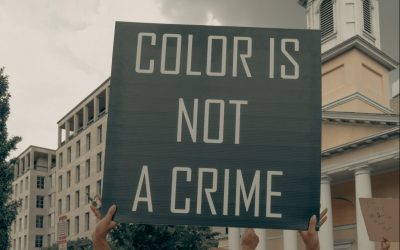
On April 20th, Derek Chauvin was found guilty on all three counts that he was facing in the trial: unintentional second-degree murder, third-degree murder, and second-degree manslaughter. Sentencing will be in eight weeks, and while the charges collectively add up to 75 years in prison, focus will be on the most serious charge of second-degree murder. This charge carries with it up to 40 years in prison. Many are holding their breath and hoping for the maximum sentence possible.

Our Migrant Workforce: Who Are They? How Did They Get Here?

Our Migrant Workforce: Who Are They? How Did They Get Here?

Brief #121—Immigration
By Kathryn Baron
Migrant workers support the US economy providing American industries like agriculture and technology the critical labor force they need to prosper. In 2019, more than 900,000 temporary foreign workers visas were granted, compared to only 400,000 in 1994.  During lockdown measures in 2020, Trump suspended all temporary work visas to ensure public health safety.

The first migrant labor program came during WWI due to severe labor shortages and drew in agricultural laborers primarily from Mexico. In 1952, lawmakers attempted to regulate and consolidate temporary visa regulations into a comprehensive Immigration and Nationality Act (INA), which introduced the H2 visa (the precursor to the H1B). There are currently 4 types of H-visas for temporary workers (with the 4th being for spouses and unmarried children of H-visa recipients).  See below for an explanation of the different H type visas that that are used by migrant workers.

Reunited; Science and Government… And It feels so good. 

Reunited; Science and Government… And It feels so good. 

Brief #112—Environment
By Shannon Q. Elliot
Biden and Harris walked into a cyclone of environmental ludicrousness as they entered The White House. The previous four years disavowed regulatory science, and neglected to create policies which would support public health and the environment. The policies enacted during the Trump era are now being reevaluated via Executive Order (EO) “Protecting Public Health and the Environment and Restoring Science to Tackle the Climate Crisis.” Under the EO, federal agencies will vet existing environmental policies, vowing to hold polluters accountable, and discuss innovative ways in which to restore and confront environmental crisis.

Biden and the Conflict in Ukraine

Biden and the Conflict in Ukraine

Brief #107—Immigration
By Will Solomon
The last several weeks have seen a significant escalation of tensions in Eastern Ukraine, a focal point of confrontation between the United States/NATO, and Russia. It has been reported that Russia has amassed troops on the Ukrainian border, with some estimates suggesting as many as 40,000 are currently stationed there. Russia has publicly claimed their troop movements are due to NATO provocations. Much of Eastern Ukraine, a predominately Russian-speaking region, has been effectively controlled by Russian-backed separatists since 2014.

The Future of the Republican Party, Part 1

The Future of the Republican Party, Part 1

Brief #17—Elections and Politics
By William Bourque
On January 20th, 2021, a large part of the country collectively sighed  relief.  After  days of tumult and chaos, President Trump had finally left office, and for what felt like the first time in months, we could see a light at the end of the tunnel.  However, we were quickly reminded that just because President Trump was out of office didn’t mean that his influence and rhetoric would disappear.  However, throughout the past several months it has been made abundantly clear that the “Trumpism” is here to stay, at least for now.  With that in mind we will begin an in-depth series on our predictions for the future of the Republican Party, whether that includes former President Trump or not.

x
x
Support fearless journalism! Your contribution, big or small, dismantles corruption and sparks meaningful change. As an independent outlet, we rely on readers like you to champion the cause of transparent and accountable governance. Every donation fuels our mission for insightful policy reporting, a cornerstone for informed citizenship. Help safeguard democracy from tyrants—donate today. Your generosity fosters hope for a just and equitable society.

Pin It on Pinterest