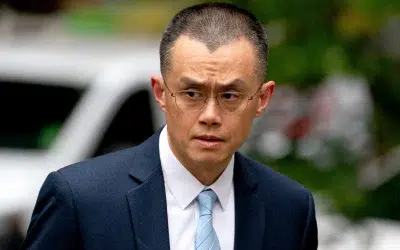
The pardon of Changpeng Zhao (“CZ”), the convicted founder of the world’s largest cryptocurrency exchange, Binance, by President Trump, is widely viewed by critics as a clear act of “pay-to-play” corruption and a severe abuse of executive clemency.
Search Results
Silence as Strategy: U.S. Denial of Genocide in Gaza (Foreign Policy Brief #220)
In September 2025, a United Nations Commission of Inquiry concluded what many on the ground have known for months: Israel is committing genocide in Gaza. The commission cited deliberate acts—mass civilian killings, destruction of vital infrastructure, deprivation of basic needs, and explicit incitement from Israeli officials—that collectively meet the threshold under the 1948 Genocide Convention.
Trump’s Staff Reductions Leave FEMA Less Prepared: When the Helpers Don’t Show Up (Social Justice Policy Brief #180)
We’ve all seen the images on our screens — homes splintered, power gone, dazed residents wandering through shattered neighborhoods. They’re desperate for water, cell service, and food. Some are still searching for missing loved ones.
Europeans no longer feel safe because of Russia; A First Person Account (Foreign Policy Brief #218)
During my trip across Europe a week ago, I spoke with people from different countries — ordinary men and women I met along the way. I asked each of them whether they feel safe in their country today and whether they expect a war.
Saudi Arabia Enters the Video Game Industry (Foreign Policy Brief #219)
Saudi’s investments in sports, in particular, has been labeled “sportswashing” and a way for the Saudi Arabian government to increase its publicity and popularity in the world while also maintaining a regime that violates human rights. Their move into new sectors and industries has also been a part of their Saudi Vision 2030 program which aims to diversify their entire economy away from traditional fossil fuels (which has propped their economies for decades) and transition into a post-oil world. Is the move to purchase EA a new moment of economic diversification, or is it more in the way of “sportswashing”? The answer isn’t totally clear.
Trump’s Termination of U.S. Exchange Programs Weakens America at Home and Abroad
Diplomatic “soft power” is related to a country’s ability to influence other nations through its core values and culture. American democratic values including a free press, the legal justice system, and foreign engagement programs are potent sources of American soft power. When public trust in these American democratic norms and institutions wanes, America stands to lose its invaluable soft power. Among President Trump’s many actions that diminish U.S. soft power—from his persistent, pernicious attacks on the American media, legal system, electoral process, universities, and allies, to his constant maligning of past U.S. presidents and his racist mocking of current U.S. politicians—it’s Trump’s attempt to terminate the nation’s long-running international exchange and aid programs that could have the most deleterious effects, making America weaker at home and abroad.
Fortress Borders: the Rise of Anti-Immigrant Nationalism (Immigration Policy Brief #192)
International migration continues to grow, with the UN’s International Organization for Migration (IOM) estimating there were 281 million international migrants globally in 2020. While much migration is South-South (between developing nations), displacement from conflict, climate change, and economic instability drives significant South-North movement. This visible migration has become a foundational issue for populist movements, particularly in Europe and North America, which frame migrants as a threat to cultural identity and national security. In response, governments are increasingly adopting deterrence-focused policies, raising significant human rights concerns.
Coal Revival in the Age of Climate Emergency: Inside Trump’s New Energy Gamble (Environmental Policy Brief #183)
In a move that has startled climate scientists and energy economists alike, the Trump administration recently unveiled a sweeping new initiative aimed at reviving America’s coalindustry—a sector long regarded as both an economic relic and a climate catastrophe. The plan, a mix of subsidies, deregulation, and export promotion, represents a dramatic reversal of the Biden-era shift toward renewable energy and the most significant policy intervention in favor of coal since the early 2000s.
The Uncertain Future of the Department of Education and Title IX (Education Policy Brief #209)
Leading up to the 2024 election, Donald Trump promised to dismantle the Department of Education, a sentiment that was supported in an executive order from the White House following Trump’s inauguration and also outlined in Project 2025. In a press release for the DOE published in March, U.S. Secretary of Education, Linda McMahon, reiterated this plan, stating that her “vision is aligned with the President’s: to send education back to the states and empower all parents to choose an excellent education for their children.” In recent weeks, McMahon reaffirmed that the Trump administration is committed to fulfilling this promise by 2029.
Political Violence
At the center of all affective communities is an element of trust. There needs to be trust that you can say and write and do things without fear of a violent reprisal. Of course criticism and non-violent blowback are fair game. But murder or even messages instilling hatred and violence towards one’s opponent cannot be tolerated. These acts are the destroyers of trust as well as lives.