
During the past two weeks, the congressional committees conducting Russia investigations were active in interviewing witnesses and requesting documents and information, most notably from other arms of the government. One of the most intriguing news items about the Russia investigations, however, relates to the controversial…
Search Results
Kushner Testimony, Private Interviews, Sanctions Past and Present, Russian Retaliation, & Trump Legal Team
The past week in the Russia investigations brought highly anticipated testimony from Trump’s son-in-law and advisor Jared Kushner, mainly focused on questions of Trump campaign collusion, which were augmented by the previous week’s revelations of Kushner’s presence at a meeting held by Donald Trump Jr and attended…
Sessions Testimony, Obstruction of Justice, DoJ Drama, Potential Subjects of Mueller’s Probe
This week’s Russia investigation news began with Attorney General Jeff Sessions testifying in an open Senate Intelligence Committee hearing. Following Sessions’ testimony were the explosive reports about President Trump’s consideration of dismissing special counsel Robert Mueller, and reports of the subjects…
Comey Testimony, Congressional Announcements, Expansion of Special Prosecutor’s Scope
Not surprisingly, it has been a busy week for the highest-profile investigations into Russian interference in the election and ties to the Trump campaign. The biggest story this week was the closely watched testimony given by former FBI director James Comey at a Senate Intelligence Committee hearing. Other developments…

Europe Is Getting Hotter (Foreign Policy Brief #233)
Florentines say July has been unusually hot this year. Outside, temperatures climb to 105 degrees Fahrenheit. It is not much cooler indoors. Tommaso, the son of the woman who owns the apartment where we are staying, says summers seem to be getting hotter every year. The heat is impossible to ignore. Inside the Uffizi Gallery, the air feels heavy and the temperature is high. Because of the oppressive heat, the museum is closing for two days to visitors without advance reservations. Standing among some of the world’s greatest masterpieces, I find myself wondering how the collection is protected under such conditions. Can extreme heat really have no effect on paintings that have survived for centuries?

Efforts At Governance Across AI, Digital Privacy, and Cryptocurrency (Economic Policy Brief #196)
The unchecked expansion of multinational technology conglomerates across artificial intelligence, digital privacy, and cryptocurrency represents a critical threat to public sovereignty, labor rights, and ecological stability. These interconnected domains function as a new frontier of extractive capitalism, demanding urgent international democratic governance to rein in tech monopolies that treat personal data as raw material and planetary resources as expendable. This systemic crisis stems from a deliberate business model designed to outpace legislative oversight, concentrating unprecedented wealth and structural power into the hands of a few unaccountable corporate executives and speculative investors.

Palantir’s Intrusive Technologies Infringe Upon Our Liberties (Technology Policy Brief #170)
Palantir Technologies Inc. is an American software company that builds large-scale data integration and analytics platforms for government agencies, military branches, and commercial businesses. Palantir’s technology lies at the heart of the government systems that enable mass surveillance and militarization at home and abroad, and is now moving into healthcare. The profits go to founder Peter Thiel and CEO Alex Karp, tech oligarchs who spend millions to promote a political agenda that favors free-market policies and increasingly supports Republican candidates and Trump-aligned PACs. Protests and public acrimony are growing.
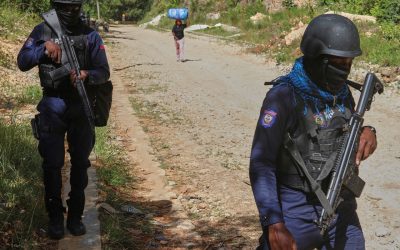
A Private Mercenary Force Takes Over In Haiti (Foreign Policy Brief #234)
A private American mercenary company is now running a large share of Haiti’s fight against its own gangs, operating drone strikes, raids, and intelligence gathering under a contract the government has never made public.

Week That Was: Global News in Review (Foreign Policy Brief #233)
The US war on Iran has now passed the six-month mark, negotiations have been abandoned and last week saw renewed fighting with Tehran attacking American bases across the Middle East. This came after a US strike was alleged to have hit a home hosting a wedding event, killing five people and wounding dozens. Washington also launched a new aggressive economic pressure campaign and blockade to coerce Iran into submission. Tehran on its part is now threatening military escalation and a wider war. The head of Iran’s National Security Council said recently that Tehran is planning to announce a maritime “exclusion zone” outside the Strait of Hormuz where it intends to stop vessels attempting to transit the waterway without Iranian permission. The conflict currently appears to have no likely end in sight.
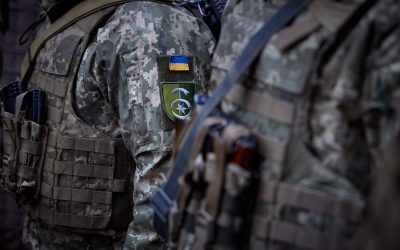
Stalemate in the Russia-Ukraine War (Foreign Policy Brief Brief #231)
The ongoing war in Ukraine seems to have slipped into the back of collective consciousness. If the war enters the news cycle it’s usually new footage of the sides trading missile and drone attacks on energy infrastructure, weapon factories, or apartment buildings.