

JOBS POLICIES, ANALYSIS, AND RESOURCES
Latest Jobs Posts
A Look at the Trump Administration’s Response to the Coronavirus
Brief #7—Transition of Power
By Sean Gray
With the first Covid-19 vaccines being administered in the US, a light is beginning to emerge at the end of the pandemic’s tunnel.
School reopening and parents’ perspectives
Brief #51—Education
By Emily Carty
As of December 12, eleven states plus D.C. and Puerto Rico have ordered schools to partially or fully close. Four state governments (Arkansas, Iowa, Florida, and Texas) have ordered schools open for the families that choose to attend.
US Government Agencies Again Fall Victim to State Sponsored Cyber Attacks
Brief #29—Technology
By Charles A Rubin
On December 13, 2020 news broke that computer networks at several US government agencies including the Departments of Treasury and Commerce had been compromised by a state actor.
Trump Administration Impedes Search for Migrant Children’s Parents ACLU Tells U.S. RESIST NEWS
Brief #112—Immigration
By Linda F. Hersey
The Trump administration withheld key contact information for locating the deported parents of 666 immigrant children detained in the U.S., according to an attorney with the ACLU, which is representing the separated families in a class action lawsuit against U.S. Immigration and Customs Enforcement (ICE).
New Defense Authorization Act Calls for the Taking Down of Confederate Monuments at Military Bases
Brief #1—Social Justice
By Erika Shannon
With 2020 finally coming to a close, many of us are beginning to look ahead to 2021. It is a new year with a new president and new possibilities for our country
Facebook Taken to Court Over Antitrust Issues
Brief #28—Technology
By Zach Huffman
Parallel lawsuits from The Federal Trade Commission and multiple state Attorneys General declared Facebook an illegal monopoly and both suits are seeking to break up the social media giant.
President Trump’s Assertion That He Can Pardon Himself Likely Wrong
Brief #145—Civil Rights
By Rod Maggay
Under Article II, Section 2 of the U.S. Constitution, the President of the United States has “the Power to grant Reprieves and Pardons for offenses against the United States, except in Cases of Impeachment.”
Trump’s Final Attempts at a Border Wall
Brief #111—Immigration
By Kathryn Baron
President Trump has barely kept his campaign promise of building a wall along the US Southern Border but has successfully constructed 415 miles of border wall.
Victory for Dreamers Amidst Presidential Turnover
Brief #110—Immigration
By Kathryn Baron
Following Brief #108, a Federal Judge recently ordered the Trump Administration to fully restore DACA (Deferred Action for Childhood Arrivals).

Twitter and the Ayatollah
Amy Swain
August 10, 2020
Summary
Censorship of politicians has become a hot topic as of late, specifically concerning Twitter vs Trump. The president’s cherished platform began censoring him after his tweets concerning Black Lives Matter protests seemed to incite violence. Now, however, Twitter is facing backlash for its seemingly selective policies on political statements.
Several tweets from Iran Ayatollah Ali Khamenei have been brought forward of evidence of this. A post of his from May 21 read “The only remedy until the removal of the Zionist regime is firm, armed resistance.” The tweet, among others, echoed some of Trump’s. This encouraged Israeli Strategic Affairs Minister Orit Farkash-Hacohen to send a letter to Twitter CEO Jack Dorsey requesting Khamenei be banned from the platform. Twitter offered a response letter explaining why they would not be complying with the request, including their commitment to serving the public conversation.
Their denial prompted discussion of the company’s policies at a recent hearing of the Knesset, Israel’s parliament in Jerusalem on July 29. Human rights attorney Arsen Ostrovsky asked Twitter’s Ylwa Pettersson: “You have recently started flagging the tweets of President Trump. Why have you not flagged the tweets of Iran’s Ayatollah Khameini, who has literally called for the genocide of Israel and the Jewish people?” Pettersson responded that the two situations are not the same, citing portions of the letter previously sent on this topic and stating “Presently, our policies with regards to world leaders state that direct interactions with fellow public figures, comments on current affairs, or strident statements of foreign policy on economic or military issues are generally not in violation of the Twitter rules.”
Analysis
Iran’s Khamemei has posted many questionable statements on his social media platform, including those denying the holocaust as well as likening Israel to Covid-19 as a virus and cancerous growth, utilizing the hashtag #covid1948 to reference the year the Jewish state was established. U.S. Secretary of State Mike Pompeo has referred to the Ayatollah’s sentiment as “echoing Hitler’s call for genocide.” Ted Cruz has called for a criminal investigation for Twitter’s allowance of Iranian officials to use the platform at all.
Twitter maintains that they censor tweets containing “targeted harassment,” and that these statements do not fall under that umbrella. The Ayatollah did post, during his prolific month of scandalous tweets, that his call for the end of Zionism is not a call for the elimination of the Jewish people, affirming that Jewish people have lived peacefully in Iran for many years. However, the style of veiled aggression in choice words resonates with many, particularly in Israel, the same way anti-BLM sentiment has with Americans in favor of social justice.
Twitter has pointed to its policy on world leaders as a blanket response to inquiries on the subject, “Blocking a world leader from Twitter or removing their controversial Tweets would hide important information people should be able to see and debate.” It is not hard to see the merit in that argument – if a world leader would like the public to be aware of a hateful agenda, should that public be denied the ability to see that side of said leader? The issue lies in the creation of several lines concerning the role and responsibility of social media companies, particularly U.S. based companies, within politics, foreign and domestic. Only time will tell whether those lines will be clearly drawn, and for whose benefit.
Resources
- For Twitter’s official rules and policies:
- https://help.twitter.com/en/rules-and-policies
- Ayatollah Khamenei’s twitter feed:
- https://twitter.com/khamenei_ir?ref_src=twsrc%5Egoogle%7Ctwcamp%5Eserp%7Ctwgr%5Eauthor
- A breakdown of the Anti-Zionism, Anti-Semitism, and Anti-Israel history:
- https://www.adl.org/resources/tools-and-strategies/what-is-anti-israel-anti-semitic-anti-zionist
- Petition to ban Iran officials from Twitter:
- https://www.change.org/p/twitter-inc-ban-iran-authorities-twitter-pages-and-social-media

Bill S.4112
The Coronavirus Child Care and Education Relief Act (CCCERA) is a $430 billion bill proposed on June 30 by Senators Patty Murray (D-WA) and Chuck Schumer (D-NY) in response to the COVID-19 impact on schools and their communities. The bill, a product of the Senate Committee on Health, Education, Labor, and Pensions (HELP), clarifies and adds to the CARES Act which was enacted in late March. Though the bill was introduced just over a month ago it remains a proposal and lawmakers have yet to finalize a package for schools, despite the nearing start date.
The bill sets aside $345 billion for education in general, with a little over half going to K-12 schools. Specifically, the bill aims to: direct money to education agencies with more students from low-income families; set aside money for migrant and homeless children and English language learners; increase “liquidity and cash flow” to Historically Black Colleges and Universities (HBCU) so they can tap into their assets. CCCERA goes further to protect educators, students, and school communities from state budget cuts by requiring that states receiving federal funds maintain or increase state education spending for three years. The bill contains several other points, but generally aims to enact a robust and equitable funding plan meant to tackle the gap in education and technology access for our most vulnerable students and families.
In addition to a greater sum of aid and more thoughtful allocation, the bill condemns Education Secretary DeVos’ implementation efforts to limit aid eligibility for Dreamers and undocumented students and repeals the Secretary’s discretionary spending fund, a percentage of aid to be spent at her discretion under laws written into the CARES Act. In May DeVos distributed over $350 million from the fund to small, private, primarily religious universities whose typically smaller and wealthier student bodies would receive more money per student than universities with more low-income students. She also distributed $180 million in grants for states, with the “absolute priority 1” being the creation of “microgrants” which could pay for technology and services to support remote learning — but could also be used for private school tuition. Both of these inequitable allocations are remedied in CCCERA which solidifies how money can be spent across the public and private sector and provides an updated formula that places more weight on the headcount of low-income students in a given school.
Policy Analysis:
As the nation is gearing up for the school year lawmakers have yet to strike a deal on a stimulus package that will not only help the economy, which seems to be their main priority, but also address the inequities in education that have been exasperated by the current public health crisis. Not all families will be able to support remote learning at home or have access to or money for technology required for effective remote learning, and that is just the tip of the iceberg. Nevertheless, Republicans and Democrats have been going back and forth for months on an all-inclusive proposal while our youth and school communities have been waiting for answers.
CCCERA policies, supported by advocacy groups, educational agencies, professional organizations, and families, provide much needed funding and spending clarifications which address the multiple levels of inequities in our education system. This bill shows that legislators are hearing what the people have been demanding and continue to demand — an educational system that is built to help everyone succeed. The bill also recognizes the people’s calls for transparency and accountability in government, as it seeks to remedy DeVos’ violation of “Congressional intent” when implementing the CARES Act. Instead of “equitable services” for private schools, she gave large grants to private institutions and required that a greater percentage of federal aid goes to private schools than what is normal under the law by counting all students instead of just low-income students — this was not what was intended by the law as equitable and is an abuse of power. Only by bringing accountability and transparency to the forefront and closing these loopholes can lawmakers prevent further misuse of funds and ensure that students’ rights to quality and accessible education are not trampled on.
S.4112 goes above and beyond the stimulus proposals currently being debated. However its passage is by no means assured. For S.4112 to become a law lawmakers from both parties must treat education, especially public education, as a nonpartisan priority. It has been referred to the Senate Committee on Health, Education, Labor and Pensions for additional review, but even if it is forwarded to the Republican Majority Senate for a vote, chances of it moving on to the House are slim. Nor is it likely to be signed by the President — who before COVID was planning on cutting the education budget by about 8% for the next fiscal year. Since the stimulus package as an all-in-one deal is taking the stage, schools and students must patiently wait in hopes that democrats will negotiate for more and equitable funding for schools.
Resistance Resources:
NASSP — The National Association of Secondary School Principals has an action page with education justice issues and a convenient fill-in template that sends emails to your local elected representatives. It also has tools that help you register to vote, find relevant elected officials, and prepare you to vote on relevant educational policies.
NEA EdJustice — The National Education Association’s EdJustice site provides information and resources for addressing injustices in education, including relevant petitions, pledges, and events. Join their “League” to connect with other advocates and organize in your community.
Educators for Excellence — Educators for Excellence connects Educators and school communities with tools to advocate for progressive policies that will help under-resourced schools and students have better access to and quality of education. They have templates, contact info, and links to help you reach out to the appropriate governing bodies and demand justice.
Healthy Schools — Healthy Schools is a 501(c)3 that partners with the CDC and EPA to provide expert advice and action plans to school leaders and governments in order to create healthy and safe schools. They’ve created an extensive plan and action tool-kit to address the pandemic, check out their resources for organizing and assisting in its implementation in your local schools.
Sources:
- Bill Text
- Bill Fact Sheet
- Future-Ed (Georgetown)
- CAP: Why K-12 Education Needs More Federal Stimulus Funding
- Providing Equitable Services in Private Schools Under CARES (FAQ – DoEd)
- UNCF
- NAAFSA
- NEA
- Education Activism Picking Up
- Alliance for Excellent Ed – CCCERA
- Trump Threat to Withhold School Money
- Learnings from Local Ed Leaders
- Ed Activism During Covid
- DeVos Discretionary Spending

Michigan Part 2
Congressional Campaign Updates is a new feature of U.S. RESIST NEWS. Written by reporter William Bourque. The updates will help our readers follow key races in the House and Senate that are key to the ability of democrats to gain control of both houses of Congress.
Michigan Part 2
August 7, 2020
We continue our review of Michigan’s congressional races by moving onto District 6, where once again a republican is the incumbent. The district’s most notable area is the city of Kalamazoo, but also includes rural areas in the southwest corner of the state. Incumbent Fred Upton has held the seat for over 30 years, initially elected in the autumn of 1986. His views, much like the republican party, have increasingly shifted right, and he has voted with President Trump on most issues this term. His opponent is yet to be decided, but Jon Hoadley, a former member of the state House of Representatives, seems to be the more likely nominee. A poll from Victoria Research on May 11 shows Hoadley with a 1 point lead, proving that if he can win the nomination that Upton will have a fight to the bitter end on his hands. Expect this election to come down to the wire and don’t be surprised if the democrats pull an upset on Upton Michigan’s 7th district is another tight district that is currently held by a Republican that has a chance to be a close race in November. Incumbent Tim Walberg was initially elected to the seat in 2006 but was defeated after just one term, in 2008. However, in 2010, Walberg ran to take back the seat and has controlled it ever since. Walberg’s margain of victory has slowly waned and democrat Gretchen Driskell came within 7 points of him in 2018, and she hopes to close that gap even further in the coming months. Driskell is the former mayor of Saline, MI, as well as a representative in the Michigan House of Rep for district 52. On her campaign website, Driskell totes her success as mayor, specifically having a balanced budget for every year she was in office, which may forecast success if elected to Congress. We believe that Driskell may have what it takes to win, and another seat could flip to the left.
Michigan’s 8th district is currently held by democrat Elissa Slotkin, and we expect that she will win re-election, albeit in a very close race. The district covers the state capital of Lansing, as well as the notable city of East Lansing, home to the Michigan State Spartans. Slotkin was first elected in 2018, where she unseated incumbent republican Mike Bishop by a margin of about 13,000 votes. Slotkin has been a loyal democrat in Congress, importantly voting for both articles of impeachment. Her opponent is yet to be decided, with a republican primary to be run on August 4th. The frontrunner in campaign funding is Alan Hoover, a republican, who is presumed to be leading the polls. Time will tell, but we forecast a clear path to a second term for Slotkin.
In the 9th district we see another democratic incumbent, one term representative Andy Levin. Andy’s father and uncle are both prominent politicians, with his father having held the seat he now holds since 1983. Levin comfortably won his initial election in 2018, and it seems that he shouldn’t have much trouble getting re-elected. His opponent is republican Charles Langworthy, who hasn’t held any prior elected office. Langworthy is a supporter of President Trump, which won’t make him popular in this democratic portion of Michigan. Levin winning re-election should be a breeze, and we expect to see him back in the House for another term.

Calls to Defund LAPD Increase Amid Growing Gang Database Scandal
August 7, 2020
Summary:
On July 10, three Los Angeles Police Department (LAPD) officers were charged with felonies when an internal investigation revealed they knowingly documented dozens of innocent people as gang affiliates in 2018. The complaint shows how Michael Coblentz, Nicolas Martinez and Braxton Shaw falsified Field Identification (FI) Cards used to conduct interviews during stops. An untold number of these were then entered into the state’s gang database, CalGang. The officers could have been motivated by a department policy that hinges performance reviews on interaction with gang affiliates.
In LA, participation in a gang is a punishable offense. Furthermore, if a person commits a crime, he can be subjected to a harsher sentence if he is documented as a gang member. Depending on the judge, a gang label can mean the difference between probation or jail. The LAPD is the state’s largest police department and the biggest contributor to CalGang, responsible for about a quarter of all entries. But on July 14, the California attorney general made it impossible for the LAPD to access the database except to remove individuals from it.
With the officers’ credibility challenged, the District Attorney’s office announced that it contacted over 750 defendants in criminal cases that the officers participated in since 2002. Convictions in these cases, from drug offenses to homicide, could be overturned if the officers provided crucial testimony or evidence. In addition, the LAPD announced it was investigating over 20 other officers for suspected falsification of FI cards, with potential victims numbering in the thousands. Lawsuits against the department have already been filed, with many more expected to come.
Analysis:
It is impossible to overstate the racial implications of this scandal. Because Black people are stopped by police at a higher rate than other races, we know that the majority of those mislabeled as gang associates on FI cards were likely Black. Unfortunately, once charged with a crime, Black people also suffer disproportionately in every phase of the criminal justice system. They are statistically less likely to be able to afford private counsel and more likely to accept harmful plea deals.
Mislabeling individuals impacts the wider community as well. CalGang describes its database as a source of “accurate gang-related intelligence.” The more people added to it, the more funding and resources the LAPD can demand for its Gang Division. When numbers are artificially inflated, it paints an inaccurate picture of gang activity in the city and exposes communities to more violent and heavy-handed police tactics.
The LAPD was already in hot water, with residents and activists calling for defunding the department. Now that call is even louder. Black Lives Matter Los Angeles is energized. Its People’s Budget LA coalition is proposing significant change to the city’s police budget and demanding city leaders focus on “care not cops”. Additionally, a Change.org petition wants LAPD funding to go toward improving infrastructure, education and social services.
Resistance Resources:
People’s Budget LA, a coalition led by Black Lives Matter-Los Angeles
Black Lives Matter Los Angeles, a local chapter of the global Black Lives Matter movement
Change.org petition to defund the LAPD
This brief was compiled by Laura Plummer. If you have comments or want to add your organization to this brief, please contact me@lauraplummer.me

Ban On Further Protest Activity By Arrested Protestors Likely Unconstitutional
Policy Summary: For more than sixty consecutive days, protesters in Portland, Oregon have marched and protested throughout the city to protest against racism and police brutality. The protests started in the aftermath of the killings of George Floyd at the hands of Minneapolis police officers in May 2020. At times in Portland, protesters have clashed violently with law enforcement officers with officers sustaining a number of injuries and protesters suffering physical harm as well. A number of protesters have been arrested by federal officials (due to concerns about violence to buildings on federal property) and were detained in federal holding facilities. Many of the protesters were charged with the offense of “failing to obey a lawful order” which is classified as a class “c” misdemeanor.
The website ProPublica has reported that a number of protesters detained were only released on the condition that they “may not attend any other protests, rallies, assemblies or public gathering in the State of Oregon.” A separate release order document stated, “Do not participate in any protests, demonstrations, rallies, assemblies while this case is pending.” Protestors released on July 23 had these bans on protesting handwritten into their release documents. A protester released on July 24th did not initially have the ban on protesting in his release order. But his order was modified to include the ban. Of the fifteen protesters released on July 27 three of the protesters had the protest ban added to their release orders. Had the protesters refused to agree to the protest ban, they likely would not have been released from custody. The majority of the orders were signed by U.S. Magistrate Judges John V. Acosta and Jolie A. Russo. LEARN MORE
Policy Analysis: The disturbing news coming out of Portland is a clear violation of an individuals’ constitutional right. The First Amendment provides individuals with the right to free assembly and so it is astonishing that the U.S. Magistrates who signed the release orders imposed the bans on protesting in the first place.
Legal scholars have begun to weigh in and there is near unanimous agreement that these bans are likely unconstitutional because of how overbroad the bans are written. The protesters were arrested for their activities related to the racism and police brutality protests but the wording of the bans can conceivably be applied to any other public gathering that the protester might choose to attend. What if a protester recently released wanted to attend an environmental protest or a political rally? Under the terms of the protest ban as written the protester would be in violation of the court order for attending one of those events.
Additionally, imposing the protest ban on the individuals as a condition of their release forces the individual to give up a constitutional right in order to be released which is not comparable to the crimes they have been charged with. The U.S. Attorney’s Office in Oregon has even weighed in and stated that they did not ask for the “no protest” restriction and that the court on its own added the condition. Many of these protesters have been charged with only a misdemeanor. These were not severe or life threatening crimes and so individuals should not be forced to give up their right to protest and advocate for closely held beliefs and issues. By silencing an individual in this way it indirectly implicates an individual’s First Amendment Free Speech rights because the government is telling a person what rallies they can attend what they can and cannot say at public gatherings. These conditions of release are likely unconstitutional and they should be modified to remove the “protest bans” as soon as the court can hear the cases. LEARN MORE
Engagement Resources:
- Defending Rights And Dissent – Defend the right to protest webpage from non – profit group.
- American Civil Liberties Union (ACLU) – webpage on repression of peaceful protest issues.
This brief was compiled by Rod Maggay. If you have comments or want to add the name of your organization to this brief, please contact Rod@USResistnews.org.
Free Trade: Recipe for Overcoming Covid-19
August 6,2020
Policy Summary
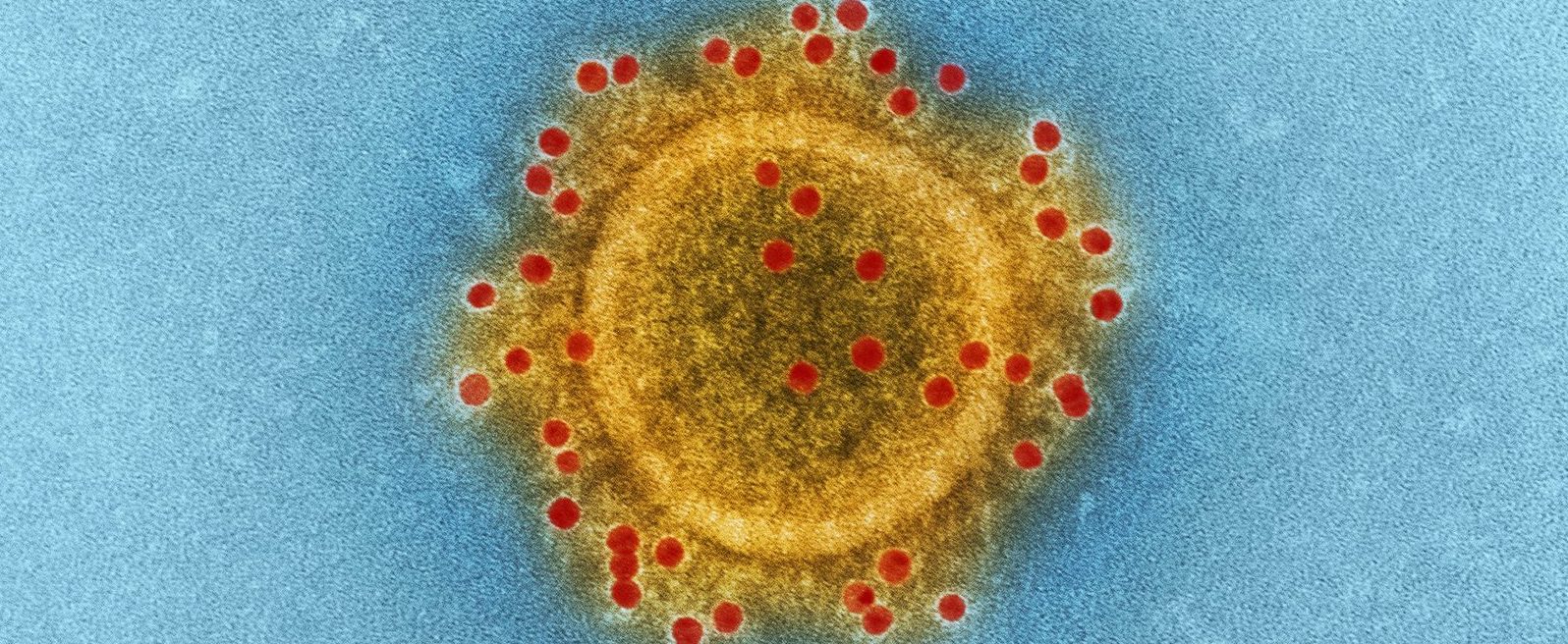
While American-first has been a theme for the Trump administration’s foreign policy, its unintended consequences have certainly restricted the collective response necessary to overcome Covid-19. President Trump continues to use populist rhetoric to convince Americans that the only way to ensure survival in the global arena is to pivot away from the international community, while shielding domestic business and industry from foreign competition.
For the past two years, under Section 301 of the Trade Act of 1974, the Trump Administration has continued to impose higher degrees of tariffs on a wide range of products from abroad. Imports from China, India, Canada, Mexico, and the European Union have been some of the main targets that have ended up in the crosshairs of U.S. trade policy. Products ranging from steel and aluminum to textiles and from electrical components to chemicals are among the valuable global inputs to production needed by U.S. firms to produce globally competitive products. Billions of dollars of these products have fallen under the blanket of tariffs imposed by the Trump Administration ranging from 15 – 25%, artificially raising the cost of production for many small businesses and manufacturers. Additionally, over $360 billion of Chinese imports have been targeted as well, encompassing more than 60% of U.S. consumer demand from China.
Unfortunately, many of these products incorporated within the president’s protectionist agenda are major components of the healthcare industry, many of which Americans have come to rely on for health, safety, and well-being. Nearly $5 billion of medical necessities from China alone were subjected to U.S. tariffs, accounting for almost 26% of all medical supplies imported by Americans.
To fight against the adversities of this global pandemic, medical professionals have acknowledged the importance of essential consumables such as personal protective equipment, masks, gloves, goggles, hand sanitizer, and medical-wear just to name a few. Additionally, for hospitals and medical facilities to properly treat patients, they should be equipped with necessary durable supplies ranging from respirators to CT systems and patient monitors. In the past, duties on these devices were relatively low, enabling hospitals and medical establishments to stock up on critical care inventory. Prior to the Covid outbreak, Americans were importing over $20 billion of essential medical supplies, which are now subject to higher prices due to heavy trade regulation. Currently, products like pulse oximeters, hand sanitizers, ultrasound and x-ray systems from China are subject to 25% tariffs, while personal protective equipment, goggles, and gloves are levied at 15%.
Back in 2019, medical professionals testified to Congress about the risk tariffs would pose to the healthcare sector by limiting necessary supplies in the likelihood of abnormally high demand resulting from a medical anomaly. Unfortunately, these warnings were disregarded.
Analysis:
The Trump Administration’s trade policy has been predicated on the idea of using one hand to solve a problem that the other hand creates. The president’s protectionist policies have shielded some businesses from foreign competition but has increased the costs of operating for others. Because of the difficulty of protecting one industry without causing harm to another, government ends up subsidizing those who have been adversely affected from the higher costs precipitated by the tariffs. Subsequently this begins the downward spiral of legislation that forces excess challenges on already-burdened taxpayers.
Fighting the effects of Covid-19 will take a mutual unified effort, which underlines the benefits of globalization and free trade. One of the very best ways to protect Americans from the affliction of this pandemic is to allow consumers the advantage of acquiring medical necessities from a global market, rather than limiting supplies from abroad in order to protect concentrated special interests. Because such a wide range of products have fallen under layers of costly trade regulation, it becomes almost impossible for medical manufacturers and suppliers to operate efficiently. While protecting certain participants in the upstream sectors of the market, others in the downstream sectors, who have in the past, depended heavily on selective imports, find themselves absorbing the increased costs of operating. Higher input costs mean fewer output returns. Because several domestic manufacturers are the ones bearing the burden of higher costs associated with tariffs, they have been less incentivized to prioritize the development of critical-care supplies, which exacerbates the shortages associated with global hoarding from other countries who the U.S. has come to rely on.
The driving success behind globalization has been as a result of countries being able to put aside political, social, and religious differences in order to come together to solve a common problem, ultimately promoting both peace and prosperity. Global actors who share collective interests rarely engage in conflict. However, when individual nations begin to deviate from unification, there exists more adversity. The beauty and efficiency of globalization and free trade is evident when we see how different nations have been able to take advantage of specialization and come together to produce globally competitive products like cars, computers, cell-phones, and other devices that the world has become the benefactors of. Supply chains have been the engine of enriched productivity, effectively being the paradigm that has given the international community the collective resources to ensure a higher standard of living.
It is no secret that because of the benefits of globalization and free trade, the quality of life has improved globally and that has shielded not only Americans, but others around the world, from disease and sickness. True, there are large swaths of the global population who unfortunately still live in abject poverty, but globalization and free trade offer the best possibility of alleviating the persistency of deprivation rather than the ideological mindset of the president’s nationalist-isolationist strategy.
Even before the pandemic, regulating demand of medical essentials from abroad through tariffs and quotas has put pressure on healthcare, especially since the baby-boomers are aging and requiring more medical services. It makes no sense to close the country off to the benefits of a global market, while almost ensuring that both patients and medical manufacturers would be restricted to a minimal supply of resources, all in the name of protecting some of the most powerful interests.
If the conditions dictate that a definitive second round of Covid could emerge, policies that force the domestic market into shortages and rationing by artificially limiting medical supplies from abroad should be considered both shortsighted and obtuse.
Resistance Resources
- Peterson Institute for International Economics – [https://www.piie.com/] – An independent research organization dedicated to strengthening cooperation and prosperity globally through practical solutions.
- Cato Institute – [https://www.cato.org/research/trade-policy] – is a public policy research organization dedicated to the principles of freedom, free-trade, and peace. Through publishing policy proposals, blogs, web features, op-eds, and TV appearances, Cato has worked vigorously to present citizens with incisive and understandable analysis.
- FEE – Foundation for Economic Education – [fee.org] – An educational foundation that inspires leaders with sound economic and political solutions in both domestic and international policy issues.

The Corruption of Elaine Chao
The Corruption Blog digs into the details of the all-encompassing corruption of the Trump administration.
Post # 19 The Corruption of Elaine Chao
By Sean Gray
August 4, , 2020
United States Transportation Secretary, Elaine Chao is responsible for much of the commerce and movement that takes place over federal jurisdiction. Her department oversees 55,000 employees spread out between 11 agencies focused on the nation’s comings and goings by land, air and sea. She is also a long entrenched bureaucrat, having served in each Republican Administration dating back to Ronald Regan. Chao has been married to Kentucky Senator, Mitch McConnell since 1993.
Addressing the nation’s crumbling infrastructure was a persistent talking point of Donald Trump’s 2016 campaign. A 2018 study using the Federal Highway Administration’s own data showed near 10% of the nation’s bridges in need of repair. So far, Trump has failed on his promise of creating a ‘’$550 billion fund for infrastructure and development.’’ Americans cross said faulty bridges an average of 174 million times a day. The closures, and subsequent delays they cause cost the trucking industry alone, $60 billion in lost fuel in productivity. Chao cannot be held responsible for her boss’ failure to deliver on a promise. But with the nation’s infrastructure still badly in need of repair, Chao has spent much of her time in office acting primarily on behalf of the interest of herself, her husband and family in mind.
The Department of Transportation has ordinarily provided access to its Secretary’s work schedule. Chao was not so forthcoming upon taking office. A Freedom of Information Act request secured in 2018 revealed that in her first year on the job, Chao had almost seven full weeks of her schedule redacted as ‘’private’’. The hours in question were limited to weekdays between 9AM and 6PM. Several former department officials quoted in a Politico article described the circumstances as atypical. Administration officials described the redactions as security-related, but they warrant further scrutiny. For example, Donald Trump revealed his $1.5 trillion infrastructure plan in March of 2018. It was largely illusory, expecting to shift cost burdens to individual states and represent a windfall for private investors. In the work-week preceding the announcement, which had major implications for the DOT, Chao had 11 hours on her calendar set aside for private meetings. Chao’s scheduling opacity begs the question whether the American taxpayer is regularly getting a full day’s work from her. And worse than that, what she is doing in work hours hidden from the public. And for what reason has she attempted to obscure such a significant portion of her professional activity.
As mentioned above, Chao is married to Senate Majority Leader McConnell. Her father is James Chao, founder of Foremost Group. Foremost is a nominally American shipping company, which does most of its business in China and sails under the flags of Liberia and Hong Kong. Its presence in the US is minimal, with only a small, unlisted headquarters in Manhattan. As a result, it falls under the regulatory purview of the US Maritime Administration, regulated by the DOT. This triad has long been involved in reciprocal self-dealing on the taxpayer’s dime.
Federal officials are not permitted to use their office to promote one business over another, particularly a family business. While Elaine Chao holds no formal stake in Foremost Group, she and her husband were the recipients of a gift valued between $5-$25 million from James Chao, according to their federal disclosures. The ethics ban on endorsing products or businesses did not deter Elaine from appearing in Chinese language interviews with her father promoting him and his shipping company. In one such interview, the DOT flag appeared behind the two as they spoke.
By all accounts, the American shipping industry is in serious trouble. China has largely usurped the US in this realm. Chao’s family business has benefited greatly from this trend and is bolstered by deep ties to political and economic elites in China. As the head Secretary of Transportation, closing the gap between the two nations should be a priority of Chao’s. Instead, and at the same time she was appearing at events promoting Foremost, Chao attempted to further imperil US maritime shipping. Her department’s budget has repeatedly tried to cut grants for small domestic shipyards and loan guarantees for US shipbuilders. The DOT has also attempted to slash a program which would keep 60 American-flagged ships in service. In contrast, her family has paid for scholarships and a ship simulator in China to train seamen.
Mitch McConnell has increased his net-worth ten-fold in his 36 years in the Senate. The Chao family played no small part in enriching him, and keeping him in power. McConnell has seen over $1 million dollars in campaign contributions from the Chao family. He faces reelection in the upcoming 2020 election. His dutiful wife proved willing to assist in his bid. Chao’s aide, Todd Inman, was asked to help Kentucky secure grants for federal projects. No other state enjoys such an ease of access. Beginning in 2017 Chao and Inman began meeting with a delegation from Owensboro, KY to discuss two highway improvement projects McConnell saw as key to his reelection effort. The projects had twice been rejected for grant applications. Through the efforts of Chao and Inman, Kentucky was approved for $78 million in federal money to upgrade critical infrastructure. In the interest of full disclosure, Kentucky ranks 26th in population and 25th in DOT money. Nevertheless, the timing hardly seems coincidental, particularly considering McConnell’s effusive pride in allocating federal resources to his home state.
Like all Federal Departments, the Department of Transportation has an Inspector General to conduct oversight and investigate malfeasance. The DOT’s previous IG had been Mitch Belm, who was not a political appointee. In an all too common occurrence in the last four years, he was removed by the Trump administration when he began investigating whether Chao was showing preferential treatment towards Kentucky-based projects. He was replaced in the role by Howard ‘’Skip’’ Elliot. Elliot had previously been an interim IG while simultaneously heading the department’s agency responsible for pipelines and hazardous wastes. In the latter role he was a subordinate of Elaine Chao’s. It also means that he’s now responsible for investigating the potential fraud and waste of himself and his former boss.
US infrastructure needs improvement. It is perhaps the subject least likely to raise ire in political debate in Washington. The Department of Transportation appears seriously dysfunctional. Not all the blame can be laid at the feet of Elaine Chao. But her ethical lapses and lack of transparency have compounded the dysfunction, and invite
Trump and Putin: A Kremlin Arranged Marriage
By Brandon Mooney
August 4, 2020
Unless you’ve had your head buried in the sand for the past month, you have no doubt heard about the controversy surrounding whether Trump had been briefed on intelligence claiming that Russia offered bounties to the Taliban in Afghanistan for the targeting and killing of U.S. servicemen.
Policy Summary:
Unless you’ve had your head buried in the sand for the past month, you have no doubt heard about the controversy surrounding whether Trump had been briefed on intelligence claiming that Russia offered bounties to the Taliban in Afghanistan for the targeting and killing of U.S. servicemen. With more right-wing news sources and the Trump administration offering a variety of arguments such as that the intelligence was not verified, that the intelligence was never brought to Trump’s attention, or that Russian and Taliban denials of the affair should be taken as truth; one can quickly surmise that the American public will probably never know the truth. Plausible deniability is on Trump’s side, and however much liberal audiences may cry out, it is unlikely that the official narrative will change. It has become, as all things are in the era of Trump, a “he said, she said” debate with each side claiming wrongdoing by the other. However, this event raises the opportunity to take a look back over Trump’s foreign policy with Russia.
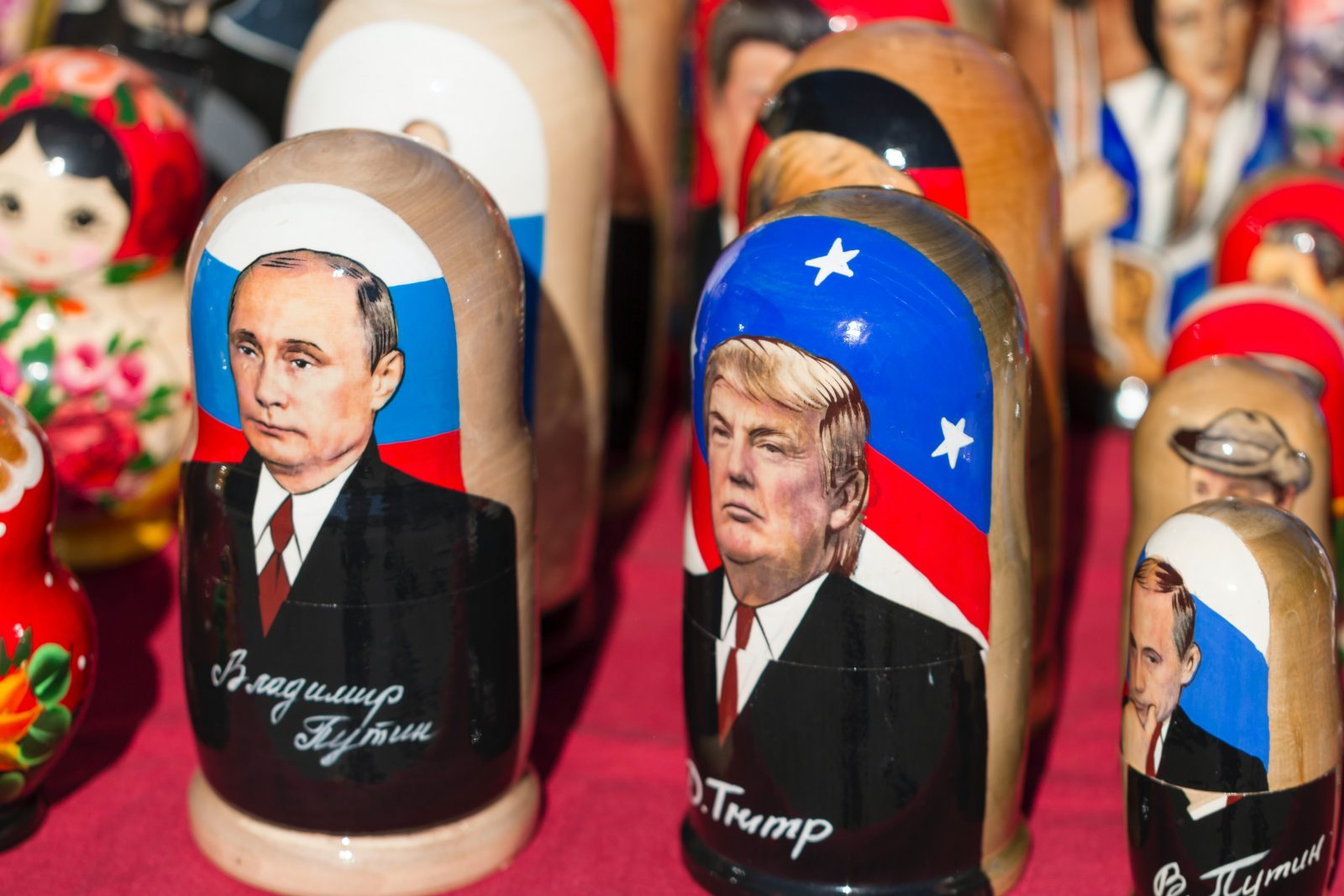
As many media sources have pointed out, the Trump administration’s seeming foreign policy goals and treatment of Russia has been nothing if not confusing. Marked by anti-Kremlin policies from the administration and GOP allies mixed with a litany of pro-Putin sentiments from Trump, it is an odd tangle of conflicting elements. Looking first at moves by the Trump administration, one finds a fairly homogenous approach of resisting Russian influence. Back in 2017, the Trump administration closed two Russian diplomatic trade annexes and shut down Russia’s consulate in San Francisco over accusations of espionage. However, it was reported that Trump had either been disinterested in said closings or had never been brought in on the decision, with then-Secretary of State Rex Tillerson and then-Secretary of Defense James Mattis spearheading the move. In the same year, the administration approved the selling of lethal arms to Ukraine to resist Russian-backed forces in Crimea, a move that the Obama administration had refused to do. Moving forward, in 2018, the Trump administration pushed for a $1.4 billion increase in the European Deterrence Initiative budget, an almost 41% increase over the Obama-era.
However, these foreign policy decisions are juxtaposed by Trump’s personal rhetoric. He has suggested re-instating Russia into the G-7, from which it was removed in 2014 following the annexation of Crimea. He has also floated withdrawing U.S. troops from Germany, which many see as allowing Russian influence in the region to swell and a weakening of NATO power. He was criticized for revealing top-secret Israeli intelligence on ISIS bomb-making to Kremlin officials in a closed-door meeting as well. Trump has posted various pro-Putin remarks over Twitter, and even sent out a congratulations on Putin’s election victory. Trump has also largely denied Russian interference in the 2016 presidential election and seems to give Russia the benefit of the doubt on most issues. A series of bipartisan sanctions imposed on Russia in 2017 by Congress was met by heavy criticism by Trump’s White House and on Twitter.
Analysis:
Whenever he comes under criticism about his personal treatment of Russia, Trump argues that he has been the toughest president on Russia in recent history and points to the moves by his administration that I mentioned above. However, one has to wonder how many of those moves came from him and how many came from those around him. Is he truly anti-Kremlin and just admires an oil-rich autocrat masquerading as a democratically elected president? Although I do believe that Trump wishes to push American national interest, I seriously doubt that his version of national interest involves an aggressive anti-Russian component. This is not to say that diplomacy should be abandoned or that the U.S. should be antagonistic, but that refusing to admit to Putin’s authoritarian tendencies and the Kremlin’s desire to manipulate the American electorate in order to erode our power abroad is ultimately far worse than turning a blind eye.
As much as Trump may say it doesn’t, his rhetoric matters. Posting on Twitter is his main avenue for communicating with the wider world and acting congenial and supportive of the Russian regime should not be dismissed as casual talk without meaning. You can bet that the Kremlin is watching, learning, anticipating, and acting upon the things that Trump posts. They obviously see him as an ally in a world order that views Russia with suspicion. The fact that his administration has been tough on them has not appeared to overly sour Putin’s chummy relationship with Trump nor dissuade Russian trolls and interference.
In closing, although the Trump administration as a whole has made admirable moves towards resisting Russian influence and pushing for the expansion of American national interest, Trump’s own feelings and narrative of Russia is highly divergent and does not fill me with confidence. Hypothetically, if Trump was told that Russian operatives were paying the Taliban to kill U.S. servicemen, from a reading of his tweets, I am not confident that Trump would take this as intelligence to act upon. And in a world where our president has openly expressed admiration for a world leader that utilizes the organs of state for personal enrichment, that should worry all of us.

What Is the Significance of the 32.9% Second Quarter GDP Drop?
Rosalind Gottfried
Economics
August 2, 2020
Policy
The headline 32.9% drop in the Gross Domestic Product (GDP) for the second quarter is stunning, but what does it actually signify? A Dow Jones survey had predicted a drop of 34.7%. The GDP represents all the purchases made in the US plus the net exports, government spending, and investments made in the period discussed. This figure actually indicates what the annual figure would be if the same rate occurred for the entire year. If this really reflects the annual rate, it will be far worse than the worst year of the depression which was a 12.9% drop in 1932.
The second quarter represents activities from April through June. The actual figure for the second quarter, compared to the same quarter last year, is 9.5%. The largest quarterly drop was 10% in 1958. How does this translate in behavioral terms? Overall personal consumption, the largest chunk of the GDP, was down 10%. In contrast, expenditures for the unemployed population rose by 10%. This is likely attributable to the generous benefits subsidized by the $600 weekly payment provided by the federal government. Low income workers likely could make purchases of essential goods they had put off for lack of funds. Spending for healthcare, clothing, footwear was down as was inventory investment for motor vehicle dealerships, equipment, and personal housing. Prices for domestic purchases fell 1.5% and for personal care expenditures 1.9%, indicating some deflation. Exports were down by 9.4% and offset by increases in imports of 10%.
The last week of July saw 1.4 million filings for new unemployment claims. New claims filed by gig and self-employed workers were at 830,000 for the same week. This continued an upward trend for the past two weeks, down from 15 weeks previously where the claims had decreased after the initial virus swelling. Nevertheless, claims numbered over one million for the past 19 weeks. Research indicates a spreading pessimism as 47% of the unemployed expect their jobs to be permanently lost while in April 78% expected to return to their jobs. Unemployment for women, particularly women of color, is really at risk partially due to the types of jobs they have had and also as a consequence of lack of childcare.
Stocks fell in response to the data though the tech industry has had explosive growth. Facebook, for example, reports an 11% uptake in revenue compared to the same quarter in 2019. They report a profit increase of 98%. Three billion people use one of its apps regularly and 2.47 billion do so daily. This use data is an increase of 12% from a year ago and likely reflects the greater dependence on tech due to the sheltering in place mandates. June saw a grass roots campaign Stop the Hate for Profit to pressure advertisers to pull back ads to protest hate speech on the sites. Sources admitted that Facebook did see an impact in their July figures as a consequence of the campaign. Zuckerberg, chief executive of Facebook, pledged to maintain his free speech policies in spite of the campaign.
Analysis
Most of the trends seen in the second quarter represent the dramatic impact of a full quarter of viral repercussions. There was some mitigation in the reopening that occurred in June, much of which has been drawn back. It is notable that spending went up only for the unemployed which has been attributed to the government payouts and unemployment aid. These have not yet been renewed and Federal Covid-19 unemployment benefits ended July 31st. The consequences of a failure to provide another stimulus package are imagined to be dire. In order to divert the worst possible economic fallout another stimulus should be imminent and generous. There should be more cash transfers to all low and moderate income; sustained generous federal aid for the unemployed; rent assistance; an eviction moratorium; subsidies for childcare and healthcare; and aid for schools and communities. With appropriate planning the worst economic fallout can be averted. The successes in the government programs of the European Union can be used as guides.
Learn More
- https://www.refinery29.com/en-us/2020/07/9941810/gdp-drop-2nd-quarter-great-depression-2020
- https://www.cbsnews.com/news/gdp-drop-q2-32-9-us-economy-suffers-biggest-quarterly-decline-on-record/
- https://www.nytimes.com/live/2020/07/30/business/stock-market-today-coronavirus
Resistance Resources
- https://www.stophateforprofit.org/ Website for the campaign to pressure advertisers to cut support to Facebook

Recommended Democratic Party Platform Goals
U.S. RESIST NEWS proposes the following set of public policy goals to guide the Democratic Party’s 2020 presidential campaign platform. We support all progressive policy proposals but would like to emphasize the policy goals below as ones we think need to be prioritized. They reflect the suggestions of our talented team of reporters, journalists, and bloggers.
The Most Important Goal
The most important goal in the upcoming presidential election is to win. We need to win the presidency, maintain control of the house, and flip the senate. To do this we need all Democrats everywhere and anywhere to vote (in-person or by mail) for Joe Biden and his Vice-Presidential running mate.
- Civil Rights: Voter suppression in all of its forms (limiting access to the ballot box, legislative obstacles such as shorter registration deadlines, voter purges, etc.) should be deemed unconstitutional. Civil rights and equality efforts should be promoted, especially those aimed at promoting racial justice and ending discrimination on the basis of gender, sexual orientation and gender identity. The Black Lives Matter and LGBTQ+ efforts that have been at the forefront of these issues deserve enhanced and continued support.
- Ethics Reform :Mandate that the president, his appointees and members of Congress, disclose their previous 10 years of tax returns. Require a divestiture of all holdings which may represent a conflict of interest as defined by the Office of Government Ethics. Bar any outgoing president, appointee or member of Congress, from working for those who’ve lobbied them for a period of ten years.
- The Economy: Implement a comprehensive adequate safety net to address the economic needs of those at risk. Right now, services to low-income populations are dispersed and levels of support inadequate. We should have universal health care that is not related to employment, subsidized daycare, paid sick, parental, and family leave with job security, and a minimum basic income so that rent and food are not in question. Transition America’s economic dependence upon what is now a global industrial carbon-based supply chain to a more self-reliant locally sourced economy; while also recognizing that the United States is part of a worldwide interdependent economic order. Well-designed free trade agreements among nations, that respect labor rights, human, rights, and environmental standards, are often in America’s best interest.
- Education: Forgive the debt of those who cannot afford to repay students loans, and ease repayment terms on all loans. Make tuition at all community colleges free, and provide reduced tuition at public colleges and universities for anyone with moderate incomes. Restore higher education affirmative action programs. Increase public school teacher salaries and make sure that schools in low income communities have the resources to provide quality education to their students.
- Environment: Triple our country’s investment in renewable energy. Make the US the world’s leader in clean energy research, investment, commercialization, manufacturing, and exports by 2030. Mandate that all new and renegotiated electricity generation contracts have to be based on 100% low-carbon electricity starting in 2021. Rejoin the Paris Climate Agreement.
- Ethics Reform: Mandate the president, his appointees and members of Congress disclose their previous 10 years of tax returns. Require a divestiture of all holdings which may represent a conflict of interest as defined by the Office of Government Ethics. Bar any outgoing president, appointee or member of Congress from working for those who’ve lobbied them for a period of ten years.
- Foreign Policy: Rejoin and strengthen our alliances in Europe and Asia. Reset our relationships with Russia and China. Emphasize multilateral collaboration in solving global problems such as climate change. Strengthen the effectiveness of international organizations, such as the United Nations, the World Trade Organization, and the International Criminal Court. Increase our foreign assistance program for developing countries.
- Gun Control: Pass major gun control legislation that includes mandatory background checks; the banning of assault weapons of all kinds; raising the age to buy guns; and promoting the use of red flag laws.
- Health Policy: Secure proper funding for the American healthcare system to provide hospitals with the equipment needed to support patients and staff during COVID-19 treatments. Fully contain COVID-19 in all 50 states and rebuild our public health system so the US is better prepared for future pandemics. Make sure that pharmaceutical companies are held accountable for their role in the opioid crisis and ensure that addiction treatment is prioritized. A strong commitment to reproductive rights is imperative after the recent attacks on the rights of womxn). And an inclusive health insurance option must be made available for every person in America, at no cost for those who can’t afford it.
- Immigration: Reassert America’s commitment to asylum-seekers and refugees. Encourage foreign entrepreneurs, innovators, scholars, medical professionals, and creative thinkers to come to the United States. American policymakers should make a point to address the value and skills that immigrants bring to our country. Tear down the Trump border wall, and provide citizenship to all Dreamers.
- Police Reform: Prohibit the use of chokeholds. Pursue criminal and civil penalties for police misconduct and ban no-knock warrants in drug-related cases. Create a national registry to track police misconduct, and establish standards for police conduct and certification. Delegate non-criminal police responsibilities to health care workers, social workers, and others. Promote local adoption of existing campaigns such as #8CantWait, Campaign Zero, #8toAbolition, and President Obama’s Task Force on 21st Century Policing. Towns and cities can decide which of these make the most sense for their municipalities based on their histories and current practices.
- Technology: Strengthen Federal regulation over the posting of hate speech and false advertising on social media platforms. Strengthen the protection of individual privacy rights from the intrusion of technology platforms. Support broadband access for all Americans. Encourage greater government, business, not-for-profit and educational collaboration to increase internet security and guarantee individual freedoms.