

JOBS POLICIES, ANALYSIS, AND RESOURCES
Latest Jobs Posts
Our Election Predictions
Brief #11—Congressional Campaign Updates
ByWilliam Bourque
As we wind closer and closer to election day races are tightening and hearts are racing.
Trump Adviser’s Ties to Anti-Immigration Policies and Hate Groups Scrutinized
Brief #106—Immigration
By Linda F. Hersey
The Administration’s abject failure to secure identifying information on hundreds of migrant parents separated from their children at the U.S. border in 2018 raises
Section 230 of the Communications Decency Act: What is it and Why does Nobody Like it?
Brief #23—Technology
By Scout Burchill
Over the past few months, Section 230 of the Communications Decency Act, which was passed into law in 1996, has become ensnared in controversy from both sides of the political spectrum.
Children Remain Separated from their Families, as Election Nears
Brief #105—Immigration
By Kathryn Baron
In June 2018, a Federal Judge in San Diego delivered an order that children in government custody were to be reunited with their families.
How Non – Profit Groups Are Still Helping To Protect The Vote So Close To Election Day
Brief #141—Civil Rights
By Rod Maggay
With the 2020 United States election only days away a number of states have already started the process of voting.
Ben Shapiro and David Pakman’s Take on the 3rd Presidential Debate
Brief #4—Media Blog
By John McCabe
Covering news and politics on their respective radio shows, conservative commentator, Ben Shapiro, and progressive commentator, David Pakman, offer contrasting views as to who was the winner of the third presidential debate between President Donald Trump and former Vice President Joe Biden.
End of Eviction Moratoriums Strains Renters’ Legal Support System
Brief #1—Legal
By Zack Huffman
Covid-19 brought record unemployment over the summer, which left millions of families unable to afford rent.
U.S. Fish & Wildlife Service Refuses to Protect Wolverines Under the Endangered Species Act
Brief #100—Environment
By Jacob Morton
The wolverine is a rather elusive character. Only about 300 of these iconic mammals exist in the United States’ lower 48 states.
Can Social Media Companies Regulate Their Own Content?
Brief #22—Technology
By Scout Burchill
As the 2020 election approaches, social media platforms have been taking major actions to moderate content in an attempt to combat growing amounts of misinformation.


Is the CARES Act Effective?
Policy
The effectiveness of the late March 2.3 trillion dollar Coronavirus Aid, Relief, and Economic Security (CARES), Act remains hotly debated. It is the most comprehensive act of government support since the depression, and its cost is similar to expenditures characterizing wartime. Many critics feel it did not go far enough in helping individuals and it actually missed the mark for propping up the most vulnerable businesses. Although voted unanimously in the House, some Republicans criticized the bill for recalling controversial government programs of the New Deal era. Politicians moved in favor of the bill with the realization that something needed to be done quickly to help the unemployed and affected businesses.
On the individual level measures were taken regarding compensation for lost wages that were more generous than in usual circumstances. These allowed gig workers and self-employed persons, typically ineligible for unemployment insurance, to collect at least half of their states compensation and 16 weeks of an additional weekly benefit of $600 at federal expense. Other laid off, or furloughed, workers also are eligible for the additional federal employment monies. For lower wage workers, this income would amount to full replacement value of wages. Some gig and self-employed workers, however, were excluded from the payments and so have no income.
The CARES Act also provided for cash payments to households of up to $1200 for individuals and $500 dollar per child. These payments were based on income reported to the IRS but also excluded some of the most needy who did not file income taxes in 2019. An estimated 30 million seniors, disabled, and veterans did not file taxes and are ineligible for cash payments unless they file, and free tax preparation aid was temporarily discontinued so it will be difficult for many to do so. Another estimated 92 million did not file with direct deposit and consequently will not receive payment for months. Some workers received no aid, such as low paid workers in healthcare and delivery who retained essential employment, though a quarter of whom make less than the federal poverty level. While these programs are a step in the right direction they are time limited, rather than based on the ability of a person to return to full employment. Additionally, some criticized the failure to provide more help to higher paid unemployed workers. These two programs account for 550 million dollars of the CARES budget.
Another 350 billion dollars was allotted to a small business loan/forgiveness program. This program has perhaps suffered the most criticism. Small businesses account for 44% of the Gross Domestic Product (GDP) and 49% of the private sector. The money ran out in days and favored larger companies leaving many businesses with unfunded applications. Many of the unsupported were businesses with women or minority owners or in rural areas. In order to qualify for loan forgiveness, the company has to spend 75% of its loan on payroll per SBA orders but the CARES act did not have that provision. This put owners in a quandary, if they used 75% for payroll they could qualify for loan forgiveness but they were likely to be delinquent on rent, utilities, or paying vendors. The CARES act distribution lacked oversight, opting for spending in the “pubic interest,” and lacking in any guidelines for specific rules. A small business, defined as having less than 500 employees, often did not receive aid while large corporations such as Ruth’s Hospitality Group and Shake Shack did (Shake Shack eventually returned their loan money). These companies had tens of millions of dollars in annual profits. The Act was criticized for securing shareholders’ interests over the financial and physical well-being of labor. These programs also ran out of money, in days, and there were no provisions for automatic extensions or continued aid. A second round of small business loans was better at hitting small businesses and provided for smaller grants to more businesses. In this round, 61% who applied received loans.
Analysis
Some of the programs in the CARES act certainly have made a positive initial impact both for businesses and individuals but each program is limited by money and/or time. Consequently, the economic despair, brought on by the pandemic, will be long lasting. In early June new legislation expanded the initial CARES act for small businesses. There are three new programs. One is called the Economic Injury Disaster Loan Assistance (EIDL) which lends money to small businesses and nonprofits with low interest rates and no forgiveness. Another offers an extended Payroll Protection Program which gives varying amounts depending on several factors and has a 1% interest rate. Under specific circumstances, these loans can be forgiven if the money is utilized within 24 weeks of the loan’s origination. Finally, there is the Main Street Lending Program which has three different levels of support based on the size of the company that can be as large as 15,000 employees with as much as five billion dollars in revenue. Eligible companies must be able to meet their obligations for 90 days without facing bankruptcy. These programs will address some of the deficiencies in the original CARES program. However the Main Street Lending Program has no oversight, and concern has been expressed that funds will be used to reward political allies of the administration.
For direct assistance to the individual, beyond short term relief from student debt obligations and mortgage loan relief, there is not much. (Healthcare provisions in the CARES act are not addressed in this article and also are short term). If the country is to reaffirm its ideals regarding the quality of life, there will need to be some long term programs to change the safety net for individuals and households and a different approach to small businesses focused on the long term health of companies considering the new economic and social realities.
Learn More
https://www.cnbc.com/2020/05/09/coronavirus-ppp-may-have-left-minority-business-owners-behind.html
https://www.epi.org/blog/despite-some-good-provisions-the-cares-act-has-glaring-flaws-and-falls-short-of-fully-protecting-workers-during-the-coronavirus-crisis/
https://www.forbes.com/sites/kathrynjudge/2020/04/20/the-design-flaw-at-the-heart-of-the-cares-act/#752bef26bede
https://thehill.com/opinion/white-house/493458-where-the-cares-act-went-wrong
https://www.tapinto.net/sections/government/articles/exclusive-rep-tom-malinowski-disappointed-by-the-failure-of-the-cares-act-to-help-small-businesses-55
https://rsmus.com/economics/coronavirus-resource-center/cares-act-expands-access-to-loans-for-small-and-midsize-business.html
Resistance Resources
https://www.fhfa.gov/Homeownersbuyer/MortgageAssistance/Pages/Coronavirus-Assistance-Information.aspxC
A government website with housing assistance information.

Killing of Rayshard Brooks Incites Calls for Atlanta Police Reform
Summary:
On June 12, amid worldwide protests against police killings of Black people, 27-year-old Rayshard Brooks was shot in the back by an officer of the Atlanta Police Department (APD). His death has amplified the calls for police reform at the department.
Established in 1873, the APD has around 1,700 officers patrolling the city’s seven zones with a fleet of 300 vehicles. It operates on an annual budget of just over $204 million. African-Americans account for 58 percent of the force, and Whites 37 percent.
Qualified APD applicants are required to undergo police academy training, including physical, defensive, firearms and academic instruction. Graduates are required to complete additional field training under the supervision of a field training officer. They are also routinely coached in crisis intervention, fair and impartial policing, and reality-based scenarios.
The department has a use-of-force policy that governs the use of tasers, pepper spray, firearms and control holds. The APD has also banned choke holds, strangleholds, neck restraints, carotid artery holds and other weaponless control techniques that have the potential to cause serious injury or death except in self-defense.
Despite having a use-of-force policy on the books, this is not the first time the APD has come under fire for use of excessive force against a Black person. The department was subject to a federal investigation in 2006 after officers shot and killed 92-year-old Kathryn Johnston when they entered on a no-knock warrant. During the George Floyd protests, APD officers pulled two Black students from their vehicle and tased them.
Experts believe that Rayshard Brooks did not have to lose his life and that police could have explored other alternatives.
Analysis:
#8CantWait is a nationwide campaign focused on saving civilian lives by demanding that police departments adopt the following eight policies: 1. ban chokeholds and strangleholds, 2. use of de-escalation techniques, 3. verbal warning before shooting, 4. exhaust all alternatives before shooting, 5. duty to intervene when fellow officers are using excessive force, 6. ban shooting at moving vehicles, 7. establish a use-of-force continuum and 8. comprehensive reporting.
The APD has already banned holds and established a use-of-force policy. In the wake of protests over Brooks’ death, Atlanta Mayor Keisha Lance Bottoms has also agreed to implement de-escalation, a duty to intervene and better reporting. #8CantWait urges Atlanta citizens to put pressure on their lawmakers to adopt policies around verbal warnings, exhausting alternatives and not shooting at vehicles.
Organizations such as the Georgia NAACP, Just Georgia, and the Movement for Black Lives (M4BL) of Brunswick/Atlanta have also issued demands for changing how police interact with the public. These include eliminating laws that disproportionately criminalize Black people, ensuring the safety of protestors, conducting thorough investigations of police misconduct and requiring the APD to make amends for the systemic harm it has inflicted on Black families.
Resistance Resources:
#8CantWait: https://8cantwait.org/
M4BL Brunswick/Atlanta: https://m4bl.org/week-of-action/brunswick-atlanta-georgia/
Just Georgia: https://www.just-georgia.org/
Georgia NAACP: https://www.naacpga.org/
This brief was compiled by Laura Plummer. If you have comments or want to add the name of your organization to this brief, please contact me@lauraplummer.me>

The Gig Economy Looks Bleak
June 11, 2020
Policy
In recent years gig workers, acting as independent contractors, entered the gig economy as a means to supplement income, promote flexibility, and even be a secure alternative to regular employment. Employers took advantage of the cheap available labor. The workers pay the price in multiple ways and the early potential of the gig option has been dissipating even before the fallout from the Covid-19.
For many workers the pandemic has meant the end of employment, or at least a significant reduction in wages and/or hours. Its benefits, if they exist, have been limited to a very select few. Under usual circumstances, gig workers typically lacked job security; guaranteed minimum hours or wages; health insurance; sick leave; or any other benefits associated with regular employment. With the contracted economy, the demand for many of their services has fallen and the competition for the remaining ones has grown steeper.
Since the shelter in place mandate, 68% of gig workers have had no income; 89% are looking for new sources of income; 50% have no job; 25% have decreased hours; and only 23% have any savings. Fully 70% of gig workers surveyed felt that their company, and the government, did not satisfactorily support them. Many platforms catering to freelancers, or gig workers, have seen an upsurge in applications for work along with a decreased demand. Less travel means decreased demand for ride share services such as Lyft and Uber. Even those where the need has remained stable have experienced a drop in wages and hours. Instacart, a SF based food delivery service, reportedly added 300,000 jobs while jobs in babysitting, housesitting, and cleaning have fallen by 36%. Instacart asserts that its shoppers are earning 60% more due to gaining double the tips and maintaining the same average of batches. But other platforms are not reporting similar gains. Amazon Flex has shown a decrease in average hours from 28-32 hours a week to 18-20 hours.
Freelancers in professional occupations such as design, development, animation, and technology also have experienced a downturn. Workers in these areas report decreased pay and contracts that are labor intensive so that the pay does not extend to the actual time needed to perform the tasks. One worker described the situation as “a race to the bottom.” Platforms such as Fiverr, Upwork, Clickworker, and Amazon’s Mechanical Turk have sustained significant increases in demand along with depressed wages. These trends predate the advent of the virus, with some reporting average hourly wages as low as $2-$6.50 an hour in 2017. The severity of the exploitation seems likely to worsen. Many companies are contemplating long term remote work, a situation likely to lead to more free lancing, which enhances corporate profit and capitalizes on the availability of a global workforce. The World Bank reported, for the first time since 1998, an increase in global poverty hinting at the backslide to come.
Policy
Gig workers, as independent contractors, typically have not been eligible for unemployment, employer health insurance, or sick time. The CARES stimulus has created a new world in that self-employed and freelance workers became eligible for 39 weeks of state unemployment payments in addition to federally funded $600 a week supplements for 16 weeks. Unfortunately this program is unlikely to be sustained without further Congressional and Executive interventions.
Government regulation of labor practices in the freelance world needs to be addressed. For example, “bots”are programs automated by algorithms which grab new jobs and affix them to new platforms that require subscriptions to access the jobs. Instacart shippers pay a fee to get the Bot job apps making it harder for other seekers to apply. Instacart denies this allegation and has stated that any person found to be utilizing these apps will be “deactivated,” a term eerily inhumane, as is the current market policies. The need for protective legislation is indicated and has been passed in California.
In January, California enacted legislation, known as AB5 or the gig economy bill, mandating that gig workers are entitled to the benefits of employees. They established this based on a 2004 case of a delivery driver who sued his company, Dynamex, when it forced the drivers to become independent contractors. The current legislation is based on the findings in that case that a person qualifies as an independent contractor if s/he is exempt from company control or direction; works in non-mainstream aspects of the business; and is already performing similar work in situations independent of that company. These standards do not seem to accrue to gig workers affected by the litigation.
The California legislature has pledged 20 million dollars to enforce the mandate. CA truckers were immediately granted an exception to the legislation and companies like Uber, Lyft, Doordash, Postmates, and Instacart have raised over 110 million dollars to support a ballot initiative exempting them from the new law. They estimate the cost to them of bill’s implementation will 20-30% more than utilizing their casual workforce. With the distraction of the pandemic, little has been established with regard to the future of AB5 though it certainly points to the need for new government labor regulations and to the reform of elements of the safety net. What is being done temporarily for workers and businesses, through the CARES act, can be seen as a template for more permanent legal change.
Learn More
https://time.com/5836868/gig-economy-coronavirus/
https://www.weforum.org/agenda/2020/04/gig-workers-hardest-hit-coronavirus-pandemic/
Resistance Resources
https://gigworkersrising.org/get-informed/covid19-resources/ Information for gig workers and consumers

Trump Opens Protected Marine Monument to Commercial Fishing
Policy
On Friday, June 5th, Donald Trump signed an order to open nearly 5,000 square miles of the Northeast Canyons and Seamounts Marine National Monument off the coast of New England, to commercial fishing. The Obama administration designated this stretch of ocean a National Monument in 2016, to protect the endangered species that live in this ecosystem “from harmful intrusion and permanent damage by commercial interests.” The original Proclamation 9496 of September 15, 2016 from the Obama administration, identified a number of canyons and seamounts in the area as “objects of historic and scientific interest,” and even writes, “these canyons and seamounts, and the ecosystem they compose, have long been of intense scientific interest,” with “scientists from government and academic oceanographic institutions” studying “the canyons and seamounts using research vessels, submarines, and remotely operated underwater vehicles for important deep-sea expeditions.” According to Bob Dreher, senior vice president of Conservation Programs at Defenders of Wildlife, these deep canyons and large seamounts are home to “Ancient and slow-growing deep sea corals, endangered large whales and sea turtles, and an incredible array of fish, seabirds, sharks, dolphins, and other wildlife.” The Northeast Canyons and Seamounts Marine National Monument is the only marine national monument in the Atlantic Ocean. The designation as a National Monument was challenged by interests of the fishing industry in 2017 but was quickly rejected in federal court.
According to the Proclamation Modification signed by Donald Trump this month, it is not necessary to prohibit commercial fishing within the Monument’s boundaries, because current commercial fishing regulations and other laws, such as the Endangered Species Act, already protect the at-risk species in the area. The modification writes, “I find that a prohibition on commercial fishing is not, at this time, necessary for the proper care and management of the Northeast Canyons and Seamounts Marine National Monument, or the objects of historic or scientific interest therein.” It continues, “WHEREAS, I find that removing the restrictions on commercial fishing set forth in Proclamation 9496 to allow for well-regulated commercial fishing use is in the public interest and that the objects in the monument can be, and are currently, protected pursuant to carefully tailored regulation and management under existing Federal law.”
Analysis
Many view this move as another attempt on the part of the Trump administration to continue limiting environmental regulation while the nation is distracted with the looming Covid-19 pandemic and nation-wide protests. Bob Dreher with Defenders of Wildlife says, “Opening up the nation’s only marine national monument in the Atlantic will help no one but a handful of fishers while risking irreparable damage to the marine wildlife that have no other fully protected areas off our eastern seaboard.” According to Brad Sewell, senior director of oceans for the Natural Resources Defense Council (NRDC), commercial fishing, even with its regulations, “poses a range of threats, such as harm to deep-sea corals from heavy fishing gear, and entanglement of marine mammals and fish in thick lines and nets.” He warns that “These fragile, extraordinary ocean areas are full of thousand-year-old corals, endangered whales, and other precious marine life. They belong to all Americans, and they are held in trust for future generations.”
According to a report by the Washington Post, the ban on commercial fishing has not even had a significant negative effect on the fishing industry. Most of the commercial fishing vessels that fish near the Northeast Canyons and Seamounts National Monument had “generated 5% or less of their annual landings from within the monument.” In fact, government data shows that revenues and catch for those same fisheries, has gone up or stayed the same since the National Monument’s designation. Randall Bowman of the Bureau of Land Management (BLM) under Trump, the lead staff member for reviewing the legitimacy of the marine region’s National Monument status, was actually found in 2017, to have recommended leaving those facts out of the report, because it “undercuts the case for the ban being harmful [to commercial fishing].”
Brad Sewell says. “The Antiquities Act gives the president power to protect special areas for future generations, not the opposite power to abolish those protections.” He claims that the President does not have the authority to modify the Proclamation, and that “A significant change to the monument or its protections, such as allowing commercial fishing, must be done by Congress, not by the president.” Sewell says the NRDC will fight the Trump administration in court, and that “We are prepared to sue the administration to protect these ocean treasures from harm and exploitation by commercial fishing and other extractive industries.”
Resistance Resources
Natural Resources Defense Council
- works to safeguard the earth – its people, its plants and animals, and the natural systems on which all life depends. combining the power of more than three million members and online activists with the expertise of some 700 scientists, lawyers, and policy advocates across the globe to ensure the rights of all people to the air, the water, and the wild. https://www.nrdc.org/
Defenders of Wildlife
- Defenders of Wildlife is dedicated to the protection of all native animals and plants in their natural communities. Founded in 1947, Defenders of Wildlife is the premier U.S.-based national conservation organization dedicated to the protection and restoration of imperiled species and their habitats in North America. https://defenders.org/
National Wildlife Federation
- America’s largest and most trusted conservation organization, works across the country to unite Americans from all walks of life in giving wildlife a voice. We’ve been on the front lines for wildlife since 1936, fighting for the conservation values that are woven into the fabric of our nation’s collective heritage. https://www.nwf.org/
Environmental Defense Fund
- One of the world’s largest environmental organizations and a 501(c)(3) non-profit. Preserving the natural systems on which all life depends. https://www.edf.org/
Learn More:
Eilperin, J. (2018, July 23). Trump administration officials dismissed benefits of national monuments. The Washington Post. Retrieved June 11, 2020, from https://www.washingtonpost.com/national/health-science/trump-administration-officials-dismissed-benefits-of-national-monuments/2018/07/23/5b8b1666-8b9a-11e8-a345-a1bf7847b375_story.html?wpisrc=al_news__alert-hse–alert-national&wpmk=1
Johnson, J. (2020, June 06). Quietly Putting Hundreds of Species at Risk,’ Trump Opens 5,000 Square Miles of Atlantic Ocean to Commercial Fishing. Common Dreams. Retrieved June 11, 2020, from https://www.commondreams.org/news/2020/06/06/quietly-putting-hundreds-species-risk-trump-opens-5000-square-miles-atlantic-ocean
Natural Resources Defense Council. (2020, June 05). Trump Illegally Eliminates Protections for First and Only Monument in the Atlantic Ocean [Web log post]. Retrieved June 11, 2020, from https://www.nrdc.org/experts/nrdc/trump-illegally-eliminates-protections-first-and-only-monument-atlantic-ocean
Proclamation on Modifying The Northeast Canyons And Seamounts Marine National Monument. (2020, June 05). Retrieved June 11, 2020, from https://www.whitehouse.gov/presidential-actions/proclamation-modifying-northeast-canyons-seamounts-marine-national-monument/

Revival of Federal Consent Decrees Needed Now To Confront Police Misconduct
Policy Summary: On November 7, 2018 then U.S. Attorney General Jeff Sessions issued the memorandum titled “Principles and Procedures for Civil Consent Decrees and Settlement Agreements with State and Local Government Entities” to the Department of Justice (DOJ). This new memorandum was issued to replace prior guidelines and to provide new guidance on how the DOJ would use consent decrees in the future. Previously, the federal government would open a lawsuit against a local police department that had a pattern and practice of police misconduct and abuse. Without any admission of guilt by local law enforcement officials, consent decrees were long term police department reform plans negotiated by federal and local officials that were supervised and enforced by a federal court. Attorney General Sessions wanted less federal oversight of local police departments and moved to diminish the use and effectiveness of federal consent decrees.
On June 8, 2020 Democrats in the House of Representatives introduced the “Justice In Policing Act” bill. The bill proposed new reforms aimed at policing issues and techniques, which come on the heels of protests over the killing of George Floyd, an African – American man, by a white police officer in Minneapolis, Minnesota. Protests have ignited across the United States and in a number of places around the world.
The bill proposes to ban police departments from using techniques such as chokeholds on persons (George Floyd died when Officer Derek Chauvin knelt on Mr. Floyd’s neck for more than eight minutes despite already being handcuffed and lying on the ground on his stomach) and no – knock warrants (Breonna Taylor died when officers executed a warrant without announcing themselves on the wrong apartment where they subsequently shot and killed her). Additionally, the bill contains administrative requirements for states with one requiring the creation of an independent state commission by the state attorney general that will investigate allegations of police misconduct and police brutality in local police departments. LEARN MORE, LEARN MORE
Policy Analysis: The bill that the Democrats introduced in the House of Representatives on Monday is without question a response to the tragic killings of George Floyd and Breonna Taylor and the wave of protests that have swept the United States. There are some good proposals such as the elimination of the techniques that resulted in the tragic deaths of Mr. Floyd and Ms. Taylor recently but there needs to be more wholesale change than the simple elimination of those methods. What is interesting is that the Federal Government did have a tool at their disposal to help monitor and institute change against local police departments. However, the Trump Administration and former Attorney General Jeff Sessions took steps to render the use of consent decrees today ineffective because they were opposed to the federal government having a role in monitoring local police departments.
Consent decrees to counter police misconduct and police brutality have been shown to have positive benefits. PoliceOne, an organization advocating for law enforcement officers has compiled a list of how cities with active consent decrees with the federal government have been faring in instituting change in their local police departments and their list shows that a number of cities have made meaningful improvement after working with federal authorities. Additionally, some cities have been able to implement effective deadly force trainings while some cities have even seen a decline in civil rights lawsuits against the police department. This may be due to the fact that segments of the community and civil rights groups have had a role in partnering with federal authorities to have their concerns heard. These methods to have federal authorities work with cities have seen varying levels of success and should be brought back to deal with the current police department concerns that have emerged with the eruption of protests the last week.
The “Justice In Policing Act” bill is well intentioned but it is important to know that the federal government already had in place a method that has had success in forcing change in communities that have struggled with police misconduct and police brutality incidents. Now is the time to call on the Trump Administration to utilize the consent decree again to help bring meaningful reform to police departments after the tragic events of the last two weeks. LEARN MORE, LEARN MORE, LEARN MORE
Engagement Resources:
- Equal Justice Initiative – project’s article on how use of consent decrees to reform police department abuses have had an impact.
- Campaign Zero – non – profit group seeking to end police violence in America.
- National Police Accountability Project – project dedicated to ending law enforcement officer misconduct.
This brief was compiled by Rod Maggay. If you have comments or want to add the name of your organization to this brief, please contact Rod@USResistnews.org.

Trump Sinks in the Polls Amid Unrest
By Iryna Shkurhan
June 10,2020
Last Tuesday, several states held their primaries with open polls while protests against police brutality and racial injustice took the nation by storm in all fifty states. Amidst the civic unrest, President Trump’s poll numbers plummeted as prominent Republicans also publicly renounced him. Primaries still remain in several states with the focus shifting to the results of local elections.
The Candidates
After Tuesday’s primaries in seven states and the District of Columbia, Joe Biden has officially secured the 1,991 delegates needed to become the democratic nominee. Although he has been unchallenged in his party since Bernie Sanders dropped out in April, the verdict comes in unprecedented times. Amid the turmoil, a poll found that Joe Biden has doubled his lead in Michigan, a key swing state, now leading by 12 percent.
President Trump’s approval rating hit an all-time low since January 2019 with a new CNN poll showing that only 38% approve his handling of the presidency, while 57% disapprove. The same poll conducted in early June found that Biden leads the incumbent by 14 points, the highest rating Biden has seen from a CNN poll. These results come after almost two weeks of unrest and turmoil following the murder of George Floyd by the Minneapolis Police Department.
Several Republicans, including Former President George W. Bush and Mitt Romney, have announced that they won’t back the President’s reelection efforts. Former Defense Secretary Jim Mattis came out criticizing President Trump’s disinterest in unifying the country at a time where demonstrations in all fifty states have only continued to grow. Mattis described Trump as a threat to the constitution, and a dividing force in the country. Colin Powell, a Republican and former military leader, also shared similar sentiments and even expressed support for Biden’s campaign.
Voting
In Texas, the federal appeals court has blocked an order that would have expanded mail voting saying that the coronavirus is not a good enough reason to give the majority of voters the option to vote by mail. As the majority of states have made mail voting more assessable, higher courts in Texas continue to overturn policies that would to give the majority of voters the option to vote by mail in both the primary and general election.
On the contrary, a judge in Tennessee has ruled that the state must allow everyone registered the opportunity to vote by mail in the general election, but the ruling is likely to be appealed. In both states, Republicans have citied that fear of catching or unknowingly spreading the virus at the polls should not be the sole qualifier to vote by mail.
As millions of Americans cast their ballots in the remaining primary elections, the emphasis will be on the results of local elections. On June 9, West Virginia, Georgia, North Dakota, Nevada and South Carolina are scheduled to vote, with options for mail-in voting an absentee ballot. New York, Kentucky and Virginia will vote on June 23 and the following week, Colorado, Utah and Oklahoma on June 30.

Will Democrats Retain Control of the House? 4 House Races to Watch for 2020
Congressional Campaign Update
2020 Congressional Campaign Updates is a new feature of U.S. RESIST NEWS. Written by reporter William Bourque, the updates will help our leaders follow key races in the House and Senate that are key to the ability of democrats to gain control of both houses of Congress.
Update # 3 Will Democrats Retain Control of the House? 4 House Races to Watch for 2020
June 8, 2020
The strong Democratic control of the House of Representatives can’t be taken for granted in November, and many experts see these elections as close and heated encounters. With the recent wave of police protests across the nation, many see this as an opportunity for Democrats to pull ahead in their push for the White House and Senate, in addition to strengthening the control of the House. I decided to take a look at the closest house races to watch in November.
ME-02, with one-term incumbent Jared Golden, is a race that intrigued many experts two years ago, when Golden pushed his grassroots campaign to a victory in a district Trump won. Golden beat two-term incumbent Bruce Poliquin by a margin of about 4,000 votes, albeit in a district that historically leans democrat. Regardless of the history of the district, Golden is in for a tough race yet again, with his opponent to be either Eric Brakey, former state senator and U.S Senate candidate, or Adrienne Bennett, former press secretary of Gov. Paul LePage. 270towin.org rates the election as a toss-up, and it is surely one that will come down to the wire in November.
In California’s 21st district, incumbent TJ Cox faces a strong test against return challenger David Valadao, who won the seat in 2014. When Cox and Valadao last faced off, in 2018, Cox won by a margin of just under 1,000 votes, showing just how tight this district is. The Cook Political Report, via Ballotpedia, rates this race as a toss-up. The district has generally leaned slightly red in their selection for the House, being represented by Devin Nunes until 2012. If the recent patterns continue, Cox should maintain a close advantage to win another term.
Georgia’s seventh district is another that the democrats could end up flipping to maintain their control of the House, with incumbent Rob Woodall stepping down from his seat. The likely Republican nominee is Renee Unterman, former state senator in Georgia. She faces stiff competition in presumptive democratic nominee Carolyn Bourdeaux, a former professor of public policy. Bourdeaux ran for the seat in 2018, losing to Woodall by just 433 votes, per the Gwinnett Daily Post. Bourdeaux does face a challenge in the primary, most notably by Nabilah Islam, an activist who has been endorsed by Alexandra Ocasio-Cortez and Ilhan Omar. Georgia’s 7th district promises to be an exciting race with the democrats keeping their hopes high for a seat flip.
Iowa is most well-known for it’s cornfields and presidential caucuses. However, it is also the site of a battleground in the house this election cycle, with democratic incumbent Abby Finkenauer running to maintain control of the seat against Ashley Hinson, a TV news reporter turned politician. The district in of itself is interesting, because of how many “pivot counties” exist within the district. Pivot counties are counties that voted for Barack Obama in 2012 and Donald Trump in 2016. Looking at the recent trends, it would show that Finkenauer has a slight advantage in the district she won by about 17,000 votes in 2018. A recent poll published by FiveThirtyEight has Finkenauer with a percentage point lead over Hinson. Both candidates have some national backing and it will be a tight fight to the end if the democrats want to keep the seat.
It’s clear that the road to keeping the house in democratic control is a windy but attainable one. We will have coverage of more house campaigns to watch in the following weeks and will attach the campaign websites for each of the democratic candidates if you’d like to learn more.
Engagement Resources
- Jared Golden: https://jaredgoldenforcongress.com
- TJ Cox: https://tjcoxforcongress.com
- Carolyn Bourdeaux: https://www.carolyn4congress.com
- Abby Finkenauer: https://www.abbyfinkenauer.com
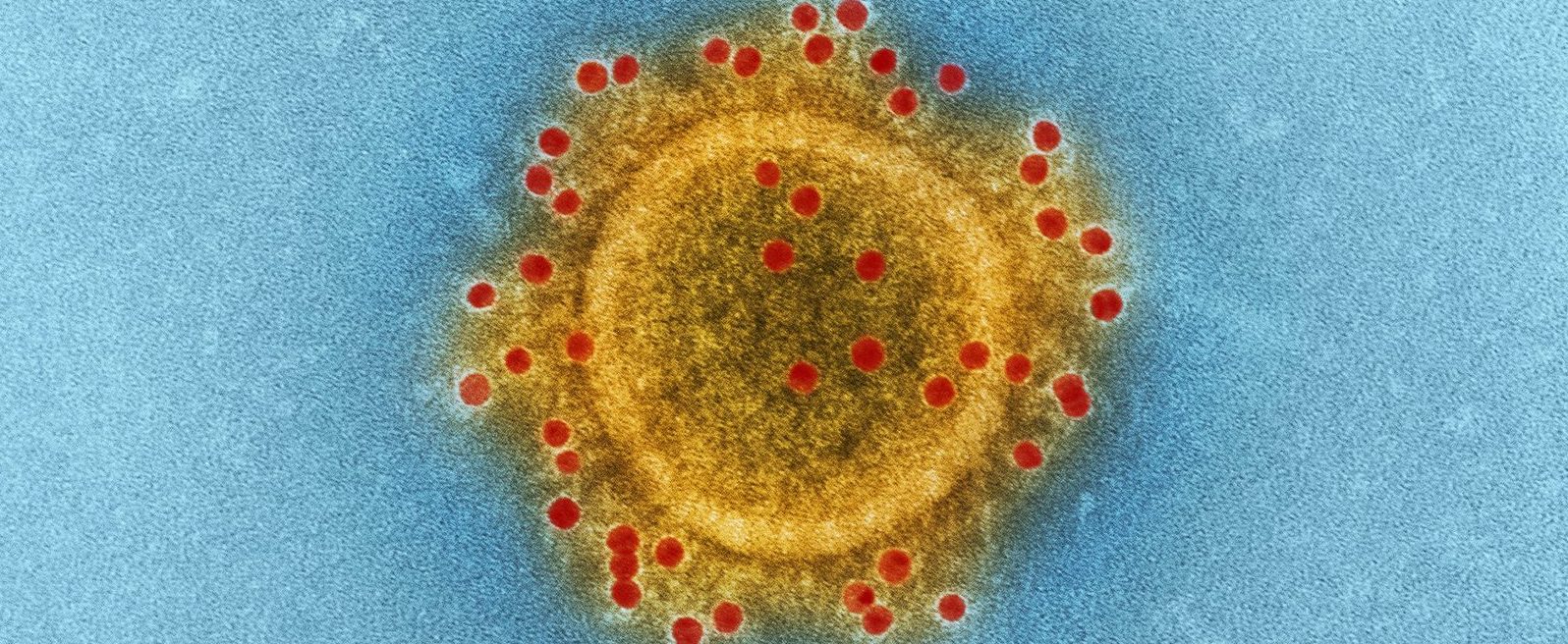
Why Have Some Countries Been Better Able to Contain Covid-19 Than Others
By Hassan Elsebai
June 8, 2020
Summary
The Coronavirus death toll now exceeds one hundred thousand in the United States and is far ahead of every other country with respect to both deaths and confirmed cases. Followed by the UK with almost 40,000 deaths(June 1st). Italy and Brazil take third and fourth place, respectively. To understand how we got to this point it is imperative to examine the early actions taken by these countries’ leadership.
the U.S., the U.K., and Brazil—all three of which are currently run by a conservative government or administration— have been criticized for failing to act in both a responsible and timely manner.
President Trump insists the U.S, is “leading the way” in combatting the pandemic, and a role model for other countries to emulate. But the U.S. had fumbled an opportunity to act fast after grave reports of the COVID-19 death toll emerged out of Wuhan and Italy before the virus spread to the rest of the world. Trump in late February called the Coronavirus a Democrat “hoax.”
The federal government was slow to react and introduce central policy in the early stages of the pandemic. Individual states were given the responsibility of shutting down. Testing and contact tracing—the most robust methods of containing the spread of the virus— were absent from the federal policy. Trump promoted the use of a certain medication even when many medical experts said there was no proof of its effectiveness.
The early U.K. response was ambivalent. The leadership on Downing Street was still wrapping their heads around Brexit and clearly had no organized plan for the pandemic. Boris Johnson’s early statements assured there would be no ‘Wuhan style’ lockdowns. Talks arose of an unconventional ‘herd immunity’ approach by the U.K. in a unique attempt to flatten the curve. Top U.K. officials and cabinet members continued to underplay the severity of the Coronavirus.
On March 18, Johnson announced the closure of all schools. All restaurants and bars were ordered to close on March 20th, long after other nations imposed their own shutdowns. A former cabinet minister called it a “screeching u-turn.” Prime Minister Johnson finally took advice from the scientific community but only after putting his country in a dangerously precarious position and before he himself would contract the Coronavirus.
The Greek newspaper Ethnos described Johnson as “more dangerous than coronavirus”, saying one of the crisis’s greatest tragedies was that “incompetent leaders” such as Johnson and Donald Trump were “at the helm at a time of such emergency”.
Brazil has seen a steep increase in cases and is expected to be —if not already— the world’s most infected country. Brazil’s President Jair Bolsonaro like Trump and Johnson, is characterized by the adjectives: populist and conservative. Another thing they all have in common is their skepticism of science and early action. Bolsonaro has been reluctant to implement shutdowns or any social distancing guidelines while the countries healthcare system struggles to fight the virus and administer testing.
Sweeping poverty and extreme inequality further debilitate Brazil’s healthcare system and catalyze the spread of the virus, in a country rampant with favelas where social distancing is virtually impossible.
Andy Slavitt, Obama’s former health official, drew comparisons between the U.S. and Brazil’s handling of the pandemic “Brazil is [a lesson] in what the U.S. would look like if Trump had been allowed to continue to ignore the outbreak as he was through mid-March”
Analysis:
The Trump administration, and the far-right, have long put business profits over common sense and public health. Skepticism of the scientific community manifests itself in Trump’s policies through deregulation. The New York Times writes “The president’s COVID-19 response has extended the administration’s longstanding practice of undermining scientific expertise for political purposes.” Environmental concerns are thrown out the window and the EPA is continuously gutted.
Many countries have exemplified proper remedies to combat the spread of the virus. Hong Kong, Taiwan, and Singapore, Germany, and New Zealand had brought in controls on travelers from infected regions and strict contact tracing to help understand who could have been exposed, inform them, and require self-isolation. Face masks became widespread in east Asia, long before it was recommended elsewhere.
Germany’s Angela Merkel has been praised for her effective leadership since the start of the pandemic. Germany has been hailed for its model response for introducing early testing and consistent planning. The German Health Ministry has said that it was testing 80,000 people per week in early March, and about 400,000 tests per week in April. Early testing coupled with Germany’s robust public health infrastructure made the country better equipped to handle a crisis.
New Zealand has reportedly ‘eliminated’ COVID-19 from the country and has begun returning to ‘normal.’ The nation accomplished this by installing an early and aggressive lockdown followed by effectively managing its borders, contact tracing, testing, and surveillance.
Now, compare these leaders and stories with the populist strongmen using the crisis to spread messages of authoritarianism, blame others, and demonize journalists.
Many experts have stated that the U.S.’s severe death toll was avoidable. Had the United States followed a timely, scientific, and central approach, the COVID-19 death toll would not be as high as it is today.
- Learn More
- https://www.nytimes.com/2020/04/28/climate/trump-coronavirus-climate-science.html
- https://www.theguardian.com/world/2020/may/06/complacent-uk-draws-global-criticism-for-covid-19-response-boris-johnson
Resistance Resources:
- Environmental Integrity: A government watchdog that reports and combats any environmental deregulation on the part of government officials.
- Health Policy Watch: Reports on global health policy. Transparent reporting highlights important government responses to infectious disease outbreaks and other health concerns.
Misinformation, Disinformation Cloud Legitimate Protests
By: Ivan A. Moore
June 4,2020
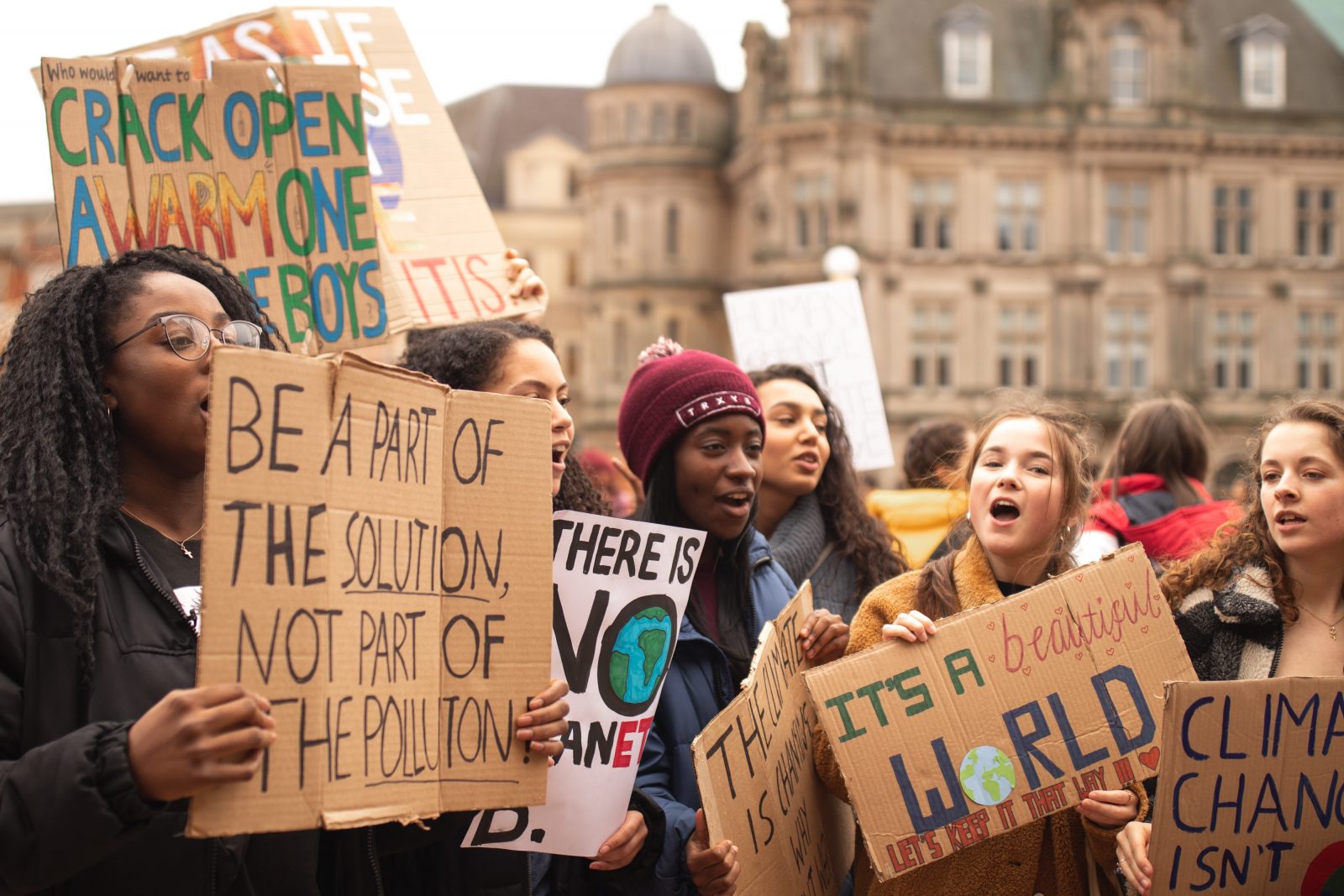
Over a week after protests began in Minneapolis, demonstrations continue in dozens of cities. While these civil rights protests were intended to be peaceful, violence has erupted on a scale unheard of since the riots following Dr. Martin Luther King Jr’s assasination. Many protesters declare that they want more than justice for George Floyd: they want to see major changes to America’s policing model, and possibly its complete dissolution.
Responses to the protests reflect the polarized, fractured nature of 21st century America. Misinformation and mixed messages have flooded the internet. While conservative outlets criticize protesters for looting and attacking police, left-leaning publications have suggested that much of the violence has been caused by police or even manufactured. Hoaxes and conspiracy theories abound on social media, including a viral tweet showing an image of Washington, DC engulfed in flames.
Misinformation is also being spread by some police departments. Following a chaotic night of arrests in Richmond, Virginia, the Richmond Police tweeted that they were forced to deploy tear gas to protect officers from violent protesters. Two hours later, they walked back the statement, calling their own actions “unwarranted.” Richmond Police Chief William Smith claimed that “there was no use of force by officers,” but protesters say this is patently untrue. One of my friends was arrested on May 31st for violating curfew, and she has allowed me to use her account of the events. The following excerpt is unedited, as per her request.
“From my experience in the jail, it was clear to me that local law enforcement is angry about the content of the protests and interested in punishing those involved, by means ranging from the banal like long periods alone in cells and strip searches all the way up to rough rides in cop vans to exposure to unsafe and potentially harmful COVID-transmitting environments. They’re mad, they can take it out on you when you’re under their power, and they want us to know that. Those officers and deputies who aren’t actively spiteful are either unbothered by the actions of their colleagues or vaguely apologetic but disempowered to intervene. As of 1pm today, police chief Will Smith was saying that no protester had complained to his office regarding their treatment — but frankly this is probably because people treated badly were crawling home to recover. Be aware of this and always have someone backing you up on the outside, if you’re going to risk arrest.”
It feels impossible to discern the truth from this confusing, chaotic picture. Unsure who to believe, many Americans have turned to anecdotes and social media for answers. It seems that America’s flagging trust in the government and the news media is at its breaking point.
Analysis
Much has been made of the public’s declining trust in the government, the news media, and each other. The phenomenon is often chalked up to Americans self-segregating online: choosing only to engage with media outlets and online platforms that conform with their political views. This is a major contributing factor, but the story is much more complex.
For generations, journalists and news outlets have aimed for objective, unbiased reporting. While this has always been an unobtainable ideal, it meant that the news functioned as an educational resource, not entertainment. For decades, Americans received a similar “education”: Newspapers, radio stations, and TV stations across the nation relied on the Associated Press; TV channels were few in number, and staying politically moderate appealed to more viewers.
That changed precipitously with the advent of cable TV and the Internet. Suddenly, NBC’s nightly news had to compete with the likes of MTV, ESPN, YouTube, and 4chan. With the horizons of choice forever expanding, journalists faced tremendous pressure to retain their audience. In their quest to remain relevant, they discovered that politics is more engaging when it’s treated as a team sport: liberals vs. conservatives, urban vs. rural, baby boomers vs. millennials. Political competition and controversy are now baked into the business model of journalism. Consciously or not, Americans no longer look to the news for information, but to get their blood pumping.
With the pandemic continuing to keep many of us at home (and potentially unemployed), the desire for this type of stimulation is stronger than ever. Most people determined their opinions on Black Lives Matter and police brutality by the time of the Baltimore riots in 2015; as such, they tune into the news to see shocking images and hear their views confirmed. Beyond being informed, they seek to be shocked and validated. We’re fighting for our nation’s soul, yet we cannot extricate that battle from our desire for stimulation and entertainment. The police and protesters are gladiators in our national colosseum.
Even when we approach this issue in good faith, the truth takes a backseat to our ire, our fear, and even our boredom. Conversations about the nature of policing in America are drowned out by ferocious arguments about whether looting is justified — despite the fact that this is completely beside the point. Our society will be unequipped to have a productive dialogue about race and policing until we can put our own feelings and “teams” aside and focus on what matters: the lives of black Americans, and the role of police in our society.
Resistance Resources
- The National Association for the Advancement of Colored People is collecting signatures on a petition to Congress. Its demands include an impartial federal investigation into George Floyd’s death and police reform through federal legislation.
- Interactive list of petitions, ways to donate, and other ways to be involved in the movement.

In Support of Protests Against US Racial Injustice and Police Brutality
U.S. RESIST NEWS stands in support of those protesting against racial injustice and police brutality in America. The murder of George Floyd by Minneapolis police officers is what set off the current wave of protests. But Floyd’s murder is only the most recent example of a decades long history of police violence directed at black Americans. As the protestors so clearly point out it is time for this to stop.
We endorse the suggestions of Democratic Presidential candidate Joe Biden to ban the use of chokeholds and “weapons of war” by police, and establish a National Police Oversight Board with the ability to investigate police brutality . We need each and every police department in the country to undertake a comprehensive review of their hiring, their training, their de-escalation,” Biden said in recent remarks in Philadelphia..
Biden’s suggestions are excellent but there is little chance they will be implemented as long as President Trump is in the White House. However former President Barack Obama pointed out in a recent article in Medium that the elected officials who matter most in reforming police departments and the criminal justice system work at the state and local levels. It is there that action needs to be taken to ensure prosecution of police misconduct. That is something we can go to work on immediately. We need to ignore the President’s attempt to hijack this moment as a law and order issue.
Media coverage of the protests has unfortunately often highlighted the violent actions of a few political extremists and those who have used the protests as an opportunity to vandalize property. These people need to be arrested and criminally charged if appropriate.
But the overwhelming number of people in the streets of US cities have been peaceful protestors. They have come out to protest in the midst of a public health pandemic, because they feel that, no matter what the circumstances, the murder and mistreatment of black Americans by the police needs to stop now.
And A Note to Our Fellow Protestors: The ability to peacefully protest a government law, regulation or unjust action is enshrined in the 1st Amendment to our Constitution. No one can take that right away from us. Our friends at the American Civil Liberties Union offer a handy detailed guide to our rights as a protestor or a protest organizer. Here is a link: