

JOBS POLICIES, ANALYSIS, AND RESOURCES
Latest Jobs Posts
Profiles of U.S. Anti-Abortion Groups
Brief #139 – Health and Gender Policy
By Geoffrey Small
With Roe v. Wade overturned, a deluge of anti-abortion trigger laws have gone into effect across the country. States like Louisiana, Texas and Missouri have created some of the strictest laws and legislative proposals in the United States. Recent proposals include criminal and civil prosecutions for providers, people who aid in out-of-state abortions, and potentially the patients who receive them.
Round 10 in the Fight to Save the Planet – and Fatigue Has Set-in
US Renew Op-Ed
By Todd J Broadman
Global warming as our single most important political issue has begun to wane, taking a backseat to economic concerns. A scant 1 percent of those recently polled by the New York Times/Siena College perceive climate change as the most important U.S. issue.
That low ranking for climate as an issue held true for those under 30 as well. As this is a long-term issue and one that requires long-term determination, the apparent widespread apathy is cause for concern.
The Banning Surveillance Advertising Act of 2022
Brief #63 – Technology Policy
By Mindy Spatt
Internet giants like Google and Facebook are selling our personal data or selling access to the data they collect. The resulting barrage of advertisements are not just annoying, they violate our privacy, perpetuate discrimination and spread misinformation.
How Donald Trump Changed the Government
Brief #38 – Social Justice
By Maureen Darby-Serson
A President can change the course of the United States in many ways. Donald Trump was no different. But the ways that Trump changed the government are haunting us and will follow us for decades to come.
Schools, Universities Now Leading Targets of Ransomware Attacks
Brief #54 – Education
By Lynn Waldsmith
A new viral threat known as ransomware is attacking schools and universities throughout the country. According to security company Sophos, 64 percent of higher education institutions and 56 percent of K-12 schools were struck by ransomware last year.
According to the company’s State of Ransomware in Education 2022 report, that means an average of 60 percent across the education sector overall, up from 44 percent in 2020.
The New Gun Law Also Helps Address the U.S. Mental Health Crisis
Brief #37 – Social Justice
By Geoffrey Small
On June 25th, 2022, President Joe Biden signed The Bipartisan Safer Communities Act. The Congressional Bill is a measure touted to address gun safety. However,
this bipartisan legislation is the culmination of almost a decade of mental health advocacy spearheaded by Republican Senator Roy Blunt and Democratic Senator Debbie Stabenow. The most effective measure of this bill may be the record $8 billion in funding allocated to school programs and mental health programs.
The Latest Developments and Applications in 5G Technologies
Brief #62 – Technology
By Christopher Quinn
Wireless communications systems use radio frequencies (also known as spectrum) to carry information through the air. 5G operates in the same way, but uses higher radio frequencies that are less cluttered. This allows for it to carry more information at a much faster rate. 5G also works closely with the iCloud to store and retrieve data.
After Dobbs v. Jackson, the End of Roe v. Wade and the Battlefield for Liberty
Brief #138 – Health & Gender Policy
By Alexandre Ellis
On June 24, 2022, the United States Supreme Court released the published opinion of Dobbs v. Jackson Women’s Health Organization.19-1392, 597 U.S. ___. In a 6-3 majority opinion, a group of unelected officials stripped people with uteruses bare of the right to choose whether they will carry a pregnancy to term.
Preview of US Senate Races in Ohio and Iowa
Brief #40 – Elections & Politics
By Ian Milden
Control of the U.S. Senate will be up for grabs in the 2022 mid-term elections. Competitive races in key states will determine the balance of power. In this brief, I will preview the US Senate races in Ohio and Iowa.


Situation Update #5: The Ukraine Crisis
Situation Update #5: The Ukraine Crisis
Foreign Policy Brief #149 | By: Abran C | March 10, 2022
Header photo taken from: AP News / Serhii Nuzhnenko
Follow us on our social media platforms above
Browse more foreign policy briefs from the top dashboard

Photo taken from: US News (.com)
[SSB theme=”Official” align=”center” counter=”true” ]
As the Russian invasion of Ukraine enters its second week, the destruction and death toll have continued to worsen. Nearly 2 million people or 4.5% of the population, have fled Ukraine. Most refugees have made their way to neighboring countries such as Hungary, Poland, Moldova, and Slovakia. The EU on March 8, 2021 allocated 500 million Euros for humanitarian aid to Ukraine, and expects millions of more refugees to arrive at its borders. Thus far 516 Ukranian civilians have been killed in the two weeks that war has been raging, with another 1000 civilians wounded. The true toll is likely much higher and will only become clear once the war has ended.
At two weeks into the war, Russia has struggled more than expected as the Ukranian military and civilians have fought keeping them at bay and out of the capital Kyiv. The Ukranian government has requested a NATO no-fly zone be implemented in order to assist in the fight against the invading forces, the request has been rejected multiple times. Implementing a no-fly zone in Ukraine would be dangerous and costly. It would require the US and NATO air power to be in direct conflict with Russian forces. The risks of such a move could drastically escalate the conflict and result in an all out war or even devolve into nuclear strikes. Putin has already signaled his readiness to rely on nuclear weapons with Western interference in the war. Putin has also stated he would not tolerate unlimited U.S. or NATO arms supplied to Ukraine. NATO, in turn, warned Russian against the conflict spilling into a NATO country like Poland or Romania.
Countries opposed to the war have so far relied mainly on sanctions as their primary means of combating the Russian invasion. The US and its allies have already removed Russian use of the SWIFT financial system, sanctioned Putin and officials close to him, as well as frozen Russia’ s assets in the West. Additionally, the US has now banned Russian oil in what are the most restrictive sanctions ever imposed on a major power. The EU has also committed to scaling back use of Russian energy imports by the end of the year, down ⅔ of their average consumption, which would be a tremendous blow to Russia’ s already battered economy.
Even Switzerland has dropped its long held neutral stance and has sanctioned Russian assets. These sanctions, along with a number of businesses that have cut ties with Russia, have made it impossible to conduct business as usual in the country. The Russian ruble has fallen to record lows amid the sanctions. Now it is worth less than one penny.
Oil prices in the US, which were already on the rise, have been pushed up even further with the announcement of Russian oil sanctions. Energy prices are contributing to the worst inflation in 40 years, consumer prices jumped 7.5% compared to last year. The US has held talks with Venezuela to find an alternative source of oil to fill the void left by Russian sanctions. The US had previously cut ties with Venezuela and does not recognize Nicolás Maduro as the legitimate president of the South American nation. This move could be seen as one to isolate Russia even further by replacing its oil with Venezuelan oil in the US and European states, and scratch off one of the few allies Russia has left.
Free speech has become another casualty of the Russian invasion of Ukraine. In order to combat public isolation, Russia has banned journalists from calling its actions in Ukraine a ‘war’ or an ‘invasion’. On March 4, 2022 President Putin signed a law making the spread of what the government would classify as false information about the armed forces illegal. Journalists caught doing so could be jailed for up to 15 years. The move prompted several international media outlets to pull out of Russia in order to avoid having their journalists prosecuted and jailed.
There has also been a host of criticism of the West’s double standards in its handling of refugees and in reporting on the war. The EU’s quick humanitarian response to the refugees fleeing Ukraine has drawn calls of unequal responses. Contrast those of a European background fleeing war and being welcomed with open arms to Middle Eastern and North African refugees, many of which have spent years, if not decades, attempting to seek asylum in Europe.
Certain media coverage of the ongoing crisis has also come under scrutiny for the use of offensive and racist language.


Photo taken from: Reuters / Mahmoud Hassano
(click or tap to enlargen)
Comments made by Western journalists have been widely circulated in media, for example, CBS News’ Charlie D’Agata stated last week that “ Ukraine isn’t a place, with all due respect, like Iraq or Afghanistan… This is a relatively civilized, relatively European – I have to choose those words carefully, too – city, one where you wouldn’t expect that, or hope that it’s going to happen”.
There have also been reports of minorities in Ukraine experiencing racist treatment by Ukrainian security and border officials. African and Asian students in Ukraine had reportedly been denied access to escape routes alongside Ukrainians fleeing the Russian onslaught. “Only Ukrainians. That’s all. If you are Black, you should walk”, were the words reportedly told to one African student attempting to get on a bus to across the border into Poland.
On Wednesday March 9, 2021 Russian airstrikes hit three hospitals including a maternity hospital. The strikes were carried out to destroy so- called chemical weapons labs. On the same day, the power supply to the Chernobyl nuclear power plant was cut. Ukrainian authorities have said the invading Russian forces were to blame for the blackout at the site and warned it could lead to nuclear discharge.
While the war has created a massive problem for the citizens of Ukraine and neighboring European states, but it has also taken a massive toll on Russia and will probably frustrate Russian officials who may not have foreseen the extent of the consequences of their actions. A lagging and demoralized army, along with a squeezed and battered economy, may anger Putin into escalating the war in dangerous ways.

Russia’s Bombs Target Women in Mariupol
Russia’s Bombs Target Women in Mariupol
Foreign Policy Brief #148 | By: Yelena Korshunov | March 10, 2022
Header photo taken from nv.ua
Follow us on our social media platforms above
Browse more foreign policy briefs from the top dashboard

Photo taken from: The New York Times
[SSB theme=”Official” align=”center” counter=”true” ]
My friend Maria is a New York volunteer who collects clothes, blankets, and medicines for Ukrainian hospitals. She sends it to Poland volunteers, paying for express air shipping from her own pocket. Maria was born in Mariupol. Had you ever heard about this place before the devastating war in Ukraine started? Mariupol was a beautiful green Ukrainian city on the coast of the Sea of Azov. If you travel there before February 24th, 2022, you would love this quiet nice place.
Maria has been living in New York for 20 years, but her parents and siblings with their families live in this Ukrainian city. Such as in any place like Mariupol, adults work, children go to school, friends and families celebrate holidays. Precisely, it was like this before February 24th, 2022.
After that date the entire world was stunned watching news from Ukraine. And today, on March 9th, videos and pictures from Mariupol’s ruined maternity hospital appeared in all the world news. Around 4:30 pm, the Russian invaders dropped several powerful bombs from aircraft on the maternity hospital and a children’s hospital in the center of the city.
As reported by “Ukrainskaya Pravda”, as a result of an air strike on the Mariupol maternity hospital No. 2, 17 people were injured, among them the staff and those who gave birth. “Now there are 17 confirmed wounded among the staff and women in labor. Three people died, among them is a little girl.”, said on Ukrainian TV the head of the Donetsk regional military administration Pavlo Kirilenko.
According to Kirilenko, it is difficult to confirm information about dead civilians and keep any statistics, but as of the morning of March 9th, he was informed of 1207 civilian casualties from Mariupol. Mariupol is under constant bombardment by aircraft and artillery of the Russian forces. Kirilenko reports that for more than a week, the occupiers have been cordoning off the city and frustrating all attempts to evacuate civilians through “humanitarian corridors.”
Mariupol residents report that the Russian military does not allow them to remove corpses from the streets. Mobile and Internet connection is inconsistent.
Representatives of Ukraine filed an official lawsuit with the International Court of Justice on the commission of war crimes against the civilian population by the Russian occupation forces, in particular, the deliberate destruction of hospitals, schools, child care centers, etc. Ukraine president Volodymir Zelensky said today that “what the occupiers are doing to Mariupol is already beyond atrocity. A children’s hospital, a maternity hospital. How did they threaten the Russian Federation?
What kind of country is this – the Russian Federation, which is afraid of hospitals, is afraid of maternity hospitals and destroys them? Pregnant women were going to shoot at Rostov? Someone in the maternity hospital humiliated the Russian-speakers? What was that, the denazification of the hospital?” the president asks.


Photos taken from: EBRD Green Cities and nv.ua
(click or tap any to enlargen)
Reportedly, on March 8th, the occupiers offered the residents of Mariupol to evacuate at gunpoint to Rostov-na-Donu in the Russian Federation. What will be the people’s choice? To be the next victims of “Russian peace” in Mariupol or to “evacuate” to Russian territory at gunpoint and cameras of Russian TV reporting how happy these “saved” people will be under the rule of those who killed their friends and relatives?
And how many more newborns and children will be killed and wounded before the world will stop this atrocious war?

The U.S. House Select Committee Investigation of the January 6 Attack on the Capitol: Part 9
The U.S. House Select Committee Investigation of the January 6 Attack on the Capitol: Part 9
Social Justice Policy Brief #34 | By: Erika Shannon | March 9, 2022
Header photo taken from: Saloon (.com)
Follow us on our social media platforms above
Browse more social justice policy briefs from the top dashboard

Photo taken from: Orange County Register
[SSB theme=”Official” align=”center” counter=”true” ]
The investigation into the attack on our nation’s capitol last January has been underway for several months now. Countless subpoenas have been issued, to both companies and individuals, and thousands of pieces of video and photographic evidence has been submitted. The House Select Committee has been winding down a long list of people who are connected in some way to the events that transpired on and around January 6, 2021 in Washington, D.C. In a recent bombshell, the Committee has stated that there is enough evidence to conclude that former President Donald Trump and allies may have conspired to commit fraud and obstruction by misleading Americans on the outcome of the 2020 election and attempting to overturn the election results.
The finding of the Committee were released in a legal brief issued in federal courts regarding former President Trump’s lawyer John Eastman. Eastman has attempted to hide records and email from the House Committee’s investigation, alleging that he is under the umbrella of attorney-client privilege. The Committee is looking into whether or not there may be a crime-fraud exception to this attorney-client privilege rule; they believe Eastman’s emails indicate that he helped the former President advance a corrupt scheme to obstruct the counting of Electoral College 2020 ballots, and a conspiracy to impede the transfer of power.
John Eastman’s attorney, Charles Burnham, has made it clear that Eastman has a responsibility to protect client confidentiality, even at great personal risk. He claims they will respond in due course, and for now it looks like the Committee will have to wait for the information they are seeking from Eastman. In order for the House Committee to prove Trump committed felony obstruction, investigators would need to show that he “corruptly” intended to impede an official proceeding. The Committee says Trumps’ working with Eastman to pressure former Vice-President Mike Pence to take illegal acts could satisfy that requirement. Only time will now tell if a federal judge will require Eastman to provide his own emails to congressional investigators.
As time goes on, the Committee continues to subpoena individuals in relation to the January 6th, capitol riots. Most recently, the Committee subpoenaed Kimberly Guilfoyle, former trump campaign aid and fiancée to Donald Trump, Jr. The House Select Committee purports to have evidence that Guilfoyle was in direct contact with key individuals, raised funds for the rally immediately preceding the violent attack on the U.S. Capitol, and participated in that event. Guilfoyle spoke at the rally on the Ellipse in support of the former President and his claims of election fraud. Since Guilfoyle backed out of her voluntary interview, the Committee is hoping that this subpoena will compel her to testify before them.
The House Select Committee has also issued subpoenas to six individuals who promoted false claims that the 2020 president election was fraudulent, and also participated in or encouraged various actions based on those false claims. The six individuals named are Cleta Mitchell, Kenneth Chesebro, Christina Bobb, Katherine Friess, Kurt Olsen, and Phillip Kline. The Committee hopes the testimony of these individuals will help them further understand various strategies employed to potentially affect the outcome of the 2020 election.

Photo taken from: Yahoo
(click or tap to enlargen)
The National Archives has also released documents to the House Select Committee that were previously kept hidden by the former President. This includes a schedule of the former President’s morning on January 6, 2021. That afternoon the former President spoke at the Ellipse at the Save the America Rally, where he continued to make unsubstantiated claims about the 2020 election’s outcome.
In another small victory for the House Select Committee, former Attorney General William Barr has said that he would be willing to further cooperate with the committee.
Barr said he believes that the former President was responsible for the January 6 riot in a “broad sense” but did not lay down any legal implications. Barr is thought to have relevant information to the panel’s investigation and may help push their investigation in ways that will ensure the events that transpired in January of 2021 do not repeat themselves.
This brief is part of an ongoing series in the Select Committee’s investigation; further updates will be provided as the investigation continues.
Engagement Resources
Click or tap on resource URL to visit links where available

To read the panel’s most recent court filing, click here.
For the latest news regarding the January 6th Investigation, click here.

The Olympic Games: Sports, Politics, or Both?
The Olympic Games: Sports, Politics, or Both?
Foreign Policy Brief #147 | By: Reilly Fitzgerald | March 4, 2022
Header photo taken from: NBC News
Follow us on our social media platforms above
Browse more foreign policy briefs from the top dashboard

Photo taken from: Encyclopedia Britannica
Policy Summary
[SSB theme=”Official” align=”center” counter=”true” ]
Like everyone else, the Olympic Games have been mesmerizing to watch; the athletes that have given everything to reach the pinnacle events in their sport. The dedication alone to become an Olympian representing a country is spectacular. The 2022 Olympic Games in Beijing have also been full of political tension. We saw athletes get accused of doping, some athletes have renounced their citizenship, some teams like China’s Men’s Hockey Team were made up of a lot of foreign nationals rather than just Chinese players, and we even had athletes using their platform to try and steer the world away from war in Ukraine – only to be told to be silent about politics.(.
The Olympics originated, as the world knows, in Ancient Greece. It was an event held in four year increments to rally and unite the city-states to celebrate athletics … but it was also a time for the city-states to speak to one another in one place about political matters. The city-state of Elis was the first to create the tradition of the Olympic Truce which applied to the city-states coming to the games and the spectators; it allowed the games to be held without the risk of conflicts interrupting the celebration. According to the Penn Museum, the Spartans violated the truce in 420 BC by holding a military training exercise with their army and were fined and excluded from the Olympic Games afterward.
The Olympic Games have not been ongoing since the Ancient Greeks were walking the Earth; they ended in 394 CE but were restarted in 1896 as the first “modern” Olympic games. According to the Olympic Games website, the Ancient Games were ended due to the Roman Emperor Theodoseus viewing the Games as a pagan celebration.
The history of the modern Olympic Games has been wrought with controversy, politics, and many other elements besides athletics and sportsmanship. The Games have frequently been used as propaganda by countries with tyrannical governments, the most glaring examples of this was the 1936 Olympics held in Berlin at the height of the Nazi Regime before the start of World War II – while the persecution of Jewish people was in full motion.
Some of the most recent games have been full of controversy as well – the 2014 Winter Games in Sochi, Russia, uncovered a State run national doping program that infiltrated almost all of the Olympic events, and it was done at the direction of Russian President Vladimir Putin. The Summer Olympics in Rio in 2016 were fraught with human rights violations as the local government was forcibly removing people from their homes and neighborhoods to create space to host the games. The 2022 Winter Olympics are being hosted in China while China persecutes the Uyghur population in their country – though they deny this and pretend to be ‘re-educating’ this minority group.
Policy Analysis
Sports and politics have always been intertwined, especially the Olympic Games (ancient or modern). The Games have had a history of many highly political moments such as the hosting of the Games in Berlin in 1936 under the Nazi regime; or the 1980 Summer Olympic Boycott against the Soviet Union; or the uproar after the 1968 Olympics Black Power salute atop the podium; and many other instances.
The fact of the matter is that the Olympic Games and some of the requirements of hosting the games can often lead to human rights issues. It was well documented during the 2016 Rio Olympics that the Brazilian government was displacing people to either build new venues for the events or to restrict access and criminal activity in certain locations. According to a Sports Illustrated article, from 2015, there were approximately 4,000 families that experienced human rights abuses in Brazil directly tied to the Olympic Games. Some of these violations included violence via police officers, evictions and forced displacement, and other actions taken by the state. The government of Rio denied all of the allegations. Unfortunately, most of the countries in the world attended these games and did not deem these abuses to be severe enough to warrant a boycott.
However, in the 1980 Moscow Summer Olympics, there was a massive international boycott ( in protest of Russia’s invasion of Afghanistan) that included countries like the United States, West Germany, and many other smaller countries. In the 2022 Beijing Winter Games, some countries like the United States, conducted a diplomatic boycott to protest China’s treatment of the Uyghurs. The 1980 Boycott forced some athletes to compete for other countries, if possible; just like we are seeing with these Olympic Games where foreign citizens or citizens of other countries are competing for China in events like hockey or skiing.

Photo taken from: Yahoo Sports UK
The United States’ foreign policy decisions regarding the Olympic Games since 1980 have never reached the tension that was caused by the Moscow Games. The United States has since had boycotts of games, but diplomatic boycotts; which bar politicians, officials, and dignitaries from going to and/or participating in the games – it does not restrict athletes. However, this type of decision does call into question the credibility of the values that the United States’ foreign policy attempts to uphold around the world such as respect, dignity, democracy, and human rights. The Rio Games are a great example of the United States turning a blind eye to these ideals when there was clear documentation and studies completed that exposed the displacement of people, and the inhumane treatment endured by the people in Rio to prepare for the games.
Unfortunately, the Olympic Games are a huge money-making opportunity for the International Olympic Committee which organizes the games; it is a money-maker for the host country and city, though there is often a large sum of debt that is associated with hosting; and it is one of the largest non-violent ways to demonstrate your superiority as a country – by winning the medal count.
All of these factors were at play in 2014 Sochi Winter Olympics when Russian President Vladimir Putin created a state-run doping program by which athletes, representing Russia, in almost every single sport tested positive for banned substances. This caused political pressure from other countries to ban the Russian Federation from competing under their own flag – so for now they compete as either “Athletes From Russia”, or “Russian Olympic Committee”. This has not stopped Russians from doping either as a 15 year old figure skater, Valieva, tested positive for a banned heart medication. Gold medals are great for the athletes personally, but even better for a country in need of a PR lift.
As I am writing this several days after the Games concluded with the Closing Ceremonies, it should be noted that Russia has invaded Ukraine. Much of the political blustering and drama during these Winter Games surrounded the anticipation of war in Europe. It appears, to many, that Russia has violated the spirit of the Olympic Truce – and this war will be a major and significant foreign policy event for all nations involved. Athletes during the games were told to not use their platforms, while at the games, for political messaging – in anticipation of backlash toward China for their treatment of the Uyghurs and also backlash against Putin’s preparations for war. However it was rumored that President Putin of Russia told President Xi of China of his plans to invade Ukraine, and President Xi asked Putin to delay the start of the invasion until after the Olympics were over.
Engagement Resources
Click or tap on resource URL to visit links where available

Penn Museum – Olympics Section ( https://www.penn.museum/sites/olympics/olympicorigins.shtml )

Minority Rights Group International ( https://minorityrights.org/minorities/uyghurs/ )

Council on Foreign Relations – Olympics Section ( https://www.cfr.org/olympics )

An Update on US GDP and the Economic Effects of Russia’s Invasion of Ukraine
An Update on US GDP and the Economic Effects of Russia’s Invasion of Ukraine
Economic Policy Brief #136 | By: Greg Ziegler | March 5, 2022
Header photo taken from: Getty Images
Follow us on our social media platforms above
Browse more economic policy briefs from the top dashboard

Photo taken from: CNBC
Policy Summary
[SSB theme=”Official” align=”center” counter=”true” ]
The Bureau of Economic Analysis (“BEA”) released the second estimate of 2021 Q4 Gross Domestic Product (“GDP”) on Thursday, February 24th. The first advanced estimate was released on January 27th which showed fourth quarter growth in 2021 of 6.9% and third quarter growth in 2021 of 2.3%. The second estimate was consistent with the first advanced estimate and showed that GDP increased at an annual rate of 7% in the fourth quarter. This estimate is based on a more complete data set than what was available for the first advanced estimate.
The BEA stated that the increase in fourth quarter growth reflected the continued economic impact of the COVID-19 pandemic, and that in the fourth quarter, COVID-19 resulted in continued restrictions and disruptions in the operations of establishments in some parts of the country. In a technical note accompanying the advanced estimate the BEA noted that several legislative acts, such as the Coronavirus Aid, Relief, and Economic Security (CARES) Act, the Coronavirus Response and Relief Supplemental Appropriations (CRRSA) Act; and the American Rescue Plan (ARP) Act, (the “Acts”), provided temporary funding for existing federal programs to support individuals, communities, and businesses impacted by the pandemic.
Because the effects of the Acts were in the form of transfers to individuals, subsidies to businesses, and grants to state and local governments, their effects on GDP show up indirectly through components of GDP, such as consumer spending. In its technical note to the second estimate the BEA noted that the increase in GDP primarily reflected increases in private inventory investment, exports, consumer spending, and nonresidential fixed investment.
Policy Analysis
GDP is used as a gauge to measure the overall health of the economy and represents the value of all the finished goods and services produced in the United States. (For example, the economy is often considered to be in a recession after two consecutive quarters showing a decline of GDP)
Just as the economy is beginning to emerge from the economic effects of COVID-19, the United States economy, and the economies’ of all nations will face the effects of a war in Europe as Russia invaded Ukraine on February 24th. The price of oil steadily ticked up as a Russian invasion became more and more certain. The price of Western Intermediate Crude (“WTI”) was $89.60 on 2/4, $90.61 on 2/11, and $92.89 on 2/18 closing at $92.81 on 2/24 (one year ago on 2/24/21 the price of oil was $63.53).

Photo taken from: The Balance
(click or tap to enlargen)
The Automobile Association of America (“AAA”) stated that the national average for a gallon of regular gasoline has increased and that the increasing oil prices will continue to play a role in pushing prices higher.
As the war continues and additional economic sanctions are levied against Russia oil markets will continue to reflect the volatility in the world and the energy markets, the impact that these world events have on the United States economy is only just beginning to be seen.
Engagement Resources
Click or tap on resource URL to visit links where available

https://www.bea.gov/news/2022/gross-domestic-product-fourth-quarter-and-year-2021-advance-estimate
https://www.bea.gov/sites/default/files/2022-01/tech4q21_adv.pdf
https://www.bea.gov/news/current-releases
https://www.bea.gov/data/gdp/gross-domestic-product


https://markets.businessinsider.com/commodities/oil-price?type=wti

https://www.up.com/customers/surcharge/wti/prices/index.htm

As Oil Prices Surge, Drivers Should Brace For More Pump Price Increases
West Virginia School District Sued For Forcing Students To Attend Religious Assembly During School Hours
West Virginia School District Sued For Forcing Students To Attend Religious Assembly During School Hours
Civil Rights Policy Brief #183 | By: Rodney A. Maggay | March 2, 2022
Header photo taken from: NPR
Follow us on our social media platforms above
Browse more civil rights policy briefs from the top dashboard

Photo taken from: The News & Observer
Policy Summary
[SSB theme=”Official” align=”center” counter=”true” ]
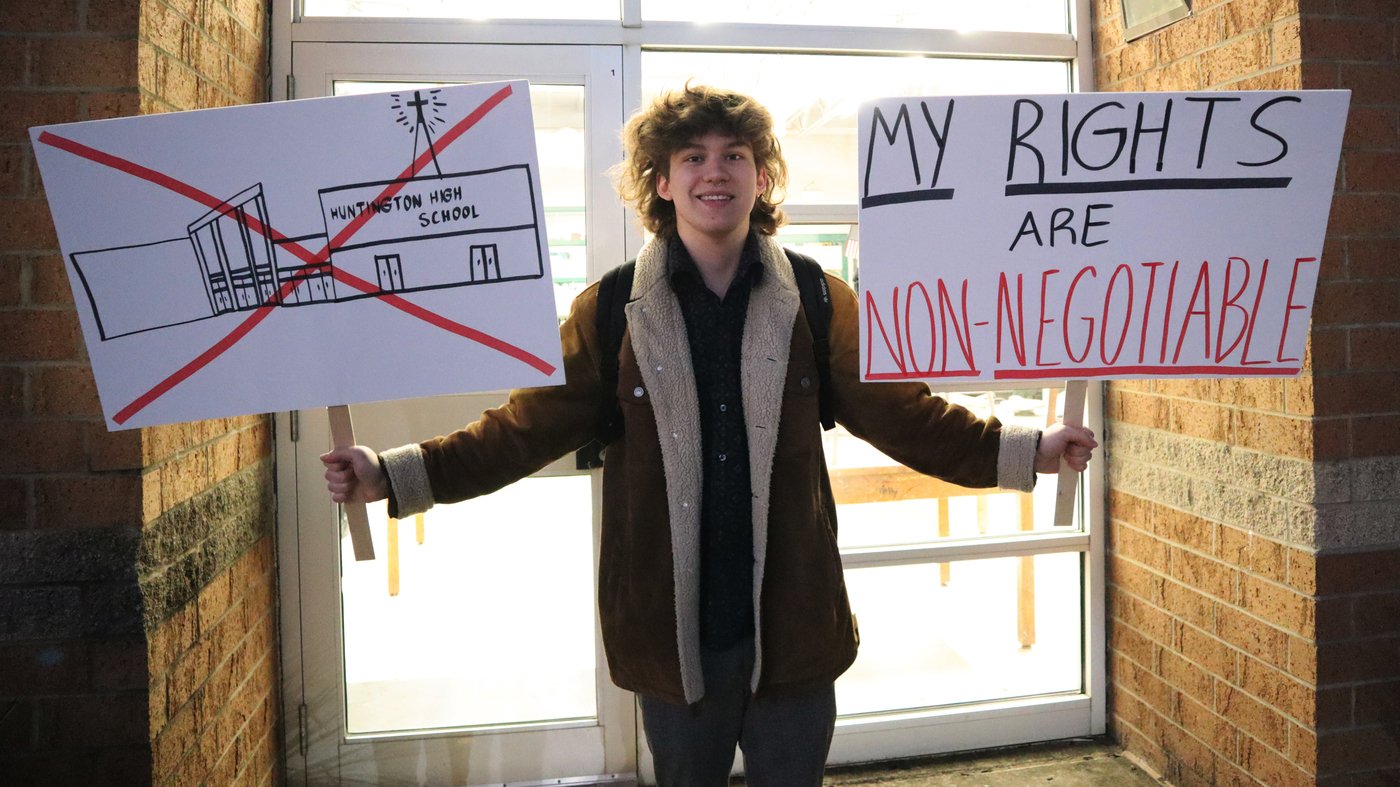
On February 2, 2022 two homeroom classrooms at Huntington High School in the Cabell County School District in southwestern West Virginia were brought to a school assembly. The assembly was hosted by Nik Walker of Nik Walker Ministries. Nik Walker is an evangelical preacher and his group had been hosting revival events in the area with the purpose of exposing persons to Jesus Christ and Christianity.
Two of the teachers who escorted their homeroom class to the assembly told their class that they were required to attend. The homeroom classes were brought over but when one student who did not feel comfortable attending the event asked to leave, he was told that the room was locked. At the event, Nik Walker encouraged the students to pray with him by sending adults into the crowd to lead the students in prayer and admonished the students “to follow Jesus or face eternal torment.”
Approximately one week later, more than one hundred students staged a walkout during school hours to protest their required attendance at the Nik Walker Ministries event. In addition to the walkout, many of the students signed a petition seeking an apology from the West Virginia Board of Education.
Later a lawsuit was filed in the U.S. District Court for the Southern District of West Virginia on behalf of a number of families whose students were coerced into attending the evangelical revival event. The lawsuit was filed by the Freedom From Religion Foundation (FFRF) and seeks a permanent injunction barring the Cabell County School District from sponsoring any religious worship services, adult led religious activities during the school day or participation of students in such events during school hours.
Policy Analysis
The First Amendment to the United States Constitution provides that “Congress shall make no law respecting an establishment of religion” and the Supreme Court has applied this law to public schools in a variety of scenarios. Classroom scripture readings and prayers were found to be in violation of the First Amendment as well as moments of silence to pray at the beginning of classes, the posting of the Ten Commandments in public schools and the requirement to teach “creationism” in schools.
The overall principle of many of these decisions as it relates to public schools is that the First Amendment of the Constitution forbids schools from endorsing a religious position or any religious faith as part of a student’s school day.
During the student led walkout to protest the religious assembly held on campus students chanted, “Separate the church and state” and “My faith, my choice.” Based on what happened at Huntington High School on February 2nd it is clear that the teachers and the high school erred by requiring their students to attend the Christian revival assembly during school hours. But while some are trying to argue that this is merely a one – time honest mistake that won’t happen again, the history of the Cabell County School District shows that this school district has a history of trying to use school assemblies to force religious expression on students and of trying to coerce them to accept Christian thoughts and values.
In 2017 the Cabell County School District was notified about hosting two religious assemblies at Huntington High School during school hours. And in 2019 the school district was again notified because parents discovered that adult led religious clubs were being run in district schools during school hours.

Photo taken from: News Observer (.com)
(click or tap to enlargen)
Both notices were seemingly ignored by the Cabell County School District with no record of whether any action had been taken to prohibit those and similar activities in the future.
The Cabell County School District’s tolerance of religious activities during school hours instead appears to be a systematic effort to ignore the commands of the Constitution and try to impose religious teachings and host religious themed activities in their school district. But the law is the law and they cannot continue with this pattern of behavior at schools in the district.
The problem is that the school district is obviously taking a position by saying Christianity is the only accepted faith that should be followed. And they are pushing this position during school hours on young minds that might be forced to accept.
The permanent injunction asked for in the lawsuit brought by the Freedom From Religion Foundation can help to try and stem the incidents that have been going on in the district and can send the message that public school students should not be coerced into listening or adopting unwanted Christian viewpoints during school hours. LEARN MORE, LEARN MORE, LEARN MORE
This brief was compiled by Rod Maggay. If you have comments or want to add the name of your organization to this brief, please contact Rod@USResistnews.org.
Engagement Resources
Click or tap on resource URL to visit links where available

Freedom From Religion Foundation – non – profit group webpage about the lawsuit they brought on behalf of Huntington High School families and their work advocating for the separation of church and state.

American Civil Liberties Union (ACLU) – quick info bulletin on public schools and religion and the Establishment Clause of the First Amendment of the U.S. Constitution.

Situation Update # 4: The Ukraine Crisis
Situation Update # 4: The Ukraine Crisis
Foreign Policy Brief #146 | By: Abran C | February 28, 2022
Header photo taken from: ABC News
Follow us on our social media platforms above
Browse more foreign policy briefs from the top dashboard

Photo taken from: CNN
[SSB theme=”Official” align=”center” counter=”true” ]
On February 24, 2022, the largest assault on a European state since World War Two began as Russia launched a full-scale invasion of Ukraine. Russian forces entered by way of air, land, and sea quickly spreading across the country. Areas outside of the capital Kyiv, such as the Chernobyl Nuclear Power Plant and Ukraine’s second-largest city Kharkiv have fallen under Russian control. The invading forces have targeted the country’ s infrastructure, fuel facilities, airfields, and military posts attempting to limit Ukraine’s capacity to fight back. Yet as Russian troops have advanced towards the capital they have been slowed by fierce pushback from Ukrainian forces and armed civilians. A curfew has been put in place in Kyiv and is set to last to Monday morning as Russian forces close in on the city.
Condemnation of the invasion followed soon after it began, the US, UK, European Union, Japan, Australia, New Zealand, and Taiwan all hit Moscow with fresh rounds of sanctions. US sanctions include– cutting off major Russian banks’ access from using dollars for transactions, sanctioning wealthy Russian individuals with links to the Kremlin, cutting off high-tech imports to stop Russia from developing further military capabilities, as well as sanctioning Vladimir Putin himself. Following the US’s lead, the UK, EU, and Canada also announced personal sanctions on Putin and Russian Foreign Minister Sergey Lavrov. On Saturday, February 26, 2022, Russian banks were shut out of the SWIFT (Society of Worldwide Interbank Financial Telecommunication) financial system.
European countries had previously stopped short of shutting Russia out of the financial system. SWIFT is used by over 11,000 banks worldwide to carry out transactions worth trillions of dollars. EU countries such as Germany had argued that removing Russia from SWIFT could damage their economies that have business dealings with Russia. Yet as the invasion enters its third day with the capital of Ukraine within sight of Russian forces the move was taken to harshly hinder Russia financially.
As of February 27, 2022, nearly 150,000 people have fled Ukraine into Poland and other neighboring countries. Most refugee arrivals have been women and children, as all men aged between 18 to 60 years old have been banned from leaving the country in order to take up arms and assist in the fight against the invasion. Ukrainian officials have reported 198 deaths thus far. While across the border in Russia, more than 3,000 people have been arrested for protesting against the war in Ukraine.
In a ratcheting up forces, NATO has announced that the alliance would deploy thousands of troops to neighboring allied states. The deployments include elements of its rapid response force made up of, land, air, sea, and special operations forces. The alliance has also indicated it would continue sending weapons to Ukraine. President Biden has also instructed the US State Department to provide an additional $350 million worth of weapons to be allocated to Ukraine under the Foreign Assistance Act.
On Friday, a draft UN security council resolution that would have condemned the invasion of Ukraine was vetoed by Russia. Eleven other security council members voted in favor of the resolution with the UAE, India, and China abstaining, signifying Moscow’s isolation and lack of support for its aggression. Additionally, France on Saturday seized a cargo ship in the English channel, “the Baltic Leader”, that is suspected to have been defying sanctions and have links to Russian officials targeted by sanctions.

Photos taken from (above): Sky News, (below): Sparklight

Officials in Kyiv have urged residents to seek shelter, stay away from windows, and take precautions to avoid flying debris or bullets. Ukrainian President Volodymyr Zelensky released a video on Saturday on the streets of Kyiv having rejected offers by foreign governments to evacuate him from the besieged country, instead choosing to remain and fight.
“I am here. We are not putting down arms. We will be defending our country, because our weapon is truth, and our truth is that this is our land, our country, our children, and we will defend all of this,” he said.

Figure Skating Drama: Adults’ Ambitions Can Kill Kids’ Health
Figure Skating Drama: Adults’ Ambitions Can Kill Kids’ Health
Health Policy Brief #147 | By: Yelena Korshunov | February 25, 2022
Header photo taken from: Then24
Follow us on our social media platforms above
Browse more health policy briefs from the top dashboard

Photo taken from: Insider
Policy Summary
[SSB theme=”Official” align=”center” counter=”true” ]
Sport is beautiful, isn’t it? Many of us enjoy watching the Olympic games on TV. Mastery of fascinating figure skating and graceful rhythmic gymnastics enchant us. But what happens behind the curtain? What price do these gracious young teenagers in a big sport pay to meet adults’ ambitions? After Kamila Valieva, Russian teen figure skater, was cleared to participate in the Games despite testing positive for a banned drug, she finished fourth in the women’s individual figure skating competition at the Beijing Olympics.
An issue that followed her performance was shocking. “Why did you stop fighting?” Valieva’s trainer, Eteri Tutberidze, rudely spat in the teen’s face, chilling every single one who heard it. Even the International Olympic Committee president, Thomas Bach, spoke out. “I must say I was very disturbed yesterday when I watched the competition on television,” he said. “First in her performance, how high the pressure must have been on her (Valieva). I know from my athlete time a little bit about pressure. But this pressure is beyond my imagination, in particular for a girl of 15 years old.”
We also watched the silver medallist, Alexandra Trusova, crying after her beautiful performance: “Everyone has a gold medal, everyone, but not me. I hate skating. I hate it. I hate this sport. I will never skate again. Never.” Isn’t the price for Olympic medals too high, especially for teenagers whose fragile psyche is in an acute time of its development?
Even for an average child, serious sport activities are risky despite all the precautions and attention given by supervisors. According to Stanford Children’s Health, about 30 million children and teens participate in some form of organized sports in the US, and more than 3.5 million injuries each year, which cause some loss of time of participation, are experienced by the participants. Sports and recreational activities contribute to approximately 21 percent of all traumatic brain injuries among American children.
You can just imagine how high is the injury rate for children and teenagers in a big sport and how many talented children lost their health somewhere on the way to great achievements. We will never hear their names. This is a price that they pay for adults’ ambitions. Much worse is when a child’s psyche is destroyed by an adult’s inattention, indifference, or even rude accusations, that a multi-million TV audience has recently witnessed.
Policy Analysis
For most girls, their body begins to change at the age of 13-15. They gain weight, their shape changes, and a hormonal shift also affects their psychology. For many skaters, their careers end at this point and they never move into adult sports. By this age, if they are well prepared, they can jump three quads or even quadruple jumps per performance. Then nature will take its toll, and this same girl will not be able to jump quads at all. These well-prepared teens are a temporary triumph of trainers like Eteri Tutberidze that throw them to the scrapyard when their body starts puberty. That recently happened to Evgenia Medvedeva, Alina Zagitova, and Julia Lipnitskaya.
Their starring career lasts a year or two before they become forgotten. Isn’t it unfair? I once spoke to a mom of a young transparently slender girl who dreamed about her daughter’s starry career in rhythmic gymnastics. The girl is 11, but she has already been on a strict diet for years. Nobody cares about the healthy growth and puberty of this child. “One day she will be a star,” confidently states her mom. Who else, if not parents and trainers, should care about the health and safety of these kids?
“Benefits of Youth Sports,”report developed by the PCSFN (President’s Council of Sports, Fitness, and Nutrition) in 2020, shows that participating in youth sports can lead to immediate and long-term benefits for youth, their families, and communities.

Photo taken from: jerseywatch.com
(click or tap to enlargen)
According to the PCSFN’s findings, 73 percent of parents believe that sports benefit their child’s mental health. And they are right! 88 percent of parents believe that sports benefit their child’s physical health. 55 percent of parents believe that sports will benefit their children academically and improve their future careers. 80 percent of parents believe that sports helped their child learn about discipline and dedication, as well as how to get along with others. Research supports these beliefs.
73 percent of adults who play sports participated when they were younger. This means they built the habit of physical activity early and are reaping the rewards in adulthood. Lifelong participation in sports can also lead to improved mental health outcomes.
Look how thin the border is, how much kids can benefit from doing sports and how fatally it can ruin their lives.
It’s in our power to create healthy sports for children, without enormous pressure and ambitious expectations that harm kids’ physical and mental health, but rather with support and encouragement that will make them happy.
Engagement Resources
Click or tap on resource URL to visit links where available

List of Kids Sports
https://www.rookieroad.com/sports/kids-sports-list/#rowing

All About Sports for Children’s Health https://www.healthychildren.org/English/healthy-living/sports/Pages/default.aspx

Play More Than One Youth Sport for Better Mental Health

The Remington Deal With the Sandy Hook School Massacre Victims’ Parents
The Remington Deal With the Sandy Hook School Massacre Victims’ Parents
Social Justice Policy Brief #33 | By: Inijah Quadri | February 22, 2022
Header photo taken from: The Wall Street Journal
Follow us on our social media platforms above
Browse more social justice policy briefs from the top dashboard

Photo taken from: BBC
Policy Summary
[SSB theme=”Official” align=”center” counter=”true” ]
On the 14th of December, 2012, Adam Lanza, a 20-year-old shooter, murdered children and educators using a Remington rifle lawfully owned by Lanza’s mother.
Before turning the handgun on himself as police closed in on their Newtown house, Lanza killed his mother in her bed and then took the rifle to the school and opening fire for five minutes.
As a result of Lanza’s mental illness, fascination with violence, and access to his mother’s firearms, Connecticut’s child advocate called it “a prescription for mass murder”.
A lawsuit filed by the nine families of those killed in the Sandy Hook Elementary School murder in 2012 has been settled with the maker of the AR-15 semi-automatic weapon that was used in the slaughter of 20 children ages six and seven, as well as six teachers.
There will be $73 million paid up by Remington to resolve lawsuits filed in 2015 by families who claimed that their loved ones were killed by Remington’s sale of illegal assault rifles. It was their goal, according to the plaintiffs, to stop other mass shootings in the future.
Apparently, the AR-15 weapon used by the shooter was advertised to at-risk young men via product placement in violent video games. Remington advertised the rifle with the slogan “Consider Your Man Card Reissued”.After the Sandy Hook massacre, the manufacturer was hit with a slew of lawsuits and sales restrictions.
“It was never about compensation in the sense of damages in this instance.” At a press conference announcing the settlement, lawyer Josh Koskoff, a representative for the families, stated, “It was about damages, in the sense of forcing change”. To that end, Koskoff urged gun manufacturers to take greater responsibility for the way their goods are used, saying, “It’s money that gets their attention.”
Policy Analysis
As a result of the Sandy Hook lawsuit, which was filed in Connecticut in 2015, the weapons industry has come under assault for its alleged role in the country’s rampant pandemic of gun violence. It was predicted that the case would lead to an unprecedented wave of gun-related lawsuits or fundamentally alter the landscape of such cases. Legal scholars who have examined the history of gun industry cases insist it is doubtful that this will happen.
To understand why, we must first look at the federal liability shield that protects gun-makers. It’s called the Protection of Lawful Commerce in Arms Act and it shields gun manufacturers from lawsuits stemming from the illegal exploitation of their products.
Sandy Hook relatives, on the other hand, claimed that their case was exempt from federal immunity. They asserted that the Unfair Trade Practices Act of Connecticut, which they believed applies to the marketing of firearms, was violated since this marketing was immoral.
Victims of gun violence may file similar lawsuits in other jurisdictions that have legislation comparable to Connecticut’s regarding unfair business practices. Consequently, victims may contend that a gun manufacturer’s aggressive marketing of combat-style weapons violates state laws that apply to the sale or marketing of a firearm – such as an unfair trade practice law.

Rich Pedroncelli / AP Photo
New California legislation is attempting to amend these rather stringent regulations. One measure would focus on ghost weapons, while another would prohibit some firearm advertisements from being directed at children under the age of 18. California is attempting to impose stricter regulations on the marketing and distribution of weapons by the gun industry, as well as the ability for the state Department of Justice and gun crime victims to file lawsuits against individuals who violate the state’s harsh firearms laws.
The California law would empower a plaintiff to seek injunctive relief to prohibit the transfer of guns, as well as recover $10,000 in damages for each handgun implicated in a complaint under certain circumstances.
These lawsuits brought against the gun business are aimed at encouraging gun manufacturers and retailers to develop goods that are less likely to be used for criminal purposes and to keep them out of illicit markets.
Engagement Resources
Click or tap on resource URL to visit links where available

The Conversation (https://theconversation.com/why-73-million-sandy-hook-settlement-is-unlikely-to-unleash-a-flood-of-lawsuits-against-gun-makers-177209)

Wiley Online Library (https://onlinelibrary.wiley.com/doi/pdf/10.1111/1468-5973.12186)

Hartford Courant (https://www.courant.com/news/connecticut/hc-news-sandy-hook-lanza-spreadsheet-20181205-story.html)

Disaster Health (https://www.ncbi.nlm.nih.gov/pmc/articles/PMC5314926/)


Views of Odessa Residents: First Day of Putin’s Invasion
Views of Odessa Residents: First Day of Putin’s Invasion
Foreign Policy Brief #145 | By: Yelena Korshunov | February 25, 2022
Header photo taken from: Courthouse News Service
Follow us on our social media platforms above
Browse more foreign policy briefs from the top dashboard

Photo taken from: Dumskaya.net
[SSB theme=”Official” align=”center” counter=”true” ]
I spent my childhood years in Odessa, a sunny seaport city in south Ukraine, on the Black Sea shore. I remember bright cozy streets, flourishing acacia, tall poplars, shady sycamores, the smell of the sea, and smiley people whose humor and unique mixed multicultural talk became known as “Odessa’s language”. People of more than 133 nations and nationalities have been residing in the Odessa region for hundreds of years. This multicultural melting pot induced tolerance to each other’s traditions, cultures, and languages. That is what was engraved in my childhood memory.
Also, there were a lot of civil government holidays that we celebrated altogether: Ukrainians, Russians, Jews, Bulgarians, and many others. February 24th, the day after the former Soviet Army holiday, turned out to be the date when Putin’s army invaded Ukraine, bombing, shelling, and killing. Ukrainians will remember this day forever. I’m intentionally not saying “Russia’s army”. Putin is not Russia, and Russia is not Putin. This is Putin’s governance that seeds violence on Ukrainian land and in his own country, jasiling Russian citizens who are brave enough to protest against Russia’s invasion of Ukraine.
I still have part of my family and friends in Ukrainian Odessa and I made multiple phone calls today to find out what’s going on in the city.
Irina lives in an apartment building in a quiet green block. Her family now hosts their friends. People try to not stay alone in their apartments. “We heard explosions at 5 in the morning, then at 10, and then at 1pm. I can’t describe my feelings. It’s scary. We still have water and electricity, but who knows what’s gonna happen? TV reports that Russian troops are about to invade the Chernobyl nuclear power plant. Withdrawing cash from ATMs is very limited. People stay in lines to get at least some bills in their pockets. Gas stations limit gas sale to 20 liters (5.28 gallon) per person.”
Sergey’s family escaped from invaded Eastern Ukraine to Kiev years ago. “We ran away from the war in Donetsk, but it has caught us up in the heart of the country, in its capital.”
Victoria and Igor are parents of three. Their two kids, a high school student and a college student, had their lessons remotely today. “Entire week we had a daily shelling drill”, says their daughter. “Inexpensive food and medicines disappeared from shelves this morning”, tells me Victoria. “There are enormously long lines to the gas stations. People wait for hours to get their 20 liters of gas. But there is enough food and medicine if you can overpay and there is no panic in the streets. People are walking back and forth, and it looks like a routine day. Farmer markets work as usual, though some supermarket networks and McDonalds are closed, and some merchants in local stores say that they’re gonna be closed in the afternoon.” Vera, Victoria and Igor’s older child is trying to get to Odessa from Kiev at this hour. Small bus (“marshrutka”) is full of people and is moving very slowly. There is a huge traffic jam on a Kiev highway toward Odessa.”
Sofia has been living in Moscow for more than 20 years. Her parents are in Odessa where she was born. “I’m frustrated and scared. I don’t know what to do to help my family in Ukraine. It’s a nightmare. It just cannot be a reality”, she says.

Photo taken from: iNews
(click or tap to enlargen)
Curfew in Odessa is announced from 11 pm tonight through 6 am in the morning. This is something that my cognition refuses to absorb. In 21st century’s Europe, at this hour, my motherland is invaded by a neighboring country. Many families from both countries have been traditionally mixed up for centuries. Many Ukrainians (including me) have Russian as their native language. And today my family, friends, and their neighbors in Ukraine are praying just to stay alive.
Military service in both Ukrainian and Russian armies is mandatory for young men when they turn 18. Today Russian youths are thrown to shell the land of their neighbors and — probably — relatives.
Ukrainian youth risk their lives to defend the motherland, while mothers on opposite sides of the border cry and pray to see their children again, coming back home alive. I wish Ukraine peace. I want to go there and see this land as beautiful and flourishing as I saw it years ago through my child’s eyes.