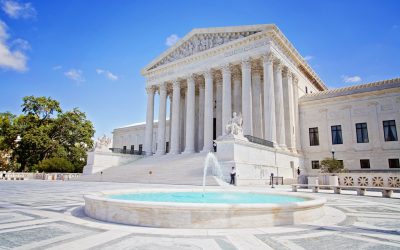
President Donald Trump may have gotten what he most wanted from the U.S. Supreme Court when it ruled on July 1, 2024 – by a 6-3 vote – that former presidents have absolute immunity from criminal prosecution by, essentially, being president. Trump named three justices to the high court during his first term in office – Neil Gorsuch, Brett Kavanaugh and Amy Coney Barrett – and all three ruled in his favor in Trump v. United States (Barrett in part). The latest raft of major SCOTUS rulings, due next month, may continue to largely meet with Trump’s approval, or at least conservative priorities, but by no means is the court’s October 2025 term, as it’s officially known, likely to be a slam dunk for the right.
Search Results
When War Becomes Routine (Foreign Policy Brief #225)
The war in Ukraine, which is Europe’s largest land war since 1945, has entered the peculiar phase familiar to historians and unbearable to those living through it — the phase in which catastrophe becomes routine. Loud air raid sirens still interrupt dinners in Kyiv. Young men still disappear into the trench lines of Donetsk and Zaporizhzhia. Russian drones still arrive nightly, buzzing in the dark like giant mechanical mosquitoes. As the rumble draws nearer, exhausted people rise from their beds and head into the narrow corridors of their apartments or into the basements of their houses. It happens night after night, year after year, while outside the region, the war increasingly competes with other crises for attention, just becoming a part of the atmospheric background of modern life.
Crony Diplomacy Is Failing U.S. Foreign Policy (Foreign Policy Brief #233)
At a recent press conference, U.S. Defense Secretary and Christian nationalist Pete Hegseth justified the Trump administration’s unconstitutional act of starting the war with Iran by saying that before launching missiles, “We sent our best people to negotiate — Steve and Jared.”
The Value of NATO—Past, Present, and Future (Foreign Policy Brief #224)
The North Atlantic Treaty Organization, better known as NATO, has been one of the most influential political and military alliances in modern history. Formed in 1949 by 12 countries, NATO has grown into a 32-member alliance across Europe and North America, with Sweden becoming the newest member in March 2024. Its stated purpose is to guarantee the freedom and security of its members through political and military means, especially through the principle of collective defense: under Article 5, an attack against one member is treated as an attack against all.
California Seeks to Limit Passenger Abuse by Uber Drivers (Technology Policy Brief #167)
Uber has buried statistics on assaults and accidents on its platform for years. Journalists and advocates have dug hard and are revealing disturbing levels of both. As more customers are suing the company for its inadequate safety measures, Uber is responding with a ballot initiative in California that would limit its liability for accidents, and consumer attorneys are supporting measures that would increase Uber’s liability and accountability.
2026 Democratic Primary Preview Series: Minnesota
Minnesota has emerged as a central battleground in the broader political and cultural conflicts shaping the country in recent years. From the police killing of George Floyd in 2020 to renewed clashes over federal immigration enforcement and ICE activity, the state, particularly the Twin Cities, has become a focal point for activism, protest, and national political attention. These developments have helped shape both voter engagement and partisan dynamics heading into the 2026 election cycle.
Flying Blind — The Economic Sabotage of the Federal Shutdown (Economic Policy Brief #92)
While the full federal government reopened in early 2026, the United States remains in a state of economic volatility due to a lingering partial shutdown of the Department of Homeland Security (DHS), now entering its 67th day.
The Week That Was: Global News in Review (Foreign Policy Brief #232)
Iran has vowed retaliation after a US destroyer fired on an Iranian-flagged cargo ship in the Gulf of Oman late last week.
Issues Affecting Democrat Messaging in the Upcoming Midterm Elections (Elections and Politics Brief #204)
With the 2026 midterm general elections approaching, analytics show Democrats rebuilding national attention. Though it is early, special election results, voter enthusiasm and new candidates suggest what some analysts call a possible Democratic “blue wave.”
2026 Democratic Primary Preview Series: New York
New York often sits in the average voter’s mind as a solid blue state, almost as a homogenous Democrat stronghold. With the recent election of Zohran Mamdani as the mayor of NYC, one wouldn’t be faulted for assuming that the rest of the state is skewed towards the left to some degree. Representatives like Alexandria Ocasio-Cortez, House Minority Leader Hakeem Jeffries, and Senate Minority Leader Chuck Schumer lend credence to this impression.