
Summary
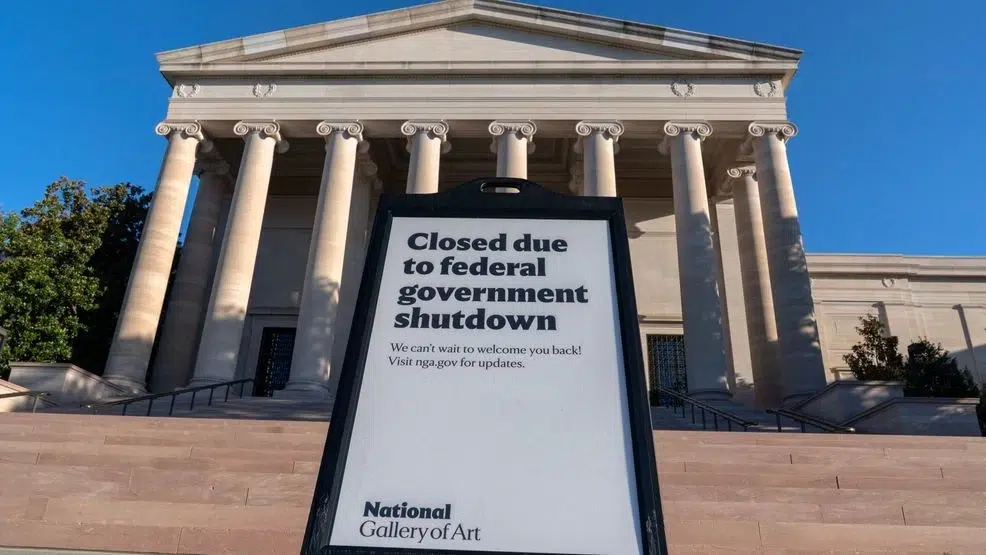
While the full federal government reopened in early 2026, the United States remains in a state of economic volatility due to a lingering partial shutdown of the Department of Homeland Security (DHS), now entering its 67th day. The broader 40-day shutdown earlier this year reduced real Gross Domestic Product (GDP) growth by an estimated 1.5 to 2.0 percentage points on an annualized basis, resulting in a permanent loss of activity between $7 billion and $14 billion. Although most agencies have resumed operations, the “data blackout” from late 2025 which included the cancellation of the full October jobs report continues to hamper year-over-year economic forecasting. Today, the crisis has shifted to our borders and airports, where the DHS funding lapse has forced the Transportation Security Administration (TSA) and ICE to operate with severe staffing shortages and delayed pay.
Analysis
The economic damage of these consecutive fiscal crises is compounding. While the Labor Department has resumed most regular reporting, the loss of critical 2025 data sets means that the Federal Reserve and global investors are still working with “incomplete maps.” The Fed’s reliance on data-dependent decision-making is compromised when historical benchmarks from the shutdown period are simply missing or statistically “noisy.”
From a social justice perspective, the current DHS-specific shutdown is particularly localized but intense. While most federal employees received backpay after the general reopening, TSA officers and DHS contractors are currently missing paychecks or receiving them in arrears. At major hubs like George Bush Intercontinental (IAH), wait times peaked at four hours this month as nearly 55% of staff called out due to financial hardship. This forces a reliance on untrained “supplemental” staffing, which advocacy groups argue compromises both worker rights and public safety. Furthermore, the 5.2 million federal contractors impacted by the previous full shutdown remain the “invisible victims,” as they are not legally guaranteed the backpay provided to direct federal hires.
My Opinion
It is ethically unconscionable for the political class to use the stability of the global economy and the livelihoods of civil servants as leverage. The “data blackout” of late 2025 was an act of economic sabotage that we are still paying for today through market uncertainty. Even as the rest of the government functions, leaving the men and women who secure our airports and borders without reliable pay is a failure of leadership.
We are watching a pattern of “economic policing” where the most vulnerable contractors who can’t recover lost wages and frontline officers who can’t pay rent are the ones bearing the cost of partisan ego. We must move toward a system where essential data and essential workers are protected from the theater of budget negotiations. The current strategy of “flying blind” isn’t just a political stalemate; it’s a direct threat to the credibility of U.S. institutions.
Engagement Resources
- Congressional Budget Office (CBO): https://www.cbo.gov/publication/59902
- Center on Budget and Policy Priorities (CBPP): https://www.cbpp.org/research/economy/federal-shutdown-social-impact
- Federal Reserve Board (Data Releases): https://www.federalreserve.gov/monetarypolicy/fomccalendars.htm