

JOBS POLICIES, ANALYSIS, AND RESOURCES
Latest Jobs Posts
An Update on House Races in Florida
Brief #10—Congressional Campaign Update
By William Bourque
Florida has long-been a key state in every major election, and this year is no different.
Trump’s Erratic Military Policies
Brief #95—Foreign Policy
By Colin Rugg
In the wake of Jeffrey Goldberg’s September 3rd Atlantic report lambasting Trump for his disparaging comments about the United States Military, the president has come under fire from Military commanders and politicians on both sides of the aisle.
Will “Ballot Harvesting” Play A Role In The 2020 Election?
Brief #140—Civil Rights
By Rod Maggay
In 2016 the California Legislature passed Assembly Bill 1921 which expanded on who can return an absentee or mail ballot on another person’s behalf.
As Social Media Giants Move to Curtail QAnon Trump Steps Up His Misinformation Campaign
Brief #21—Technology
By Charles A. Rubin
With the U.S. presidential election only weeks away, Facebook and other social media companies are struggling to show that they take the use of their platforms to spread misinformation and hate speech seriously, Facebook announced on October 6, 2020 that it had removed nearly 1,000 QAnon conspiracy theorist groups and promised to halt political ads after the polls close on November 3
The Corruption of John Ratcliffe
Brief #26—The Corruption Blog
By Sean Gray
Director of National Intelligence is a position created in the aftermath of the 9/11 terrorist attacks.
Just How Unfair is the Tax Code?
Brief #96—Economics
By Rosalind Gottfried
The recently published revelations regarding the status of President Trump’s tax record hardly come as a surprise.
5 Key States Show a Close Presidential Race
Brief #9—Presidential Campaign Update
By Linda F. Hersey
President Donald Trump’s recent comments to the press about what his next move will be if he loses the presidency to Democrat Joe Biden underscores the nervousness of the Trump team just days before the Election.
Prisoner Re-Entry Programs: Do They Work?
Brief #18—Gun Control & Criminal Justice
By Linda F. Hersey
Deshawn Grange says he is proud to have not just one but two jobs. He is a part-time worker assembling vehicle doors at a Tesla plant in California.
Police Wall of Shame: The New York Police Department
Brief #17—Gun Control & Criminal Justice
By Laura Plummer
The New York Police Department (NYPD) is the largest police department in the U.S. and the second largest in the world after Tokyo.


Revival of Federal Consent Decrees Needed Now To Confront Police Misconduct
Policy Summary: On November 7, 2018 then U.S. Attorney General Jeff Sessions issued the memorandum titled “Principles and Procedures for Civil Consent Decrees and Settlement Agreements with State and Local Government Entities” to the Department of Justice (DOJ). This new memorandum was issued to replace prior guidelines and to provide new guidance on how the DOJ would use consent decrees in the future. Previously, the federal government would open a lawsuit against a local police department that had a pattern and practice of police misconduct and abuse. Without any admission of guilt by local law enforcement officials, consent decrees were long term police department reform plans negotiated by federal and local officials that were supervised and enforced by a federal court. Attorney General Sessions wanted less federal oversight of local police departments and moved to diminish the use and effectiveness of federal consent decrees.
On June 8, 2020 Democrats in the House of Representatives introduced the “Justice In Policing Act” bill. The bill proposed new reforms aimed at policing issues and techniques, which come on the heels of protests over the killing of George Floyd, an African – American man, by a white police officer in Minneapolis, Minnesota. Protests have ignited across the United States and in a number of places around the world.
The bill proposes to ban police departments from using techniques such as chokeholds on persons (George Floyd died when Officer Derek Chauvin knelt on Mr. Floyd’s neck for more than eight minutes despite already being handcuffed and lying on the ground on his stomach) and no – knock warrants (Breonna Taylor died when officers executed a warrant without announcing themselves on the wrong apartment where they subsequently shot and killed her). Additionally, the bill contains administrative requirements for states with one requiring the creation of an independent state commission by the state attorney general that will investigate allegations of police misconduct and police brutality in local police departments. LEARN MORE, LEARN MORE
Policy Analysis: The bill that the Democrats introduced in the House of Representatives on Monday is without question a response to the tragic killings of George Floyd and Breonna Taylor and the wave of protests that have swept the United States. There are some good proposals such as the elimination of the techniques that resulted in the tragic deaths of Mr. Floyd and Ms. Taylor recently but there needs to be more wholesale change than the simple elimination of those methods. What is interesting is that the Federal Government did have a tool at their disposal to help monitor and institute change against local police departments. However, the Trump Administration and former Attorney General Jeff Sessions took steps to render the use of consent decrees today ineffective because they were opposed to the federal government having a role in monitoring local police departments.
Consent decrees to counter police misconduct and police brutality have been shown to have positive benefits. PoliceOne, an organization advocating for law enforcement officers has compiled a list of how cities with active consent decrees with the federal government have been faring in instituting change in their local police departments and their list shows that a number of cities have made meaningful improvement after working with federal authorities. Additionally, some cities have been able to implement effective deadly force trainings while some cities have even seen a decline in civil rights lawsuits against the police department. This may be due to the fact that segments of the community and civil rights groups have had a role in partnering with federal authorities to have their concerns heard. These methods to have federal authorities work with cities have seen varying levels of success and should be brought back to deal with the current police department concerns that have emerged with the eruption of protests the last week.
The “Justice In Policing Act” bill is well intentioned but it is important to know that the federal government already had in place a method that has had success in forcing change in communities that have struggled with police misconduct and police brutality incidents. Now is the time to call on the Trump Administration to utilize the consent decree again to help bring meaningful reform to police departments after the tragic events of the last two weeks. LEARN MORE, LEARN MORE, LEARN MORE
Engagement Resources:
- Equal Justice Initiative – project’s article on how use of consent decrees to reform police department abuses have had an impact.
- Campaign Zero – non – profit group seeking to end police violence in America.
- National Police Accountability Project – project dedicated to ending law enforcement officer misconduct.
This brief was compiled by Rod Maggay. If you have comments or want to add the name of your organization to this brief, please contact Rod@USResistnews.org.

Trump Sinks in the Polls Amid Unrest
By Iryna Shkurhan
June 10,2020
Last Tuesday, several states held their primaries with open polls while protests against police brutality and racial injustice took the nation by storm in all fifty states. Amidst the civic unrest, President Trump’s poll numbers plummeted as prominent Republicans also publicly renounced him. Primaries still remain in several states with the focus shifting to the results of local elections.
The Candidates
After Tuesday’s primaries in seven states and the District of Columbia, Joe Biden has officially secured the 1,991 delegates needed to become the democratic nominee. Although he has been unchallenged in his party since Bernie Sanders dropped out in April, the verdict comes in unprecedented times. Amid the turmoil, a poll found that Joe Biden has doubled his lead in Michigan, a key swing state, now leading by 12 percent.
President Trump’s approval rating hit an all-time low since January 2019 with a new CNN poll showing that only 38% approve his handling of the presidency, while 57% disapprove. The same poll conducted in early June found that Biden leads the incumbent by 14 points, the highest rating Biden has seen from a CNN poll. These results come after almost two weeks of unrest and turmoil following the murder of George Floyd by the Minneapolis Police Department.
Several Republicans, including Former President George W. Bush and Mitt Romney, have announced that they won’t back the President’s reelection efforts. Former Defense Secretary Jim Mattis came out criticizing President Trump’s disinterest in unifying the country at a time where demonstrations in all fifty states have only continued to grow. Mattis described Trump as a threat to the constitution, and a dividing force in the country. Colin Powell, a Republican and former military leader, also shared similar sentiments and even expressed support for Biden’s campaign.
Voting
In Texas, the federal appeals court has blocked an order that would have expanded mail voting saying that the coronavirus is not a good enough reason to give the majority of voters the option to vote by mail. As the majority of states have made mail voting more assessable, higher courts in Texas continue to overturn policies that would to give the majority of voters the option to vote by mail in both the primary and general election.
On the contrary, a judge in Tennessee has ruled that the state must allow everyone registered the opportunity to vote by mail in the general election, but the ruling is likely to be appealed. In both states, Republicans have citied that fear of catching or unknowingly spreading the virus at the polls should not be the sole qualifier to vote by mail.
As millions of Americans cast their ballots in the remaining primary elections, the emphasis will be on the results of local elections. On June 9, West Virginia, Georgia, North Dakota, Nevada and South Carolina are scheduled to vote, with options for mail-in voting an absentee ballot. New York, Kentucky and Virginia will vote on June 23 and the following week, Colorado, Utah and Oklahoma on June 30.

Will Democrats Retain Control of the House? 4 House Races to Watch for 2020
Congressional Campaign Update
2020 Congressional Campaign Updates is a new feature of U.S. RESIST NEWS. Written by reporter William Bourque, the updates will help our leaders follow key races in the House and Senate that are key to the ability of democrats to gain control of both houses of Congress.
Update # 3 Will Democrats Retain Control of the House? 4 House Races to Watch for 2020
June 8, 2020
The strong Democratic control of the House of Representatives can’t be taken for granted in November, and many experts see these elections as close and heated encounters. With the recent wave of police protests across the nation, many see this as an opportunity for Democrats to pull ahead in their push for the White House and Senate, in addition to strengthening the control of the House. I decided to take a look at the closest house races to watch in November.
ME-02, with one-term incumbent Jared Golden, is a race that intrigued many experts two years ago, when Golden pushed his grassroots campaign to a victory in a district Trump won. Golden beat two-term incumbent Bruce Poliquin by a margin of about 4,000 votes, albeit in a district that historically leans democrat. Regardless of the history of the district, Golden is in for a tough race yet again, with his opponent to be either Eric Brakey, former state senator and U.S Senate candidate, or Adrienne Bennett, former press secretary of Gov. Paul LePage. 270towin.org rates the election as a toss-up, and it is surely one that will come down to the wire in November.
In California’s 21st district, incumbent TJ Cox faces a strong test against return challenger David Valadao, who won the seat in 2014. When Cox and Valadao last faced off, in 2018, Cox won by a margin of just under 1,000 votes, showing just how tight this district is. The Cook Political Report, via Ballotpedia, rates this race as a toss-up. The district has generally leaned slightly red in their selection for the House, being represented by Devin Nunes until 2012. If the recent patterns continue, Cox should maintain a close advantage to win another term.
Georgia’s seventh district is another that the democrats could end up flipping to maintain their control of the House, with incumbent Rob Woodall stepping down from his seat. The likely Republican nominee is Renee Unterman, former state senator in Georgia. She faces stiff competition in presumptive democratic nominee Carolyn Bourdeaux, a former professor of public policy. Bourdeaux ran for the seat in 2018, losing to Woodall by just 433 votes, per the Gwinnett Daily Post. Bourdeaux does face a challenge in the primary, most notably by Nabilah Islam, an activist who has been endorsed by Alexandra Ocasio-Cortez and Ilhan Omar. Georgia’s 7th district promises to be an exciting race with the democrats keeping their hopes high for a seat flip.
Iowa is most well-known for it’s cornfields and presidential caucuses. However, it is also the site of a battleground in the house this election cycle, with democratic incumbent Abby Finkenauer running to maintain control of the seat against Ashley Hinson, a TV news reporter turned politician. The district in of itself is interesting, because of how many “pivot counties” exist within the district. Pivot counties are counties that voted for Barack Obama in 2012 and Donald Trump in 2016. Looking at the recent trends, it would show that Finkenauer has a slight advantage in the district she won by about 17,000 votes in 2018. A recent poll published by FiveThirtyEight has Finkenauer with a percentage point lead over Hinson. Both candidates have some national backing and it will be a tight fight to the end if the democrats want to keep the seat.
It’s clear that the road to keeping the house in democratic control is a windy but attainable one. We will have coverage of more house campaigns to watch in the following weeks and will attach the campaign websites for each of the democratic candidates if you’d like to learn more.
Engagement Resources
- Jared Golden: https://jaredgoldenforcongress.com
- TJ Cox: https://tjcoxforcongress.com
- Carolyn Bourdeaux: https://www.carolyn4congress.com
- Abby Finkenauer: https://www.abbyfinkenauer.com
Why Have Some Countries Been Better Able to Contain Covid-19 Than Others
By Hassan Elsebai
June 8, 2020
Summary
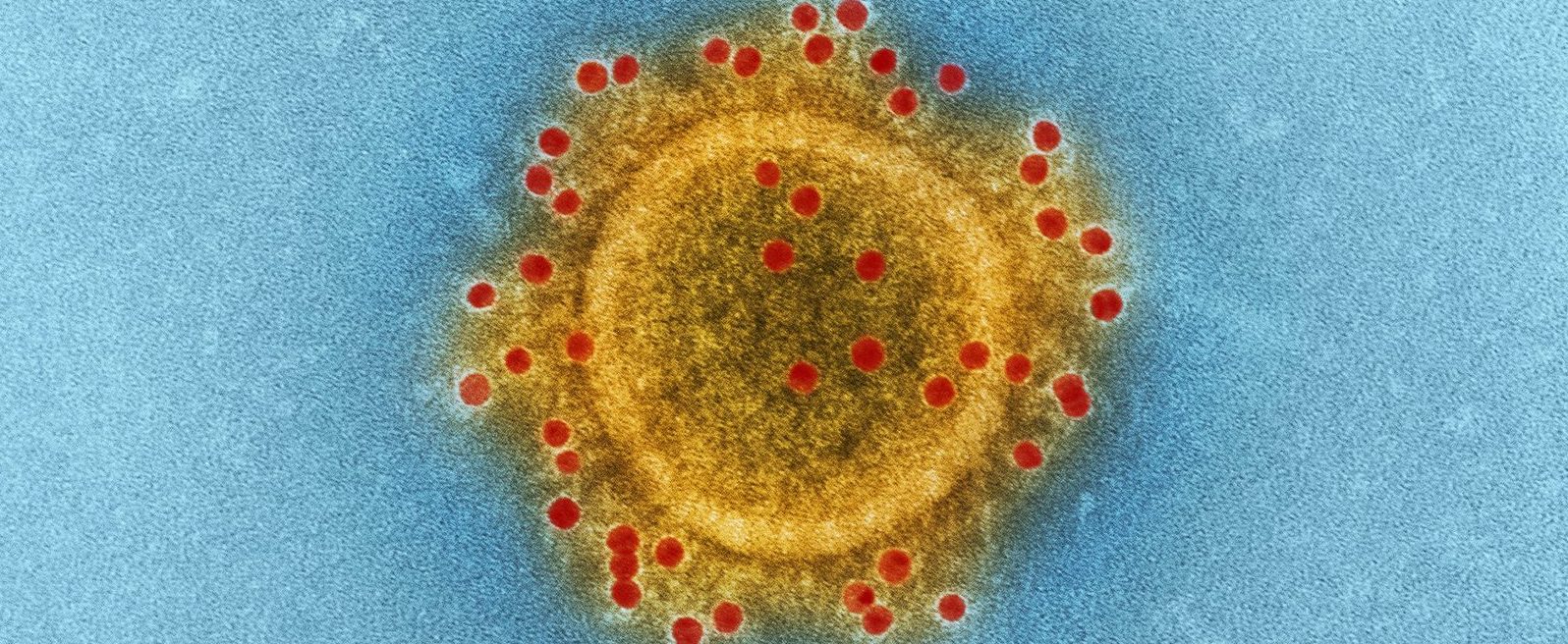
The Coronavirus death toll now exceeds one hundred thousand in the United States and is far ahead of every other country with respect to both deaths and confirmed cases. Followed by the UK with almost 40,000 deaths(June 1st). Italy and Brazil take third and fourth place, respectively. To understand how we got to this point it is imperative to examine the early actions taken by these countries’ leadership.
the U.S., the U.K., and Brazil—all three of which are currently run by a conservative government or administration— have been criticized for failing to act in both a responsible and timely manner.
President Trump insists the U.S, is “leading the way” in combatting the pandemic, and a role model for other countries to emulate. But the U.S. had fumbled an opportunity to act fast after grave reports of the COVID-19 death toll emerged out of Wuhan and Italy before the virus spread to the rest of the world. Trump in late February called the Coronavirus a Democrat “hoax.”
The federal government was slow to react and introduce central policy in the early stages of the pandemic. Individual states were given the responsibility of shutting down. Testing and contact tracing—the most robust methods of containing the spread of the virus— were absent from the federal policy. Trump promoted the use of a certain medication even when many medical experts said there was no proof of its effectiveness.
The early U.K. response was ambivalent. The leadership on Downing Street was still wrapping their heads around Brexit and clearly had no organized plan for the pandemic. Boris Johnson’s early statements assured there would be no ‘Wuhan style’ lockdowns. Talks arose of an unconventional ‘herd immunity’ approach by the U.K. in a unique attempt to flatten the curve. Top U.K. officials and cabinet members continued to underplay the severity of the Coronavirus.
On March 18, Johnson announced the closure of all schools. All restaurants and bars were ordered to close on March 20th, long after other nations imposed their own shutdowns. A former cabinet minister called it a “screeching u-turn.” Prime Minister Johnson finally took advice from the scientific community but only after putting his country in a dangerously precarious position and before he himself would contract the Coronavirus.
The Greek newspaper Ethnos described Johnson as “more dangerous than coronavirus”, saying one of the crisis’s greatest tragedies was that “incompetent leaders” such as Johnson and Donald Trump were “at the helm at a time of such emergency”.
Brazil has seen a steep increase in cases and is expected to be —if not already— the world’s most infected country. Brazil’s President Jair Bolsonaro like Trump and Johnson, is characterized by the adjectives: populist and conservative. Another thing they all have in common is their skepticism of science and early action. Bolsonaro has been reluctant to implement shutdowns or any social distancing guidelines while the countries healthcare system struggles to fight the virus and administer testing.
Sweeping poverty and extreme inequality further debilitate Brazil’s healthcare system and catalyze the spread of the virus, in a country rampant with favelas where social distancing is virtually impossible.
Andy Slavitt, Obama’s former health official, drew comparisons between the U.S. and Brazil’s handling of the pandemic “Brazil is [a lesson] in what the U.S. would look like if Trump had been allowed to continue to ignore the outbreak as he was through mid-March”
Analysis:
The Trump administration, and the far-right, have long put business profits over common sense and public health. Skepticism of the scientific community manifests itself in Trump’s policies through deregulation. The New York Times writes “The president’s COVID-19 response has extended the administration’s longstanding practice of undermining scientific expertise for political purposes.” Environmental concerns are thrown out the window and the EPA is continuously gutted.
Many countries have exemplified proper remedies to combat the spread of the virus. Hong Kong, Taiwan, and Singapore, Germany, and New Zealand had brought in controls on travelers from infected regions and strict contact tracing to help understand who could have been exposed, inform them, and require self-isolation. Face masks became widespread in east Asia, long before it was recommended elsewhere.
Germany’s Angela Merkel has been praised for her effective leadership since the start of the pandemic. Germany has been hailed for its model response for introducing early testing and consistent planning. The German Health Ministry has said that it was testing 80,000 people per week in early March, and about 400,000 tests per week in April. Early testing coupled with Germany’s robust public health infrastructure made the country better equipped to handle a crisis.
New Zealand has reportedly ‘eliminated’ COVID-19 from the country and has begun returning to ‘normal.’ The nation accomplished this by installing an early and aggressive lockdown followed by effectively managing its borders, contact tracing, testing, and surveillance.
Now, compare these leaders and stories with the populist strongmen using the crisis to spread messages of authoritarianism, blame others, and demonize journalists.
Many experts have stated that the U.S.’s severe death toll was avoidable. Had the United States followed a timely, scientific, and central approach, the COVID-19 death toll would not be as high as it is today.
- Learn More
- https://www.nytimes.com/2020/04/28/climate/trump-coronavirus-climate-science.html
- https://www.theguardian.com/world/2020/may/06/complacent-uk-draws-global-criticism-for-covid-19-response-boris-johnson
Resistance Resources:
- Environmental Integrity: A government watchdog that reports and combats any environmental deregulation on the part of government officials.
- Health Policy Watch: Reports on global health policy. Transparent reporting highlights important government responses to infectious disease outbreaks and other health concerns.
Misinformation, Disinformation Cloud Legitimate Protests
By: Ivan A. Moore
June 4,2020
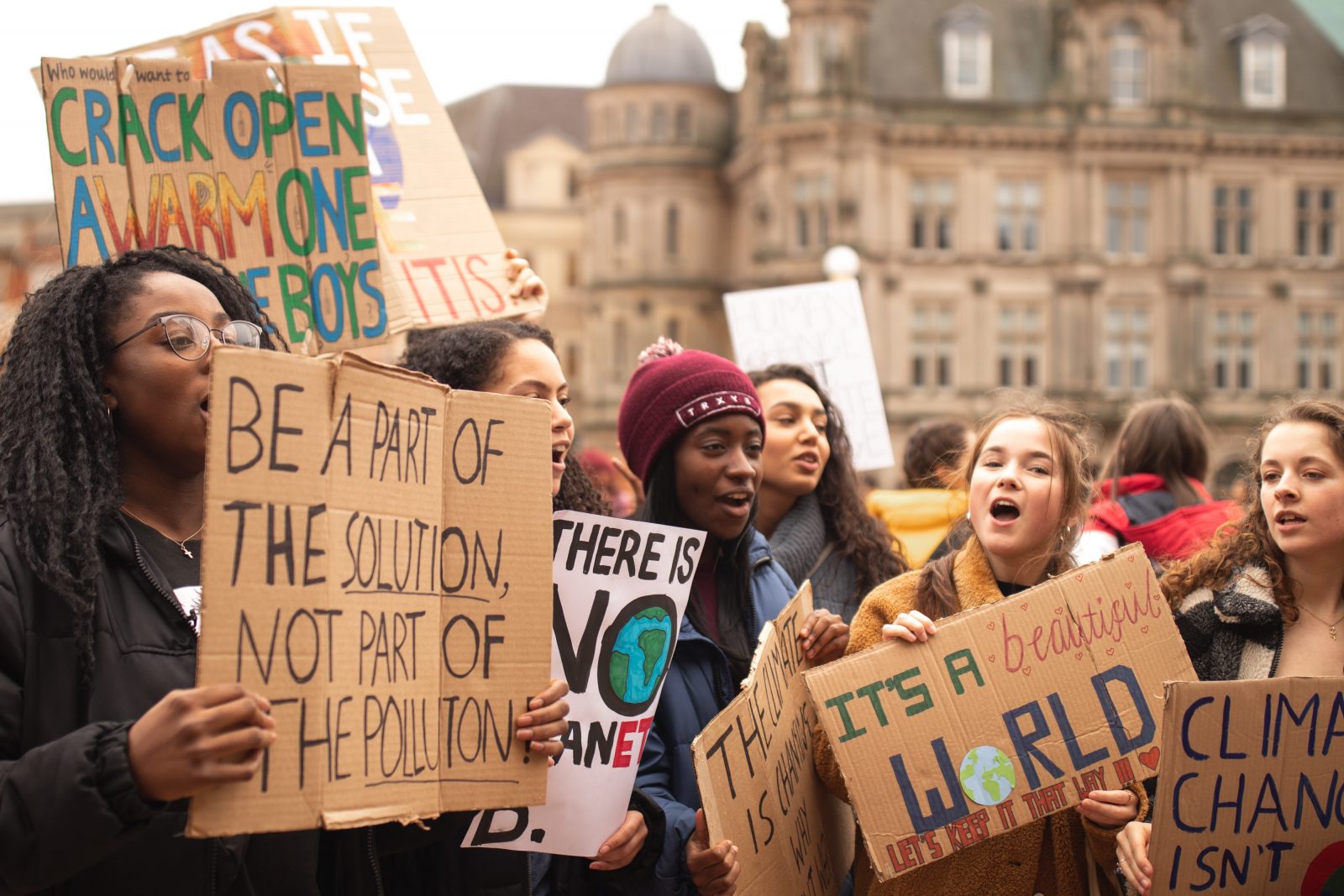
Over a week after protests began in Minneapolis, demonstrations continue in dozens of cities. While these civil rights protests were intended to be peaceful, violence has erupted on a scale unheard of since the riots following Dr. Martin Luther King Jr’s assasination. Many protesters declare that they want more than justice for George Floyd: they want to see major changes to America’s policing model, and possibly its complete dissolution.
Responses to the protests reflect the polarized, fractured nature of 21st century America. Misinformation and mixed messages have flooded the internet. While conservative outlets criticize protesters for looting and attacking police, left-leaning publications have suggested that much of the violence has been caused by police or even manufactured. Hoaxes and conspiracy theories abound on social media, including a viral tweet showing an image of Washington, DC engulfed in flames.
Misinformation is also being spread by some police departments. Following a chaotic night of arrests in Richmond, Virginia, the Richmond Police tweeted that they were forced to deploy tear gas to protect officers from violent protesters. Two hours later, they walked back the statement, calling their own actions “unwarranted.” Richmond Police Chief William Smith claimed that “there was no use of force by officers,” but protesters say this is patently untrue. One of my friends was arrested on May 31st for violating curfew, and she has allowed me to use her account of the events. The following excerpt is unedited, as per her request.
“From my experience in the jail, it was clear to me that local law enforcement is angry about the content of the protests and interested in punishing those involved, by means ranging from the banal like long periods alone in cells and strip searches all the way up to rough rides in cop vans to exposure to unsafe and potentially harmful COVID-transmitting environments. They’re mad, they can take it out on you when you’re under their power, and they want us to know that. Those officers and deputies who aren’t actively spiteful are either unbothered by the actions of their colleagues or vaguely apologetic but disempowered to intervene. As of 1pm today, police chief Will Smith was saying that no protester had complained to his office regarding their treatment — but frankly this is probably because people treated badly were crawling home to recover. Be aware of this and always have someone backing you up on the outside, if you’re going to risk arrest.”
It feels impossible to discern the truth from this confusing, chaotic picture. Unsure who to believe, many Americans have turned to anecdotes and social media for answers. It seems that America’s flagging trust in the government and the news media is at its breaking point.
Analysis
Much has been made of the public’s declining trust in the government, the news media, and each other. The phenomenon is often chalked up to Americans self-segregating online: choosing only to engage with media outlets and online platforms that conform with their political views. This is a major contributing factor, but the story is much more complex.
For generations, journalists and news outlets have aimed for objective, unbiased reporting. While this has always been an unobtainable ideal, it meant that the news functioned as an educational resource, not entertainment. For decades, Americans received a similar “education”: Newspapers, radio stations, and TV stations across the nation relied on the Associated Press; TV channels were few in number, and staying politically moderate appealed to more viewers.
That changed precipitously with the advent of cable TV and the Internet. Suddenly, NBC’s nightly news had to compete with the likes of MTV, ESPN, YouTube, and 4chan. With the horizons of choice forever expanding, journalists faced tremendous pressure to retain their audience. In their quest to remain relevant, they discovered that politics is more engaging when it’s treated as a team sport: liberals vs. conservatives, urban vs. rural, baby boomers vs. millennials. Political competition and controversy are now baked into the business model of journalism. Consciously or not, Americans no longer look to the news for information, but to get their blood pumping.
With the pandemic continuing to keep many of us at home (and potentially unemployed), the desire for this type of stimulation is stronger than ever. Most people determined their opinions on Black Lives Matter and police brutality by the time of the Baltimore riots in 2015; as such, they tune into the news to see shocking images and hear their views confirmed. Beyond being informed, they seek to be shocked and validated. We’re fighting for our nation’s soul, yet we cannot extricate that battle from our desire for stimulation and entertainment. The police and protesters are gladiators in our national colosseum.
Even when we approach this issue in good faith, the truth takes a backseat to our ire, our fear, and even our boredom. Conversations about the nature of policing in America are drowned out by ferocious arguments about whether looting is justified — despite the fact that this is completely beside the point. Our society will be unequipped to have a productive dialogue about race and policing until we can put our own feelings and “teams” aside and focus on what matters: the lives of black Americans, and the role of police in our society.
Resistance Resources
- The National Association for the Advancement of Colored People is collecting signatures on a petition to Congress. Its demands include an impartial federal investigation into George Floyd’s death and police reform through federal legislation.
- Interactive list of petitions, ways to donate, and other ways to be involved in the movement.

In Support of Protests Against US Racial Injustice and Police Brutality
U.S. RESIST NEWS stands in support of those protesting against racial injustice and police brutality in America. The murder of George Floyd by Minneapolis police officers is what set off the current wave of protests. But Floyd’s murder is only the most recent example of a decades long history of police violence directed at black Americans. As the protestors so clearly point out it is time for this to stop.
We endorse the suggestions of Democratic Presidential candidate Joe Biden to ban the use of chokeholds and “weapons of war” by police, and establish a National Police Oversight Board with the ability to investigate police brutality . We need each and every police department in the country to undertake a comprehensive review of their hiring, their training, their de-escalation,” Biden said in recent remarks in Philadelphia..
Biden’s suggestions are excellent but there is little chance they will be implemented as long as President Trump is in the White House. However former President Barack Obama pointed out in a recent article in Medium that the elected officials who matter most in reforming police departments and the criminal justice system work at the state and local levels. It is there that action needs to be taken to ensure prosecution of police misconduct. That is something we can go to work on immediately. We need to ignore the President’s attempt to hijack this moment as a law and order issue.
Media coverage of the protests has unfortunately often highlighted the violent actions of a few political extremists and those who have used the protests as an opportunity to vandalize property. These people need to be arrested and criminally charged if appropriate.
But the overwhelming number of people in the streets of US cities have been peaceful protestors. They have come out to protest in the midst of a public health pandemic, because they feel that, no matter what the circumstances, the murder and mistreatment of black Americans by the police needs to stop now.
And A Note to Our Fellow Protestors: The ability to peacefully protest a government law, regulation or unjust action is enshrined in the 1st Amendment to our Constitution. No one can take that right away from us. Our friends at the American Civil Liberties Union offer a handy detailed guide to our rights as a protestor or a protest organizer. Here is a link:

Coronavirus US and Global Update
COVID-19’s Status in the US
After the Memorial Day Holiday, where all fifty states had reopened in some capacity, the concern of a summer second wave looms. These fears are compounded by the National Institutes of Health announcement that warmer weather is unlikely to stop the spread of the virus, after previous hopes that the summer could provide some reprieve before flu season and a likely second wave. Fears of additional cases come on the heals of national outrage and protests demanding justice for a killed unarmed black man, George Floyd. Masses gathered in the thousands across every state in the US, it is hard for such gatherings and social distancing to coexist. Legislators are still contemplating another round of stimulus checks and business bailouts, with an agreement expected no earlier than July. The United States has already passed 1.8 million cases and over 100,000 deaths.
-Head to the Washington Post to see state by state restrictions-
COVID-19’s Status Internationally
South and Central America are experiencing an onslaught of cases. However many previously ravished nations appear to be controlling the virus, with the exceptions of the United States and United Kingdom.
Iran reported nearly 3,000 new cases on Monday, the highest daily rise in two months, prompting concern the nation will have another wave shortly. New Zealand is set to reduce restrictions after the nation passes eleven days with no reported cases.
After mass testing in Wuhan, China, officials report they have detected a mere 300 asymptomatic carriers and no new COVID cases. The first Rohingya refugee death has been reported after it was confirmed a 71 year-old refugee living in the densely populated Cox’s Bazar camp.
Analysis:
With businesses reopening and social distancing measures still in place, COVID-19 is expected to be a staple for the American people. Hope is found in the 133 current vaccines being developed across the globe. About 7 in 10 Americans say they would get a COVID-19 vaccine should one be developed and was both free and available for everyone, according to a Washington Post-ABC News poll. While President Trump has set a goal for millions of doses of the vaccine to be available by the end of 2020, scientist counter the ambitious claim as being unrealistic even with researchers around the globe scrambling for a safe and effective vaccine. States will likely see if the reopening of businesses will be for the best or result in an influx of new cases.
Engagement Resources:
- For concerns about COVID-19, please seek assistance with the Center for Disease Control, the World Health Organization, or local health officials.
- Subscribe HERE to stay up to date with COVID-19
Number of COVID-19 cases and deaths as of June 2, 2020 – Consult the CDC or Johns Hopkins for an update in numbers.
| Nation | Confirmed Cases | Deaths |
| Globally | 6,339,005 | 378,266 |
| United States | 1,828,736 | 106,046 |
| Brazil | 526,447 | 29,937 |
| Russia | 423,186 | 5,031 |
| United Kingdom | 279,391 | 39,452 |
| Spain | 239,932 | 27,127 |
| Italy | 233,515 | 33,530 |
| India | 207,183 | 5,829 |
| France | 188,450 | 28,943 |
| Germany | 183,879 | 8,563 |
| Peru | 170,039 | 4,634 |

African Americans Suffer Deprivation in all Economic Arenas
June 2, 2020
Policy
In every measure contributing to well-being African Americans experience significant deprivations. African American poverty was 20.8% in 2018, compared to 11.8% of the general population. African American wages are still depressed, compared to white wages, even as the education gap has closed significantly. Ninety percent of African American in young adulthood (25-29) now has a high school diploma and the portion with college degrees has doubled since 1968 to 2018 though it still represents only half as many degrees (22.8%) as in the white population (42.1%) of the same age.
African American workers bring home 82.5 cents to the dollar white workers receive, even when education level is controlled for. African American workers experience 2.5 times the poverty of white workers. Black and Latino workers represent 44.1% of the workers who would benefit from a federal minimum wage of fifteen dollars. African Americans are twice as likely as white workers to be unemployed. When household income is considered, African Americans accrue 40% less than average white households.
The starkest disparity, however, can be seen in wealth where the average African American family is worth only 10% of the wealth held by white families. Average African American wealth has actually decreased from 1983-2016. Moreover, the African American family is more likely to depend on that small asset for basic needs in retirement; children’s college education; down payments for a home; and crises arising from unemployment or illness. College debt is higher among African Americans averaging $26,000 for men and $30,000 for women.
Wealth is a measure which speaks to intergenerational well-being since often a young couple buys a first home with help from their parents. Owning a home speaks volumes regarding quality of life since neighborhoods where more people own their home tend to have better schools, recreation, services, and safety. When African Americans buy homes, even in the middle class, they are steered to less affluent areas than their white counterparts. Additionally, African Americans are twice as likely to be turned down for mortgages and are given no reason in 52% of these denials. African Americans are 105% more likely to be charged a higher interest rate and greater fees.
Lending gaps have contracted very little in fifty years and costs not at all. In the fifty years from 1968-2018, the portion of home ownership among the African American population has remained stagnant and is currently 30% less than among white families. A HUD study of renters revealed that African Americans suffered barriers to “favorable” neighborhoods in that they were shown fewer units, charged higher rents, and denied leases when compared to whites. As a result, they are more likely to live in areas of concentrated poverty and in areas with less educational resources; less job opportunities; and fewer services. African Americans, as a result of wage and job discrimination, are more likely to become homeless representing 40% of that population and comprising only 13% of the US population. Discrimination against ex-convicts also contributes to homelessness and unemployment due to laws limiting access to public housing and other programs. The rate of incarceration of African Americans tripled between 1968-2018.
Various measures of quality of life show an equally dismal condition. African Americans are twice as likely as white households to experience food insecurity, meaning that they have to reduce their intake and/or change their eating patterns. African Americans are more likely to be in food deserts where access to fresh produce is limited and there is a dependence on convenient stores and small grocery stores equal higher prices.
The areas of health insurance, health care, and mental health also reveal the stark realities of African American life today. Not only are African Americans more likely to be uninsured and under insured, they also pay more for their health insurance. Almost ten percent are uninsured and 18% of adults are underinsured. Even more significant is the cost of insurance. The average white family pays about 11% of their income on health insurance premiums; copays; deductibles, and pharmacy items whereas the average African American household spends 20% of the household income solely on premiums. African Americans are highly likely to be concentrated in the states that did not buy into federal Medicaid expansion. This program allows for Medicaid to be extended to those making a little more than the official federal poverty level. These states include seven southern states, Texas, Oklahoma, Missouri, and Kansas. The residents who do not gain Medicaid coverage because they make too much do not make enough to qualify for tax credits to gain subsidies and so they are the segment which is likely to fall through the cracks, remaining uninsured.
Due to all of the above-mentioned circumstances, the African American community suffers more avoidable illness; greater maternal and child mortality; pregnancy complications; lack any consistent or quality care; depends on emergency rooms for non-emergency conditions; and often just goes without treatment. The latter situation is even more pronounced in areas of mental health and substance abuse. It is no wonder that the death rates are greater, and the longevity less, among this group.
Analysis
Racism begins with the history of slavery; it persists in state sanctioned policies today. Slave labor is estimated as corresponding to 14 trillion dollars in unpaid work. But unpaid, poorly remunerated labor of African American extends through reconstruction to the New Deal, where the population was restricted to occupational segregation sanctioned by government programs. The Freedman’s Bureau encouraged former slaves to remain with the families they worked for in agricultural and domestic labor. The newly freed citizens could be fined if they sought work outside these areas. Laws were passed to prohibit ads for better jobs in distant locales and recruiters could not provide any financial assistance.
With the New Deal institutionalized disparities in jobs and wages again was supported by legislation. Innovations of the Fair labor Standards Act of 1938 initiated a 40-hour work week, overtime, child labor laws, and a minimum wage. African Americans were excluded from jobs with better working conditions, benefit, and collective bargaining. The jobs they inhabited, in agriculture and domestic work were excluded from the legislation where there was no minimum wage, set work week, benefits or oversight. By the mid twentieth century, when agricultural jobs were contracting and domestic labor was becoming mechanized, unfair lending practices in the Department of Agriculture, lynching, discriminatory lending, and the KKK drove African Americans north and west seeking better opportunities. Once resettled, many of the newly migrated workers were subjected to de facto segregation in low wage domestic and service work even if they escaped the Jim Crow mandates of their southern origins.
Laws integrating this discrimination into the institutional structure are seen in such areas as tipped servers’ minimum wages which can be as low as $2.13. Only seven sates mandate that serving staff must be paid the federal minimum wage guaranteed to other workers. “Right to work” laws, which establish that nonunion workers benefiting from union contracts cannot have a portion of union dues deducted, exist in eight of the ten states with the highest portions of African American workers. Agencies like the Equal Economic Opportunity Commission, which are supposed to ensure fairness in the workplace, are severely underfunded and can investigate a fraction of received complaints. Agencies which advocate for fair treatment and support of workers have been underfunded.
The stress of poverty on the body and community cannot be underestimated. It affects everything from health, to family life, to community standards. One sure fix is to put more money into protective government agencies and make them accountable for their mandates. Another policy, pointed out by experts in the field, suggests that all the tax money that has been used to increase policing efforts should be shifted to create better social programs addressing labor conditions and the safety net. Massive re-evaluation of jobs, and their value, would likely result in increased wages but nothing really can replace incorporating a living wage, healthcare for all (unattached to employment), and decent costs for housing, education, and daycare/preschool.
Another more controversial remedy refers to reparations for slavery. Many African American leaders suggest that funds be made available to African American communities to be used for programs they develop to support the progress of their communities as they see fit. That seems like an overdue step in acknowledging the hundreds of years of systemic exploitation.
Learn More
- https://www.healthypeople.gov/2020/topics-objectives/topic/social-determinants-health/interventions-resources/food-insecurity
- https://tcf.org/content/report/racism-inequality-health-care-african-americans/?session=1
- https://endhomelessness.org/homelessness-in-america/what-causes-homelessness/inequality/
- https://www.americanprogress.org/issues/race/reports/2019/08/07/472910/systematic-inequality-economic-opportunity/
- https://www.marketplace.org/shows/marketplace/structural-economic-racism/
- https://www.epi.org/publication/50-years-after-the-kerner-commission/
Resistance Resources
- Black Lives Matter: www.blacklivesmatter.com
- Colin Kaepernick : https://kaepernick7.com

Trump’s New Moves to Contain China: End Hong Kong’s Privileged Treatment and Withdraw from the World Health Organization
June 3, 2020
In another blow to U.S.-Chinese relations, Trump has recently announced he will begin the process of ending Hong Kong’s privileged economic treatment due to a newly introduced security law pressured by mainland China.
Policy Summary:
In another blow to U.S.-Chinese relations, President Trump has announced he will begin the process of ending Hong Kong’s privileged economic treatment due to a newly introduced security law pressured by mainland China. The move has drawn significant Chinese ire and hints at a worrying (but possibly not unwarranted) escalation in the simmering tensions between the Trump administration and the Chinese Communist Party (CCP). Trump and Secretary of State Mike Pompeo have declared that the reasoning for said shift is due to the loss of Hong Kong’s status as a separate and distinct territory from China. In conjunction with the ending of said treatment, there are supposed, but vague, threats of imposing sanctions on Chinese and Hong Kong officials that have been designated as having played a role in the gradual loss of the territory’s autonomy by the Trump administration. Chinese foreign nationals that are deemed to be potential security threats will be denied entry into the U.S. And to top it all off, in a related stroke of foreign policy, Trump has stated that he will cease U.S. invovlement in the World Health Organization (WHO), which he has accused of handling China with kid gloves over the unfolding Covid-19 pandemic.
First, what is the history of this so-called “privileged treatment” and what is Trump threatening? Hong Kong’s special status was created in 1984 through the Sino-British Joint Declaration, in which the U.K. agreed to hand over control of its former colony of Hong Kong to China with the promise that the newly-created territory would not be subject to the CCP’s political or economic systems for 50 years. Ever since, Hong Kong has enjoyed a privileged extradition treaty, favorable trade agreements, a lack of tariffs and controls imposed upon the mainland, and many other favorable conditions with the international community. However, the CCP has historically, and especially of late, been accused of attempting to erode Hong Kong’s autonomy and bring it more securely into the fold. It was under such accusations that the people of Hong Kong rose up in mass protests beginning in June 2019 with demands for civil liberties and further independence from Beijing’s control.
Second, what is this new security law that has drawn so much fuss? The law would allow CCP organs to crack down on anything perceived as anti-Beijing dissidence, and possibly permit mainland security agencies to be extended into Hong Kong. Due to be enacted in September, it is still unclear as to what exactly will be made illegal, but many theorize that it will outlaw any discussion of secession, any subversion of CCP authority, the prosecution of all activities designated as terrorism directed against China or Chinese interests, and the blocking of foreign interference in Hong Kong. It is most certainly a blow to democratic freedoms and signals a less force-based approach by the CCP to reign in what has become a PR nightmare for the regime.
Third, what is Trump’s issue with the relationship between the WHO and China? The WHO has repeatedly commended China on its response to Covid-19 despite the regime’s tight-lipped refusal to share information regarding its domestic response and heavy-handed control measures of the virus. This has drawn Trump and others to declare that the WHO is too dependent upon the financing and collaboration of affluent UN member states, such as China, to properly carry out its mission. The crux of his argument is that the WHO is too scared to publicly unmask the CCP’s guilty part in the spread of Covid-19, and that due to this unwillingness, the WHO no longer serves the interests of the U.S.
Analysis:
Let us begin with the situation in Hong Kong. I can understand the Trump administration’s decision to revoke the territory’s privileged status as a way of striking back at the CCP. Although I believe that we as Americans should step down off our self-styled high horse as leaders of the free world and embrace a humbler desire to pursue the extension of liberties for liberties sake, the new security bill is in no doubt a stain upon democratic freedoms. From a strictly contractual standpoint, China may not have wholly replaced the economic and political systems of Hong Kong, but they have certainly begun the process well before the 50-year landmark. And from the standpoint of striking a blow to China, Hong Kong is a notable crown jewel to shatter. With expensive properties, a thriving commercial and financial sector, and notable stock exchange, it is a ripe target for retribution.
However, I caution against what I would deem to be a far too expansive blow. What is needed is a scalpel, not a sledgehammer. The CCP are naturally going to attempt to finish off the protests that have been carrying on for over a year. Their use of military and police tactics drew international condemnation and has had little effect on quelling the unrest. They are now attempting to move more subtly through legislation. If we withdraw the entirety of Hong Kong’s status it will decimate the very people we are attempting to help. The territory’s usefulness to the regime is dictated by the favorable treatment. Yes, it will hurt the CCP, but only for a short time. Once Hong Kong is deprived of its status, the people have no bargaining chip to utilize.
Turning now to the issue of Trump’s grievances with the WHO. He is not the first to raise such complaints. The Ebola outbreak in West Africa is just one example of the WHO being accused of gross inefficiency and an inability to deliver results. However, should the U.S. really be drawing out of the largest international health organization during a pandemic? I would say no. Although there is certainly cause for investigating the WHO’s handling of Covid-19 and the repeated praise heaped upon China despite evidence to the contrary, our reckoning with the WHO can wait until the pandemic is over. Otherwise we would be shooting ourselves and the rest of the world in the foot. Premature reprisal, however well-intentioned and possibly well-founded, requires far more evidence and forethought than what Trump is putting in. Let the world heal, do not deprive it of needed funding and research before we have left the woods behind.
Resistance Resources:
- Hong Kong Free Press – pro-democracy news organization within Hong Kong
- 612 Humanitarian Relief Fund – organization working to provide for protester needs on the ground
- Hong Kong Public Opinion Research Institute – working to generate reports about the needs of civil society in Hong Kong
President Trump Engages in Free Speech Fight with Twitter
Policy Summary: The Communications and Decency Act (CDA) was passed in 1996 and provides that an “interactive computer service” is immune from civil liability if they publish information from third – party users.
On May 28, 2020 President Donald J. Trump signed an executive order titled “Preventing Online Censorship.” The executive order was prompted by Twitter’s decision earlier in the week to place labels on tweets emanating from President Trump’s verified Twitter account. On a May 26, 2020 tweet from the President about perceived mail – in ballot fraud, Twitter for the first time added a link at the bottom of the tweet that said “Get the facts about mail – in ballots” which was preceded by an exclamation mark in an oval. That signaled that there were other facts to the issue that were not mentioned in the President’s tweet.
In Section 2, subsection (b) of the executive order, the President directs all executive departments and agencies to examine whether Section 230 of the Communications Decency Act is properly applied in a manner to ensure that a social media platform cannot enjoy immunity from civil liability while engaging in acts of censorship of a third – party user’s views. Additionally, President Trump ordered further rule – making to clarify the instances of when a social media platform is engaging in acts of censorship. LEARN MORE
Policy Analysis: Twitter’s announcement that they would append labels to tweets from President Donald J. Trump’s Twitter account is unique in that it is believed to be the first time that Twitter has sought a way to combat the numerous falsehoods that have become a feature of the President’s tweets. Brad Parscale, President Trump’s campaign manager, called the move by Twitter “biased” and a way to “obstruct and interfere with President Trump getting his message through to voters.”
But the executive order and the statement from Mr. Pascale have misconstrued the situation. There is no obstruction and interference or an issue with free speech because Twitter has in no way placed limits on what President Trump wants to write or tweet out. The President still has control over the message he chooses to type out and put up on his Twitter feed. Twitter has not altered his tweets in any way to change the message contained in his tweets. What they have merely done is added a hyperlink on the bottom of the tweet, separate from what the President has typed out, that encourages readers to “get the facts” and additional info. Readers can still read the President’s tweets in their original form intended by the President while also having the option of further researching the issue and coming to their own conclusion after comparing other available evidence. President Trump has a long history of spewing out outright falsehoods and debunked conspiracy theories and it appears that Twitter has become fed up with the political vitriol that have roots in President Trump’s tweets. But this executive order will do nothing to help create an environment where free speech can flourish and all viewpoints are welcome. By directing his executive order at Section 230 of the DCA and the issue of civil liability the President and his team are avoiding the issue of whether their tweets have merit and may simply be angry that their tweets can be contradicted with opposing and established facts. If the President’s tweets are not being altered or blocked from view in any meaningful way then there is no free speech violation.
Finally, the President’s executive order is another incident in a trend where President Trump falsely believes that he has the power to amend the law. The President of the United States has no power to change existing law. Only Congress has the power to do that. The President only has the power to execute laws that have already been passed and can only direct federal agencies to administer the law as it currently exists. His executive order cannot override the requirements of Section 230 of the DCA. Two Internet legal scholars – Eugene Volokh at UCLA and Eric Goldman at Santa Clara University – state that Congress has already rejected the model that websites are civilly liable for a third – party user’s speech that they publish. Since Congress has already decided this issue, President Trump cannot unilaterally change it or have it be modified in a significant way by federal agencies.
This situation is the direct result of President Trump’s Twitter behavior. Had the President been more thoughtful about his tweets than Twitter likely would not have had to take the action that they did this week. But the President’s actions in response to Twitter’s move illustrates that his views on free speech and presidential power are not rooted in the established concepts of the First Amendment and what the White House can do to affect meaningful change. LEARN MORE, LEARN MORE
Engagement Resources:
- First Amendment Coalition – non – profit group webpage on First Amendment free speech issues.
- Electronic Frontier Foundation – non – profit group infopage on Section 230 of the Communications Decency Act of 1996.
This brief was compiled by Rod Maggay. If you have comments or want to add the name of your organization to this brief, please contact Rod@USResistnews.org