

JOBS POLICIES, ANALYSIS, AND RESOURCES
Latest Jobs Posts
The Teacher Shortage is Bad. Education Culture Wars are Making it Worse
Brief #87 – Education Policy Brief
by Rudolph Lurz
When these kids arrived for their first day, many were greeted by a substitute teacher. Dozens of districts began the school year with unfilled teaching positions.
Do Students and Educators Benefit from Bringing Yoga to Schools?
Brief #86 – Education Policy Brief
by Yelena Korshunov
According to recent findings, 45% of students in high school admit to being stressed almost every day in school, and 61% of teenagers between the ages of 13 and 17 feel stress over obtaining satisfactory grades.
Can the 14th Amendment’s Birthright Citizenship Rule be Overturned?
Policy Brief #212 – Civil Rights
by Rodney A. Maggay
Kim Ark, who was born in San Francisco… was denied re-entry to the United States on the grounds that he was not a U.S. citizen.
The Women’s Health Protection Act of 2023: An Effort to Push Back on the Supreme Court Dobbs Decision
Policy Brief #164 – Health and Gender
by Carlos Avalos
The impetus to this bill is debatable but seems to center around a few key moments in recent American History.
The Medium is the Manipulation, Part 1: Misusing Campaign Ads to Fight Legal Battles
Brief #94 – Elections & Politics Policy Brief
by Steve Piazza
What do Alvin Bragg, Jack Smith, Letitia James, and Fani Willis all have in common?
Situation Update: The Ukraine Crisis
Brief #90 – Foreign Policy Brief
by Abran C
Drone attacks on Russian territory have become an almost daily occurrence…
Is Trump Barred From The 2024 Ballot By The Constitution’s Disqualification Clause?
Policy Brief #211 – Civil Rights
by Rodney A. Maggay
Could Donald Trump be barred based on the U.S. Constitution’s 14th Amendment “Disqualification Clause?”
Medicare Negotiations on Drugs Save Money and Lives
Policy Brief #163 – Health and Gender
by Geoffrey Small
The Inflation Reduction Act, which was enacted last year, gives Medicare the authority to negotiate drug prices with pharmaceutical companies….
Google Cloud’s AI Conference Draws Protestors
Brief #97 – Technology Policy Brief
by Mindy Spatt
The emergent capabilities of AI systems have blurred the boundaries between machine autonomy and human control…


Who really won the Debt Ceiling Compromise?
Who really won the Debt Ceiling Compromise?
Economic Policy Brief #54 | By: Arvind Salem | June 14, 2023
Photo taken from: marketwatch.com
__________________________________
On June 3, 2023, just two days before a disastrous default and government shutdown, President Joe Biden signed the Fiscal Responsibility Act of 2023 to suspend the debt ceiling until 2025. The act was a result of months of political maneuvering and negotiations as Republicans attempted to use their control of the House of Representatives and the threat of default as leverage to negotiate a compromise with Democrats, who control both the presidency and the Senate. Predictably, the deal’s provisions represent a middle-ground on many issues, with key wins and losses for both sides.
Going into the negotiations, the Republican party was keen on using their leverage to negotiate spending cuts, while Democrats wanted to pass a clean debt ceiling increase and have these policy discussions another time. However, it soon became clear that to avoid default a compromise would be necessary. Examining the key provisions of the compromise will reveal both parties’ priorities and how much influence each party had in the negotiation.
The agreement would institute spending caps that keep nondefense spending roughly flat in the 2024 fiscal year and increase it by 1% the following year, although it is important to note that these numbers don’t take into account inflation and are likely to be cut in real terms, as inflation will likely increase by more than 1% in the following year. Additionally, the agreement would rescind about $30 billion in unspent coronavirus relief money from unobligated money from many programs that received aid in the pandemic, such as rental assistance and small business loans. However, some funding is exempt including veterans’ medical care, housing assistance, and the Indian Health Service. The agreement also claws back $21.4 billion of the $80 billion that the IRS received from the Inflation Reduction Act, imposes stricter work requirements for food stamps, speeds up review of permits for new energy projects, and terminates the student loan freeze.
Policy Analysis
On one level, Democrats lost through this compromise even happening. Biden earlier refused to argue over the debt ceiling by principle, but was forced to negotiate when it was clear that Republicans wouldn’t cave in by that principle alone. Moreover, the Democrats allowed a slight Republican minority in the House to hold them hostage when they had a sizable minority in the House and controlled both the Senate and the Presidency.
However, given that the deal occurred, it included both wins and losses for both parties and overall represented a short- term compromise that didn’t decisively affect the long-term financial future of the country.
On Spending Caps, the Democrats won, as they were able to leave most programs unscathed and got the Republicans to budge from their insistence on substantial spending cuts, although they missed the opportunity to negotiate an increase in spending on those programs.
On COVID-19 claw backs, the Democrats won because the funds that were taken were unspent and mostly unobligated, meaning that the money wasn’t actively being used, protecting these programs for the near future. Additionally, many programs were left intact, including $5 billion to support research into new COVID treatments, $800 million in investments for the Defense Production Act, which includes efforts to bolster pharmaceutical supply chains, and funds for the Centers for Disease Control and Prevention to detect emerging variants.
Regarding the IRS funding, Democrats won because only $1.4 billion of the $21.4 billion will be rescinded and another $10 billion a year will be redirected to other federal agencies in fiscal years 2024 and 2025 during the annual appropriations bill, accounting for the other $20 billion. Although this seems huge, the cuts likely won’t substantially affect the operation of the IRS since they have time to adjust to these changes and they received $80 billion in the Inflation Reduction Act last year.
Concerning work requirements, Democrats won because they managed to negotiate work requirements that kept most of the programs intact and negotiate exceptions for homeless people, veterans, and recent foster youth and in some cases expanded programs like the Supplemental Nutrition Assistance Program (SNAP) and the Congressional Budget Office estimates that the deal would actually increase spending overall.
On energy permits, Democrats won as there were no sweeping regulatory changes and the changes do not substantially affect agencies’ ability to conduct environmental reviews of proposed projects. Importantly, the Republicans were unable to touch $369 billion in clean-energy incentives granted by President Biden’s Inflation Reduction Act, which was one of Biden’s signature achievements.
Republicans’ lone win came in terminating the student loan freeze. The student loan freeze has been repeatedly extended by executive actions by both Presidents Trump and Biden since the beginning of the pandemic. This deal would block the President from offering any further extensions past the Biden administration’s stated plan of resuming student loan payments later this year.
This deal protects most of the Democrat’s legislative victories and Republicans were unable to win a majority of the issues. Republicans got small concessions on many major issues, but they mostly fell short of what the party would have liked, as Democrats were able to avert major damage, even on the student loan payment freeze, which they already committed to ending anyways, but just made that commitment legally binding.
Engagement Resources
The Committee for a Responsible Federal Budget is a non-partisan, non-profit organization that aims to educate the public on fiscal policy issues and promote fiscal responsibility. Readers interested in the issues discussed in this article may be interested in subscribing or donating to this organization.
The Center on Budget and Policy Priorities is a nonpartisan research and policy institute that seeks to build a nation where everyone has the resources they need to thrive. It does this through research and advocacy on a variety of fiscal policy issues on both the federal and state level. Readers interested in fiscal policy and budget issues may wish to donate or otherwise contribute to this organization.
The Economic Policy Institute is a nonpartisan, non-profit think tank that aims to highlight the needs of low- and middle-income workers in economic policy discussions. To accomplish this goal they conduct research on working America, propose public policy solutions to the problems plaguing working America, and assess government policies’ on low and middle-income workers. Readers interested in broader economic issues implicated in the debt ceiling discussion may be interested in donating to this organization.

The Republican Presidential Candidates’ Positions on Abortion
The Republican Presidential Candidates’ Positions on Abortion
Elections & Politics Policy Brief #79 | By: Abigail Hunt | June 13, 2023
Photo taken from: time.com
__________________________________
This is the first in a series o U.S. RESIST NEWS Briefs on the views of Republican Presidential candidates on key public policy issues.
The ever-expanding field of 2024 Presidential candidates for the GOP nomination includes several current or former politicians, including governors from Arkansas, South Carolina, Florida, New Jersey, and North Dakota, an ex-President, an ex-Vice President, an entrepreneur of biotech and health care, a Midwestern businessperson, and a conservative radio host. As per usual, the candidate options tend to be older, white, and male, but there is some diversity with two African American and two Indian American candidates, one of whom is the only female so far in the running. With the number already in the double digits so early in the race, it looks to increase further before the nominee is found.
Overloading the candidate pool may very well help cement another Trump-Biden head-to-head, only the future will tell. In the interim, it is necessary to know where each potential nominee stands on pressing issues such as abortion, immigration, education, and race. The information for these candidate reviews is gleaned from various press reports and candidate and government websites. This is not a comprehensive breakdown of each candidate’s views but a taste of them.
The following focuses on abortion. Overall, each candidate supports banning abortion at some level, limiting women’s access to care and cementing our international infamy of having the worst maternal health outcomes of any developed nation, at a rate of more than 17 deaths per 100,000 births. With reduced abortion access, it is guaranteed that more women will die from childbirth alone, not to mention from botched procedures from unlicensed practitioners or from complications from self-abortion attempts.
Abortion
Nikki Haley, who was U.N. Ambassador under Trump and the 116th Governor of South Carolina for six years before that, supports a federal abortion ban. During her stint as governor, Haley signed a law banning abortions after 20 weeks (about 4 and a half months).
Vivek Ramaswamy, a biotech and health care entrepreneur with a bachelor’s in biology – so clearly an expert on women’s bodies – supports an even earlier ban, advocating to outlaw abortions after six weeks. Many women do not even know they are pregnant until much further along.
Asa Hutchinson, former Arkansas governor, congressperson, and attorney – and a white man in his 70s – said in 2014 he would sign a 12-week abortion ban into law as Governor, and in 2022 celebrated the overturn of Roe.
Larry Elder, conservative talk radio host, is a loud critic of abortion access, calling Roe disastrous when he celebrated the SCOTUS ruling that eliminated federal protection of safe access to legal abortions.
South Carolina Governor who prides himself on being a Southern Black Republican, Tim Scott is vocally anti-abortion, posting often about it on social media over the past several years.
Chris Christie, former governor of New Jersey, opposes abortion with exceptions for rape, incest, or the health of the mother, but falls short of supporting a federal abortion ban, citing his strong belief in states’ rights, something that might win him some points with conservatives or liberals willing to vote red. As governor, Christie vetoed millions in funding for Planned Parenthood.
North Dakota Governor Doug Burgum proved in April of this year that not all people who wear glasses make smart decisions by signing one of the strictest abortion bans in the country, banning all pregnancy terminations, with rare exception for health, rape, and incest, after six weeks’ gestation.
Perry Johnson, a mid-70s white man with a bachelor’s degree and no political experience, like many of his kind heard the siren call of the Republican party and rushed to join. Johnson says he would pardon Trump and believes in zero exceptions for abortion, advocating for a total ban and ensuring that women would be forced to give birth to children that are the results of rape and incest.
Former Vice President Mike Pence is a vocal opponent of abortion access, opposing the use of mifepristone, a medication sometimes used to induce labor in a case which can cause an abortion but is also used to induce labor for live births.
At a CNN town hall in May, Trump patted himself on the back for his Supreme Court Justice appointments, claiming responsibility for the overturn of Roe v. Wade. While Trump has previously stated he thought abortion should be a state decision, in recent months to garner support from anti-abortion groups, Trump has changed his tune by insinuating he would support a federal ban.
In spring 2023, Florida Governor Ron DeSantis signed a law on abortion after six weeks, further restricting the state’s existing 15-week ban, which is currently under review in the state’s Supreme Court. These candidates do not have to worry, as DeSantis tops off a list of candidates who, like Donald Trump, will always have access to abortion if they need it, because they are rich.
Engagement Resources
- Ballotopedia Ballotpedia is a non-profit encyclopedia of American politics that describes itself as an unbiased information resource. https://ballotpedia.org/Main_Page
- Isidewith.com is run by two friends, one a lifelong undecided voter, the other a diehard political nerd. Find out more about them and support them via Patreon here: https://www.isidewith.com/about/
- Take Isidewith.com’s 2024 Presidential Quiz to see how you align with candidates’ views: https://www.isidewith.com/elections/2024-presidential-quiz

Will Social Media for Youths be the Next Big Tobacco?
Will Social Media for Youths be the Next Big Tobacco?
Health & Gender Policy Brief #162 | By: Geoffrey Small | June 13, 2023
Photo taken from: therallymagazine.com
__________________________________
Summary
On May 23rd, The United States Surgeon General, Dr. Vivek Murthy, issued an advisory about the effects of social media on youth mental health. Dr. Murthy’s Health and Human Services Report stated that social media use is nearly “universal” for youth in the United States, with 95% of ages 13-17 using it and more than a third indicating they use it “almost constantly.” Despite the HHS advisory outlining some benefits to social media use, it also cited multiple studies that correlate harmful impacts on the mental health of adolescents. Over sixty years ago, the U.S. Surgeon General issued a report documenting the causation between smoking and lung cancer. Forty years later, the federal government banned cartoon labels on cigarette packaging that targeted youth from the seventies to the late nineties. Exploring the timeline of regulating big tobacco can provide some insight into the strategies that federal and state governments may use to curb the negative impacts of social media on adolescents.
Policy Analysis
The U.S. Surgeon General advisory on social media outlines some of the factors leading to mental health issues in youth. Multiple medical studies cited in the report indicated increased depression and anxiety with prolonged exposure. Cyber-bullying is well documented in having a significant impact on mental health. Nearly half of adolescents 13-17 reported that social media made them feel worse about their body image. Adolescent girls of color were determined to be especially vulnerable, as more than one-third surveyed reported exposure to racist language and content. Studies have also indicated that social media algorithms, designed to engage users, create a change in the brain structure related to excessive exposure. These changes share similarities with individuals who face substance abuse or gambling addictions.
1956 was the first smoking advisory issued by the Surgeon General, highlighting the causal relationship between smoking and cancer. Government sponsored anti-smoking messages on television and radio soon followed, until cigarette adds were banned in 1969. States and federal agencies soon banned smoking in public places after a 1972 Surgeon General report highlighted the dangers of secondhand smoke. Big tobacco adapted by appealing to younger consumers with images of cartoons like “Joe Camel” on the packaging. However, in 1997 the Federal Trade Commission filed a complaint against the Joe Camel add campaign for violating the FTC Act with “unfair or deceptive acts or practices in or affecting commerce.” The campaign was soon ended after the complaint and a billion dollar settlement, which was paid by big tobacco to states seeking medical costs of smoking-related illnesses.
The health effects related to smoking are clear. However, as stated in the Surgeon General’s recent advisory, the effects of social media on youth mental health is more complex. Research in the field is relatively new and more data needs to be collected. Will the federal government be able to target social media add campaigns that affect the mental health of adolescents? Will states be able to sue social media companies to cover the cost of mental health-related illnesses? The clearer the causation, the more likely these actions may occur. Donating to organizations like the Child Mind Institute, which contributed to the recent Surgeon General advisory, can help educate the public on youth mental health issues.
Link to Donate: https://childmind.org/give/donate/

DEMOCRATIC PARTY 2024 PLATFORM SUGGESTIONS PART 1: EDUCATION
DEMOCRATIC PARTY 2024 PLATFORM SUGGESTIONS
Op Ed | By: U.S. Resist News | June 2023
Photo taken from: syracuse.com
__________________________________
PART 1: EDUCATION
This is the first in a series of U.S. RESIST NEWS recommendations of platform positions for use by 2024 Democratic Party candidates.
Democrats should counter Republican curriculum interference and book banning and strike a positive tone about the needs for all children in the United States to have access to a quality education. The Democratic platform should identify the goals such as quality education and the means of achieving those goals.
Goals:
To enable students to access a quality education that prepares them for work, family life, and citizenship in a democratic society. Such an education should include having the ability to read and write, do basic mathematics; learn how to problem-solve and make up your own mind on important issues; understand the scientific method and how science works; understand your roles as a citizen in a democracy and how your government works; master digital literacy skills that enable students to smartly navigate the Internet and social media; have an appreciation for the arts; have the skills and knowledge needed to enter the job market; be physically fit and have balanced nutrition.
Means of Achieving Goals
In order to achieve these goals students should have access the following:
- A universal pre-Kindergarten instructional program
- Quality learning materials and school facilities
- Well paid and well trained teachers
- Classrooms that reflect the diversity of people in their community, including those who are disabled
- Instruction that stimulates discussion and debate and respect for different people, ideas and points of view; that does not promote one religion but supports respect for different religious points of views
- A special instructional program for those who are physically or mentally disabled
There should be an effort to provide all schools in each district with the same facility infrastructure, and level out the distribution of school finances. Alternatives to basing school funding solely on the property tax should be explored.

Law Prohibiting Chinese Nationals From Buying Real Property Being Challenged In Florida
Law Prohibiting Chinese Nationals From Buying Real Property Being Challenged In Florida
Civil Rights Policy Brief #205 | By: Rodney A. Maggay | June 6, 2023
Photo taken from: therealdeal.com
__________________________________
Policy Summary
On May 22, 2023 the American Civil Liberties Union (ACLU) Foundation, the ACLU of Florida and the Asian American Legal Defense and Education Fund (AALDEF) along with a number of other entities filed a lawsuit in the federal district court for the Northern District of Florida. The lawsuit alleges that the recent bill signed by Florida Governor Ron DeSantis, SB 264, “imposes discriminatory prohibitions on the ownership and purchase of real property based on race, ethnicity, alienage and national origin – and imposes especially draconian restrictions on people from China.” The lawsuit seeks an order barring enforcement of the new law and a declaratory judgment that the law is unconstitutional.
SB 264 bars most Chinese nationals and nationals of a number of other countries – Cuba, Venezuela, Syria, Russia and North Korea – from purchasing homes in the state. A minor narrow exception would permit a foreign national of these countries who has a non – tourist visa or has been granted asylum to purchase no more than two acres as long as the residential lot is not within five miles of a military installation. Governor DeSantis signed the bill into law on May 8 and the law is scheduled to go into effect on July 1, 2023.
An “alien land law” is a law that is designed to exclude a class of people from owning or purchasing real property based on their ethnicity, race or country of origin. Some laws were enshrined in state constitutions or codified by the state’s legislature but most, not all, have been rendered unconstitutional or repealed from the state codes. LEARN MORE
Policy Analysis
Florida’s passage of SB 264 is clearly against the historical and legal treatment of alien land laws and a ploy to merely appeal to right wing voters as Governor DeSantis begins his campaign for the Republican presidential nomination in 2024.
There is no doubt that on the surface SB 264 is aimed at foreign nationals in this country with a specific emphasis on Chinese persons. But at one time in this country alien land laws were once commonplace, if not the norm. As many as sixteen states in the early twentieth century had laws on the books that prohibited Asians from owning property. And it wasn’t just state law as Oregon and California had provisions in their state constitutions that prohibited Asians from purchasing property – Oregon’s clause stated no “Chinaman” could purchase real property while California’s constitution only allowed aliens of the white race or African descent to buy real property. What these laws contributed to was an environment of hostility, increasing violence towards Asian communities and an inability to secure financial and economic stability for many families of Asian descent. Governor DeSantis’ new bill excluding Chinese and other foreign nationals would lead to a repeat of this sordid chapter of American history and lead to an increase in hostilities against these communities again and, in effect, sanction discrimination against Asians and other foreign nationals in the Florida real property market.
While those reasons are more than enough to label SB 264 improper, the legal history of alien land laws likely points to the conclusion that the law is unconstitutional and raises the question as to why legislators in Florida or anyone in Governor DeSantis’ office did not know that. Alien land laws may have been commonplace in the first half of the twentieth century but courts and subsequent legislators soon began the work of making the laws unenforceable. In 1948, the United States Supreme Court decided Oyama v. California, which held that California’s bar on aliens owning property was a violation of the “rights and privileges” guarantee of the 14th Amendment to the Constitution. In 1952, the California Supreme Court decided in Sei Fuji v. California that the prohibition on aliens owning land was in violation of the equal protection guarantee of the 14th Amendment. Soon, other states followed suit and began repealing their alien land laws in the 1950’s and in subsequent decades. It took much longer for some other states as Kansas and New Mexico repealed their laws in the early 2000’s. Voters finally voted out the alien land law in Florida in 2018. The fact that Florida finally repealed their state’s land law in 2018 is disconcerting because it took a long time but also because the repeal of their law should have informed the Governor and his allies that writing a new law targeting Chinese foreign nationals to exclude them from property ownership would be against the law. Not only against Florida state law but also against the trend of alien land laws around the country being disfavored and in some cases being declared in violation of the U.S. Constitution. This law targeting Chinese persons is an abomination and should be declared unconstitutional because of what the law might unleash in terms of violence and hostility against Asian – American communities in Florida and because of its blatant discriminatory basis and unconstitutionality.
SB 264 has now been signed and is official state law so the future of the bill is now in the hands of the courts. It remains to be seen if the courts will heed history’s rejection of alien land laws or find the law another sad chapter in the Governor’s right wing culture war as he seeks the 2024 Republican presidential nomination. LEARN MORE
Engagement Resources
- Governing – website’s infopage on how alien land laws were use to exclude Asians.
- Seattle Civil Rights & Labor History Project – excellent historical background of alien land laws and the groups who fought for their repeal.
This brief was compiled by Rod Maggay. If you have comments or want to add the name of your organization to this brief, please contact rodwood@email.com.

What Makes Good Immigration Policy and Why Does it Matter?
What Makes Good Immigration Policy and Why Does it Matter?
Immigration Policy Brief #134 | By: Arvind Salem | June 6, 2023
Photo taken from: psu.edu
__________________________________
Policy Summary:
With the expiration of Title 42, a pandemic era immigration policy that allowed the United States to turn away immigrants seeking asylum due to public health concerns, the United States looks to start a new chapter of immigration policy, as with the end of the COVID-19 emergency, public health concerns can give way to economic, social, and foreign factors, necessitating a new chapter of immigration policy. As the country starts this new chapter, it’s worth it to look back at modern immigration policy, especially after World War II, to determine the components of a successful immigration policy and how such policy can positively contribute to the United States.
At the beginning of the 20th century, the United States implemented extremely restrictive immigration policies, the most famous of which were the various national origins quotas: restrictions on the number of immigrants that could come in from certain countries. These quotas were designed to essentially ensure that the US continued to have the same racial dynamics, by allowing the United States to grant visas to 2 percent of the population of each nationality in the United States as calculated based on the 1890 census, and completely barring immigration from Asia.
The next major era in U.S. immigration policy was in the midst of the Cold War, when the United States consolidated all of its immigration and naturalization policies into a single federal policy, known as the McCarran-Walter Act. McCarran-Walter continued the national origins quota system favoring white Europeans, however it ended the ban on Asian immigration. It also established a worldwide immigration limit of 2,000 immigrants, which has been adjusted over time but is still in place today. Currently, the limit is 675,000, not including U.S. citizens’ spouses, parents, and children under the age of 21 and refugees. Ideological tests for loyalty were also common and refugees were evaluated based on foreign policy priorities, such as whether they were fleeing from a communist country.
In the midst of the Civil Rights movement, there were calls for more equitable immigration policies, including the elimination of the national origins quota, leading to the passage of the 1965 Immigration and Naturalization Act (also known as the Hart-Cellar Act). Instead of national origin, the new law prioritized family reunification with a seven-category preference system and increased the limit on immigration, leading to more Latin American, especially Mexican, and Asian immigration. The Hart-Cellar Act also created a permanent admissions class for refugees, who had previously been admitted under the attorney general’s parole power ( the attorney general still continued to use this power to admit refugees beyond the limit). The Refugee System would be further developed by the Refugee Act of 1980, which established the modern U.S. refugee system, which allows the President to set admissions targets, created the asylum system, and outlined a path to citizenship for both refugees and asylees.
Near the end of the Cold War, and in line with its hardline “tough on crime” and “war on drugs” policies, the United States enacted the Immigration Reform and Control Act of 1986 to end illegal immigration through three ways: penalizing employers that hired illegal immigrants, increasing border security, and offering certain illegal immigrants legal status if they satisfied certain conditions. The emphasis on security from this era continued and was heightened after 9/11, especially after the creation of the Department of Homeland Security, which was charged with protecting the border supported by an increase in funding towards border security efforts. The exceptions to these trends are the Immigration Act of 1990, which attempted to make entry easier for high-skill workers, and most notably executive actions taken by President Obama such as Deferred Action for Childhood Arrivals (DACA), allowing certain people who came to the United States as children to request deferred action, an instance of prosecutorial discretion to defer removal action for a certain period of time but does not confer legal status, and requests work authorization.
Policy Analysis:
It is clear that immigration policy generally mirrors the general sentiments of the country at any given time. In the beginning of the 20th century, the desire to maintain American homogeneity manifested in the 1924 Immigration Act’s provisions of quotas and Asian exclusion. The pressing national security concerns generated by the Cold War prompted many immigration decisions based on how it would impact the War and to ensure that the American ideals were not weakened during this critical period. Immigrants were judged based on their ideological conformity to America and evaluated primarily based on their impact on national security. Moreover, it is clear today that the practice of discrimination based on national origin for the purposes of maintaining a perceived ideal of American society is extremely flawed, as American society has always been composed of immigrants and limiting immigration severely hinders the cultural and economic development of the United States.
With the advent of the Civil Rights movement, attitudes towards immigration clearly began to change as a focus on ensuring an equal opportunity to all was brought to the forefront of American life. This period saw the end of quotas and began the proliferation of Asian and Mexican immigrants that are still continuing today. This development has had heavy ramifications for U.S. culture, especially the increased presence of Mexican immigrants. However, the increase in immigration spurred fears of crime, which combined with the general hardline policies at the time such as the “War on Crime” and the grim predictions of a crime wave, swung public sentiment towards more restrictive immigration: a feeling only heightened by the terrorist attacks on 9/11.
Immigration has shown a tremendous ability to enrich the cultural and economic state of the United States. As the United States currently battles inflation and supply chain disruptions immigrant workers are an essential component of the labor force and essential to the overall productivity of the United States, as well as driving innovation. Immigrants are also more likely to work than their native peers and are crucial to important sectors of the economy such as Science, Technology, Engineering and Math (STEM) and healthcare. Currently, the United States has a shortage of immigrant workers, which has worsened labor and supply shortages, especially in industries such as hospitality. Furthermore, immigrants help stabilize the population as the United States’s population growth is slowing, helping the United States remain economically competitive. Clearly, immigrants have extraordinary potential to enrich the United States, however there are also downsides to immigration: immigrants could bring crime with them, draw from public services and welfare programs without contributing, and lower wages and job opportunities for U.S. citizens.
Due to the many effects of immigration policy, any proposed reform has a myriad of stakeholders, which also means that it is very difficult to pass comprehensive immigration reform, as such reform often requires broad consensus. However, most reform proposals have centered around three key components: legalize illegal immigrants currently living in the United States, increase enforcement of the immigration laws, and allow more legal permanent immigration and temporary migration through more guest worker visas for lower‐skilled workers. Legalized current illegal immigrants would allow them to start their life anew and clear the black market and eliminate any backlogs in the system. Heightened enforcement would reduce illegal immigration and incentivize immigrants to immigrate legally. Expanding visas would allow more would-be illegal immigrants to become legal immigrants and provide more workers for the U.S. economy.
Engagement Resources:
FAIR, the Federation for American Immigration Reform, is a nonpartisan, public-interest organization that seeks to evaluate policies and develop solutions to reduce the impact of excessive immigration on all facets of the nation including security, the economy, and healthcare. Readers who want to help further immigration reforms through a nonpartisan organization may be interested in contributing to this organization.
The American Immigration Council works to ensure due process for all immigrants by increasing access to legal counsel for immigrants and using the legal system to ensure fair treatment for immigrants. The American Immigration Council also aims to educate the public and use communications strategies to spread awareness about the importance of immigrants to the United States. Readers who want to help more immigrants receive access to legal counsel may be interested in contributing to this organization.
The ACLU, the Americans Civil Liberties Union, is an organization that works to protect the freedoms of Americans across a wide range of issues, including voting rights, free speech, and racial justice. One of the issues they address is immigration, helping ensure that immigrants receive the legal protections that they are entitled to. Readers who want to help ensure that immigrants receive fundamental constitutional protections that they are entitled to may be interested in contributing to this organization.

The Ukraine Crisis Situation Update #23
The Ukraine Crisis Situation Update #23
Foreign Policy Brief #79 | By: Abran C | June 6, 2023
Photo taken from: euractiv.com
__________________________________
Drone Strikes by Both Sides
On June 1, 2023, Russia launched a pre-dawn missile attack on Ukraine’s capital Kyiv, killing 3 people including a 9 year old and her mother. The attacks also damaged apartment buildings, schools and a children’s hospital, it was the highest casualty and most destructive attack on Kyiv over the past month. In the last few weeks Russia has unleashed multiple air attacks on Kyiv, intensifying its missile and drone attacks after a lull of nearly two months, targeting infrastructure facilities and supplies. These attacks come likely as a warning against the suspected Ukrainian summer counteroffensive.
Conversely, in recent weeks a number of drone strikes have occurred within Russia’s borders. On Tuesday eight drones were used in attempted strikes in the Russian capital Moscow, five were shot down and three stopped with signal jamming technology causing them to lose control and miss their targets. It was the first time that the city has been so heavily targeted since the beginning of the war. Since the start of 2023, there have been over 60 suspected drone attacks inside Russia and Russian-controlled territory in Ukraine. The Russian foreign ministry blames Ukraine for the attacks and recently made statements that Western support for Kyiv was “pushing the Ukrainian leadership towards ever more reckless criminal deeds including acts of terrorism”. Ukraine meanwhile has denied any connection to the drone attacks inside of Russia.
Attack on Russia’s Belgorod region
Two pro-Ukraine Russian paramilitary groups conducted an incursion Monday into Russia’s Western Belgorod region from Ukraine, in which they overran several small villages. Moscow this week said it had defeated the groups, killing more than 70 people. The paramilitary forces appeared to have used U.S. made equipment, something that the Pentagon has said it would investigate. Pentagon spokesperson Brig. Gen. Patrick Ryder said that the U.S. had not authorized nor received Ukrainian requests for transferring equipment to paramilitary groups. He also expressed doubts about the Russian reports and images appearing to show U.S. made vehicles. Ukraine has denied involvement in the attack, saying the two groups which are suspected neo-Nazi organizations, Legion of Free Russia and Russian Volunteer Corps, consist only of Russian citizens aiming to create a demilitarized zone on the border with Ukraine.
The recent attacks within Russia’s territory show that the war is now making its way back into its own borders. While Russia sought a quick and decisive victory and has downplayed the war as only a “special operation” it has been anything but and now its own capital and citizens have suffered from the violence of war. Additionally the paramilitary groups targeting Russia’s Western region adds a dangerous complexity to an already devolving situation for the Kremlin, where different groups can cause chaos on different fronts requiring even more resources and manpower that Russia is severely lacking.

Fintech Loans: Breakthrough in Payday Lending or Just Another Way to Bilk Consumers?
Fintech Loans: Breakthrough in Payday Lending or Just Another Way to Bilk Consumers?
Technology Policy Brief #91 | By: Mindy Spatt | June 2, 2023
Photo taken from: money.com
__________________________________
Summary
The dramatic growth of Earned Wage Access apps is sending off alarm bells among consumer advocates. Just a handful of employer-sponsored programs facilitated more than $9.5 billion in loans in 2020, about a 200% increase from 2018, with consumers borrowing before payday and agreeing to automatic repayment through their paycheck or bank account.
The majority of consumers using Earned Wage Access apps are college educated and middle class. The majority are also women, who are targeted in deceptive ads offering fast cash for free that don’t disclose all the fees the user will have to pay.
Analysis
‘Fintech” payday loans are the Internet’s answer to traditional payday loans and, consumer advocates claim, can be just as nefarious. According to one provider, Earnin.com, Earned Wage Advances work two ways.
In employer-based models, the employer partners with a “provider” and the advance is repaid by taking the money directly out of the employees’ paycheck, with fees paid by either the employer or employee or both.
A direct-to-consumer model is available to people with regular direct deposit income, including gig workers. According to Earin, “Consumers can pay for this product through a subscription fee, a per-transaction fee, or a voluntary tip amount. However, most EWA providers offer customers a no-fee version of their service.”
A no fee version sounds great, especially considering the high interest rates traditional payday loans are notorious for. The Consumer Financial Protection Bureau warns that “A typical two-week payday loan with a $15 per $100 fee equates to an annual percentage rate (APR) of almost 400 percent,” compared to credit card APRs that are usually from 12 to 30 percent.
But the loans or “advances” offered by Earned Wage Access companies, even when advertised as free, mostly aren’t. Advocates including the National Center for Consumer Law claim users are pressured to pay voluntary tips and are penalized if they fail to pony up, in contravention of truth in lending laws.
In fact, some state regulators have demanded a stop to the deceptive advertising, including the Connecticut Department of Banking, the California Department of Financial Protection and Innovation (DFPI) and the Office of the Attorney General of the District of Columbia, where Fintech company SoLo Funds were ordered to stop offering loans with a concealed APR of over 500%. The Connecticut Banking Commissioner found that although SoLo claimed tips were optional, every single customer in Connecticut had paid one. That’s similar to the results of California’s investigation, which found that the majority of consumers paid tips, with companies that requested them getting paid 73% of the time.
The glaring problems with this approach are not only that it bypasses truth in lending requirements, but also that it prevents comparison shopping and subjects consumers to a great deal of pressure. Creditkarma.com lauds the website Dave as being ‘the best for low fees”, because “The Dave app doesn’t charge interest. Instead, it has a $1 membership fee.” However, the tip request, which is repeated numerous times, can be as high as 15%, with the default for a $100 loan set at $6.00.
In a paper urging closer scrutiny and regulation of the industry, Georgetown Law Professor Nakita Q. Cuttino points out that loan markets with ineffective price disclosures are associated with an increase in loan costs as compared to markets with clear price disclosures, and that the earned wage market is “riddled with a variety of pricing models.”
She proposes a federal-regulatory framework that would incorporate some of the consumer protections available for other types of loans such as uniform price disclosures, ability-to-repay rules and a right-to-rescind assignment.
Some of those concerns are addressed by rules proposed in California, which would regulate app-based advances as loans and cap the interest rates and fees they could charge at the same levels as other financial products. In a recent report on the rules in the Los Angeles Times by Aaron Glantz and Monica Campbell for the Fuller Project, the reporters found numerous examples of advertising by Fintech companies claiming funds are available with no fees or interest, in minutes, most of them featuring women of color expressing great relief at being able to rely on the app for fast cash.
California’s DFPI found that half of EWA users are non-white and predominantly (63 percent) women. A majority are employed full-time at companies with more than 250 employees and are between 25-40 years old. Yet they are living paycheck to paycheck, and being sucked into loans that hide their full costs, which can add up to the same 400 percent APR payday lenders charge.
Engagement Resources:
- Earned Wage Advances and Other Fintech Payday Loans: Consumers Shouldn’t Pay to Be Paid, National Consumer Law Center, April 2023.
- The Rise of “Fringetech”: Regulatory Risks in Earned-Wage Access Nakita Q. Cuttino, 2021.
- California DFPI Should Prevent Fintech Predatory Lending, Expand Protections in Earned Wage Advance Proposal

Expanded Border Technology Raises Human Rights Concerns
Expanded Border Technology Raises Human Rights Concerns
Technology Policy Brief #90 | By:Steve Piazza | May 31, 2023
Photo taken from: immigrationimpact.com
__________________________________
Summary
The 4th Amendment, amongst other things, protects civilians against warrantless actions by the government. This means that authorities are not allowed to perform searches of private property nor seize belongings without probable cause and appropriate documentation.
However, the “border exception” provides federal personnel with the power to disregard the protections as long the search and seizure action is within a reasonable distance from all U.S. borders. Probable cause doesn’t even need to be factored in.
The size of the unprotected area is up for some debate, though the U.S. Supreme Court ruled that 20 miles is considered “reasonable.” U.S. Customs and Border Patrol (CBP) officers have long interpreted this distance to be approximate, meaning they believe they’re authorized to enter and search vehicles in an even wider area up to 100 miles away from any port of entry, land or sea.
Regardless where the line is legally drawn, CBP claims of severe understaffing, recently substantiated by a Memorandum from U.S. Inspector General, Joseph V. Cuffari, means the agency is forced to cover more ground with limited personnel. To help in their attempt to secure the borders, the CBP has turned to new and improved technologies, many of which are now under scrutiny because of privacy and security concerns.
Analysis
As Title 42, the strict border policy enacted by the Trump Administration during the pandemic, was nearing its end on May 11 of this year, CBP Acting Commissioner Troy A. Miller assured the nation the illegal immigration situation at hand was under control. Miller stated that the agency has “surged resources, technology, and personnel to safely and orderly manage challenges along the southern border.”
However the “surge of technology” was accelerated by the passage of The Homeland Security Act of 2002, which calls for, in part, developing and implementing the use of technology systems and resources, including, “the physical and technological assets that support such systems.”
From communications devices between government agents to the development of digital tracking platforms, the amount of intelligence being collected using the latest technology continues to grow considerably. In fact, the CBP is even actively soliciting new partnerships with technology firms, according to its own CBP Business Connections page.
Since the 2002 law’s enactment, technology used in this effort seems to have grown from merely entering personal information by hand into databases to include biometric screening, such as the use of electronic finger identification and facial recognition. These are used not only at all borders, according to CBP claims, but at all airports, and 36 seaports as well.
A chief concern of privacy advocates is new technology that is being used to access people’s phones, laptops, and even car systems. The government has been using technology from companies like Israel-based Cellebrite to break into handheld devices. This has been happening even before 2021, when an appellate court in Boston ruled that officers can search laptops and smartphones at airports and at the borders.
But because of the expansive monitoring territory, the technology has moved on from face-to-face contact upon entry. Technology advancements have allowed the CBP to integrate a number of new innovations that include distance monitoring devices, license plate detectors, and drones.
Virtual Assistant Devices devices, like those developed by Amazon and Apple, have long been accused of listening in on homes. But within these expanded border zones, many are concerned that there will be nothing to stop the government from doing the same thing if they had “reasonable suspicion.”
Something even more concerning to many comes in the form of video surveillance. One example is the movable surveillance towers manufactured by General Dynamics. The company secured a $177 million contract in 2013 for the construction of mobile platforms that can use video equipment capable of surveying up to 7 miles.
Concerns are growing for the rights of people living within the hundred-mile zone. Recent Supreme Court decisions to reinforce “border exclusion” policy enables the use of technology to continue the practice of racial profiling and questioning people with only a reasonable suspicion anywhere in the 100-mile zone.
It’s important to continue to evaluate the implications of devices being used at border stations, not to mention the technology pointed in the opposite direction for 100 miles.
Engagement Resources:
- Groups like the ACLU are working hard to protect the privacy and security of Americans within the 100-mile zone. View a list of technologies used for border management currently in use.
- View another list of technology being used at the borders.
- The Electronic Frontier Foundation, a non-profit civil liberties organization, posted a map of Border Surveillance Towers.
Balancing Power: The Anti-Trust Dilemma in the Tech Era
Balancing Power: The Anti-Trust Dilemma in the Tech Era
Economic Policy Brief #53 | By: Inijah Quadri | May 31, 2023
Photo taken from: marketwatch.com
__________________________________
This is the 3rd in a U.S. RESIST NEWS 3-part series that examines the complex socio-economiuc issues related to the increased use of technology in our daily lives.
Summary
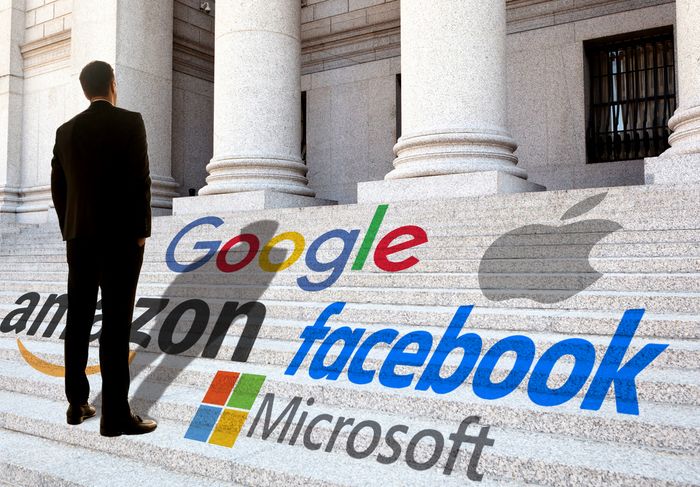
Anti-trust laws, also known as competition laws, are designed to protect consumers and ensure a competitive market landscape. They do so by preventing abusive business practices, restricting the formation of cartels or monopolies, and overseeing mergers and acquisitions that could reduce competition. However, the rise of tech giants such as Google, Amazon, Facebook, and Apple has presented new challenges for anti-trust regulation, with these companies holding an enormous share of the market in their respective sectors.
The concern here is not merely about dominance, but also about how these companies use their dominance. Anti-competitive practices, such as preferential treatment of their own services, predatory pricing, or exclusionary contracts with suppliers, can inhibit competition and stifle innovation. According to a 2022 report by the US House Judiciary Committee, all four of the tech giants mentioned earlier have engaged in practices that either exploit or shut out competitors, confirming the fears of anti-trust advocates.
Analysis
Anti-trust regulation requires a nuanced understanding of the tech industry’s complexities and the ways in which tech giants can exploit their dominant position. Governments and regulatory bodies worldwide have started to take notice. For instance, the European Union has been a trailblazer in this regard, imposing hefty fines on Google for anti-competitive practices. They have also opened a Statement of Objections case against Apple. In the US, both the Federal Trade Commission (FTC) and the Department of Justice (DOJ) have launched investigations into Big Tech’s anti-competitive practices.
Two key anti-trust cases are currently shaping the discourse:
a. Facebook (Meta) and Instagram/WhatsApp: Facebook’s acquisitions of Instagram and WhatsApp have been a focus of anti-trust scrutiny. Critics argue that these acquisitions have allowed Facebook to monopolize the social networking space, reducing competition and limiting consumer choice.
b. Amazon and Third-Party Sellers: Amazon has faced scrutiny over its dual role as both a marketplace for third-party sellers and a retailer of its own products. The company has been accused of using data from third-party sellers to develop its own competing products, which is seen as an unfair advantage.
Solving the anti-trust dilemma in the tech sector will require a multifaceted approach. This may include strengthening existing laws, creating new regulations tailored to the digital age, and improving the enforcement capabilities of regulatory bodies. Furthermore, fostering competition and innovation should be at the heart of these efforts.
Engagement Resources:
- Open Markets Institute (https://openmarketsinstitute.org/): Open Markets Institute is a think tank that advocates for stronger anti-trust enforcement and market competition.
- American Antitrust Institute (https://www.antitrustinstitute.org/): The American Antitrust Institute is an independent nonprofit organization that promotes competition that protects consumers, businesses, and society.
- Electronic Privacy Information Center (https://epic.org/): EPIC is a public interest research center that focuses on privacy and civil liberties issues, including anti-competitive practices in the tech sector.
- International Competition Network (https://www.internationalcompetitionnetwork.org/): The International Competition Network is a virtual network that provides competition authorities worldwide with a specialized yet informal platform for addressing practical competition concerns.