Brief #15—Social Justice
By Erika Shannon
The fight for tighter gun laws in the U.S. is nothing new in recent years. We have seen upticks in the number of mass shootings here in the U.S., as well as cities like Chicago struggling with ongoing gun violence daily. Innocent lives are lost left and right as guns fall into the wrong hands; it’s clear that something needs to be done, but there is much debate on what that should be. President Biden has made promises to put efforts towards gun control, and we have seen a few executive orders laid out, but nothing substantial. Individual states are also implementing their own gun control regulations, when federal regulations are just not enough to curb gun violence.

Search Results
Should the US join the International Criminal Court?
Brief #112—Foreign Policy
By Ailin Goode
Relations between the U.S. government and the International Criminal Court have shifted back and forth between cautious support and straightforward opposition with each administration since the founding of the ICC in 2002. While the Biden administration is proving more tolerant of the Court than his predecessor it remains to be seen whether-or-not the United States will reconsider its current abstinence from the Rome Statute, the treaty that established and governs the ICC.
Attorney General Merrick Garland Brings Back DOJ Consent Decrees As A Tool For Police Reform
Brief #160—Civil Rights
By Rod Maggay
On April 16, 2021 new U.S. Attorney General Merrick Garland issued a memorandum titled “Civil Settlement Agreements and Consent Decrees With State and Local Governmental Entities.”
The memo was comprised of four points. First, the new memo rescinded a November 2018 memo that imposed restrictions on the traditional use of consent decrees against state and local law enforcement entities. That November 2018 memo was issued by then Attorney General Jeff Sessions. Second, the new memo instructs that settlement agreements and consent decrees would return to the traditional process of approval that had been in place prior to Attorney General Sessions November 2018 memo. Third, the use of consent decrees again must lay out specifically what the violations are, what remedies are being proposed and how the remedies will address the violations. And lastly, the memo instructs that if monitors are brought in to help oversee the proposed consent decree that the monitors are independent, highly qualified and free of conflicts of interest. LEARN MORE
Show some courage! Defy your tribe!
Show Some Courage
By Robert Wright
Last week LeBron James, who has 50 million Twitter followers, tweeted a picture of a policeman in Columbus, Ohio who had shot a 16-year-old Black girl to death. The tweet said, “You’re next. #Accountability.”Coming right after the verdict in the Derek Chauvin trial, the tweet seemed to mean that this cop, like Chauvin, would be convicted of murder and imprisoned—though some took James’s message as more menacing: a threat of vigilante justice.On either interpretation, the tweet didn’t make sense. The cop’s body cam had captured the killing, and the video told this story:
A cop responding to a 911 call arrives on the scene and sees the 16-year-old, Ma’Khia Bryant, with a knife in her hand, approaching another girl. The other girl is backed up against a parked car, with no means of escape, as Bryant draws the knife back and seems poised to stab her.
Our Migrant Workforce: Who Are They? How Did They Get Here?
Brief #121—Immigration
By Kathryn Baron
Migrant workers support the US economy providing American industries like agriculture and technology the critical labor force they need to prosper. In 2019, more than 900,000 temporary foreign workers visas were granted, compared to only 400,000 in 1994. During lockdown measures in 2020, Trump suspended all temporary work visas to ensure public health safety.
The first migrant labor program came during WWI due to severe labor shortages and drew in agricultural laborers primarily from Mexico. In 1952, lawmakers attempted to regulate and consolidate temporary visa regulations into a comprehensive Immigration and Nationality Act (INA), which introduced the H2 visa (the precursor to the H1B). There are currently 4 types of H-visas for temporary workers (with the 4th being for spouses and unmarried children of H-visa recipients). See below for an explanation of the different H type visas that that are used by migrant workers.
How Biden’s Tax Plan Will Help Bolster the Economy
Brief #113—Economics
By Rosalind Gottfried
Biden is proposing an ambitious two part tax plan to expand the American economy. The cost will be 2.3 trillion dollars and it will make America more competitive, create jobs, re-establish the infrastructure and help Americans’ quality and standard of living. Biden’s plan is in direct opposition to the prior administration’s massive budget cuts of 2017; that plan benefited only the wealthy and failed to produce promised increases in business investments. The Trump administration cut corporate taxes to 21%, down from 35%. Biden will increase them to 28%. In 2020 the fortune 500 companies paid 11.3% in income taxes and many companies paid nothing; for example, Amazon, Chevron, IBM, and Halliburton. In addition to raising the corporate tax level the plan will stop multinational corporations from avoiding taxes on overseas profits, instead treating them as if they were domestic income. It will establish an effective minimum tax on foreign investment. A large part of this increase will fall to “foreigners” who comprise 40% of shareholders. This will fund phase one of the program which will focus on infrastructure development in highways; mass transit; broadband access; support for electric vehicles; and veteran hospitals. It will also address research and development to fund home healthcare for the elderly and the disabled, an expenditure that can be reduced significantly by keeping people at home rather than institutions.
Biden and the American Relationship with Europe
Brief #104—Foreign Policy
By Will Solomon
The Biden campaign was extremely vocal about its intention to restore a “traditional” American role in foreign affairs, an essential component of this being a restitution of America’s typical postwar role with respect to its European allies. In theory, this would reverse Trump’s erratic position towards these traditionally central alliances, which involved the imposition of tariffs on European goods, mixed rhetoric on NATO (unusual for a postwar American president), and his rhetorical hostility to the European Union, among other phenomena.
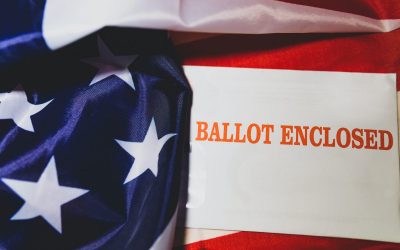
Automatic Voter Registration Systems (AVR) Is The Latest Approach To Fight State Voter Suppression Bills
Brief #155—Civil Rights
By Rod Maggay
In 2015 Oregon became the first state in the country to implement an automatic voter registration (AVR) system for its residents. California became the second U.S. state to implement an AVR system when it approved a law in October 2015. Over the next few years an additional seventeen states and the District of Columbia have passed laws that enacted AVR systems for their states. An automatic voter registration system is one where an eligible voter must opt – out of voting. Under the old traditional system in place across the U.S., voters filled out paper voter registration forms and returned them to their local voting authority body. Under an AVR system, any eligible voter who interacts with a state or federal government agency for a non – voting purpose, such as applying for a driver’s license or identification card, will automatically be registered to vote in that state. There are differences across the states that have an AVR system but the person will be registered unless they affirmatively decline. In sixteen states, the person conducting a transaction with a state or federal agency can decline during their visit with the agency they are conducting business with while two other states give the person the option to decline a registration to vote via a paper mailer sent to the person who declines by mailing the paper back.
The Minimum Wage of $7.25 Has Not Been Raised Since 2009
Brief #110—Economics
By Rosalind Gottfried
The debate regarding the efficacy of a $15 minimum wage is heating up since Biden included it in his Corona virus stimulus package. The bill would have a gradual phasing in of the wage over the next four years. Currently, it would be $9.50 and go to $11, then $12.50, then $14 annually until it reaches $15 in 2025. Future increases would be tied the median wage rate, thereby assuring the consistent value of the minimum wage.
The consequences of the increase are debated and the research demonstrates some mixed outcomes but overwhelmingly it supports the increase. Most show it does not actually decrease jobs. One study shows no impact on jobs in 138 state and local areas, over five years and another shows no impact in thirty years. One analysis of 60 studies of wages and jobs shows no net loss of jobs. Increased wages actually are more likely to increase jobs due to the enhanced purchasing power of the lowest income groups. More money would be spent in local businesses and services, increasing revenue and creating jobs.
Our Decentralized Health System Creates Vaccine Rollout Challenges
Brief #95—Health
By Erin Mcnemar
Confusion. Disorganization. Decentralization. All across the country, states are struggling with the vaccination process. From deciding who should be a priority to simply not having enough vaccines, many states are facing criticism for what seems like a failure to plan. These issues are due to the decentralized health system present in the United States. According to the World Health Organization, “Health systems decentralization involves moving decision making away from centralized control and closer to the users of health services. Many countries have embarked on a process to decentralize their health systems as a means to improve their responsiveness and performance.”