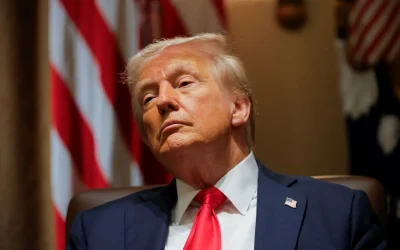
Ukraine’s government has agreed to the core parts of a peace deal brokered by the Trump administration to end the now nearly four year long war. US officials have been meeting with both the Russians and Ukrainians in order to secure an end to the war. The plan was presented as a 28 point peace plan but upon revision by the Ukrainian side has been revised to a 19 point peace plan that no longer includes items such as amnesty regarding acts committed during the war. Ukraine as part of the deal has agreed not to increase the size of its military and will not join NATO under the updated plan.

Search Results
Should Transgender Athletes be Allowed to Compete? (Foreign Policy Brief #225)
The goal for the IOC now is to create a blanket gender testing policy that would specifically for the 2028 Olympics in Los Angeles. President Trump has been one of the most ardent supporters of policies limiting the participating, or erasing the participation, of transgender athletes in sports at all levels; and has even called for more testing by the IOC ahead of the 2028 Games. President Trump has also made mention of Title IX , a federal law that prohibits sex-based discrimination, as his means of ‘protecting women in women’s sports’ while excluding and perhaps discriminating against transgender athletes. Meanwhile, Democratic lawmakers around the country have fought to create more inclusionary policies. California, currently, allows transgender athletes to participate in sports through the high school level; and their policy is based on gender identity rather than genetics. The Olympics in LA in 2028 are going to be a contentious one to watch on this issue as the stage is being set for inclusive California to be hosting the Olympics who may very well end the inclusionary practices that have been in place since 2000.
Is Trump trying to dig up the ocean? And what does the rest of the world think? “Seabed Mining” (Environment Policy Brief #185)
In keeping with the administration’s bull-in-a-China-shop approach to the environment, foreign policy, tariffs, and just about every other domestic and international issue, the Trump team now wants to dig up the bottom of the sea.
How low will he go? President Trump’s penchant for debasing himself undermines U.S. Credibility (Elections & Politics Brief #201)
If you were new to President Trump’s Oval Office press conferences with world leaders, you might have found his meeting with Saudi Arabia’s Crown Prince Mohammed bin Salman (MBS) on Tuesday, November 18, to be an astonishingly low moment for a U.S President. As though determined to debase himself and weaken U.S. credibility, Trump dismissed U.S. intelligence findings linking the crown prince to the murder of journalist Jamal Khashoggi, while savagely attacking the reporter who asked about it. And, per usual, Trump went out of his way to denigrate past presidents and brag about himself ad nauseum.
The Need for a US Technology Policy
It is a technological age, but America lacks the semblance of a policy to regulate our use of technology. We have so far failed to develop policies to help assure us that our economic and social well-being is not being picked apart by our use of unregulated technological platforms.
A Congressional Bill to Improve the Nation’s Water Infrastructure (Environment Policy Brief #185)
The official Environmental Protection Agency (EPA) report states that about 240,000 water main breaks occur each year in the United States. This highlights the urgent state of the nation’s water infrastructure. Rep. Salud Carbajal, D-Calif., introduced the Water Infrastructure Resilience and Sustainability Act (H.R. 5566) on Sept. 26, 2025. Rep. Carbajal, introduced the bill to modernize the aging water systems across the nation.The bill seeks to amend the Federal Water Pollution Control Act and the Safe Drinking Water Act.
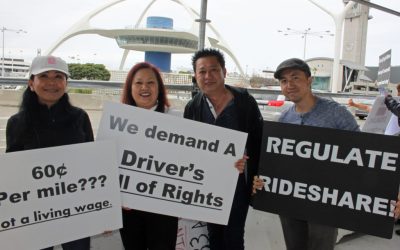
Rideshare Drivers Organize As Earnings Decline (Technology Policy Brief #160)
When Uber and Lyft came on the scene, taxi drivers protested vociferously. Now it’s the rideshare drivers protesting, as their earnings go down and the threat of autonomous vehicles looms. Organizing by rideshare drivers has had some success, but how effective hard-won changes will be remains to be seen. Workers scored an apparent victory in securing collective bargaining rights in California. But a similar law in Massachusetts has yet to yield results and the California law was a compromise that included enormous giveaways to the companies.
Alaska (2026 Democratic Primary Preview Series Brief #2)
There are two seats up for grabs this coming election season in Alaska: the first is Alaska’s single, at-large House of Representatives seat, and the second is the Senate seat of Republican Dan Sullivan. The current delegation consists of Republican Representative Nick Begich III, Republican Senator Dan Sullivan, and Republican Senator Lisa Murkowski.
Alabama (2026 Democratic Primary Preview Series Brief #1)
The Yellowhammer State will have all seven of its U.S. House seats on the ballot in 2026, along with one of its U.S. Senate seats. Alabama’s current House delegation includes: District 1: Barry Moore (R); District 2: Shomari Figures (D); District 3: Mike Rogers (R); District 4: Tyler Aderholt (R); District 5: Dale Strong (R); District 6: Gary Palmer (R); and District 7: Terri Sewell (D).
Deconstructing “Peace”: Trump’s Settled Conflicts and the Ceasefire Illusion (Foreign Policy Brief #222)
In political discourse, the language of peacemaking is often employed for its potent rhetorical value, yet the terms used can obscure the reality on the ground. A critical distinction must be drawn between a ceasefire and a peace settlement. A ceasefire, or an armistice, is a military and temporal arrangement. It is an agreement to stop active hostilities, to put down the weapons, often temporarily and along existing lines of control. It is a pause. It does not resolve the underlying political, economic, or social grievances that ignited the conflict. A peace settlement, by contrast, is a comprehensive political and legal resolution. It is a formal treaty or agreement that ends the state of war by addressing the root causes—such as sovereignty, borders, justice, and security guarantees—and attempts to build a framework for a new, sustainable relationship.