
Policy Issue Summary
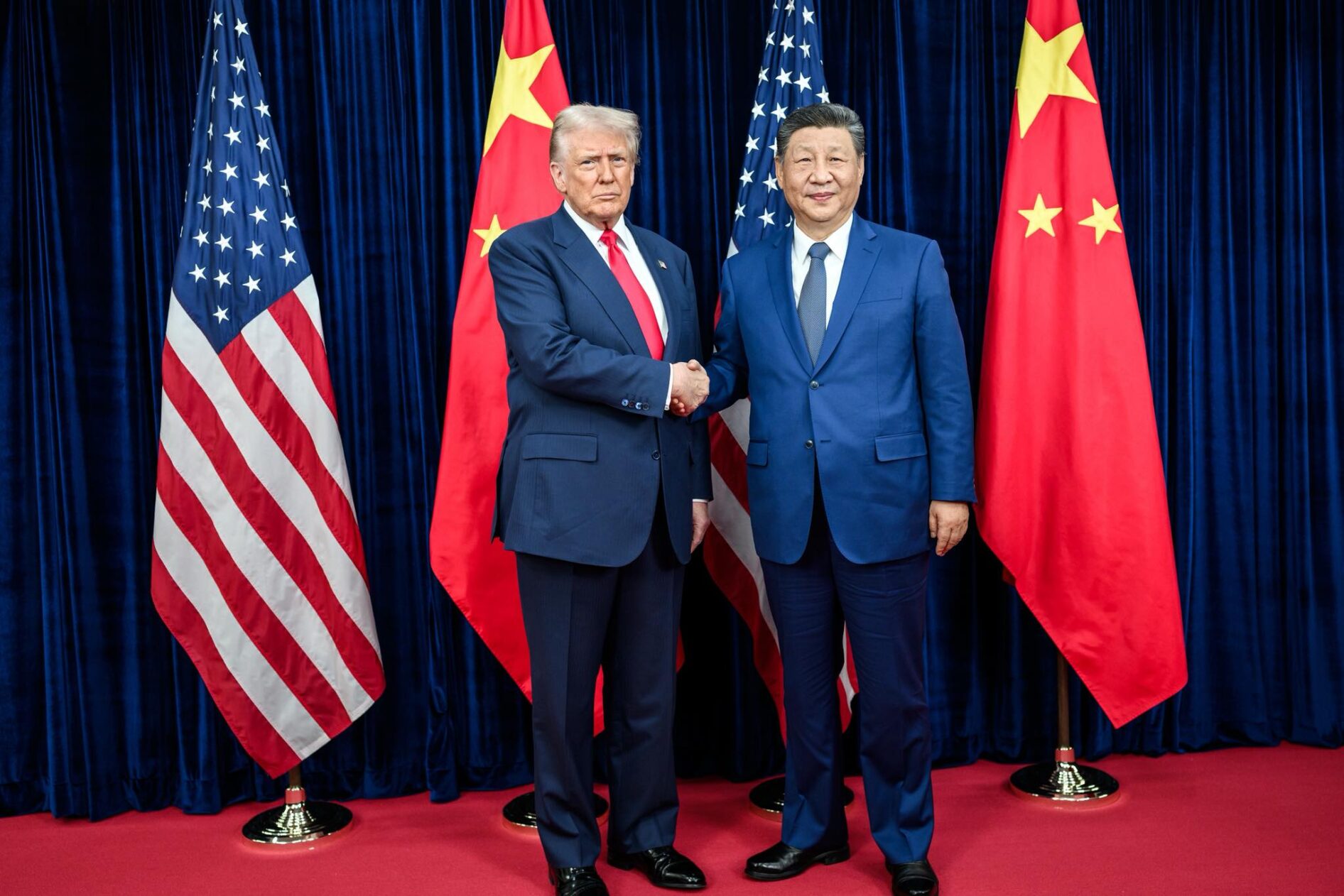
As the global community enters the second quarter of 2026, the geopolitical landscape is dominated by the upcoming summit between President Donald Trump and President Xi Jinping, scheduled for the first week of April in Beijing. This meeting follows a period of extreme volatility in bilateral relations that defined the first year of the second Trump administration. Throughout 2025, the relationship was characterized by a reignited trade war, with the United States imposing aggressive reciprocal tariffs that at times reached triple digits on Chinese imports. These measures were met with targeted Chinese retaliation, including boycotts of American agricultural products and export controls on rare earth minerals. However, a significant turning point occurred in October 2025 during a meeting in Busan, South Korea, where both leaders agreed to a one-year trade truce. This temporary reprieve rolled back the most punitive levies and led to a resumption of Chinese purchases of American soybeans and energy, providing a fragile stability that the April summit seeks to formalize and extend.
The policy framework currently guiding Washington has shifted away from the “Great Power Competition” narrative that dominated the previous decade. The 2025 National Security Strategy instead prioritizes “reciprocal” economic and technological competition. While the rhetoric of an ideological crusade has been tempered in favor of transactional deal-making, the underlying tensions remain acute. The U.S. continues to pressure Taiwan to increase its defense spending to unprecedented levels, while simultaneously navigating complex negotiations over artificial intelligence and semiconductor supply chains. For Beijing, the April talks represent an opportunity to project its role as a stabilizing force in a turbulent world, contrasting its “community with a shared future” with what it characterizes as the chaotic protectionism of the American hegemon. The stakes of the meeting involve not only the extension of the trade truce but also the potential for a new “G2” era where the two superpowers manage the global order through direct, elite-level bargaining.
Analysis
From a structural perspective, the upcoming Beijing summit serves as a theater for the reconciliation of nationalist capital interests rather than a genuine effort toward global peace or labor solidarity. The “trade war” and the subsequent “truce” are mechanisms through which the ruling elites of both nations attempt to manage the inherent contradictions of globalized capitalism. For the Trump administration, tariffs are less about protecting domestic workers—who continue to face the brunt of inflationary pressures—and more about asserting leverage to extract concessions that benefit specific sectors of American industry. This transactional approach treats geopolitical flashpoints like Taiwan and the South China Sea as chips on a poker table, demonstrating a disregard for the self-determination of local populations in favor of high-level strategic alignment. The demand for Taiwan to allocate ten percent of its GDP to defense is a stark example of how militarism is weaponized to fuel the American military-industrial complex under the guise of security.
Beijing’s participation in this rapprochement is equally calculated. President Xi’s emphasis on “common development” and “mutual respect” masks the reality of a state-capitalist system that is struggling with its own internal economic contradictions, including a cooling property market and demographic shifts. By positioning China as the “anchor of stability,” the CCP aims to exploit the perceived decline of American institutional capacity and the fraying of traditional Western alliances. The move to reduce export rebates on solar panels and batteries earlier this year suggests that China is willing to use its dominance in green technology as a tool of economic coercion, mirroring the very protectionism it critiques in Washington. The summit is likely to result in a “soft landing” that preserves the profits of multinational corporations and state-owned enterprises, while the working classes in both the U.S. and China remain vulnerable to the whims of executive orders and automated supply chain shifts.
The focus on technological competition, particularly in the realm of AI and semiconductors, reveals the true frontline of 21st-century imperialism. The U.S. efforts to restrict Chinese access to advanced chips, while simultaneously enticing Taiwanese semiconductor giants to invest hundreds of billions in Arizona, represent a desperate attempt to maintain technological hegemony. This creates a fragmented global digital order where technology is used for surveillance and control rather than the collective benefit of humanity. The April talks will likely avoid addressing the root causes of global inequality or the climate catastrophe, focusing instead on market access and intellectual property protections that serve the interests of the billionaire class. Without a fundamental shift toward internationalism that prioritizes the needs of the global majority over the strategic vanity of two competing empires, the Beijing summit will most likely remain a temporary patch on a deeply fractured and exploitative global system.
Engagement Resources
Click or tap on the resource URL to visit links where available
Tricontinental: Institute for Social Research (https://thetricontinental.org/): An inter-institutional body that promotes critical thinking and provides analysis from the perspective of the Global South on imperialism and economic sovereignty.
Qiao Collective (https://www.qiaocollective.com/): A diaspora Chinese media collective challenging the “New Cold War” and providing leftist critiques of U.S. interventionism in Asia.
Institute for Policy Studies (IPS) (https://ips-dc.org/): A progressive think tank that offers deep analysis on global inequality, militarism, and the need for a more just U.S. foreign policy.
Monthly Review (https://monthlyreview.org/): An independent socialist magazine that provides long-form Marxist analysis of global political economy and the contradictions of modern capitalism.
CodePink: Women for Peace (https://www.codepink.org/): A grassroots peace and social justice movement working to end U.S.-funded wars and occupations and promote diplomacy over militarism.
Labor Notes (https://labornotes.org/): A media and organizing project that focuses on cross-border labor solidarity and the impact of trade policies on working people globally.