
Policy Issue Summary
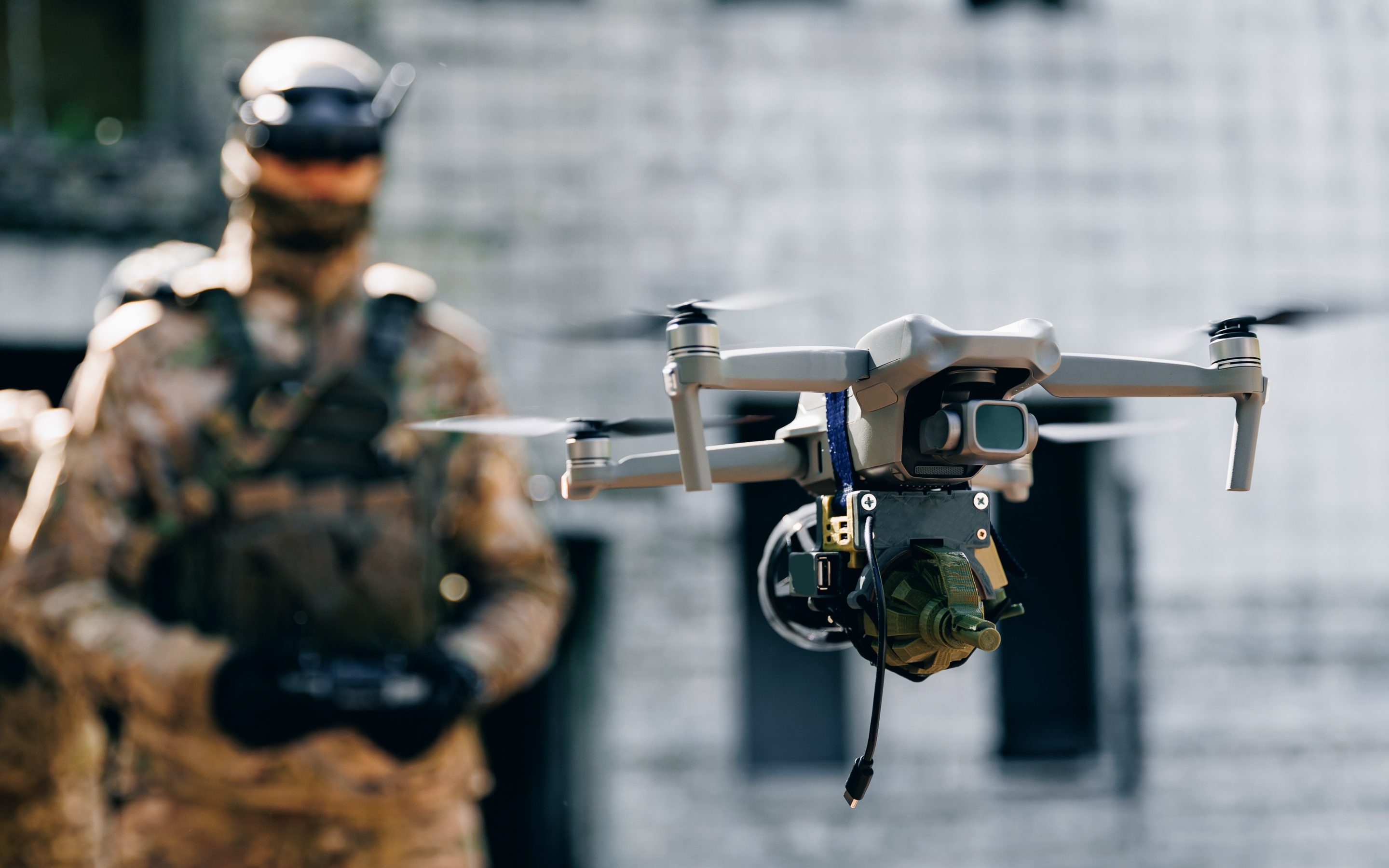
Unmanned aerial vehicles, commonly known as drones, have fundamentally reshaped modern conflict, transforming the skies into a perpetual zone of surveillance and lethal action. These aerial platforms range from small, commercially adapted First-Person-View drones used for tactical strikes to One-Way Attack systems that function as loitering munitions, as well as Medium and High-Altitude Long-Endurance models capable of carrying heavy, precision-guided explosives. With capabilities spanning from real-time intelligence gathering to targeted assassinations across borders, drones grant immense destructive power at a fraction of the cost of traditional air forces. They operate via remote human piloting through satellite communications, though modern iterations increasingly rely on artificial intelligence for navigation and target acquisition.
While the United States and Israel initially monopolized this technology, the global landscape has shifted drastically. Today, countries like China, Turkey, and Iran have emerged as premier manufacturers, flooding the international market with affordable combat drones. Consequently, the proliferation of these weapons is ubiquitous. Nearly every nation-state, alongside a growing myriad of non-state actors and insurgent groups, now possesses military-grade drone capabilities. This unchecked diffusion means that devastating aerial power is no longer the exclusive domain of global superpowers, creating a volatile environment where cross-border strikes and asymmetric warfare can be executed with unprecedented ease.
Analysis
The conventional metric for measuring the effectiveness of drone warfare relies heavily on tactical advantages, celebrating the ability to neutralize adversaries and destroy expensive military hardware using remarkably cheap technology. Military strategists often laud drones for lowering the threshold of engagement, allowing states to project imperial power and conduct lethal operations without risking their own soldiers or facing the domestic political backlash typically associated with troop deployments. However, this sanitized narrative of precision and cost-efficiency actively obscures the profound human devastation left in its wake. The reality of drone warfare is defined by extrajudicial killings, decimated infrastructure, and a staggering toll on civilian populations. Far from being a clean instrument of modern combat, the drone serves as a tool of asymmetric terror, turning marginalized regions into testing grounds for the military-industrial complex.
Furthermore, the expansion of the global drone market has fueled a highly lucrative arms race that benefits private defense contractors at the expense of human lives. Nations in the Global South are increasingly subjected to devastating airstrikes, as both state forces and militant groups deploy fleets of loitering munitions with catastrophic consequences for civilian communities. The abstraction of violence—where a remote operator can extinguish a life from thousands of miles away—has severely degraded the moral and legal constraints of war. International humanitarian law remains woefully inadequate to address the rapid normalization of cross-border drone assassinations, which consistently bypass democratic oversight and judicial accountability.
Looking toward the future, the trajectory of drone warfare is hurtling toward full autonomy, presenting an existential threat to human rights. The integration of artificial intelligence is rapidly shortening the kill chain, transferring life-and-death decisions from human operators to opaque algorithms. Recent conflicts have already witnessed the deployment of AI-driven targeting systems capable of processing vast amounts of data to generate kill lists autonomously, often accepting terrifyingly high margins of civilian “collateral damage.” As autonomous drone swarms become a reality, we face a future where human empathy is entirely removed from the battlefield, replaced by machines programmed to hunt and kill. Resisting this dystopian progression requires a fierce rejection of the militarized logic that values technological supremacy and corporate profit over the sanctity of human life.
Engagement Resources
- Airwars (https://airwars.org/): A collaborative, not-for-profit transparency project aimed at tracking and assessing military actions and related civilian harm claims in conflict zones heavily impacted by airstrikes and drone warfare.
- Drone Wars UK (https://dronewars.net/): An independent organization conducting research and advocacy to challenge the growing use of armed drones, highlighting the erosion of international law and the rising civilian casualties of remote warfare.
- Center for Civilians in Conflict (https://civiliansinconflict.org/): An international advocacy group that researches the devastating impacts of modern warfare, including the rapid proliferation of drones, and demands civilian protection and accountability from armed actors.
- Amnesty Tech (https://www.amnesty.org/en/tech/): A division of Amnesty International dedicated to exposing the human rights violations facilitated by emerging technologies, including the push toward lethal autonomous weapons systems and AI-driven warfare.
- Stop Killer Robots (https://www.stopkillerrobots.org/): A global coalition of NGOs actively campaigning for a preemptive ban on lethal autonomous weapons systems to ensure meaningful human control over the use of force.