
About 170 years ago, Frederick Douglass proclaimed that “it is easier to build strong children than to repair broken men.”Few would argue with the idea that a child growing up in a family in financial need requires additional support to become a strong, healthy, and happy adult.
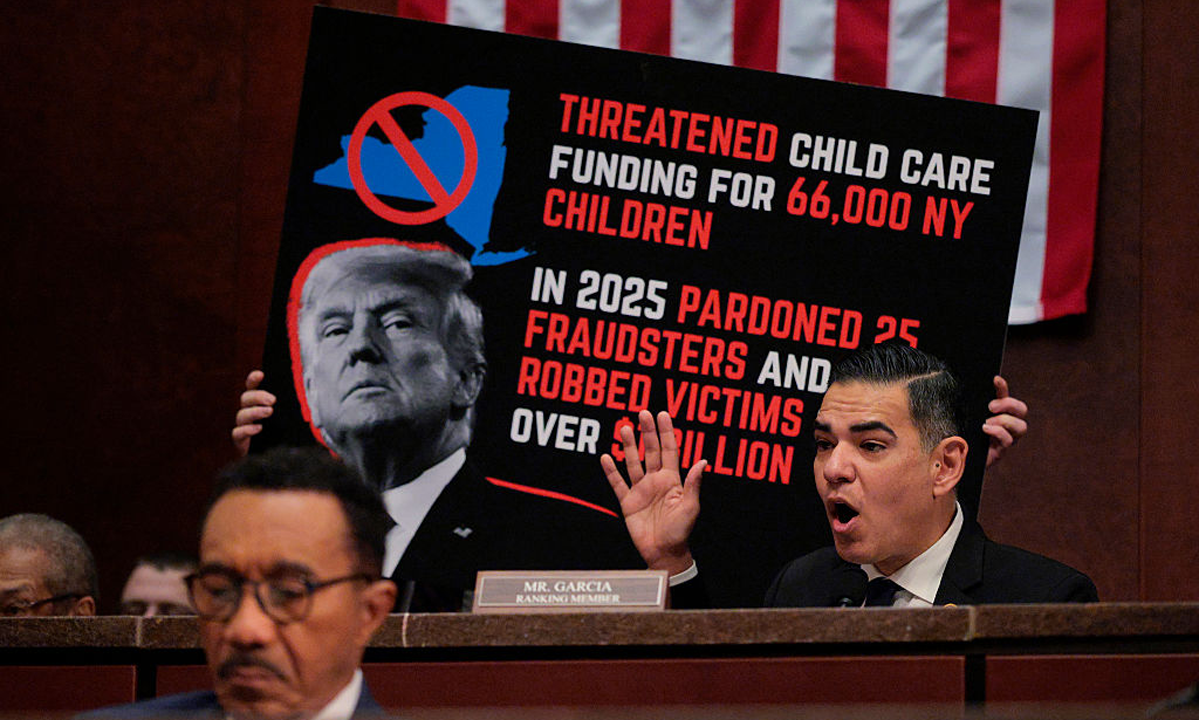
However, on Tuesday, January 6, the Trump administration decided to withhold funding for programs that support low-income families with children in five Democratic-led states—California, Colorado, Illinois, Minnesota, and New York—citing concerns about fraud. No specific details or evidence regarding the alleged fraud were provided.
The U.S. Department of Health and Human Services (HHS), which regulates and funds the programs, stated that it had “identified concerns that these benefits intended for American citizens and lawful residents may have been improperly provided to individuals who are not eligible under federal law.” As a result, HHS announced it would complicate access to funding by requiring the affected states to submit additional documentation before receiving funds.
HHS Deputy Secretary Jim O’Neill said that “families who rely on child care and family assistance programs deserve confidence that these resources are used lawfully and for their intended purpose.”
According to Reuters, the withheld funds include $7.3 billion from the Temporary Assistance for Needy Families (TANF) program, which provides cash assistance to low-income families with children, and nearly $2.4 billion from the Child Care and Development Fund, which helps make child care more affordable for working parents. HHS also froze the five states’ access to $869 million in Social Services Block Grant funding. All three programs are overseen by the Administration for Children and Families, an agency within HHS.
The New York Post reported that these programs serve as lifelines for some of the neediest Americans:
- The Child Care and Development Fund subsidizes daycare for low-income households, enabling parents to work or attend school.
- TANF provides cash assistance and job training, helping families afford necessities such as diapers and clothing while supporting employment.
- The Social Services Block Grant, though smaller, funds a range of essential social service programs.
“These resources support families in need and help them access food and much more. If true, it would be awful to see the federal government targeting the neediest families and children this way,” said a spokesperson for the Colorado governor’s office.
New York Governor Kathy Hochul strongly condemned the decision. “We’ll fight this with every fiber of our being, because our kids should not be political pawns in a fight that Donald Trump seems to have with blue-state governors,” she said.
On January 8, Governor Hochul announced an unprecedented investment aimed at delivering affordable, universal child care for children under five across New York State. The initiative includes a partnership with New York City Mayor Zohran Mamdani to provide free child care for two-year-olds in the city, as well as expanded funding to strengthen the existing free 3-K and Pre-K programs for all families, regardless of income. “$110 million in new capital funding to open hundreds of new childcare centers. Now all of this groundwork was important, it’s still important. But when I announced we’re going to begin on a path to universal childcare I said, ‘This has to go first’ … And today we’re turning that foundation into a concrete, multi-year roadmap that’ll ultimately deliver universal childcare for every single New York family statewide regardless of their income. Every child will have the same opportunity. We get the same head start. And no working parent will have to sacrifice their paycheck and career to make sure their babies and toddlers have an opportunity to grow and thrive,” stated Hochul.
All five affected states jointly sued the Trump administration, challenging the decision to withhold funding. The lawsuit was filed in federal court in Manhattan. Since then, HHS didn’t comment on the case. When the Illinois attorney general sued the Trump administration over the freezing of $1 billion in child care funding for the state, he said the action was taken without any substantive accusations or evidence of fraud. He also accused the administration of making unreasonable and burdensome demands for documentation, arguing that the requirements disproportionately targeted Democratic-led states. A temporary restraining order issued by Judge Arun Subramanian of the U.S. District Court for the Southern District of New York is set to expire on January 23. The parties are now preparing to argue in court that the administration’s decision to freeze the funds was unlawful and that its demand for years’ worth of documentation as a condition for releasing the money is unreasonable and politically motivated.
On Friday, February 6th, Judge Broderick of the U.S. District Court for the Southern District of New York approved a longer-term injunction for the duration of the lawsuit. Following the federal court decision, the anti-poverty funds will continue flowing to five states targeted by the Trump administration. However, the uncertainty over funding for vital programs — including subsidized child care and child welfare systems — still remains as the court case continues.
Engagement resources
US suspends funds for needy families in five Democratic-led states ,https://www.theguardian.com/us-news/2026/jan/07/trump-childcare-family-assistance-suspension
Five states sue over Trump freezing $10 billion in childcare, family assistance funds
Governor Hochul Announces Investments to Deliver Universal Child Care for New
Federal Judge Allows Lifeline Benefits to Continue in States Targeted by Trump, Granting Low-income Families Reprieve, https://imprintnews.org/top-stories/federal-judge-allows-lifeline-benefits-to-continue-in-states-targeted-by-trump-granting-low-income-families-reprieve/270817