
Policy Issue Summary
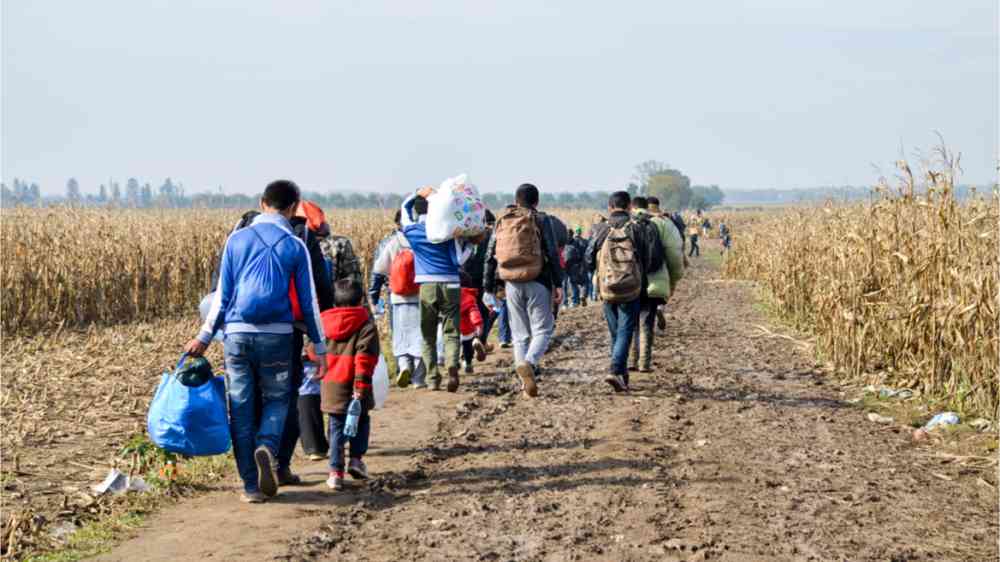
Climate change has fundamentally reshaped global human mobility, acting as a dominant and accelerating force behind mass displacement. Unpredictable weather patterns, rising sea levels, and catastrophic extreme heat are rendering vast swaths of the planet uninhabitable. A nearly 2026 report from the United Nations High Commissioner for Refugees reveals that almost 120 million people are displaced globally, with a staggering 75 percent residing in countries facing high-to-extreme exposure to climate-related hazards.
This crisis is not a naturally occurring inevitability, but a systemic failure driven by a global economic model that prioritizes endless extraction over ecological preservation. The burden of climate displacement falls disproportionately on communities in the Global South, Indigenous populations, and the global working class. For example, in Central America’s “Dry Corridor,” consecutive years of severe drought and crop failures have undermined subsistence farming and pushed many rural workers and families from Guatemala and Honduras toward Mexico and the United States. Likewise, in Bangladesh, rising sea levels and intensifying cyclones have caused severe saltwater intrusion in coastal regions like Satkhira, ruining agricultural land and contributing to migration from rural coastal communities toward urban centers such as Dhaka.
In the Pacific, the existential threat of rising oceans has already begun displacing communities in low-lying island nations such as Tuvalu and Kiribati; one widely cited example is Ioane Teitiota, a man from Kiribati who migrated to New Zealand and argued that sea-level rise, saltwater contamination, and shrinking habitable land made life in Kiribati increasingly unsafe. These communities, which have historically contributed the least to the greenhouse gas emissions driving the crisis, are forced to abandon their homes and livelihoods due to floods, droughts, and resource scarcity fueled by the heavily industrialized nations of the Global North. The dynamic exposes a stark systemic inequality: affluent nations continue to drive environmental collapse, while the most marginalized populations bear the devastating human cost.
Analysis
When vulnerable populations are forced to flee climate-ravaged regions, they are routinely met with hostile, militarized borders rather than humanitarian refuge. International legal frameworks, such as the 1951 Refugee Convention, still do not officially recognize the legal concept of a “climate refugee.” This glaring omission leaves millions of displaced individuals in a perilous legal void, completely devoid of the protections necessary for their survival and resettlement.
The United States, despite standing as one of the largest historical emitters of carbon pollution, has largely responded to this displacement crisis through aggressive border militarization and the criminalization of migrants. Instead of expanding legal pathways for migration, offering climate reparations, or addressing root ecological causes, federal investments are overwhelmingly channeled into surveillance technologies, armed border patrols, and physical barriers.
A 2025 field report by the International Refugee Assistance Project at the US-Mexico border demonstrates that these restrictive immigration policies actively compound the climate crisis for migrants. By deliberately sealing off safe and accessible points of entry, the government funnels displaced families into treacherous, unregulated routes across the desert. In these remote areas, migrants face life-threatening exposure to the exact same environmental extremes, such as severe heatwaves and sudden floods, that originally drove them from their homes.
This punitive approach treats human movement as a national security threat to be repelled by force, rather than the predictable consequence of ecological collapse. Furthermore, the sprawling, resource-intensive infrastructure of border enforcement and military operations are themselves massive polluters, generating carbon emissions that only accelerate the warming driving the displacement in the first place.
Addressing climate migration requires a radical departure from this cycle of exclusion and violence. Genuine climate justice necessitates recognizing the right to move as a fundamental human right, dismantling the violent architecture of border deterrence, and holding the primary institutional and national drivers of climate change accountable for the mass displacement they have engineered.
Take Action
- National Partnership for New Americans – Climate Justice Collaborative (https://partnershipfornewamericans.org/climate-justice-collaborative/): An initiative building the capacity of the immigrant rights movement to join the fight for climate justice, fighting to ensure the US prepares for and welcomes migrants displaced by environmental crises.
- International Refugee Assistance Project (https://refugeerights.org/): A legal advocacy organization that extensively researches the intersection of climate harms and border policies, actively pushing back on restrictive immigration laws and advocating for legal pathways for climate-displaced people.
- Southern Border Communities Coalition (https://www.southernborder.org/): A coalition advocating for human rights and pushing back against the militarization of the US-Mexico border, highlighting how increased enforcement uniquely endangers vulnerable migrants fleeing systemic disasters.