
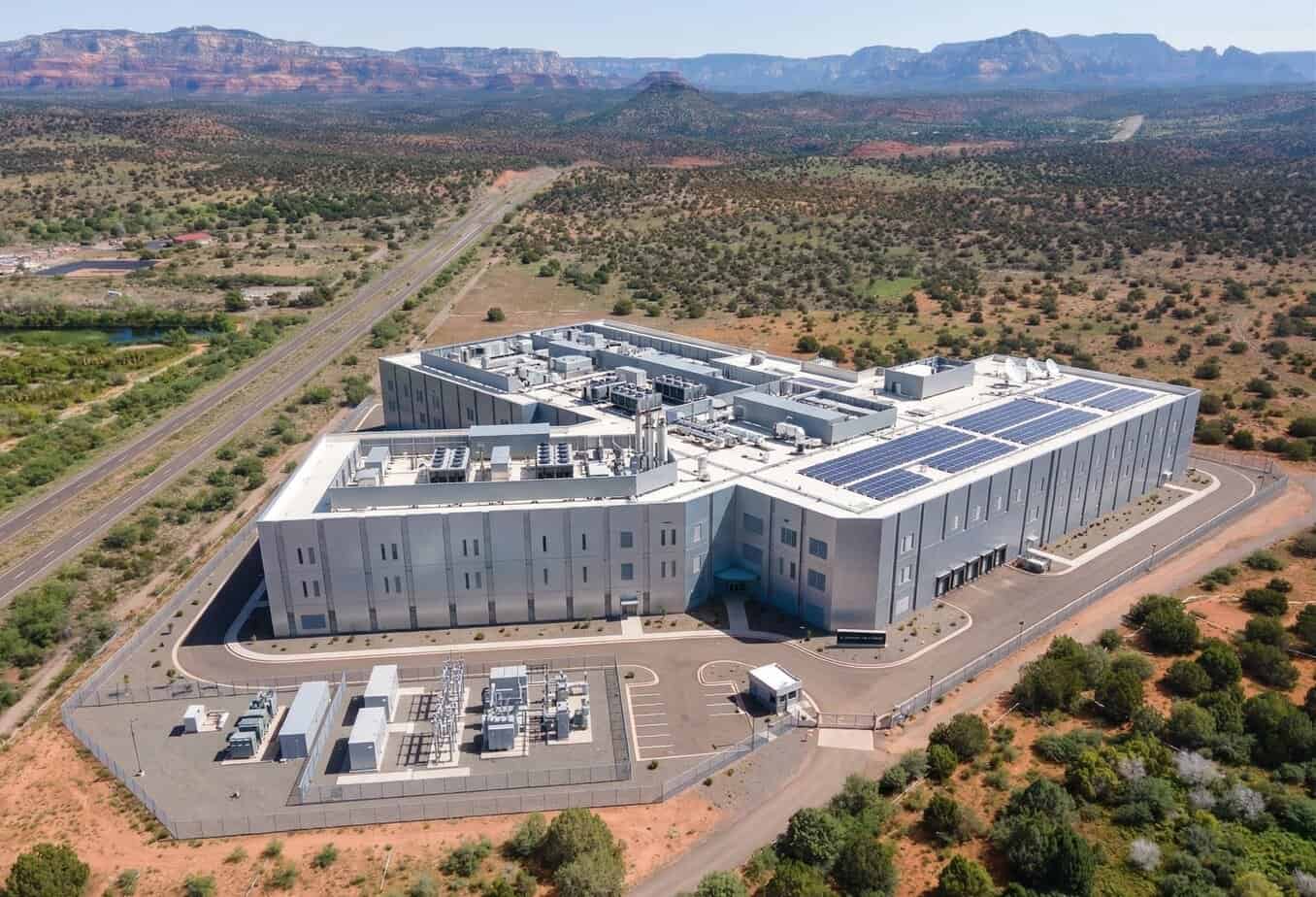
According to a Gallup poll, the majority of people don’t want data centers built near their homes. Communities are taking their objections to the ballot box, and legislators are taking notice. State and local governments are enacting regulations and ending tax breaks. The data center industry is fighting back, spending millions to influence elections and promote tech friendly policies and candidates.
Analysis
Data centers are enormous facilities housing tens of thousands of servers, routers, and cooling equipment needed to power artificial intelligence. All of that equipment requires massive amounts of electricity- some can use as much as a small city. That all generates heat, so data centers also need massive amounts of water to cool down, straining resources. So it is no surprise that a recent Gallup poll found that 7 in 10 people in the United States don’t want data centers constructed near them.
According to Gallup, “Barely a quarter favor these projects, with 7% strongly in favor.” Those sentiments were confirmed in a June election in Monterey Park, California, when the city became the first in the U.S. to enact a permanent ban on data centers. The vote wasn’t close; 86% of voters favored the ban in order to protect local air quality and resources, and prevent overuse of electricity.
The city was reacting to a proposal by an Australian firm to build a data center in Monterey Park, although the company had withdrawn its application after the City Council opposed the project and announced the ballot measure.
Across the country, people are organizing to oppose proposed data centers, concerned with the outsized impacts they have on local communities as they suck up water and energy, blight the landscape and deteriorate the quality of life
In Oregon, the city of La Pine rejected a proposed 20-megawatt data center, and the major tech hub of Hillsboro halted new tax break applications while considering an outright moratorium. Both cities cited local concerns over heavy energy demands, groundwater risks, and strained community infrastructure. In La Pine, officials unanimously rejected a proposed land sale for a data center, and residents are now demanding stricter noise and lighting standards as well as transparent reporting of resource consumption for future data centers.
And in Salem, Oregon, the state legislature passed laws requiring data centers to pay their fair share of energy infrastructure and enacted a moratorium on new data center tax breaks. They are not alone. In New York State, legislators recently passed a bill that imposes a one-year moratorium on mammoth data centers used to power generative A.I.
After Illinois lawmakers failed to pass any regulations during their regular session, despite widespread concerns from local communities about data centers, Governor JB Pritzker used his executive authority to pause tax breaks for data centers and spoke approvingly about the POWER Act, a bill discussed in legislative committee meetings but never brought to a vote.
Tech companies sell Data Centers with the promise of jobs and increased economic activity. While there may be an increase in jobs during data center construction, once built, they employ just a few people. But the promise of economic improvement can be attractive to local governments in cash-strapped low-income communities of color, which have borne the brunt of data centers (see Technology Policy Brief #155) and could continue to do so as wealthier communities enact bans.
With AI driving record profits, tech companies appear to have an insatiable need for data centers, and are not ignoring the growing threat. They have millions to spend pushing public policies that benefit them, promoting sympathetic candidates, and opposing bans and moratoriums.
A leading lobbying organization is the Data Center Coalition (DCC) a member association self-described as the voice of the data center industry. Its members are the corporations owned by the wealthiest tech billionaires, Amazon, Google, Microsoft, and Meta, as well as companies that operate data centers, including Coreweave and Oracle. The Center is located in Leesburg, Virginia. Leesburg is in Loudoun County, already home to hundreds of data centers. In fact, it claims to be home to one of the largest concentrations of data centers in the world.
The Coalition lobbies for tax incentives and energy infrastructure improvements. A guest column by DCC President Josh Levi in an Ohio newspaper waxed eloquent about the potential economic benefits the state could see from data center construction. At a Board of County Commissioners meeting in Calvert, Maryland, Levi described the potential increase in local tax revenue that building data centers could create. Open AI and Palantir are behind a Super PAC called Leading the Future that has “raised” $75.5 million and backed Republican candidates in state contests in Texas, North Carolina, and elsewhere. The website https://poweredbywho.com/money lists 9 Super PACs dedicated to lighter AI regulation with a current total of $275 million to spend.
Take Action
- 10 Reasons Data Centers Must Be Stopped, Food and Water Watch, https://www.foodandwaterwatch.org/2026/03/04/the-top-10-reasons-data-centers-must-be-stopped/
- Community Benefits Agreement Template, Stop Dirty Data Centers Campaign, NAACP. https://naacp.org/sites/default/files/documents/NAACP%20CBA%20Template%202026.pdf
- Data center-related ballot measures, 2026, Ballotpedia, https://ballotpedia.org/Data_center-related_ballot_measures,_2026