

US- Iran Ceasefire deal breakdown
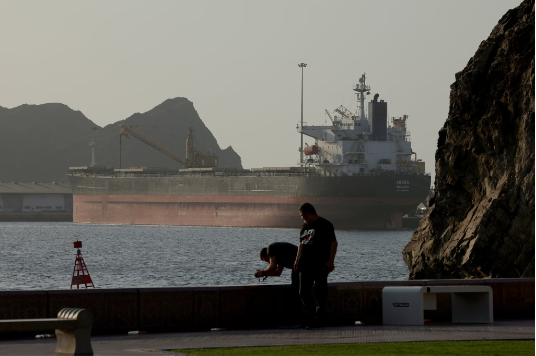
Commercial vessels and oil tankers preparing to transit through the strait of Hormuz on 17 June 2026. Photograph: Anadolu/Getty Images
Recent days have seen resumed fighting between the United States and Iran. Multiple days of US airstrikes targeting Iran, following Iran’s attacks on three ships in the strait. US and Iranian officials had agreed to a preliminary memorandum of understanding to end the costly and destructive 110 day conflict. Both the US and Iran, along with their allies, agreed to declare an end to military operations on all fronts, which includes Israel’s war on Lebanon. Including Lebanon in the deal had been a hurdle in reaching the deal as Israel has refused to end its attacks and withdraw from Lebanese territory.
The 14-point agreement was signed by Trump while attending the G7 summit in France. Though the agreement was not a final peace deal, it stated that the US and Iran would commit to negotiating and achieving a final deal in a “maximum” of 60 days. The straight of Hormuz would once again be opened, though now with Iranian control over the passage of ships. This has been a main sticking point in the implementation of the deal with the US unwilling to accept Iranian control over the strait and Iran unwilling to return to the pre-war status quo. Markets and multiple countries had welcomed the deal as months of war have left the global economy and energy supplies in shambles. However, with the resumption of hostilities and fears of a resumption of a broader war, markets and oil prices have again become volatile.
China’s Ethnic Unity Law
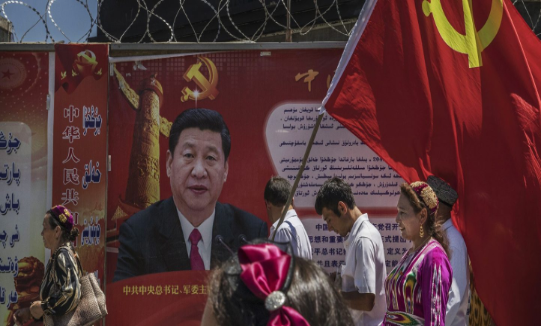
Getty Images, https://www.amnesty.org/en/latest/news/2026/06/china-new-ethnic-unity-law-set-to-entrench-assimilation-of-minority-groups/
China has brought into effect a new ethnic unity law that seeks to create a “shared” national identity among the country’s 56 ethnic groups. The ethnic groups in China consist of the Han Chinese majority and 55 other minority groups. The law promotes Han Chinese culture and language as the official standard for all ethnic groups to assimilate to or risk being charged with separatism. Outside of the majority Han Chinese population, the country recognizes 55 other ethnic minority groups, which together account for 8.9% of mainland China’s population. The law includes a clause which states that even people and groups beyond the borders of the People’s Republic of China can be held legally accountable for undermining “ethnic unity and progress or inciting ethnic separatism.” The passage of the law caused alarm in self-governed Taiwan due to the fear that it could give Beijing another legal basis to go after people in Taiwan whom it views as separatists. Rights groups have raised concerns that the new law would compromise the cultural and social rights of ethnic minorities.
Aftermath of Earthquakes in Venezuela
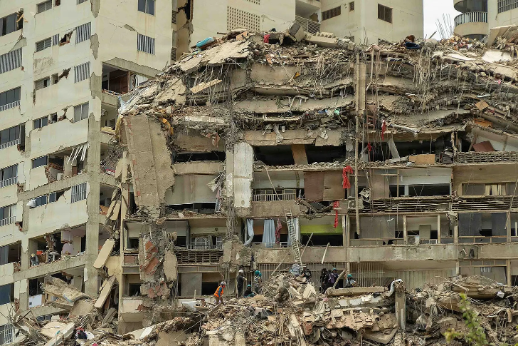
Venezuelan citizens search destroyed buildings in La Guaira, Venezuela June 28, 2026. Credit:U.S. Marine Corps/public domain.
The death toll from Venezuela’s devastating two earthquakes on June 24 has passed 4,330 people, with another 16,740 injured. Back to back quakes, and the biggest in the country in over a century, a 7.5 magnitude quake, struck only 39 seconds after the initial 7.2 magnitude shock. Before June 24, Venezuela was already facing one of the most complex economic challenges. In a single evening, the earthquakes pushed the solutions to that challenge further out of reach. Venezuela’s interim president, Delcy Rodríguez, has called for the release of frozen assets held abroad to be used towards the recovery. The UN Office for Disaster Risk Reduction has estimated direct physical damage to housing and infrastructure at about $37 billion.
US intervention in Cuba Next?
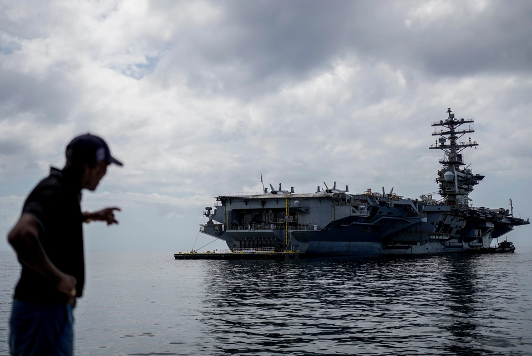
A worker points to the U.S. Navy aircraft carrier USS Nimitz docking in the Gulf of Panama, March 30, 2026. | Matias Delacroix/AP
Cuba has reported its second nationwide blackout in less than a week, plunging the island into complete darkness once again. It follows similar outages that bring the total number of island-wide outages to four since the start of the year. Outages are not uncommon in Cuba, where much of the system dates to the Cold War period, between 1960 and 1980. The problem has intensified since January, when United States President Donald Trump blockaded Cuba’s supply of foreign oil. The US military has also spent months positioning the troops and weapons needed to launch a military attack of some kind on Cuba. Trump has repeatedly floated the idea of an invasion of Cuba and even annexing the country and making it a part of the United States.
The US Secretary of State Marco Rubio, has also been open about his long standing ambition for the fall of the island’s government. Rubio stated, while professing a preference for a negotiated settlement with Cuba, also said that the chances of a deal were “not high”. US Secretary of War Pete Hegseth, also warned the government of Cuba against seeking weapons that could strike the US mainland or the US naval base at Guantanamo Bay, saying it would invite a confrontation Havana could not withstand. The administration has been open about the next stated regime change project, and it increasingly is likely we may see some kind of US intervention in Cuba in the near future.