
Summary
Texas is undergoing one of the most sweeping public education overhauls in its modern history, with major changes to school funding, curriculum, and governance taking shape as of June 2026. At the center of this shift is the rollout of a $1 billion school voucher program, expanded state control over curriculum, and controversial revisions to what millions of students will be taught in classrooms.
The voucher program, signed into law and now actively rolling out, allows families to use public taxpayer dollars up to $10,000 per student to pay for private school tuition or other education-related expenses. As of June 2026, more than 100,000 Texas students have already been awarded vouchers, signaling a major shift in how public education funding is distributed. Supporters argue this gives families “school choice,” while critics say it diverts critical funding away from already struggling public school systems.
At the same time, the Texas State Board of Education has approved a massive rewrite of social studies standards and required reading lists, including the addition of mandatory Bible stories and a stronger emphasis on Christianity and Texas identity in classrooms. The updated curriculum reduces emphasis on world history, diversity, and the contributions of marginalized groups, sparking major backlash from educators, parents, and civil rights advocates.
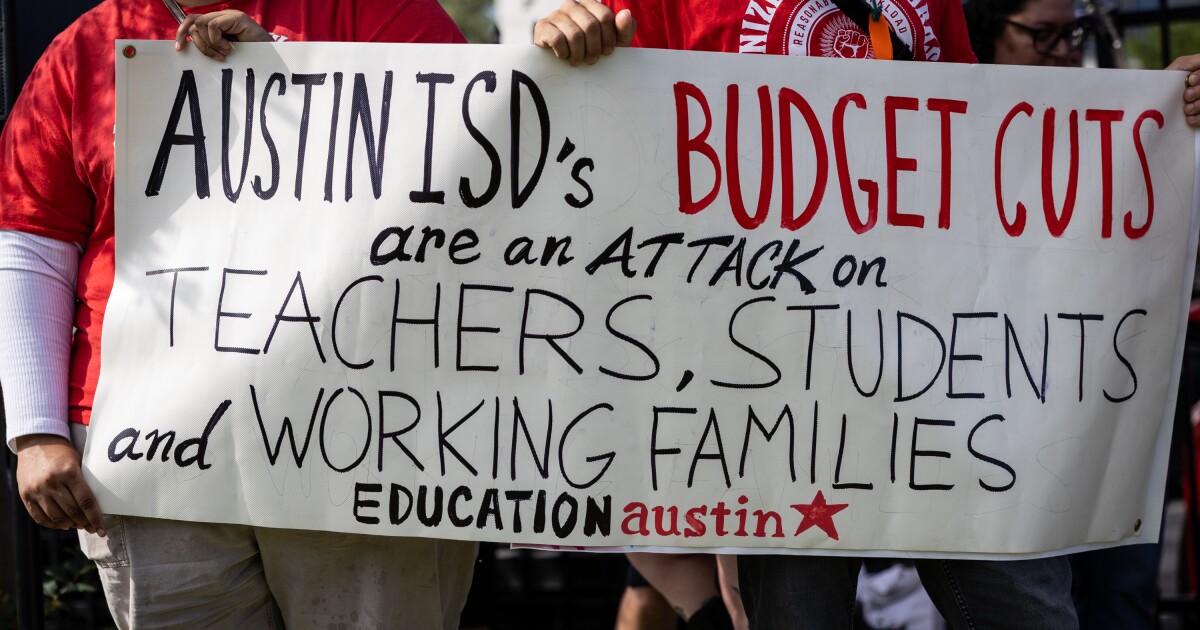
Despite significant state investments in education funding, school districts across Texas continue to report budget crises, layoffs, and campus closures, raising questions about whether these reforms are strengthening public education or destabilizing it further.
Analysis
The Texas public education overhaul is not one single policy it is a multi-layered transformation that touches nearly every aspect of how education is funded, taught, and governed. When you look at the full picture, three major shifts stand out: funding redirection, curriculum control, and systemic pressure on public schools.
The most immediate and measurable change is the school voucher program, which is now moving from theory to reality. With over 100,000 students already receiving vouchers, Texas is effectively redirecting public funds into private education at an unprecedented scale. While the policy is framed as empowering parents, the structural impact is clear: when students leave public schools, the funding tied to them often leaves as well. For already under-resourced districts, especially in urban and rural areas this creates a compounding problem. Schools are expected to operate with fewer students, fewer resources, but the same or greater needs.
Even more concerning is that financial strain in public schools is already evident. Despite an $8.5 billion funding effort through House Bill 2, districts across the state report layoffs, campus closures, and severe budget shortfalls. This suggests that increased funding is not translating into sustainable support, in part because of how funding is structured spread across targeted programs instead of strengthening core operational budgets.
At the same time, the state is tightening its grip on what students learn. The newly approved curriculum changes represent a dramatic shift toward a more state-centered educational framework. The inclusion of mandatory Bible readings and the increased emphasis on Christianity and patriotic themes mark a significant cultural and political turn in public education. Critics argue that this approach sidelines diverse perspectives and risks violating the principle of separation between church and state, while also limiting exposure to global history and multicultural experiences.
For a state as large and diverse as Texas with more than 5.5 million public school students this narrowing of perspective has real implications. Curriculum is not neutral; it shapes how students understand history, identity, and their place in the world. By reducing the visibility of race, diversity, and global context, the state risks producing a generation of students with a less complete understanding of both their country and the world.
What makes this moment particularly significant is how these policies intersect. Funding is being redirected away from public schools while those same schools are being asked to implement new, politically driven curriculum changes under increasing financial strain. Meanwhile, parents are encouraged to leave the system altogether through vouchers. The result is a dual-track system, one where public education is weakened structurally while alternative options are expanded, but not necessarily equally accessible to all families.
My Opinion
What’s happening in Texas public education right now doesn’t feel like reform, it feels like a restructuring of who education is for and who it serves.
As a Black woman and a parent, I can’t look at these changes without thinking about how they will land in communities that are already navigating inequities in education. Public schools have historically been both a lifeline and a battleground for Black and Brown families. They are where access to opportunity either expands or is denied. When funding is redirected away from those schools, the impact is not evenly distributed. It hits the hardest where the need is already greatest.
The curriculum changes are just as concerning. Education is supposed to broaden perspective, not narrow it. When you remove or minimize conversations around race, diversity, and global history, you are not protecting students, you are limiting them. And when you elevate one religious or cultural perspective above others in public schools, you are making a statement about who belongs and whose story matters.
What stands out most is the contradiction. On one hand, the state is saying it wants to “empower families.” On the other, it is centralizing decisions about what students learn while weakening the very system that serves many Texas children.
If this is the direction Texas is heading, then the question becomes: who benefits from this version of education and who is being left behind?
Take Action
- Texas Appleseed: Focuses on improving public school systems and addressing inequities in Texas education through research and policy advocacy, especially around funding and access.
- IDRA (Intercultural Development Research Association): Advocates for equitable education policies and provides research on how funding changes and curriculum decisions impact marginalized and underrepresented students.
- Every Texan (formerly Center for Public Policy Priorities): Works on public policy research and advocacy, including how state budgets and education reforms affect low-income students, public schools, and community outcomes.