
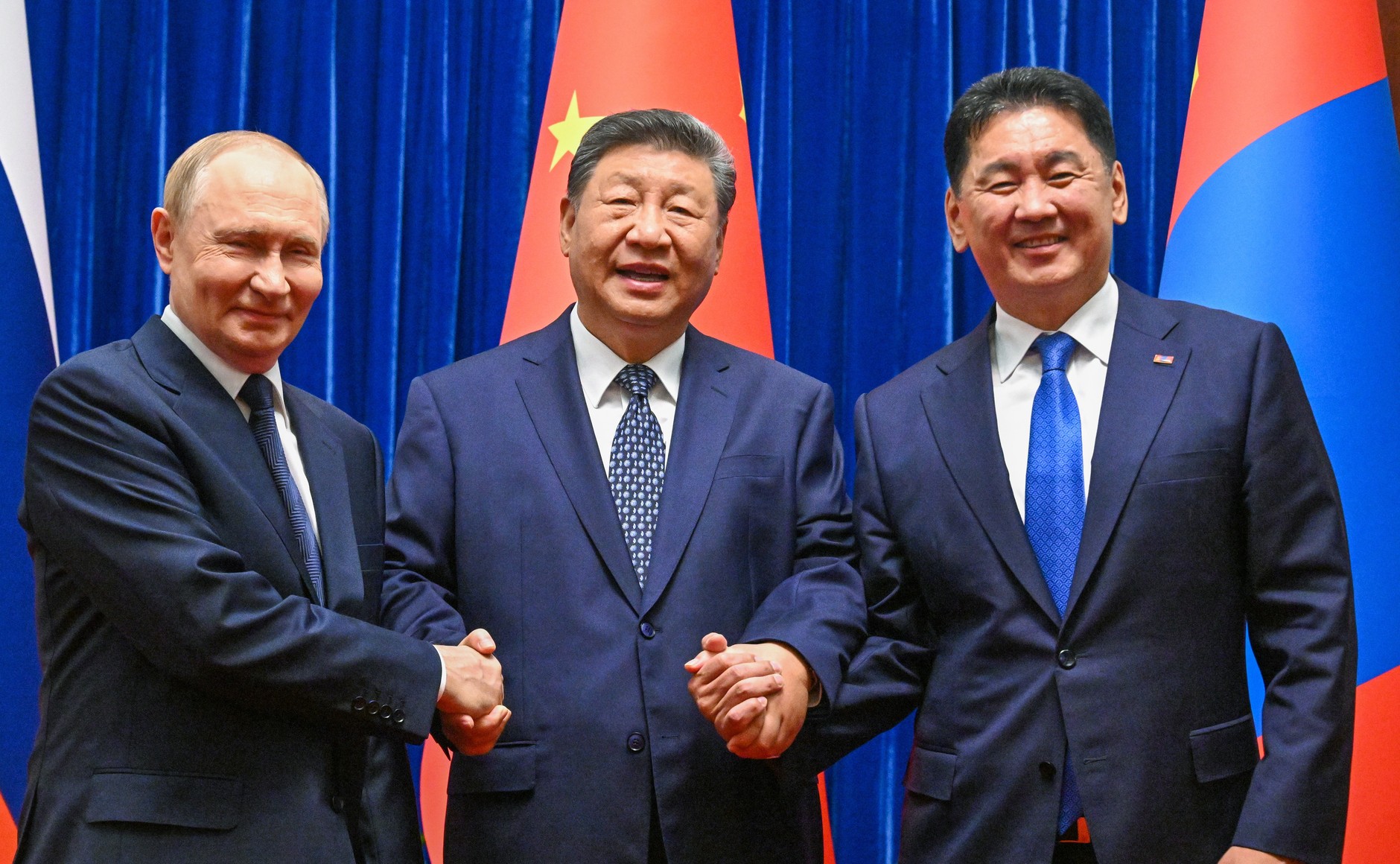
Foreign policy is a collection of goals, strategies, and actions that a government uses to guide its relationships with other countries and international organizations. Such goals include national security, economic prosperity, global stability, and values promotion. China’s foreign policy seeks to advance all of these goals using the tools of diplomacy, economic measures, military power and soft power (sharing a nation’s culture, values, and media to build good will and influence opinions).
Specifically China uses its foreign policy to stay economically competitive with the United States, Russia, the EU and other industrialized countries; to maintain its political/military interest in the South China Sea region; to gain access to the economic resources in developing countries in Africa, Asia, and Latin America; and to advocate for its positions on political issues in the United Nations and other international organizations.
China treats Taiwan as a core sovereignty issue. China’s One China Principle holds that there is only one China, that the People’s Republic of China is the sole legal government representing China, and that Taiwan is part of China. Beijing requires countries that establish diplomatic relations with the PRC not to recognize Taiwan as a separate sovereign state. China says it prefers peaceful reunification but does not renounce the use of force against moves toward permanent separation or external intervention.
China has also been a major participant in the growth of BRICS, the grouping that began with Brazil, Russia, India, and China and later added South Africa and additional members. BRICS is not a military alliance like NATO. It is better understood as a political and economic coalition through which emerging and developing countries seek greater influence over global governance, trade, finance, technology, and development.
Chinese firms are major suppliers of solar panels, batteries, electric vehicles, telecommunications equipment, and other technologies needed for industrialization and the energy transition. When China finances or sells these systems abroad, partner countries may gain access to technology and infrastructure at a scale they could not easily build alone. China, in turn, gains customers, commercial standards, supply-chain connections, and long-term political relationships. The result is not simply aid and not simply business: it is a form of foreign policy in which development, technology, and commercial interests reinforce one another.
Take Action
CODEPINK: China Is Not Our Enemy: A grassroots peace campaign that argues against a new U.S.-China Cold War and supports diplomacy, climate cooperation, and reduced militarization in the Pacific.
Tricontinental: Institute for Social Research: A research institute that publishes work on the Global South, international political economy, and changing institutions such as BRICS and the Belt and Road Initiative from a left and anti-imperialist perspective.
The Progressive International: An international network of progressive organizations and activists that publishes and organizes around global inequality, international cooperation, and alternatives to Western-dominated economic and political institutions.