
Summary
A private American mercenary company is now running a large share of Haiti’s fight against its own gangs, operating drone strikes, raids, and intelligence gathering under a contract the government has never made public.
Since 2021, when President Jovenel Moïse was assassinated, gang violence in Haiti has killed more than 16,000 people, including over 8,200 between January 2025 and March 2026 alone. Roughly 300 armed groups now operate in the country, sharing somewhere between 270,000 and 500,000 illegal firearms.
Into that vacuum stepped Erik Prince, the founder of Blackwater, the security contractor that became infamous for its conduct in Iraq. His new firm, Vectus Global, signed a 10-year contract with Haiti’s transitional government to run security operations and, eventually, collect border taxes. The deal has never been made public.
Why is a private military company doing a state’s job, and what has it actually accomplished?
Analysis
The UN’s response to Haiti’s collapse has been slow. The Multinational Security Support mission was widely seen as ineffective, and its successor, the Gang Suppression Force, only began landing troops in early 2026, half a year after it was announced. Vectus Global didn’t have that luxury. It moved in a fraction of the time and cost of a multinational deployment, and it’s been doing the actual work of taking territory back from armed groups while the UN was still finding its footing.
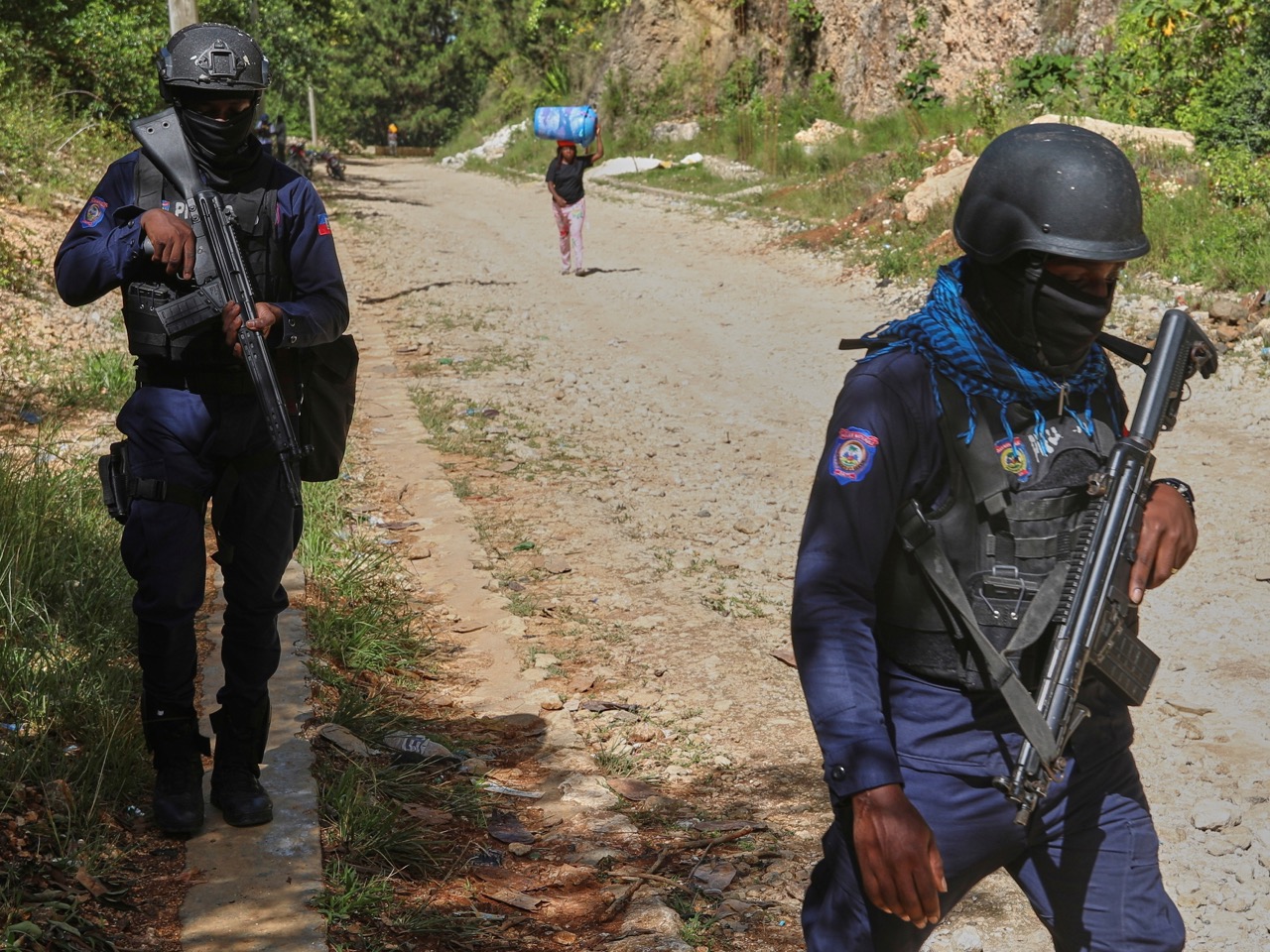
Operating since March 2025, the company has given the Haitian National Police something it never had: real logistics, helicopter support, and 24/7 aerial surveillance during raids on strongholds like Carrefour-Feuilles and Croix-des-Bouquets. In January 2026, officials confirmed Vectus-linked personnel took part in a raid targeting Jimmy “Barbecue” Chérizier, leader of the Viv Ansanm gang coalition, a group of up to 20,000 members and among the most entrenched targets in the country. That’s a private company doing what years of multinational missions couldn’t manage.
The company’s signature tool is the armed quadcopter drone, and it’s a smart one. Drones let a small, private force generate the surveillance and strike capability that used to require a standing army, at a sliver of the cost. Vectus has used it to hit gang positions 1,243 times across 141 operations between March 2025 and January 2026, degrading gang manpower in neighborhoods the state had effectively ceded. Urban counterinsurgency is messy no matter who runs it, and critics have seized on the toll to question the approach. But against the alternative, a state with no functioning military and a UN process moving at a crawl, that toll reflects the cost of finally fighting back.
This is innovation the public sector couldn’t deliver. No standing army, no years-long procurement cycle, no waiting on a Security Council vote. Prince built a force that stands up fast, funded through a contract instead of a treaty, pointed directly at the problem. Haiti gets a partner who moves at the speed the crisis demands. Prince gets a decade-long stake in the country’s recovery, including its customs revenue, a model he’s already tested in Ecuador and one that ties his own success to Haiti’s stability.
Gang violence hasn’t vanished in Haiti , not after decades of state collapse and a firearms supply in the hundreds of thousands. But the picture has shifted since Vectus arrived. High-value targets multinational forces couldn’t touch are now being raided. Weapons like Barrett M82 rifles are being seized. A private company with no army behind it is doing more, faster, than the international community managed in years of half-measures. In late August, an attack on Kenscoff left at least 47 dead, a reminder of how far gangs still reach outside areas where Vectus and police have concentrated, and a case for expanding the model, not retreating from it, with Haiti’s first election in a decade set for December 13.
Cheaper, faster, and willing to act while institutions dithered: that’s the case for Vectus Global in Haiti. Whatever discomfort comes with privatized force, the alternative was years more of the paralysis that let the gangs take over in the first place.
Ending Question
A decade-long mercenary contract signed in secret, funded in part by control of a nation’s borders, deserves more scrutiny than it’s getting. Follow the reporting from the Haitian Times and Human Rights Watch, and push your own representatives to ask why a private American company is waging an undeclared drone war with zero public accountability.