
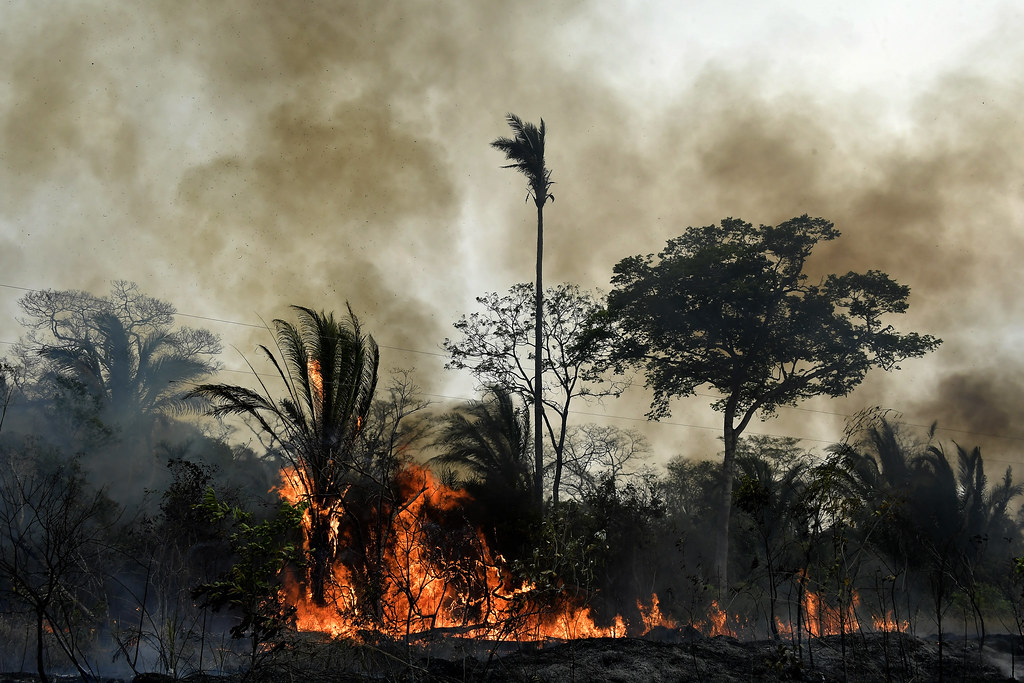
Image: Throwback: EU’s response to forest fires in Bolivia” by EU Civil Protection and Humanitarian Aid, CC BY-NC-ND 2.0
Spain’s summer of 2026 has shown how dangerous extreme heat and wildfires can be. Thousands of fires have damaged forests, threatened communities and raised concerns about the effects of climate change. According to Spain’s Ministry of the Interior, by September 29 the country had recorded 8,122 forest-fire incidents, with 275,209 hectares (680,056 acres ) of land burned. This was about 151% above the average for the previous ten years. The country’s government extended its summer wildfire response campaign through October 31. Climate change does not cause every wildfire, but it can make fires more dangerous. Higher temperatures, long periods without rain and dry vegetation allow fires to spread more quickly and become harder to control. Human activities can also start fires. The damage goes beyond forests. Wildfires can destroy homes, harm wildlife, threaten tourism and agriculture, and put people’s health at risk. Spain’s experience shows why countries need better forest management, early-warning systems and stronger emergency services.
France also experienced a devastating wildfire season in summer 2026. According to Météo-France, the country recorded its hottest summer since measurements began in 1900. Rainfall was nearly 40% below average, leaving the soil and vegetation extremely dry. In July, a major wildfire in the Gironde region of southwestern France burned tens of thousands of hectares. According to the French government, the fires damaged more than 240 buildings and forced over 250,000 people to evacuate. The scale of the damage was described as unprecedented since the major fires of 1949. By early July, wildfires had already burned approximately 11,000 hectares (27,182 acres) across mainland France, which is an unusually high figure for that point in the summer. Fires affected several southern regions, including Pyrénées-Orientales and Aude.
Extreme heat, drought, and strong winds created dangerous conditions for firefighters’ work. Climate change increases this risk by making heatwaves more frequent or intense and by drying out vegetation. However, the spread of individual fires also depends on wind, local conditions, land management and how fires start. The experience of France and Spain highlights a growing challenge for southern Europe. Governments must improve fire prevention, protect communities and prepare emergency services for longer periods of dangerous weather. At the same time, reducing greenhouse gas emissions can help limit future global warming.
These fires show that climate action involves two connected priorities: reducing the causes of climate change and helping countries adapt to its effects. Countries need energy for electricity, transportation, heating, factories and other everyday activities. However, much of the world’s energy still comes from coal, oil and natural gas, which release greenhouse gases and contribute to global warming. Countries can reduce emissions without necessarily reducing their total energy use. They can do this by using more renewable energy, improving energy efficiency and reducing waste. Spain provides a useful example. Renewable sources supplied 54.9% of the country’s electricity in 2025, according to the European Commission. Solar and wind power can reduce dependence on fossil fuels, but they also create challenges because the sun does not always shine and the wind does not always blow. Countries need better electricity networks, energy storage and reliable backup power to meet demand.
Other changes can also help. Better-insulated homes, energy-efficient appliances, electric vehicles and improved public transportation can reduce energy waste and pollution. Factories can adopt cleaner technologies to produce goods with fewer emissions. However, the transition will not be equally easy for every country. Wealthier nations often have more money to invest in new technology, while developing countries may need more energy to improve living standards. Countries that depend heavily on fossil fuels also face challenges in protecting jobs and keeping energy affordable. International cooperation, financial support and access to cleaner technologies can help countries meet their climate goals while maintaining reliable energy supplies.
Spain’s and France’s summer wildfires show why climate change requires urgent attention. Reducing greenhouse gas emissions can help limit future warming, while better forest management and emergency planning can reduce the damage caused by fires. At the same time, countries must make sure that people and businesses have access to affordable and reliable energy. This means investing in renewable energy, improving efficiency, and developing better ways to store and distribute electricity. The goal should not simply be to use less energy, but to produce and use energy more cleanly and efficiently. With the right investments and policies, countries can make progress toward climate targets while continuing to support their economies and meet people’s everyday needs.
Take action
- World Health Organization. As the climate warms, the threat of wildfires is spreading. How can historically cooler and wetter countries prepare? https://www.who.int/europe/news/item/02-09-2026-as-the-climate-warms–the-threat-of-wildfires-is-spreading-how-can-historically-cooler-and-wetter-countries-prepare
- European Environment Policy. Mitigation of Climate Change, https://www.ipcc.ch/report/ar6/wg3/
- The European Commission. The European Green Deal Striving to be the first climate-neutral continent, https://commission.europa.eu/strategy-and-policy/priorities-2019-2024/european-green-deal_en