The 2026 FIFA World Cup was supposed to represent global unity, international sportsmanship, and the United States’ ability to welcome the world. Instead, as of June 29, 2026, the tournament is being overshadowed by growing concerns over U.S. immigration enforcement, visa delays, travel bans, airport detentions, and entry denials affecting players, referees, officials, and fans. The United States, along with Canada and Mexico, is co-hosting the largest World Cup in history, but early reports show that access to the tournament is not being experienced equally.

Search Results
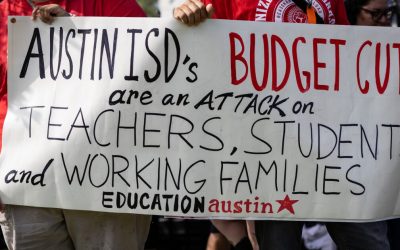
Texas Said ‘Fix Education’—and Gave Us Vouchers, Bibles, and Budget Cuts (Education Policy Brief #214)
Texas is undergoing one of the most sweeping public education overhauls in its modern history, with major changes to school funding, curriculum, and governance taking shape as of June 2026. At the center of this shift is the rollout of a $1 billion school voucher program, expanded state control over curriculum, and controversial revisions to what millions of students will be taught in classrooms.
North Carolina (2026 Democratic Primary Preview Series Brief #26)
North Carolina, the Tar Heel state, enters the 2026 election cycle as one of the nation’s most closely watched battleground states. While Republicans have enjoyed success in many statewide federal races over the last decade, Democrats remain highly competitive thanks to continued growth in urban centers such as Charlotte, Raleigh, Durham, & Greensboro. At the same time, Republicans continue to dominate much of rural eastern & western North Carolina, creating a state that is often decided on the margins. That said, North Carolina may represent Democrats’ best Senate pickup opportunity in 2026.
Flying Blind — The Economic Sabotage of the Federal Shutdown (Economic Policy Brief #92)
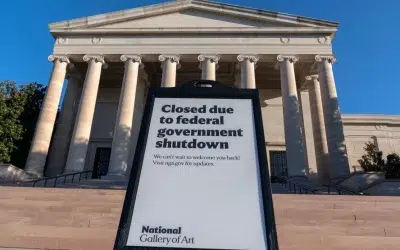
While the full federal government reopened in early 2026, the United States remains in a state of economic volatility due to a lingering partial shutdown of the Department of Homeland Security (DHS), now entering its 67th day.
Professional Exclusion and the Texas Workforce Crisis
Between March 29 and April 6, 2026, a major workforce crisis intensified across Texas as state regulatory bodies began a coordinated effort to revoke or deny occupational licenses for non-citizens and DACA (Deferred Action for Childhood Arrivals) recipients.
Federal Court Blocks Texas’ Racially Discriminatory Redistricting Map (Social Justice Policy Brief #184)
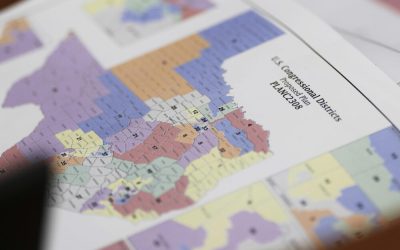
In a major ruling upholding the rights of minority voters, a three-judge federal panel on November 18, 2025, issued a preliminary injunction blocking Texas from using its newly adopted 2025 congressional redistricting map for the upcoming 2026 elections. The map, enacted during a special legislative session in August, was found to be an unconstitutional racial gerrymander that harmed the voting power of Black and Hispanic Texans. The panel ordered that the elections proceed under the state’s 2021 map. Opponents, including State Senator Juan “Chuy” Hinojosa, applauded the decision, stating the map was a clear effort by the Trump administration and Texas Republicans to “silence the voices” of minority-majority districts. Texas has already filed a notice of appeal to the U.S. Supreme Court.
Bulldozing History (Social Justice Policy Brief #182)
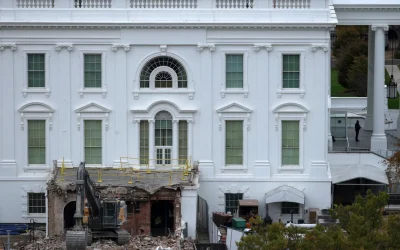
The entire historic East Wing of the White House was demolished in late October 2025 to clear space for President Trump’s controversial $300 million private ballroom project. The rapid, irreversible destruction—which eliminated the offices of the First Lady and her staff, the Social Secretary’s office, the family movie theater, and the primary public entrance—was carried out in a matter of days. This action directly contradicted the President’s prior assurance in July that the new 90,000 sq ft ballroom would be “near it but not touching it,” and would not interfere with the existing structure. The administration proceeded with the demolition without legally required approvals from the National Capital Planning Commission (NPC) or the Commission of Fine Arts, deliberately bypassing the public review process intended to protect the national landmark.
Pardoned for Profit (Social Justice Policy Brief #181)
The pardon of Changpeng Zhao (“CZ”), the convicted founder of the world’s largest cryptocurrency exchange, Binance, by President Trump, is widely viewed by critics as a clear act of “pay-to-play” corruption and a severe abuse of executive clemency.
Silence as Strategy: U.S. Denial of Genocide in Gaza (Foreign Policy Brief #220)
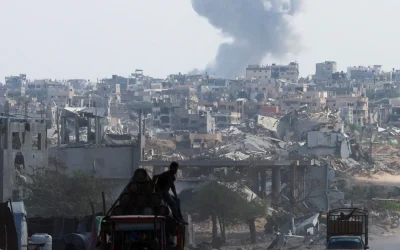
In September 2025, a United Nations Commission of Inquiry concluded what many on the ground have known for months: Israel is committing genocide in Gaza. The commission cited deliberate acts—mass civilian killings, destruction of vital infrastructure, deprivation of basic needs, and explicit incitement from Israeli officials—that collectively meet the threshold under the 1948 Genocide Convention.
Peace Prizes and Bombs: The Theater of Trump’s Nobel Pursuit (Foreign Policy Brief #211)
In the summer of 2025, President Donald Trump became the centerpiece of a surreal global spectacle: a campaign to nominate him for the Nobel Peace Prize. Israeli Prime Minister Benjamin Netanyahu lauded Trump for supposedly brokering stability in conflict zones, and Cambodia’s deputy prime minister praised him for his role in a temporary ceasefire with Thailand. The White House eagerly embraced this narrative, touting Trump as a global peacemaker and repeatedly pointing to “six major conflicts” that he allegedly helped resolve.