
Summary
The Trump administration has revived a policy of entering into Asylum Cooperative Agreements with secretive terms that violate the right of a person physically present in the US to seek asylum. The policy isn’t a new one; Trump did it in his first term, but it’s being used much more extensively now, alarming judges and advocates and frightening asylum seekers.
Analysis
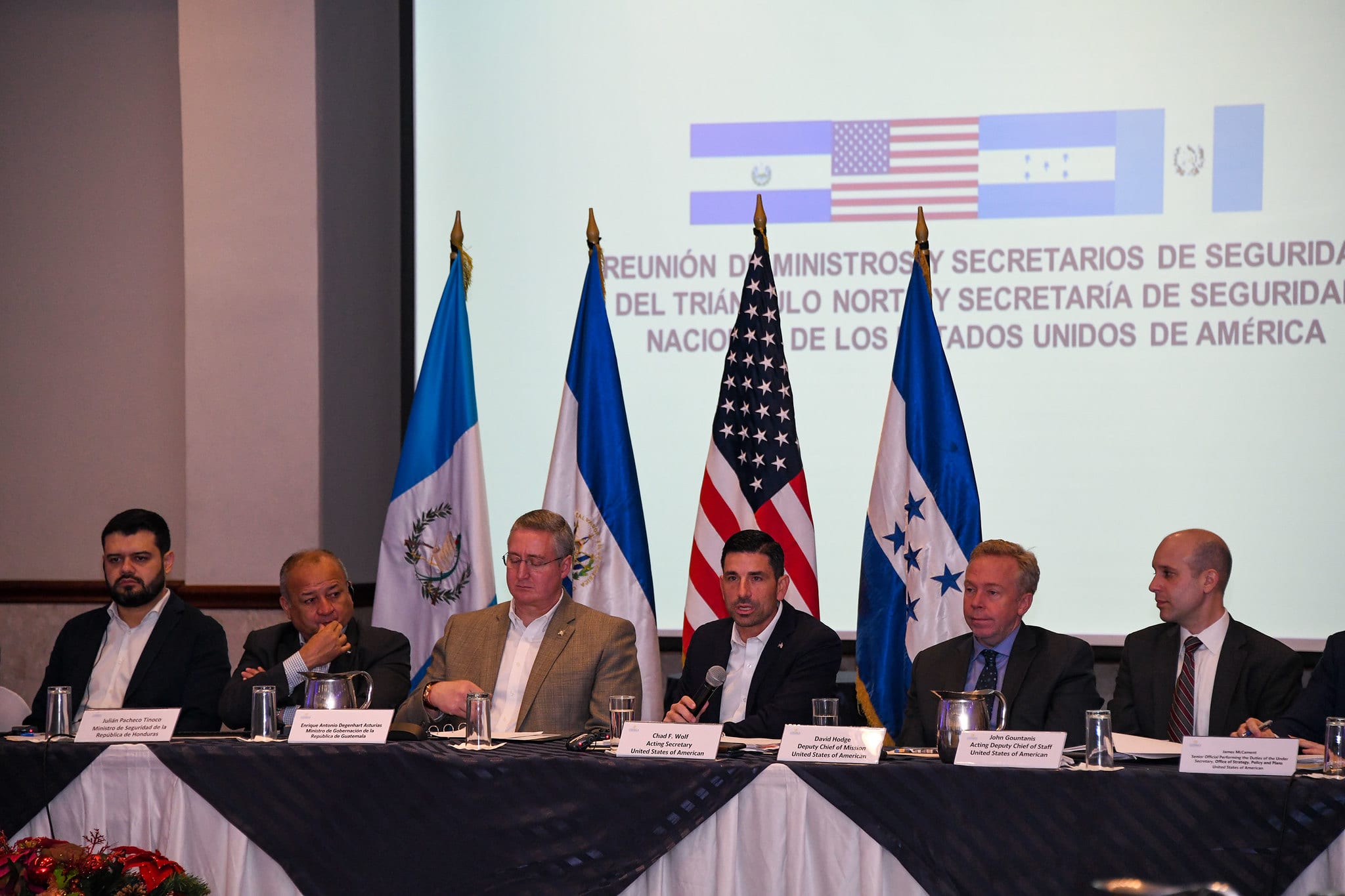
The first Trump administration began eliminating the right to seek asylum in the United States by signing Asylum Cooperative Agreements (ACAs) with Guatemala, Honduras, and El Salvador. These are meant to derail asylum claims by immigrants going through the legal process to seek asylum from violence or persecution in the United States, by sending the applicants to other countries before their claims are heard, ostensibly to seek asylum elsewhere.
After a Congressional report documented the abuses resulting from the agreements, the Biden administration quickly withdrew from them. Now they are back, speciously labeled “safe third country” agreements, and are being deployed against asylum seekers who, when attending routine court hearings, can have their applications completely derailed by a motion by the Department of Homeland Security to “pretermit” them to another country or countries to pursue their asylum claims.
Pretermitted asylum seekers can be sent to the same area they are fleeing from, Central America in many cases, or countries they have no connection to, including Ecuador and Uganda. For example, Guatemalans could be “removed” to Honduras, theoretically to apply for asylum there; Hondurans could similarly be sent to Guatemala.
At a recent immigration court session in San Francisco, a government attorney made pretermit motions in many of the cases. The judge expressed concerns about the terms of the agreements, including how many asylum seekers can be removed to each country and how robust the asylum procedures are in the countries named in the motions to pretermit. The government attorney immediately responded that the Board of Immigration Appeals has already approved the practice, and the rules don’t permit immigration judges to deny the motions on the basis that they need more information. Judges are severely limited in their authority over motions to send asylum seekers to “safe” third countries.
While the judge’s questions remain unanswered, there’s no reason to think the agreements will provide more benefits than they did in the past. Which was none at all. Hundreds of Honduran and Salvadoran families were subject to the Guatemalan ACA from late 2019 to March 2020, before the COVID pandemic ended the practice. When the democrats were back in power, the Senate Foreign Relations Committee released an investigation that found that not a single asylum seeker transferred from the United States had received asylum in Guatemala, and that individuals had been “subjected to degrading treatment and effectively coerced” into returning to their home countries.
Georgetown University also criticized the practice in a report entitled Dead Ends: No Path to Protection for Asylum Seekers Under the Guatemala Asylum Cooperative Agreement. It concluded that Guatemala did not meet the standards for a “safe third country” and that the rights of asylum seekers were being violated regularly by both U.S. and Guatemalan officials.
For those subject to an ACA, there is no requirement that a person have even passed through the third country before being sent there, let alone have any connection to it. Reportedly, DHS attorneys are being told by the White House to seek dismissal of all Spanish-speaking asylum applicants
There are very few ways for asylum applicants to challenge such motions, especially if the respondents are appearing without an attorney, as is the case in the majority of cases. Judges in San Francisco often give asylum seekers 3 months to try to find an attorney and to gather evidence as to why they would face persecution, danger or a serious threat if they were sent to any of the three countries suggested by the government, usually Guatemala, El Salvador, or Ecuador. In most cases, a person or their family or a close associate had experienced persecution, violence or threats there.
In the past, Guatemala, Honduras, and El Salvador were among the top countries from which asylum was granted, with almost 4,000 applications approved from these countries in 2018 alone. The problems that would cause a person to flee one country are equally present in each of the other two, but that is not relevant to the claim of fear. This is especially true of the continuing threat of gang violence in the region; Guatemala recently declared a national state of emergency to address gang violence.
With that, sending people back to these nations appears to violate the United States obligation under international law to avoid “refoulment,” the practice of forcibly returning refugees or asylum seekers to a country where they are liable to be subjected to violence or persecution. That is, of course, unlikely to deter the Trump administration from doing so.
Engagement Resources
Deportation with a Layover
Failure of Protection under the US-Guatemala Asylum Cooperative Agreement
Monitoring The Human Cost Of The U.S. Government’s Forced Third
Country Transfer Agreements, Website launched December 5, 2025,
https://www.thirdcountrydeportationwatch.org