
POLICY
Scientists first suspected a link between greenhouse gases and climate in the mid-19th century. Swedish scientist Svante Arrhenius won the Nobel Prize in chemistry with calculations in 1897 that linked burning coal to global warming. From that time onwards, scientists took up studying this linkage with better tools, more resources, and coordination.
Building on more than a century of research, the Environmental Protection Agency (EPA) arrived at a formal conclusion that greenhouse gas emissions endanger public health and welfare. While this is also the conclusion of countless international bodies, the EPA is authorized by Congress to focus its resources on impacts within U.S. borders. In 2009, the EPA issued what is known as the “endangerment finding.” That finding says that greenhouse gas emissions from the burning of fossil fuels harms the U.S. public. Specifically, under the U.S. Clean Air Act, Congress legally obligates the EPA to act when public health and welfare is endangered.
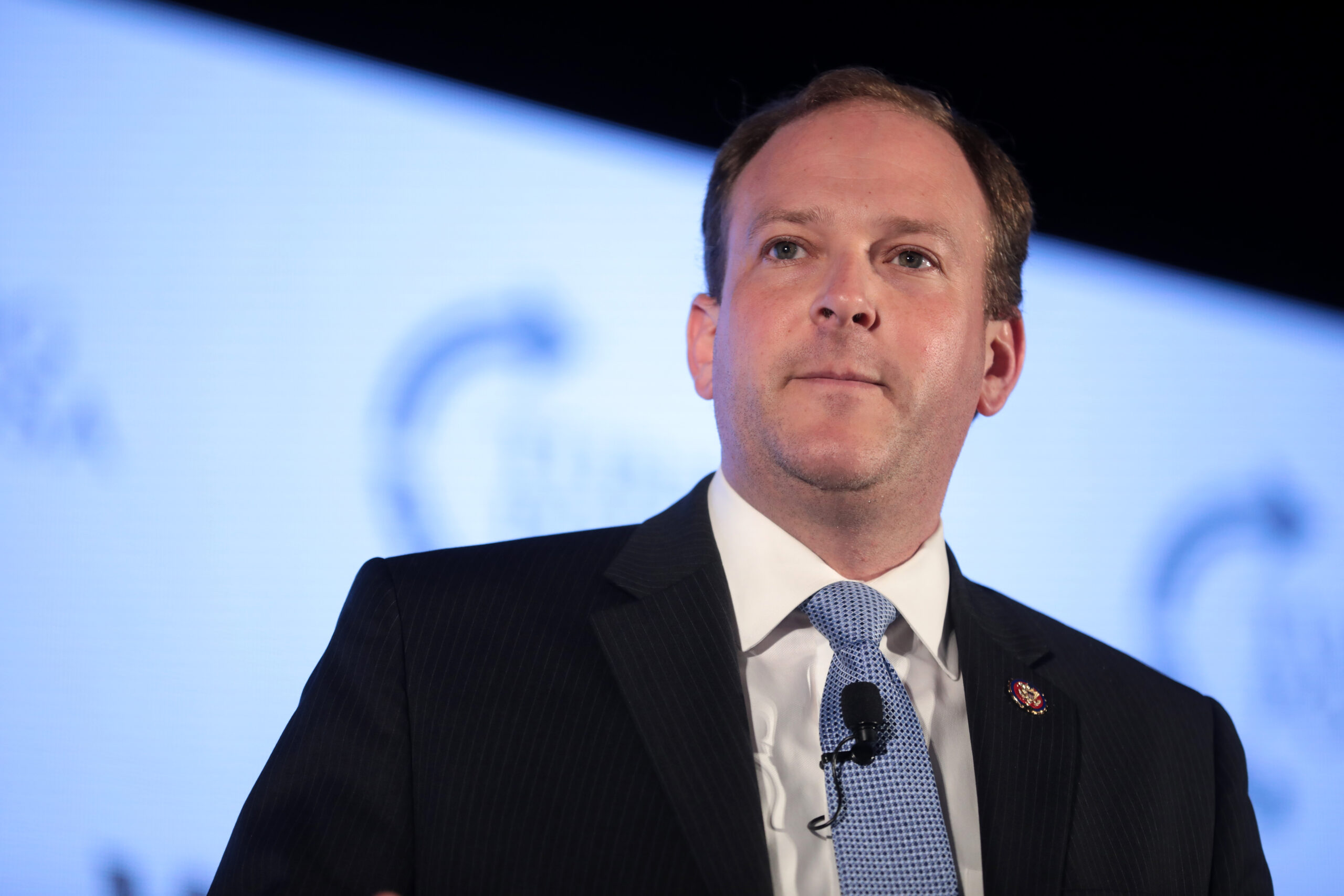
In the face of this scientific research and these conclusions, on February 12, 2026, E.P.A. Administrator Lee Zeldin, officially overturned the endangerment finding, boasting that this action is the “single largest deregulatory action in the history of the United States.”
Even as the EPA, as a whole, has supported the endangerment finding and has implemented rules in line with the finding over the last 17 years, Lee Zeldin and his appointed lieutenants at the EPA, have their own political agenda to follow. The EPA’s rules have included the regulation of pollutants, for example, from light-, medium- and heavy-duty vehicles. With the stroke of Zeldin’s pen, the EPA now has no legal basis to enforce those rules.
A lawsuit contesting the ruling have already been filed. It is expected the decision that follows will make its way to the Supreme Court who will rule on this EPA decision. If the Court upholds Zeldin’s decision to remove the endangerment finding, then the EPA will no longer have legal grounds to create and enforce rules that regulate greenhouse gases. Congress would then have to act and establish laws that would resemble the rules that the EPA are now enforcing, in effect legislating U.S. climate policy.
Should the Court uphold the EPA repeal, the EPA will continue to regulate pollutants other than greenhouse gases such as ozone, and the very dangerous nitrous oxide which is a by-product of chemical manufacturing. Even so, coal-fired and natural gas power plants, as well as virtually all combustion engine vehicle exhaust – the primary contributors to global climate change – will be outside of their legal jurisdiction to regulate.
Among Zeldin’s key influencers, there is Stephen Miller who once led American First Legal and as an Advisory Board member of the Heritage Foundation who published Project 2025. Over one-half of Trump’s Executive Orders have been lifted directly from Project 2025. As AP reporter Matthew Daly confirms, “The directive to reconsider the endangerment finding and other EPA rules was a recommendation of Project 2025.” Overhauling greenhouse gas claims and associated social costs also come from the same playbook. Since Zeldin walked into his EPA office, he has overseen the reduction of approximately 4000 staff and has an explicit 65% budget reduction goal.
Gina McCarthy, who headed Climate Policy under President Joe Biden, said of Zeldin’s repeal of the endangerment finding: it was “the most disastrous day in EPA history.” EPA must now take on the reluctant task of airbrushing its website of statements like “Greenhouse gas emissions have increased the greenhouse effect and caused the earth’s surface temperature to rise. Burning fossil fuels changes the climate more than any other human activity.” As one insider remarked, whereas “earlier rollbacks of individual rules were like removing plates, forks, and glasses one by one, repealing the endangerment finding is more like gathering the tablecloth and carting everything away in one go.”
ANALYSIS
This decision to repeal the endangerment finding is in line with the administration’s contention that the collective science behind global warming is a hoax. Similarly, Trump used the term “green new scam” to describe funding for clean energy and infrastructure under Biden. 8 billion in clean technologies grants under the Inflation Reduction Act have already been cancelled. (This action is under litigation). The tax code has even been modified to limit clean energy tax credits. What this means is that all bets have been placed on short term economic gains derived from fossil fuel production.
This policy sets the U.S. apart from the number one contributor to greenhouse gas emissions: China. Even though China still relies heavily on coal to power its electric grid, their policies going forward recognize global warming science and support their investments in clean technologies. Their three-year action plan to double the capacity of electric vehicle charging stations will extend their vehicle charging network to 28 million stations by 2027. While currently 10% of China’s cars on the road are EV, beginning in 2025 50% of all their new car sales are EV. This is in sharp contrast to the U.S. where EV sales are down to under 6% of total car sales. Mostly due to the removal of EV tax incentives and policies that incentivize gas guzzling alternatives.
Essentially, the Trump administration has decided to turn its back on nearly two decades of scientific evidence in support of the endangerment finding. Brian Lynk, with the Environmental Law & Policy Center, highlights the contradiction, stating that “the [EPA] agency cannot credibly claim that the body of work is now incorrect.” Georges Benjamin, who heads the American Public Health Association goes further: “This repeal has no basis in law, science or reality, and human health is at extreme risk.” EPA Administrator Zeldin’s response? “This is the only way that they [the administration] can drive a stake through the heart of climate religion.”
A lawsuit has been filed with the U.S. Court of Appeals for the District of Columbia Circuit arguing that the endangerment finding repeal is illegal. The lawsuit cites the Massachusetts v. EPA case of 1999. In that case, Massachusetts (and other states) had petitioned the EPA to regulate greenhouse gases. The EPA had refused citing that they lacked statutory authority. In a 5-4 decision, the Court said the EPA does have the authority to regulate greenhouse gases as air pollutants under Section 202(a) of the Clean Air Act. If the Supreme Court does take up this latest challenge, there will be arguments (from the EPA) challenging the EPA’s authority to “issue a scientific determination” on greenhouse gases.
USResist Resources:
- https://salatainstitute.harvard.edu/ Harvard’s Salata Institute for Climate and Sustainability develops and advances durable, effective, and equitable solutions to the climate change challenges confronting humanity.
- https://legal-planet.org/ fills a unique space by bridging the worlds of law and policy, but also by translating the latest developments in a way that’s understandable to a mass audience.
- https://www.ncelenviro.org/ empowers a nonpartisan network of legislative champions to protect, conserve, and improve the natural and human environment.