
Summary
Federal climate regulation is at risk as the U.S. Environmental Protection Agency (EPA) rescinded the 2009 “endangerment finding” on February 12, 2026. The EPA called the engagement finding “the single largest deregulatory action in U.S. history.” States like California and Wisconsin, as well as several organizations, are preparing for a legal battle that could eventually reach the Supreme Court, which could take years. They argue that the U.S. could be left with far less ability to regulate emissions at a national level.
Analysis
The 2009 engagement finding is a scientific determination that is a prerequisite for implementing greenhouse gas emissions standards for vehicles and other sectors. Without this finding, the EPA will lack statutory authority to prescribe regulatory standards to protect public health from greenhouse gases like carbon dioxide (CO2), methane (CH4), nitrous oxide (N2O), hydrofluorocarbons (HFCs), perfluorocarbons (PFCs), and sulfur hexafluoride (SF6).
During a news conference, President Donald Trump had said, “We are officially terminating the so-called endangerment finding, a disastrous Obama-era policy.” He added, “This determination had no basis in fact — none whatsoever. And it had no basis in law. On the contrary, over the generations, fossil fuels have saved millions of lives and lifted billions of people out of poverty all over the world.”
The agency is removing all vehicle greenhouse gas emissions standards, with Trump calling them “ridiculous.” Without this finding, most U.S. policies aimed at curbing climate change are fundamentally at risk. Power plant and industrial regulations, as well as oil and gas sector standards, are at risk. While the EPA rescinded the finding, it reasserted that federal preemption still applies to state laws, which prevents states from enforcing their own standards.
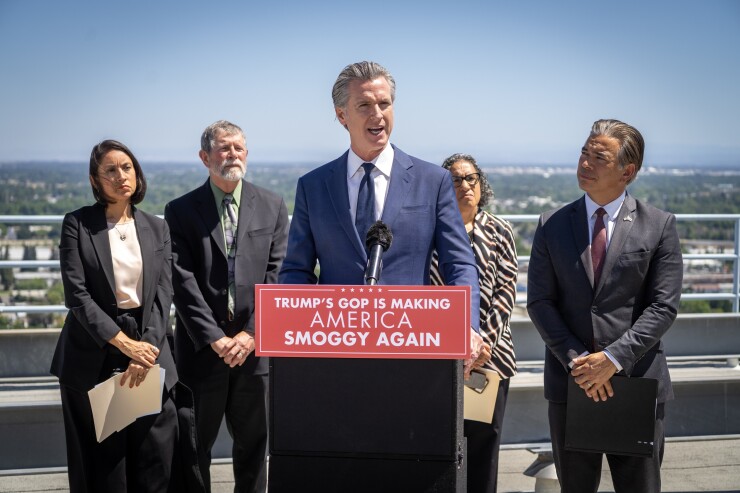
The U.S. Climate Alliance, which is led by California Gov. Gavin Newsom and Wisconsin Gov. Tony Evers, called the repeal “unlawful, ignores basic science, and denies reality.”
States and climate organizations have slammed the agency’s rejection of the finding and are preparing for a battle in the courts. A broad coalition of health and environmental groups, such as the American Public Health Association, American Lung Association, Alliance of Nurses for a Healthy Environment, Clean Wisconsin, represented by Clean Air Task Force, has sued the EPA.
Environmental advocates have warned about the consequences of the repeal beyond legal debates. Michelle Roos, executive director of the Environmental Protection Network, explained, “Communities across the country will bear the brunt of this decision — through dirtier air, higher health costs and increased climate harm.”
The American Geophysical Union released a statement calling the repeal “a rejection of established science, a denial of the struggles we are facing today, and a direct threat to our collective future.”
Trump’s administration has maintained that the repeal would boost the coal industry. Still, with the EPA’s responsibilities removed, legal experts warn it could open the door for litigants to sue companies for damages linked to their greenhouse gas emissions. The repeal is more than a regulatory tweak. It’s the removal of the legal spine of federal climate policy and the start of a lengthy court battle.
Engagement Resources
- Practical implications of the repeal
- Rescission of the Greenhouse Gas Endangerment Finding and Motor Vehicle Greenhouse Gas Emission Standards
- Endangerment Finding Showdown