
Policy Issue Summary
The American immigration detention system is currently undergoing an unprecedented and rapid metamorphosis, transitioning from a network of civil holding centers into a massive carceral apparatus designed for industrial-scale deportation. As of February 2026, the number of individuals held in U.S. Immigration and Customs Enforcement (ICE) custody has reached a historic peak of over 70,000 people across 225 facilities nationwide. This surge represents a nearly 75 percent increase in the detained population since early 2025, fueled by the staggering 45 billion dollars in ICE funding authorized under the signature One Big Beautiful Bill Act. The administration’s current strategic roadmap aims to bring upwards of 108,000 detention beds online by the end of this year, with a long-term capacity target of 135,000 beds to facilitate the largest mass removal operation in the history of the United States.
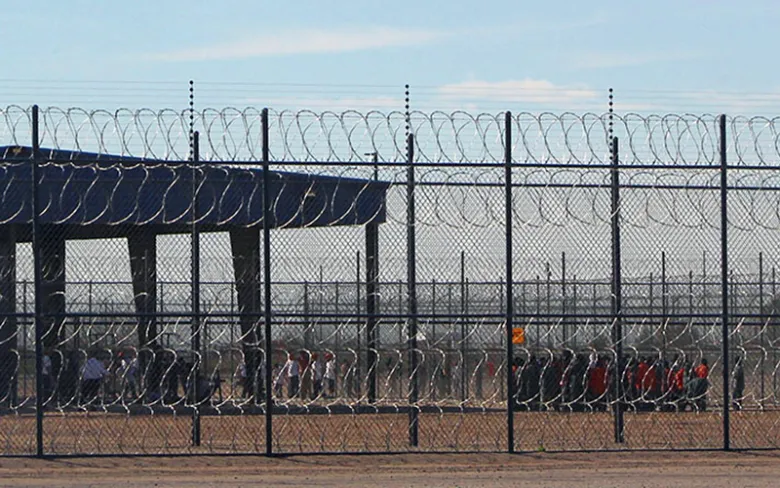
While the current infrastructure is heavily concentrated in states like Texas, Louisiana, Georgia, and Florida, the geography of detention is aggressively expanding into the interior of the country. Recent reports indicate that ICE is actively negotiating to purchase and convert warehouses in major metropolitan areas, such as South Kansas City, and is eyeing shuttered state prisons like the Augusta Correctional Center in Virginia for reactivation. This expansion is not limited to traditional brick-and-mortar facilities; the administration has pioneered “soft-sided” tent cities on military bases, such as the massive camp in El Paso, which alone houses nearly 3,000 people daily. The purpose of this expansion is explicitly carceral, moving away from discretionary releases toward a “no-release” policy that forces individuals to remain in custody for the duration of their legal proceedings, effectively using detention as a tool of deterrence and attrition.
Analysis
The proliferation of these detention centers is not a response to a genuine public safety crisis, but rather the result of a deliberate fusion of political ideology and corporate profit. Data from the Cato Institute and other monitors reveal that the vast majority of those currently being swept into this net—over 70 percent—have no criminal record whatsoever. Instead, the system is being filled through aggressive community raids and “at-large” arrests that target families and long-term residents. This shift reveals that the primary utility of these centers is the physical “warehousing” of human beings to streamline their eventual removal, regardless of their ties to the country or the merits of their legal claims. By eliminating bond and parole options, the state exerts maximum psychological and physical pressure on detainees, hoping to coerce them into accepting deportation simply to escape the deteriorating and often deadly conditions within these facilities.
Central to this expansion is the “Carceral-Industrial Complex,” where private prison giants likeGEO Group and CoreCivic manage the majority of the detention beds. These corporations have seen their revenues and stock prices soar as they sign multi-million dollar contracts to reopen shuttered jails and operate new “mega-centers.” For these entities, the mass detention of migrants is a lucrative market opportunity, leading to a system where humane treatment is secondary to the bottom line. The lack of transparency in these private contracts has shielded facilities from accountability, even as reports of medical neglect and civil rights violations continue to mount. This profit motive incentivizes the continued expansion of the system, as corporations lobby for stricter enforcement and more beds to satisfy their investors, creating a self-perpetuating cycle of incarceration.
In response, a growing wave of resistance has emerged from local governments and civil society. Cities like Kansas City, Los Angeles, and Chicago have voiced fierce opposition to the placement of new centers, arguing that these facilities drain local resources, threaten public safety by eroding trust between immigrant communities and local law enforcement, and transform productive economic zones into carceral islands. Local leaders are increasingly viewing these centers as an unwanted federal imposition that disrupts the social fabric of their towns.
This resistance has evolved from localized grievances into a sophisticated national movement of “people-powered” blockades and sustained civil disobedience. In many metropolitan areas, grassroots coalitions—comprising faith leaders, labor unions, and neighborhood associations—have successfully weaponized the administrative process to stall or kill detention contracts. By packing city council meetings, launching massive “Not in Our City” campaigns, and organizing physical vigils at proposed sites, these activists have transformed the establishment of new centers from a quiet real estate transaction into a political liability. In South Kansas City and rural Virginia, for example, the sheer volume of public outcry forced local officials to reconsider zoning permits, proving that federal ICE funding cannot always override the collective will of a mobilized community.
The effectiveness of these protests lies in their ability to disrupt the “business as usual” model of the carceral-industrial complex. Beyond mere optics, these movements have exerted significant financial pressure on private contractors by targeting their investors and lenders, branding the “detention economy” as a toxic asset. In several high-profile cases throughout 2025, sustained protests and legal interventions led by local organizers resulted in the total abandonment of multi-million dollar “mega-center” projects before the first brick was laid. These victories demonstrate that while the federal government may have the capital to fund expansion, the actual footprint of the detention web is being restricted by a public that refuses to allow their communities to be used for mass deportation logistics.
Engagement Resources
Click or tap on the resource URL to visit links where available
Detention Watch Network (https://www.detentionwatchnetwork.org/): A national coalition that exposes the injustices of the U.S. immigrant detention system and advocates for the total abolition of immigration detention.
American Civil Liberties Union – National Prison Project (https://www.aclu.org/issues/prisoners-rights): Provides legal and advocacy resources focused on the conditions of confinement and the systemic expansion of the carceral state.
Freedom for Immigrants (https://www.freedomforimmigrants.org/): Operates a national hotline and monitoring system to document abuses in ICE detention and provides direct support to those currently held in the system.
National Immigration Justice Center (https://immigrantjustice.org/): Offers legal services to detained individuals and leads policy litigation to challenge the “no-release” and mass detention frameworks.
TRAC Immigration (https://tracreports.org/immigration/): A nonpartisan research center at Syracuse University that provides up-to-the-minute data on ICE detention populations, facility locations, and enforcement trends.
American Immigration Council (https://www.americanimmigrationcouncil.org/): Conducts research and litigation to hold ICE accountable for the rapid and opaque expansion of its detention network.